


From the ISET Economist Blog (https://www.iset.ge/blog/?s=survival&lang=en)
By Nino Mosiashvili
The conclusion of the Association Agreement (AA) with the European Union was euphorically acclaimed by Georgian media as well as political and economic decision makers. Part of the AA is the Deep and Comprehensive Free Trade Agreement (DCFTA). The DCFTA is intended to liberalize trade between Georgia and the EU by lowering tariffs and reducing non-tariff barriers. For agriculture, the most relevant changes relate to food safety (bacterial contaminants, pesticides, inspection, and labeling) as well as animal and plant health (phytosanitation). For the manufacturing sector, the removal of so-called “technical barriers to trade” is similarly important, with the goal being to prevent the usage of technical standards as a means to protect domestic markets from foreign competition. “If regulations are set arbitrarily, they could be used as an excuse for protectionism”, states the World Trade Organization on its homepage.

It is clear that all these agreements require unilateral adjustment of Georgian regulations to European standards. Georgia is economically too small to impose its preferences on Europe. This is stated quite frankly in the AA, when it says that it aims to “support the efforts of Georgia to develop its economic potential via international cooperation, also through the approximation of its legislation to that of the European Union”.
Whether these unilateral adjustments are beneficial for Georgia is not generally clear. European regulations do not necessarily reflect “best international practice”. In democracies, laws and regulations come about through the lobbying efforts of political interest groups much more than through rational planning. In the future, internal political decisions made in the European Union will be relevant for Georgia much more than they were previously, and it will be more difficult to pursue policies tailored to the specific situation of Georgia.
Yet Georgia hopes that the convergence to European standards will make it easier for Georgian firms to access the European market. Most critical in this respect is Georgian agriculture, as it is the sector employing the bulk of the Georgian labor force, while it is at the same time dramatically lagging behind European productivity levels. In 2013, Georgia’s agriculture accounted for only 9.3% of the Georgian gross domestic product but employed about half of the labor force. Thus, one of the benchmarks for evaluating the usefulness of the DCFTA will be its impact on Georgian agriculture.
THROWN INTO THE WATER – WILL IT SWIM?
The impacts of the DCFTA for Georgia were assessed in a report with the lengthy title Trade Sustainability Impact Assessment in support of negotiations of a DCFTA between the EU and Georgia and the Republic of Moldova. It was written by a consortium consisting of the Dutch consulting company Ecorys and the The Center for Social and Economic Research (CASE), a Warsaw-based think tank. On a broad level, the report estimates that due to trade liberalization with the EU the national income of Georgia will increase by 291.9 million euro in the long run, corresponding to a GDP growth of 4.3%. This goes along with an increase in Georgian exports and imports by 12% and 7.5%, respectively, leading to an improvement of the Georgian trade balance. But what about agriculture?
According to the study, the DCFTA will have different effects on different agricultural products, and the overall picture is very ambivalent. The output of some product categories will increase, namely vegetable oils and fats (+6.7%), vegetables, fruits, nuts, and oilseeds(+3.4%), and animal products (+3.1%), while for many other products, the output is expected to shrink, e.g. livestock and meat products (-14.8%), other processed foods (-8.8%),beverages and tobacco (-4.0%), sugar (-2.4%), and other crops (-2.0%). The report attributes the increases to reductions of EU tariffs on Georgian exports and the decreases to the reduction of Georgian tariffs on goods imported from the EU. These numbers, if they say something about the true developments, suggest that parts of Georgia’s agricultural sector will get under severe pressure due to increased competition with European producers.
ECONOMIC DARWINISM
What are the implications for Georgian agricultural policy? Some of the producers will benefit from the integration into the European market, as they can stand the pressure and even expand in this highly competitive environment. Other producers are likely to run into essentially insoluble problems. One particularly beneficial category in this respect is vegetables, fruits, nuts, and oilseeds, because some of the products in that category (e.g. hazelnuts) are labor intensive and serve niche markets. This implies that more people can be employed in the production of these goods, making the transformation to a modern, efficient agriculture less painful, and it means that competition is lower and margins are higher. If policy recognizes these advantages, producers in that category might become “national champions”.
Currently, vegetables, fruits and nuts are in Georgia primarily produced by small and medium sized farmers. Due to lack of greenhouses the production is seasonal. Yet farms can be consolidated and technical equipment can be upgraded. In the end, it will be relevant that Georgia has fundamental advantages in the production of goods in that category, namely clean soils, little usage of chemicals, a relatively large amount of available land for cultivation, and a long tradition in vegetable and fruit production.
Moreover, about half of Georgia’s current export of vegetables, fruits, and nuts already goes to the EU, which means that Georgian producers already have “a foot in the door”. Currently, the exports almost entirely consist of hazelnuts (there are no tariffs, as hazelnuts are already covered by the GSP+ regime, and hazelnuts easily satisfy sanitary and phyto-sanitary standards). Thus, while the DCFTA may not change Georgia’s hazelnuts export to the EU significantly, there may be other niche products in this category, like berries and other kinds of nuts, which may benefit from the DCFTA, for example through adjustments of Georgian regulations regarding product packaging.
It will be important that policy will subscribe to what one might call “Economic Darwinism” – do not try to keep those producers alive that are incapable of surviving, but instead create good circumstances for those that have a future in Georgia.
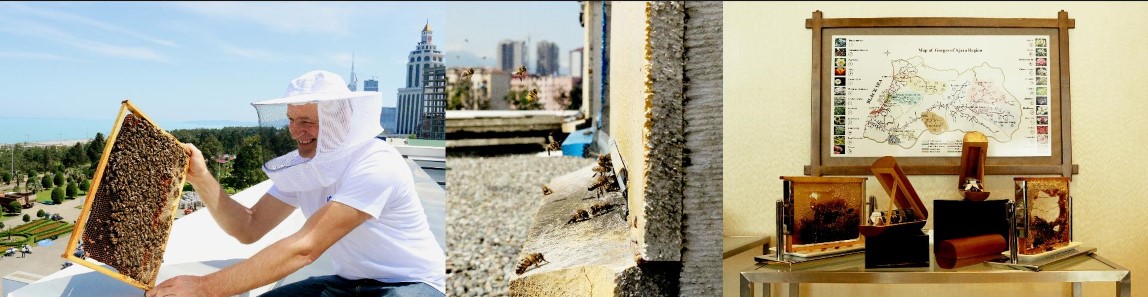
4 Beehives and their inhabitants from the high mountains of Ajara started their new life on the terrace of one of the largest Hotels in Batumi, Georgia, the Hilton Batumi, to produce honey for hotel guests. The General Manager of the Hilton, a keen birdwatcher and conservationist had the idea, seeking to showcase the beautiful countryside of Ajara and take this first step in illustrating the story of locally sourced food and the people who produce it.
By linking the hotel with the Ajara Beekeepers Business Association, the hives were installed. Urban beekeeping is increasingly popular in Europe as bee colonies decline and new ways are sought to develop a more ecologically sensitive lifestyle as urban centers grow. The Hilton also installed a honey showpiece at the breakfast buffet, of mounted honey comb, a large map of the 10 honey production gorges of mountainous Ajara and the indigenous flora on which the bees feed with the honey and comb sourced through honey producing company Matchakhela Ltd.
These initiatives which form a part of the ALCP programme’s work in the honey market system illustrate the great potential of the honey sector to feed into the promotion of Ajara as a great and varied tourist destination.
Income received from the Hotel hives will be donated to children in need in the rural municipalities.
News travels fast and perhaps other hotels may take up the initiative now it's been advertised through the Hilton chains newsletter.
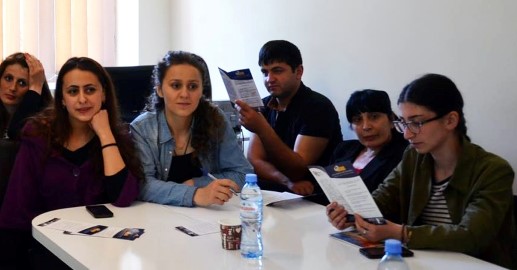
Khelvachauri Women’s Room is taking its first steps in helping women access public resources voice their opinions and participate in local self-governance. The Women’s Room model that is being replicated in Ajara was first established in three municipalities of Kvemo Kartli from 2012 and subsequently in all municipalities of Kvemo Kartli and Samstkhe-Javakheti. The first opened in Batumi with the Association of Business Women of Ajara (ABWA) in the Ajara Chamber of Commerce and Industry (ACCI) was the first of all a new type of urban and business based women’s room, with the ideas of providing business trainings and an urban connection for the municipality based women’s rooms already opened in Keda, Shuakhevi, Khulo and Khelvachauri municipalities and soon to open in Kobuleti. The rooms are proving popular with these WR’s already providing more than 1200 services in three months.
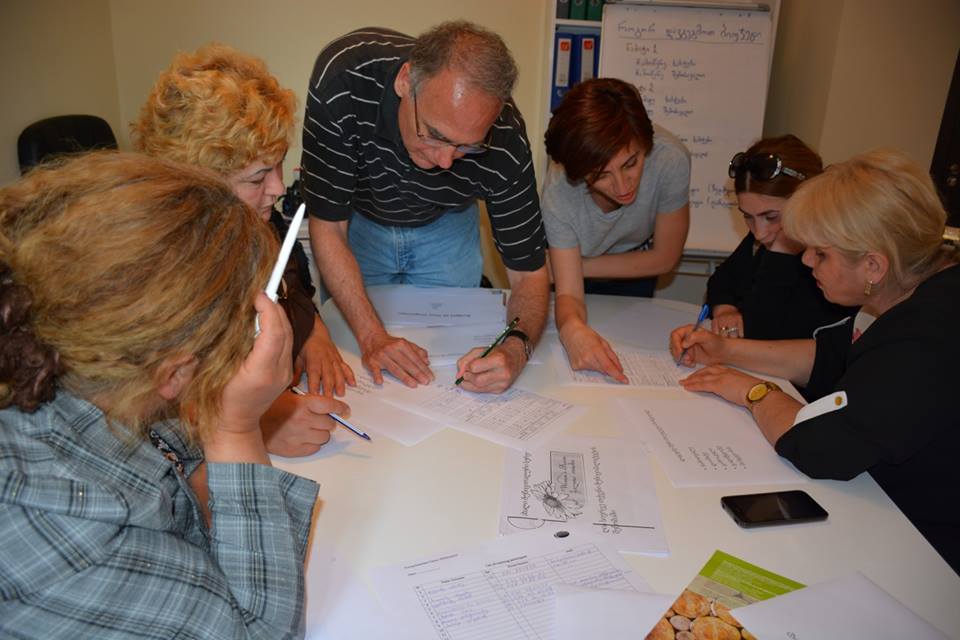
The Women’s Rooms are a municipal service, a resource and consultancy space for facilitating open dialogue between local society and municipality officials, aiming at promoting women’s participation in the decision-making at the local level and increasing their access to municipal information and services including on health care and agricultural programmes. Women’s Rooms also offer a platform for trainings and meetings, supporting new initiatives and instilling women’s active participation. The space has been taken up quickly with the Association of Young Lawyers and the School of Democracy using the rooms to raise women’s awareness on human rights, economic and educational opportunities. Visitors can use library and internet for free. All of the Women’s Rooms in Ajara are easy to access on the first floor of municipality buildings and can be freely used by people with disabilities for meeting with Gamgebeli and other officials to speak about their issues. Gamgebelis hold weekly meetings with local citizens in the W’s Rs. A Free hotline number (Khulo 0 800 100 109; Shuakhevi 0 800 000 008; Keda 0 800 100 103; Khelvachauri 0 800 100 106) allows rural women to voice their issues in the Gamgeoba.
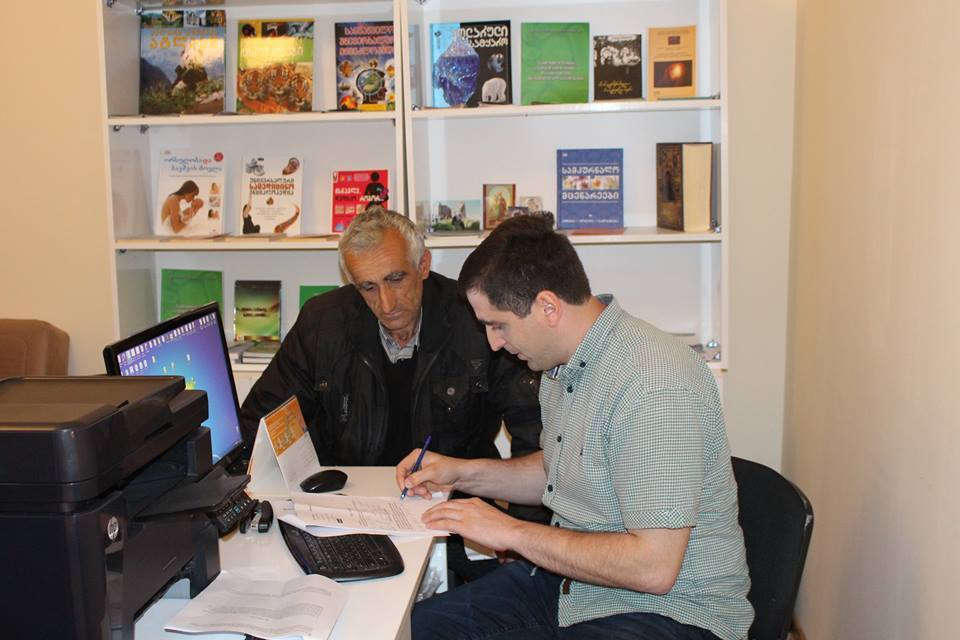
Women’s Room coordinators and municipal Gender Advisors, were trained on the importance of women involvement in decision-making using guidelines on The Application and Implementation of the Law on Gender Equality of Georgia by local self-government bodies to increase women’s participation in the community meetings, that was resulted in significant increase from 3% (2014) to 33% (2016) of women’s participation in these meetings.
To find out more about W’s Rs ongoing activities, visit Ajara (Batumi,Khulo, Shuakhevi, Keda, Khelvachauri), Kvemo Kartli (Dmanisi, Tsalka, Tetritskaro, Rustavi,Marneuli, Aspindza) and Samtskhe Javakheti (Akhaltsikhe,Adigeni, Borjomi ) W’s Rs Facebook pages.
Posted by Helen Bradbury: Team Leader, Alliances Lesser Caucasus Programme

ALCP has been featured on BEAM Exchange. See the story below.
Rural farmers can only grow their income when they have access to the drugs and veterinary services to keep their animals healthy and growing too. Alliances has partnered with a national veterinary inputs supply company to improve access to drugs, information and vet services for poor farmers in rural Georgia. There are strong signs competitors are seeking to replicate the model, which is also scaling up nationally and in neighbouring countries.
The challenge
Over 2 million people in rural Georgia rely on subsistence farming, typically owning less than one hectare of land. SDC has been funding a series of programmes in Southern Georgia since 2008 to improve the livelihoods of livestock farmers.
During initial surveys, Alliances learned that less than 10 per cent of farmers were accessing veterinary drugs or services in their community, in rural vet pharmacies mainly self-stocked from trips to Tbilisi. Others bought drugs when travelling to the capital. In the rural vet pharmacies a limited range of often improperly stored drugs were sold at high prices due to the resultant transaction costs. Local advice was minimal, unavailable or out of date. This had led to a lack of farmer trust in local veterinary products and services and unwillingness to invest.
Suppliers had failed to grasp the market potential of developing rural distribution, lacking both the information and capital to do so. The uncertainty about whether farmers would buy their products meant the perceived risk held suppliers back from making the first move.
Name: Natural Produktsia Ltd
Place: Dioknisi Village, Khulo Municipality
Type of business: Cheese Factory
Product: Imeruli Cheese
Suppliers: about 450 women from 13 villages of Khulo
Current production per day: 5 tons of milk (700 kg of cheese)
The Problem
The 450 women now selling milk directly to the milk collectors of the Natural Produktsia Ltd Factory in Dioknisi, Khulo used to make cheese from their milk. Women are responsible for milking the household cattle and making the cheese, butter, sour cream and cottage cheese which is then sold as an important part of the family’s livelihood.
Selling these products however is hard and uncertain. The journey by marshutka to Batumi Agrarian Market can take up to 4 hours on bad roads. It is taken to the market by husbands or other male family members or sent with the driver and met by a relative who then tries to sell it. There is no guarantee of a sale and often the family is forced to accept a low price from the market vendors rather than take it home again.
“Women in Georgia – Tradition and Contemporaneity” is a short documentary film prepared by ‘Netgazeti’ (online newspaper) about women living in Ghordjomi Community (Khulo Municipality, Ajara). Ghordjomi is one of the largest Muslim communities in Ajara and is known for its early marriage traditions, and other strict rules and attitudes towards women. The film describes the harsh daily routine of the women starting from 6 am in the morning with taking care of the cattle, children, household and the restrictions they face in daily life.
The ALCP AJ programme’s Focus Group Survey and Gender Analysis captured these issues and also noted the consequent effect on the participation of women in the decision-making processes at the community and local governmental levels which is chronically low.
From the ISET Economist Blog (https://www.iset.ge/blog/?p=4633)
By Eric Livny
The “do no harm” (primum non nocere) principle is well known to students of medical schools. It is one of the most fundamental maxims in medicine, as formulated, for example, in the Epidemics book of the Hippocratic Collection:
“The physician must … have two special objects in view with regard to disease, namely, to do good or to do no harm“.
Doctors are taught that medical interventions are not risk-free. Thus, when facing a “problem” one should consider whether to use a particular procedure (e.g. surgery or chemical treatment) or do NOTHING.
Not surprisingly, this very principle has applications in many fields other than healthcare. And it is high time for this principle to be studied and applied in Georgian policymaking.



