


From the ISET Economist Blog (https://www.iset.ge/blog/?p=3056)
By Tim Stewart
As Georgia embarks on an ambitious program to develop farmer organizations, it is worth considering both the positive and negative lessons from the experience of similar initiatives, both in Georgia and elsewhere in the developing/transition context. The piece by Tim Stewart, originally published on www.springfieldcentre.com, identifies some of the main reasons for the failure of start-up farmer organizations. The challenge for Georgia is to learn from these mistakes in planning and implementation, and ensure improved coordination among the many cooks involved (the newly created Agency for the Development of Agricultural Cooperatives, the Ministry of Agriculture, international donors, NGOs, and farmer associations).

A village in the Zestafoni area. It is a picturesque landscape, but the farms are not operating very efficiently. (Photo: Nikoloz Pkhakadze)
Someone once told me that I couldn’t be a real agriculturalist until I had at least one failed chicken project under my belt, illustrating both their ubiquity and propensity to flop. The same can be said of projects that seek to establish farmer groups (farmer organisations, cooperatives etc.) and for much the same reasons – although I believe we should learn from failure, not repeat patterns that lead to it.
Conventional programmes working in agricultural markets often include a component of forming and supporting farmer groups in their various guises. Their justification for this is the perceived benefits to small farmers that can accrue from economies of scale of production (assets, labour and inputs), marketing (reduced transaction costs and bigger volumes) and voice (representation to government etc.). My concern is that farmer group formation and support is frequently a waste of effort and money because they overwhelmingly fail, and there is little honest recognition of, let alone learning from, that awkward reality.
Literature drawn mainly from projects supports farmer group formation and strengthening as a panacea for agricultural advancement, and often backs up the case for intense external resourcing. It suggests that farmers in groups are more likely to adopt technologies than those who aren’t, or are more likely to grow project-supported crops. Proponents also highlight their significance to the supply of inputs into food production and of food to the market. Indeed, the FAO estimates that nearly 40% of Brazil’s agricultural GDP is produced through cooperatives while in Europe, 60% of agricultural produce and 50% of inputs are marketed through one.
However a glance at the 2012 “Exploring the Cooperative Economy” report from the World Cooperative Monitor, reveals an almost total cooperative vacuum in Africa and, to a lesser degree, Asia. More directly, in my work I am frequently confronted with the reality of failed farmer groups that evaporate once the project ends, with unused equipment rusting in the corner of a field, an image, which has become a cliché of dysfunctional development in the popular press. And for many people engaged in development, farmer groups are a byword for failure.
Yet as far as I can establish (and I have searched), there have been few honest and objective ex-post reviews of farmer group formation components of projects to look at failure and the reasons for failure. (If I’m wrong and there are real data on groups’ success and sustainability, please send it to me!) Failures, if reported, are attributed to external “unforeseen challenges” and written up as “lessons learned”. Farmers groups have become a prime example of the development industry’s “emperor’s new clothes syndrome”, where official views are positive and glowing and formal research and evidence are at odds with what we know to be common (naked!) reality. So, in that context, I would argue that farmer group formation is a poor way to improve the lot of farmers positively and sustainably. How much more money needs to be spent; how many more pet Farmer Field School projects do we need to implement; how many more constitutions do we need to write; how many MOUs do we need to sign or how many ‘Farming as a Business’ trainings do we need to subject farmers to, before we understand that this form of development is not working?
The factors leading to the failure of farmer groups (rapid decline post-project) are numerous, but broadly they fail because they were formed for the wrong reasons, by the wrong people and/or in the wrong way.
THE WRONG REASONS TO FORM FARMER GROUPS
Agencies often form farmer groups because it helps them – the agency – achieve economies of scale of delivering services, assets or grants to them. In addition some may feel more comfortable ethically with the transfer of expensive assets or technical assistance to a group rather than an individual. The ethos of communal ownership to cosiness of the collective is pervasive in certain quarters of the development industry, even in the face of the common observation of poorly managed group-owned assets. Farmer group membership is also too often a pre-condition for farmers to receive giveaways from agencies. Groups therefore become entities built on artificial incentives created by agencies wanting an easy repository for their resources and buying short-term transitory impact.
Clearly then, ill-conceived or self-serving reasons are the wrong ones for forming farmer groups.
THE WRONG PEOPLE TO FORM FARMER GROUPS
Agribusinesses often face problems interfacing with small farmers because of high transaction costs, small transaction sizes, poor organisation and communications and a general lack of understanding of them. Farmers are often observed to face challenges finding markets for their products or face poor terms of trade. The absence of institutions (like groups) and services which would help them overcome these challenges (supporting group formation) is often justification enough for agencies to intervene impulsively by stepping in on behalf of small farmers – telling and selling the narrative of the “farmer being exploited by the middleman”.
The problem here is not only do agencies avoid addressing the root causes of the problem that lies beyond the farmer-trader interface, but in stepping into this space by performing “farmer group services” they undermine the possibility that it will ever be solved. Rather than solutions cemented firmly and sustainably in the market system, emerging “farmer group services” are seen as a development agency space. Thus it becomes a self-fulfilling prophecy: farmers are disadvantaged in markets because of weak vertical and horizontal linkages and there are no services to address this market failure: justification enough for agencies to step in and undermine the market further…
Development agencies are also the wrong people to offer farmer group services because, typically, they are poor at business:
- They are not market based, they are subsidised and non-commercial and their success/failure isn’t dependent on a viable offer but on continued support from their donor.
- Their incentives are therefore aligned to the agendas of the donor and their own HQ, not the market.
- They are not cost-effective, indeed they are prohibitively expensive if the true cost of delivery is taken into account (drivers, cooks, HQ fund-raising etc.).
Development agencies are therefore the wrong people to form farmer groups because they are not long-term players in the market, undermine legitimate market players if they attempt to do so, and, put simply, are usually bad at business.
THE WRONG WAY TO FORM FARMER GROUPS
Agencies form farmer groups on the basis of an abstract, theoretical notion of potential benefits, or experience in distant contexts of limited relevance. Seldom do they ask the more grounded starting question: if groups are such an obviously “good thing”, why aren’t farmers forming groups already? Understanding the answer to this question would lead to understanding and addressing systemic problems in the market, or simply not wasting resources by attempting to do something that would be unsuccessful. The reasons that farmers don’t form groups are many, but often related to a lack of incentives or capacity.
Incentives: It may be that additional income does not accrue by aggregation, or that which is created may not be sufficient to overcome other issues such as distrust of others in financial matters. Other actors may be able to provide incentives that induce group formation such as a commodity buyer that provides inputs on credit. There may also be disincentives related to the wider political economy such as additional tax or administrative burdens to formal groups.
Capacity: There may be other obstacles to forming groups such as inefficient business registration procedures, weak advisory services, or a lack of adequately available information that would allow farmers to make an informed decision to form a group. This shouldn’t be seen as an open justification for agency intervention to address these directly for example through business services and setting up one-stop-shops for business registration etc. Rather it should lead to enquiry into who could and should be delivering these and why they are not.
The wrong way to form farmer groups is therefore to do it without understanding the central market failures that prevent farmers from forming them.
WHAT TO DO ABOUT IT
The problem for an agriculturalist and development practitioner like myself, is that working with farmers is fun and endlessly fascinating: it’s one of the things I got into the business for! However instead of being drawn to act impulsively on behalf of the small farmer, I think agencies would serve them better by doing more of the following three things.
Firstly, go in with their eyes and minds open, conducting ex-ante market analysis rather than making unsubstantiated assumptions about what farmers need. Don’t arrive with a farmer group solution pre-prepared and engineer an analysis to justify this. Establish the reasons that farmers are not cohesive, what incentives are shaping their behaviour and what capacities may be lacking. Get a valid answer to the key question: why isn’t the market system working?
Secondly, build and don’t undermine. Guided by the above analysis, work with relevant, long-term market players (private and public) to address the issues underlying farmers’ poor performance and low incomes.
Thirdly, be honest about and learn from failure. This is not especially difficult or time consuming to do, but I suspect is a place where many fear to tread.
My argument is not that farmer groups cannot be beneficial to farmers. Rather, by adopting a systemic approach aimed at fostering the conditions for self-organisation among market players, agencies have a far better chance of supporting small farmers – which may or may not involve farmer groups.
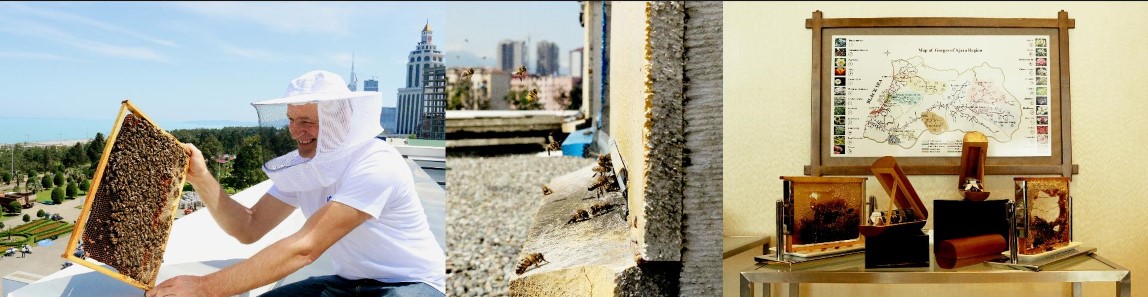
4 Beehives and their inhabitants from the high mountains of Ajara started their new life on the terrace of one of the largest Hotels in Batumi, Georgia, the Hilton Batumi, to produce honey for hotel guests. The General Manager of the Hilton, a keen birdwatcher and conservationist had the idea, seeking to showcase the beautiful countryside of Ajara and take this first step in illustrating the story of locally sourced food and the people who produce it.
By linking the hotel with the Ajara Beekeepers Business Association, the hives were installed. Urban beekeeping is increasingly popular in Europe as bee colonies decline and new ways are sought to develop a more ecologically sensitive lifestyle as urban centers grow. The Hilton also installed a honey showpiece at the breakfast buffet, of mounted honey comb, a large map of the 10 honey production gorges of mountainous Ajara and the indigenous flora on which the bees feed with the honey and comb sourced through honey producing company Matchakhela Ltd.
These initiatives which form a part of the ALCP programme’s work in the honey market system illustrate the great potential of the honey sector to feed into the promotion of Ajara as a great and varied tourist destination.
Income received from the Hotel hives will be donated to children in need in the rural municipalities.
News travels fast and perhaps other hotels may take up the initiative now it's been advertised through the Hilton chains newsletter.
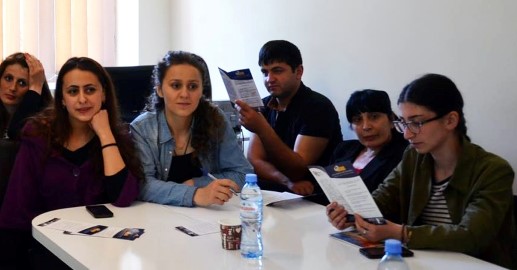
Khelvachauri Women’s Room is taking its first steps in helping women access public resources voice their opinions and participate in local self-governance. The Women’s Room model that is being replicated in Ajara was first established in three municipalities of Kvemo Kartli from 2012 and subsequently in all municipalities of Kvemo Kartli and Samstkhe-Javakheti. The first opened in Batumi with the Association of Business Women of Ajara (ABWA) in the Ajara Chamber of Commerce and Industry (ACCI) was the first of all a new type of urban and business based women’s room, with the ideas of providing business trainings and an urban connection for the municipality based women’s rooms already opened in Keda, Shuakhevi, Khulo and Khelvachauri municipalities and soon to open in Kobuleti. The rooms are proving popular with these WR’s already providing more than 1200 services in three months.
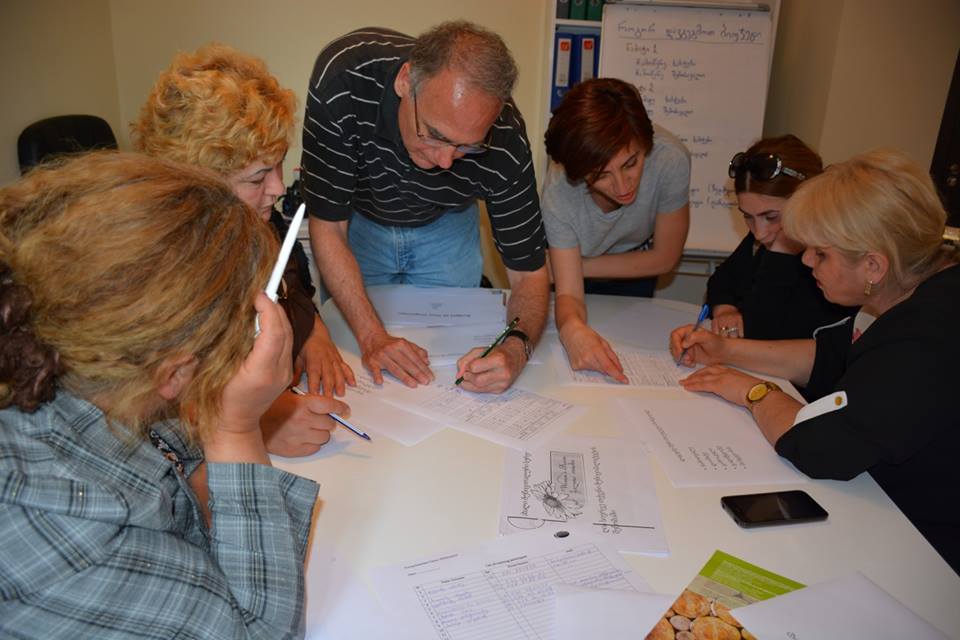
The Women’s Rooms are a municipal service, a resource and consultancy space for facilitating open dialogue between local society and municipality officials, aiming at promoting women’s participation in the decision-making at the local level and increasing their access to municipal information and services including on health care and agricultural programmes. Women’s Rooms also offer a platform for trainings and meetings, supporting new initiatives and instilling women’s active participation. The space has been taken up quickly with the Association of Young Lawyers and the School of Democracy using the rooms to raise women’s awareness on human rights, economic and educational opportunities. Visitors can use library and internet for free. All of the Women’s Rooms in Ajara are easy to access on the first floor of municipality buildings and can be freely used by people with disabilities for meeting with Gamgebeli and other officials to speak about their issues. Gamgebelis hold weekly meetings with local citizens in the W’s Rs. A Free hotline number (Khulo 0 800 100 109; Shuakhevi 0 800 000 008; Keda 0 800 100 103; Khelvachauri 0 800 100 106) allows rural women to voice their issues in the Gamgeoba.
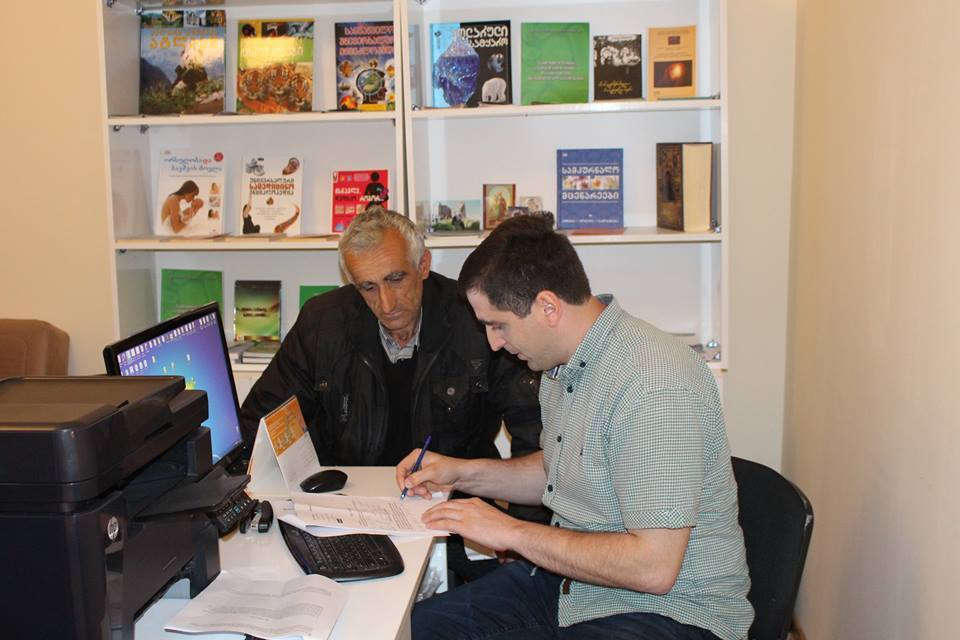
Women’s Room coordinators and municipal Gender Advisors, were trained on the importance of women involvement in decision-making using guidelines on The Application and Implementation of the Law on Gender Equality of Georgia by local self-government bodies to increase women’s participation in the community meetings, that was resulted in significant increase from 3% (2014) to 33% (2016) of women’s participation in these meetings.
To find out more about W’s Rs ongoing activities, visit Ajara (Batumi,Khulo, Shuakhevi, Keda, Khelvachauri), Kvemo Kartli (Dmanisi, Tsalka, Tetritskaro, Rustavi,Marneuli, Aspindza) and Samtskhe Javakheti (Akhaltsikhe,Adigeni, Borjomi ) W’s Rs Facebook pages.
Posted by Helen Bradbury: Team Leader, Alliances Lesser Caucasus Programme


ALCP has been featured on BEAM Exchange. See the story below.
Rural farmers can only grow their income when they have access to the drugs and veterinary services to keep their animals healthy and growing too. Alliances has partnered with a national veterinary inputs supply company to improve access to drugs, information and vet services for poor farmers in rural Georgia. There are strong signs competitors are seeking to replicate the model, which is also scaling up nationally and in neighbouring countries.
The challenge
Over 2 million people in rural Georgia rely on subsistence farming, typically owning less than one hectare of land. SDC has been funding a series of programmes in Southern Georgia since 2008 to improve the livelihoods of livestock farmers.
During initial surveys, Alliances learned that less than 10 per cent of farmers were accessing veterinary drugs or services in their community, in rural vet pharmacies mainly self-stocked from trips to Tbilisi. Others bought drugs when travelling to the capital. In the rural vet pharmacies a limited range of often improperly stored drugs were sold at high prices due to the resultant transaction costs. Local advice was minimal, unavailable or out of date. This had led to a lack of farmer trust in local veterinary products and services and unwillingness to invest.
Suppliers had failed to grasp the market potential of developing rural distribution, lacking both the information and capital to do so. The uncertainty about whether farmers would buy their products meant the perceived risk held suppliers back from making the first move.
Name: Natural Produktsia Ltd
Place: Dioknisi Village, Khulo Municipality
Type of business: Cheese Factory
Product: Imeruli Cheese
Suppliers: about 450 women from 13 villages of Khulo
Current production per day: 5 tons of milk (700 kg of cheese)
The Problem
The 450 women now selling milk directly to the milk collectors of the Natural Produktsia Ltd Factory in Dioknisi, Khulo used to make cheese from their milk. Women are responsible for milking the household cattle and making the cheese, butter, sour cream and cottage cheese which is then sold as an important part of the family’s livelihood.
Selling these products however is hard and uncertain. The journey by marshutka to Batumi Agrarian Market can take up to 4 hours on bad roads. It is taken to the market by husbands or other male family members or sent with the driver and met by a relative who then tries to sell it. There is no guarantee of a sale and often the family is forced to accept a low price from the market vendors rather than take it home again.
“Women in Georgia – Tradition and Contemporaneity” is a short documentary film prepared by ‘Netgazeti’ (online newspaper) about women living in Ghordjomi Community (Khulo Municipality, Ajara). Ghordjomi is one of the largest Muslim communities in Ajara and is known for its early marriage traditions, and other strict rules and attitudes towards women. The film describes the harsh daily routine of the women starting from 6 am in the morning with taking care of the cattle, children, household and the restrictions they face in daily life.
The ALCP AJ programme’s Focus Group Survey and Gender Analysis captured these issues and also noted the consequent effect on the participation of women in the decision-making processes at the community and local governmental levels which is chronically low.
From the ISET Economist Blog (https://www.iset.ge/blog/?p=4633)
By Eric Livny
The “do no harm” (primum non nocere) principle is well known to students of medical schools. It is one of the most fundamental maxims in medicine, as formulated, for example, in the Epidemics book of the Hippocratic Collection:
“The physician must … have two special objects in view with regard to disease, namely, to do good or to do no harm“.
Doctors are taught that medical interventions are not risk-free. Thus, when facing a “problem” one should consider whether to use a particular procedure (e.g. surgery or chemical treatment) or do NOTHING.
Not surprisingly, this very principle has applications in many fields other than healthcare. And it is high time for this principle to be studied and applied in Georgian policymaking.



