



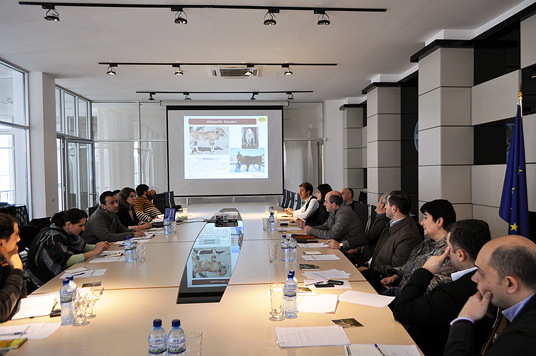
The Feasibility Study for the Animal Movement Rout and animal disease notification and control, two key topics were discussed on the 4th advisory committee on the 29th of March. At the beginning of the meeting the Alliances KK Programme Director Ms. Helen Bradbury provided a brief presentation concerning the interventions of the programme.
Rati Mekvabishvili – the representative of the Ministry of Agriculture provided the latest updates on the Feasibility Study of The Animal Movement Route. As Mr Rati announced they are planning to hold a presentation on the conducted study and all interested stakeholders are welcome to attend it by the end of April. The Alliances KK Programme Director suggested the MOA arranging not just a presentation, but a participatory workshop, where stakeholders will have opportunity to voice their views and provide information for input into the feasibility study.
One of the main topics at the committee meeting was animal disease control issue; the newly appointed Head of the NFA Regional Division Mirangula Liparteliani presented latest activities of the NFA in this direction.
‘The NFA has launched the brucellosis program that aims to estimate and study general situation for the disease. After one week, Anthrax vaccinations will commence in sites of historical outbreaks under the state program of the free vaccination. In the nearest future, in each municipality minimum one slaughterhouse will be operated. Process has already started, for instance recently a new slaughterhouse was opened in Tsalka municipality. Currently the NFA is starting organizing community level vet offices.’-said Mr Mirandula Liparteliani.
The committee will continue to be a forum for the discussions facilitating interaction and information exchange between relevant national, regional and local stakeholders form the public and private sectors.

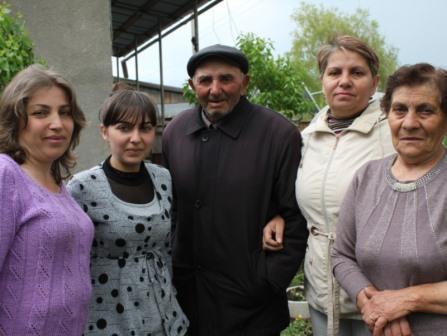
Publishing the following series of stories is an attempt to highlight the ethnic diversity of Kvemo Kartli. We are going to tell you the stories of five women living in various parts of Kvemo Kartli; these women have different lifestyles and represent different cultures, but they still have a lot in common. This is their history in stories. Stories of work, endurance, taboos, restriction, dignity, honesty and womanhood. You will not see figures and percentages here; this is not a quantitative survey. These are stories that allow us to build on those figures and percentages and enable us to develop profiles of Ajarian, Svan, Azeri, Armenian, Greek and local Georgian women’s lives, to understand their complexities and areas of commonality and to reflect this in our work as a programme.
Kvemo Kartli is one of the most ethnically diverse regions of Georgia. Ethnic diversity has developed over centuries and many contrasts and cultural differences have accumulated in this region; the study and management of these contrasts and differences and the development of models for peaceful cohabitation is not an easy task. Cultural, ethnic and language differences can be seen in every detail of life. Differences are present in rural and urban areas, in highlands and lowlands, in methods of doing business. Our objective in recording these stories was to attempt to create a profile of these women, to listen to them and build the picture of their lives, to understand the effects that culture and ethnic origin have on their lives, to see what opportunities they have and how they use or fail to use these opportunities, if they have them at all.
 |
|
|
|
|
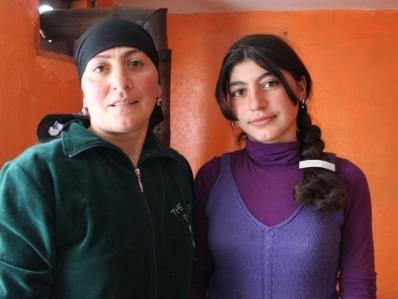
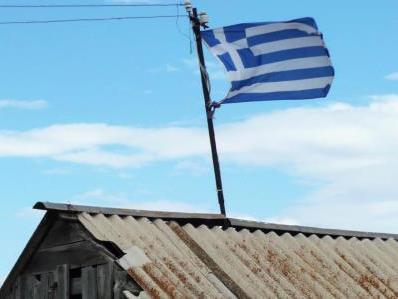
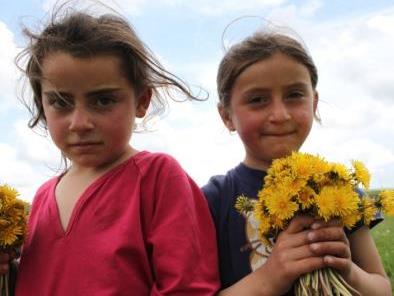
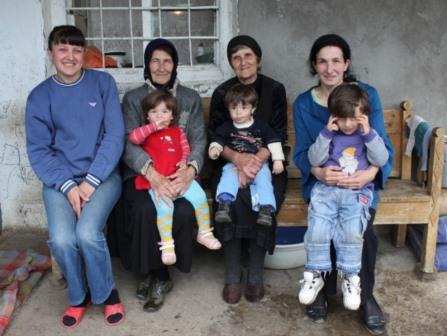
Armenians have been living in Kvemo Kartli for centuries. According to the 2002 census 31,777 out of 497,530 Kvemo Kartli residents were Armenians. The number of Armenians is highest in Tsalka where 11,484 Armenians live, out of a total population of 20977. The advent of Armenians in Georgia was related to the movement of people during the Arab, Turk-Seljuk, Mongolian, Turkmen, Kizilbash, Ottoman Turk and other invasions. Several major settlements of Armenians took place in 1828-1829, during the Russian-Turkish war
Azerbaijanis living in Kvemo Kartli are Turkic-speaking people representing the legacy of the conquerors that came to this area at different times. in the 1926 Census they were referred to as Azerbaijanis. The Azeri population that settled in Kartli is comprised of two streams of migrants: 1. The Turkish-speaking population that was resettled between 15th-18th centuries; they went through the heaviest psychological and physical stress before they adapted to the new place. 2. Migrants who moved from one place to another to improve living conditions having adapted to the new environment. Currently the Azeri population in Georgia numbers 224,606. They mainly reside in Bolnisi, Dmanisi, Gardabani and Marneuli districts, mostly in district centers apart from in Dmanisi muniiciaplity where there are many Azeri villages. Some live in Tetritskaro and Tsalka districts.
In 1980’s the planned settlement of a large groups of eco-migrant Ajarians and Svanetians started in Tetritskaro and Tsalka municipalities. There were several streams of eco-migration up to 2003. The advent of these incomers has left its mark on Kvemo Kartli. It became richer from an ethnic, religious and language standpoint, however it also gave rise to new problems and challenges for new and old residents alike in seeking to adapt to the new cultural diversity.
The first settlement of Svans into Kvemo Kartli took place in 1987. This is when the Svans from landslide-affected Chviberi (higher Svaneti) were resettled in Dmanisi, in the houses built under a government programme. Svans started to introduce their style of life in Kvemo Kartli and establish strong communities in Kvemo Kartli.



