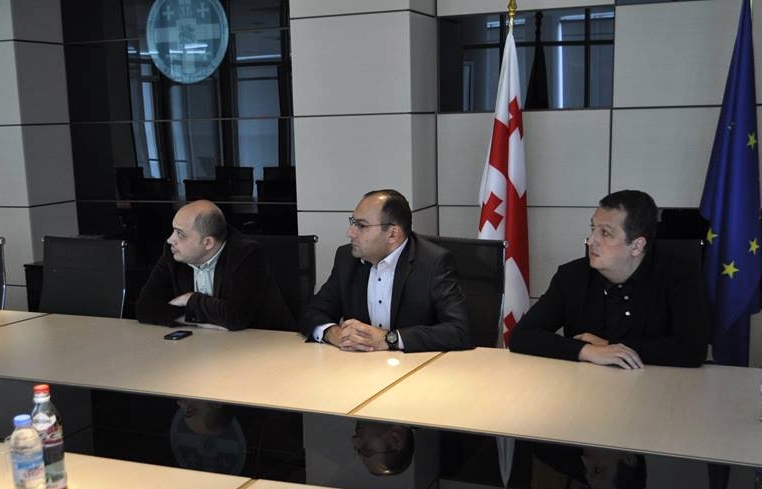
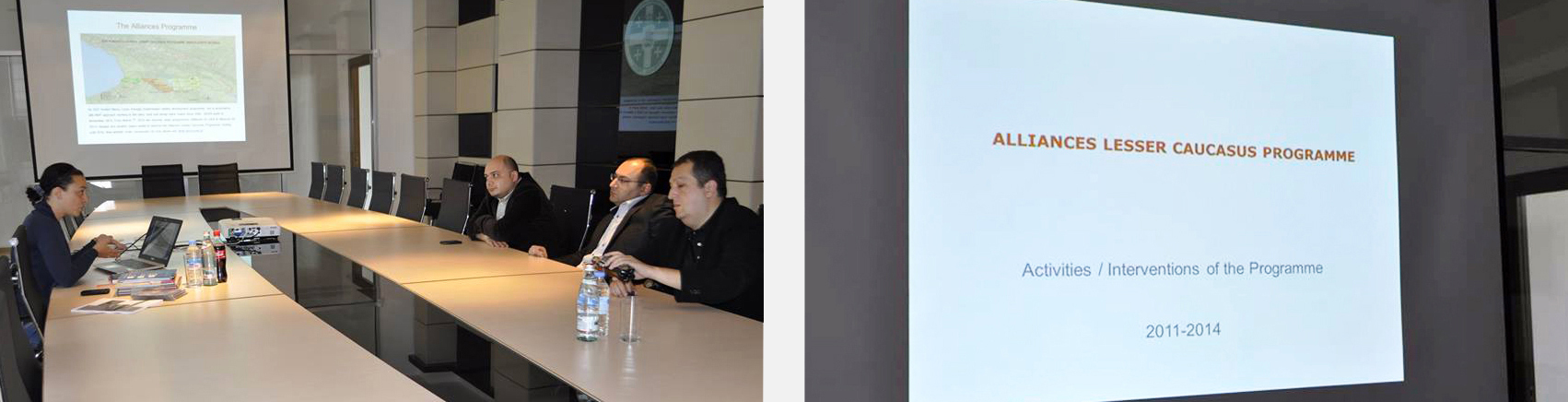
For scaling up DRR facilitation of Local Self Governments by the programme the meeting was held with the Governor of Kvemo Kartli - Ramin Ismailov. In 2012-2014 the programme facilitated creation of Municipal Working Groups on Animal Disease Control and Disaster Risk Reduction in Dmanisi, Tetritskaro and Tsalka municipalities as a mechanism for reducing livestock related disaster risks at municipal level. In the phase II the programme intends to scale up its facilitation regarding DRR by extending this model in three other municipalities of Kvemo Kartli. The purpose of the meeting was to engage the Governor’s office in this process by transforming it into a regional model.
“The Governor’s office now is responsible for imposing the veterinarian quarantines but we don’t have any mechanism to monitor how it is carried out by the local self-governments and the NFA. I think that we could adopt the proposed model and create an Animal disease Control and Disaster Risk Reduction Regional Board which will coordinate the Municipal DRR working groups,” – the Governor stated.
Also at the end of the meeting the Governor raised an issue regarding an increased incidence of rabies cases in Kvemo Kartli.
“Currently we have the problem in regard to frequent cases of rabies in Kvemo Kartli and we will be grateful, if you help us to overcome this problem by providing proper expertise of situation and recommendations,” – he said.
As a result of the meeting the sides agreed that they will continue cooperation by making concrete plan for setting up the Regional Model for disease & disaster notification, control and reporting, which will push in the process of preparation & planning and mitigation at local self-government’s level. Furthermore with facilitation of the programme the Governor’s office will contact the local self-governments in the region for ensuring that above mentioned working groups were established and work properly.
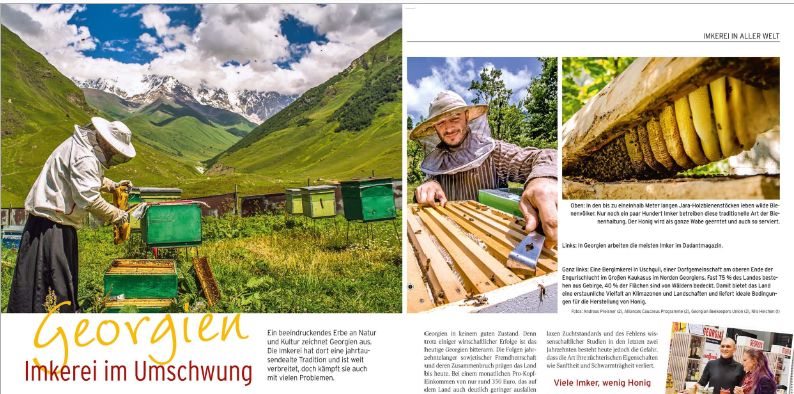
A German beekeeping magazine Deutsches Bienen-Journal with circulation of 52,000 copies a month published a comprehensive article on beekeeping in Georgia and its history, local bee breed Mountain Grey Caucasian Honey Bee (Apis mellifera caucasica) and Jara honey a special mention of the project’s work.
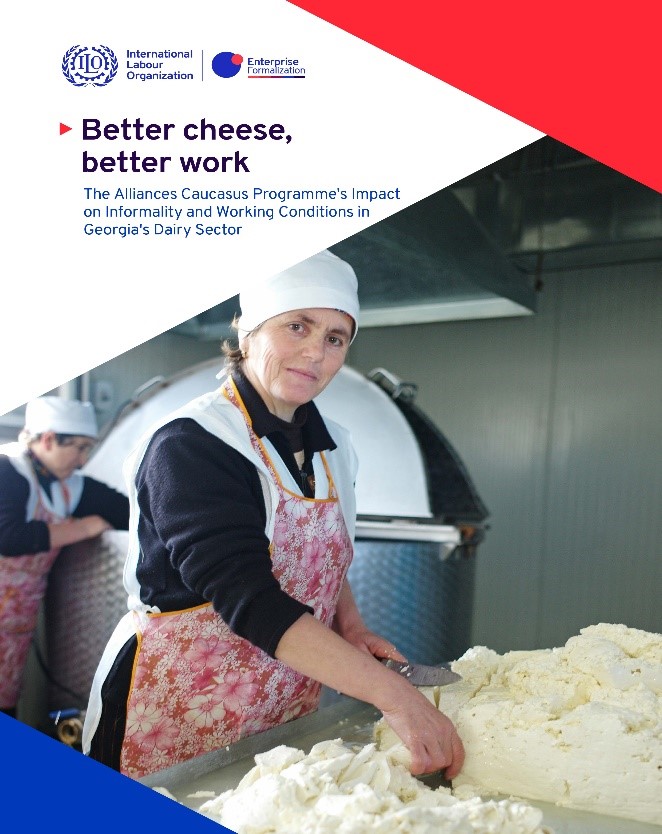
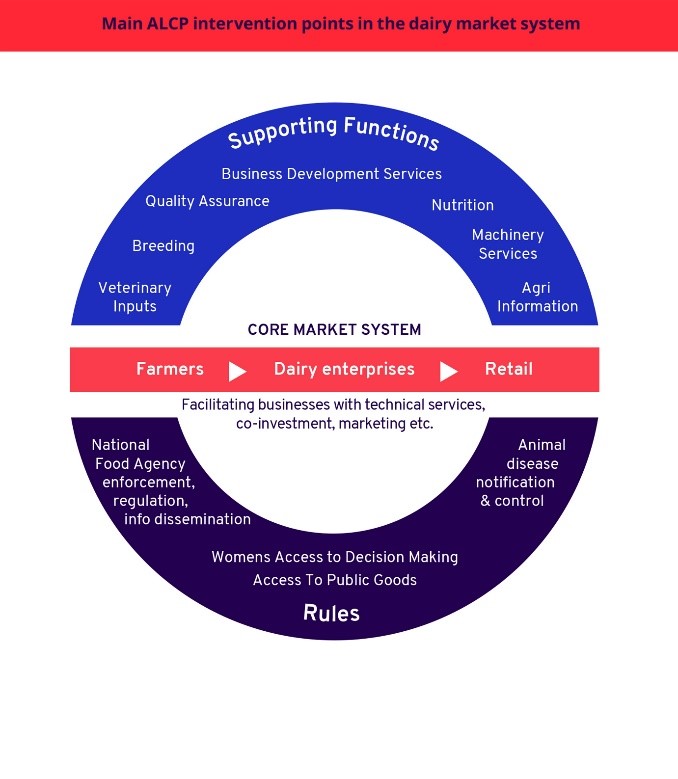
The International Labor Organization’s (ILO) Better Cheese, better work: The Alliances Caucasus Programme’s Impact on Informality and Working Conditions in Georgia’s Dairy Sector which explores formalization within the dairy value chain in Georgia stemming from ALCP market systems interventions, is now available on the ALCP website.
The ILO and ALCP worked together from summer 2019 to bring this research to completion. There are several reasons for the timeliness and importance of this report; chief amongst them is the ever present need for lessons learnt from MSD programmes, which can be applied in others, secondly the need to demonstrate the efficacy of the approach with a detailed account of systemic change and thirdly the growing importance in development programming of evaluating the efficacy of the MSD approach to develop quality employment at scale.
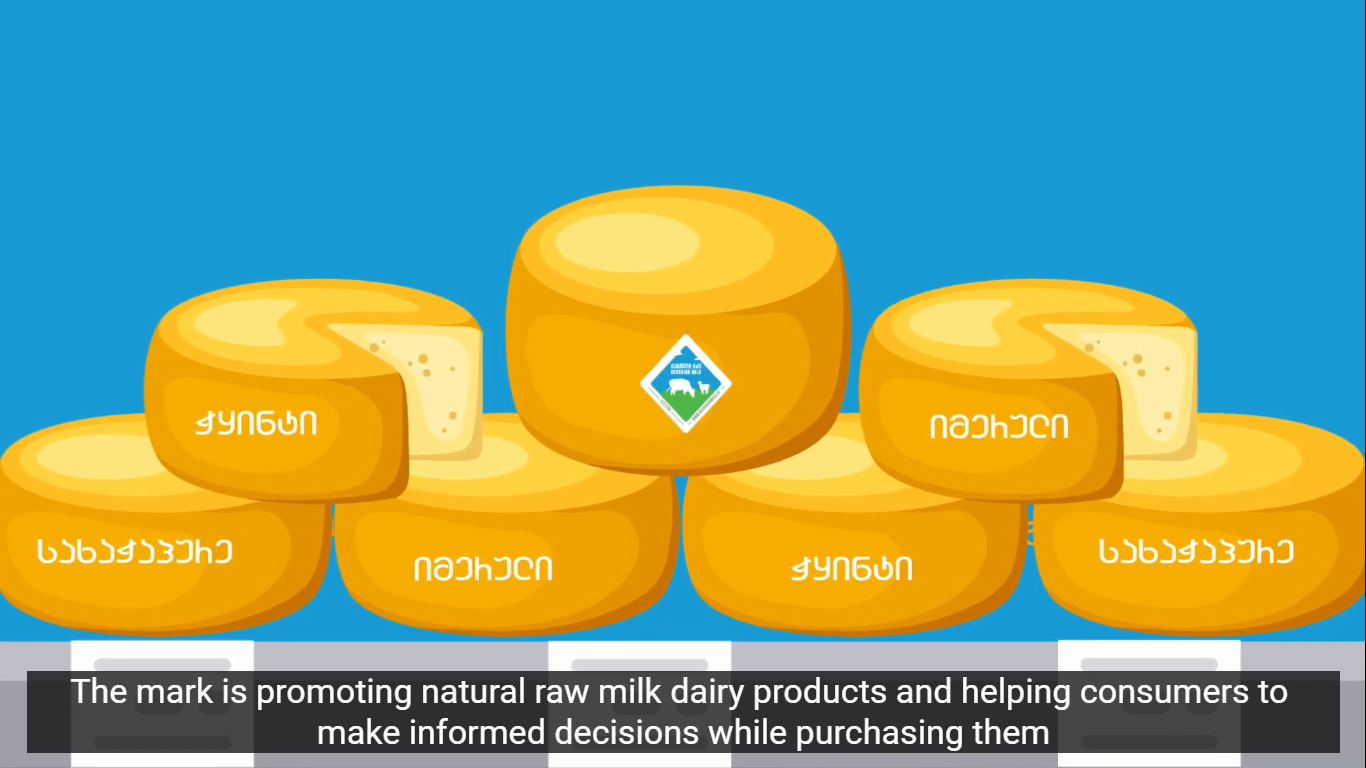
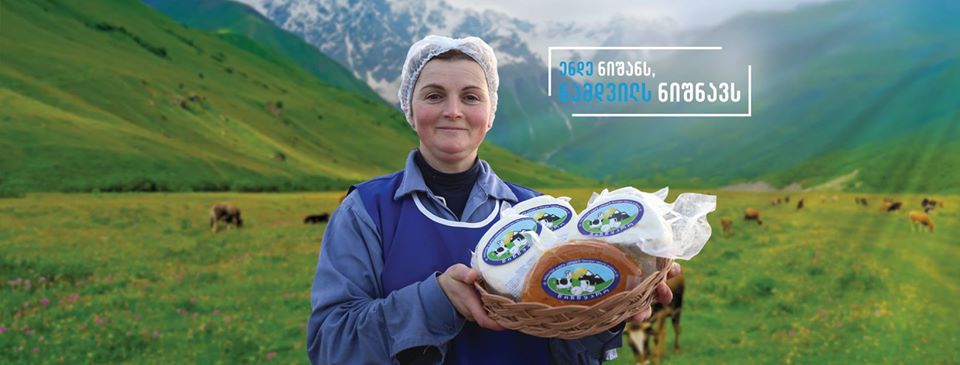
From the beginning of June, the two most popular national TV stations Imedi TV and TV Pirveli have been broadcasting the Georgian Milk Mark (GMM) animation video five times a day during prime time for free as a part of social advertising. Those televisions have national coverage reaching a high number of consumers.
There are now ten GMM dairy enterprises’ products available in fifteen supermarket chains across Georgia. Detailed information to be found on www.georgianmilk.ge.

On the May 20th, 4,400 beekeepers registered in the new GBU database received an SMS notification from the Georgian Beekeepers Union (GBU) on how to treat Varroa, the most common bee disease in Georgia.
The GBU will continue informing its members through phone Facebook. And their new official webpage is now online: www.geobeekeepers.ge.
Created in 2018, the GBU is an umbrella association uniting ten beekeeping associations and three commercial beekeeping companies.
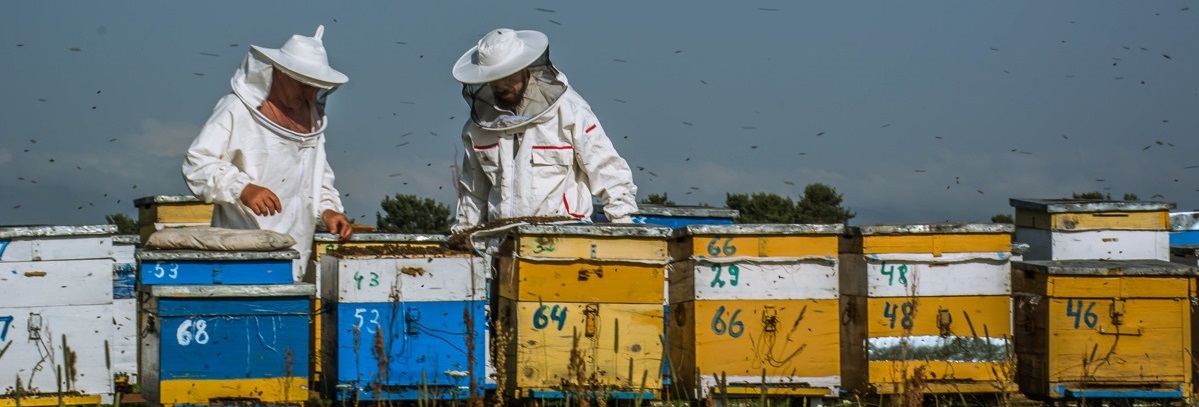
The Georgian Beekeepers Union (GBU) successfully advocated for permits to be issued for beekeepers allowing them to continue work during the curfew.
The Government of Georgia declared the nationwide curfew on March 30th, 2020 to restrict the spread of the COVID-19 virus, prohibiting any movement from 9:00 PM to 06:00 AM. This posed a serious problem for beekeepers who rely on transhumance predominantly at night.
In Georgia, bee transhumance allows for beekeepers to place hives at different altitudes to capture the flowering of different plants. Starting from late Spring, Georgian beekeepers start to move apiaries to get different types of honey including Acacia,Chestnut, Alpine, Linden. The transhumance of bees significantly increases their honey productivity.



On April 4th, the GBU sent an official letter to the Ministry of Environmental Protection and Agriculture of Georgia (MEPA) asking for the issuing of permission/passes for beekeepers including the guidance it developed for beekeepers during the Covid-19 outbreak.
‘We asked the Minister to mediate with the appropriate agencies to issue special permits, so that beekeepers may access their apiaries and work there, transport beekeeping apiaries for transhumance on pre-determined routes within the curfew conditions.’ – Avksenti Papava, the Director of the GBU.
Up to eight hundred beekeepers have already used permits, who are now able to visit apiaries and carry out vital seasonal treatment and maintenance. Bees are transported at night where possible, because they do not leave a hive during night, which the permit makes possible.
‘I have my apiaries located in the different regions for getting various types of honey. I was very happy to hear about special permit for beekeepers, as it is very active season in beekeeping. I am able to freely move to the locations and do not worry about time limitations’ – Kakhaber Zirakasvili, a beekeeper.
Guidance and contact information on getting permits and the Covid-19 recommendations have been shared by the GBU on its facebook page.
The Georgian Beekeepers Union (www.geobeekeepers.ge) is an umbrella association uniting ten beekeeping associations and three commercial beekeeping companies with more than four thousand Georgian beekeepers. It was established to represent their interests and to promote the health and development of the honey sector in Georgia with the facilitation of the Swiss Agency for Development and Cooperation (SDC) project the Mercy Corps Georgia implemented Alliances Caucasus Programme (ALCP).
In the midst of anxiety under the COVID-19, some people rise to the occasion when faced with adversity and it is uplifting to hear stories about them. As for many others it has been difficult times for the client businesses of the programme, but they have continued to help people most affected by the current crisis over the past two weeks.
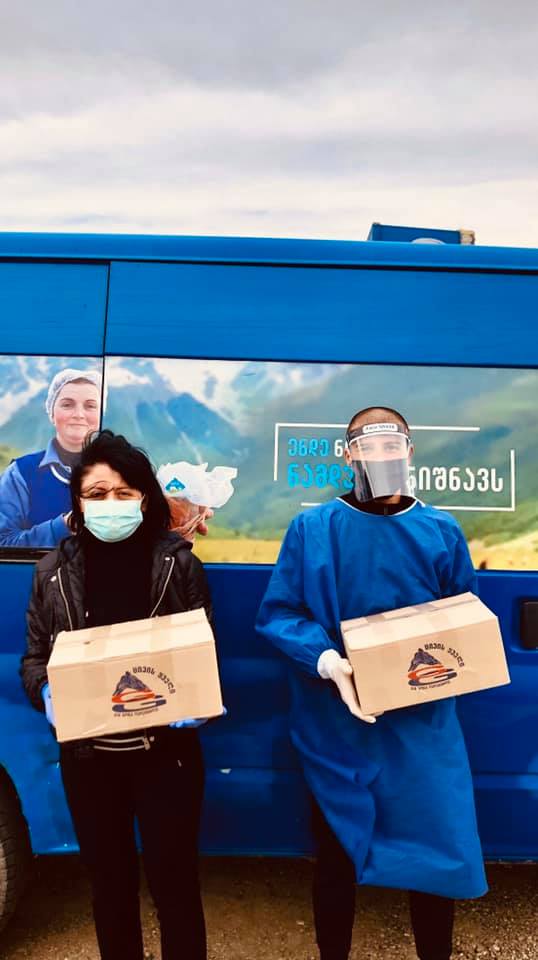
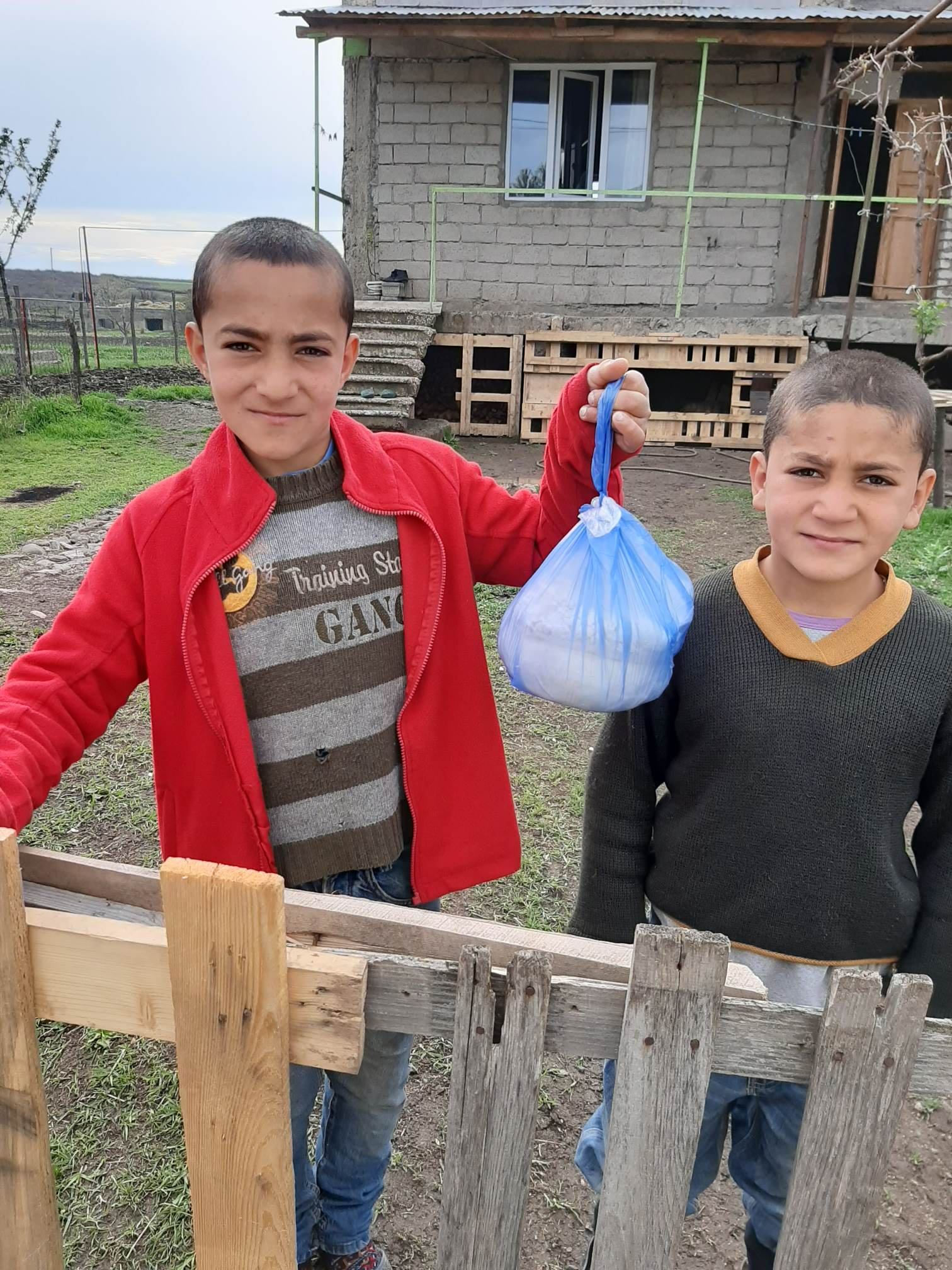
Ten dairy enterprises with the Georgian Milk Mark www.georgianmilk.ge provided cheese for the medical staff of hospitals in the frontline of battling the virus as well as people under quarantine and locals in the lockdown areas in the different regions of Georgia, who have limited access to the markets.
‘It is now important to show support to each other. I was very happy to see reactions from people, who were very surprised and thankful. I think those GMM enterprises set very good example for others.’ – A GMM cheese distributor.
The Georgian Beekeepers Union (www.geobeekeepers.ge), uniting ten beekeeping associations and three commercial beekeeping companies supplied 1.2 tonnes of honey for further distribution among medical staff and vulnerable groups.
The Kakhetian Traditional Winemaking group’s (programme facilitated honey aggregator and exporter company) forty-one rooms hotel-complex is being used as a quarantine zone, the company also supplied food to locals over seventy in two regions of Georgia within a social project ‘Care for Each Other’ initiated after the virus outbreak and is now offering online sales and a free home delivery of its products (wine, compotes, jams, including, honey); the company’s webpage Old Kakheti went online to improve online sales.
These are a few examples and continuation of the kindness acts that started a month ago.