



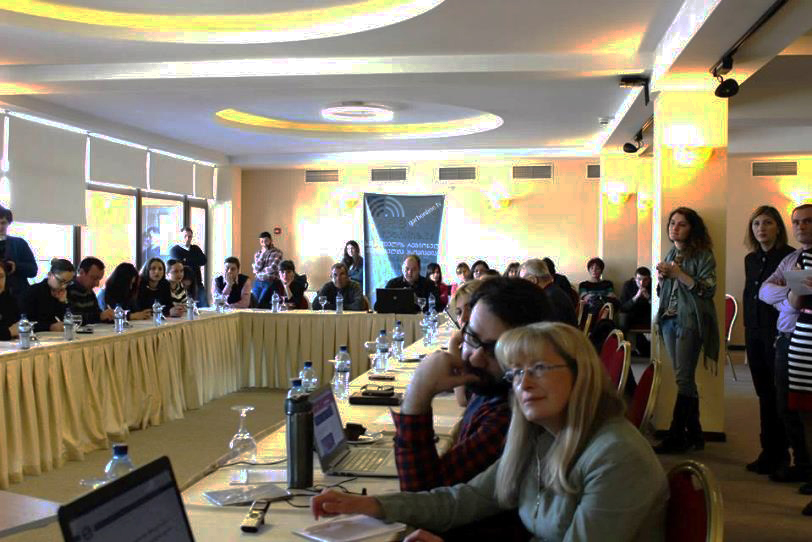
For the first time in Georgia a training on agro journalism was conducted for media representatives wishing to report specifically on rural issues and news. The main purpose of the training was to fill knowledge gaps of media practitioners in crops, livestock husbandry and agriculture management and to introduce the basics of agro journalism. Heather Briggs, an international expert and member of British Guild of Agricultural Journalists - was invited to lead a 5 day training from January 26th to February 2nd. About 50 representatives of regional, national broadcasters and printed media participated in the event. The training was organized by the Georgian Regional Media Association and facilitated by the Alliances Lesser Caucasus Programme.
The Minister of Agriculture Mr. Otar Danelia was also invited to the event to introduce the strategic priorities of agriculture development, future plans of the ministry, the new regulations and to answer the questions of media representatives who participated in the training.
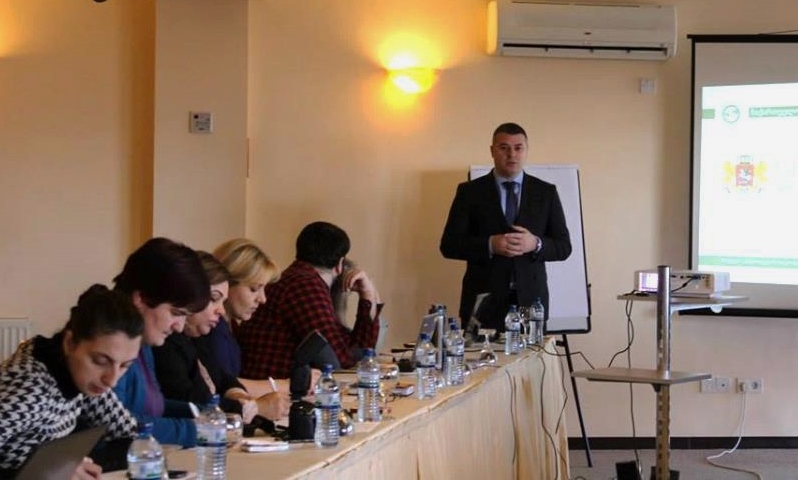
“The involvement of regional media is pivotal for successful implementation of the state projects and for keeping the Georgian population appropriately informed. It is necessary to deliver proper, timely information about the existing situation and ongoing processes in agriculture to the population of the regions”- Mr. Danelia stated.
Together with Mrs. Briggs, the local experts in Food Safety & Hygiene and in the Veterinary Sector - Ekaterine Burkadze and Rusudan Gigashvili also shared the information during the training on Food Safety & Hygiene, Veterinary, Animal Disease and on EU regulations related it these topics. After the completion of the training, the guideline will be prepared and published briefing the main principles on how to report on agricultural issues. Future activities will also include the development of agro journalism module for agro journalism degrees.
Finally after years of waiting punctuated by the protests of desperate rural inhabitants who have at times blocked it to highlight their plight, the Batumi-Akhaltsikhe central road, which from the top of the Goderdzi pass to Khulo is little more than a dangerous track, is to be constructed into a proper road. The Kuwait Economic Fund has signed MoU with the Government of Georgia to help with rehabilitation of the road. The funding for the project (which is estimated at 100 million GEL) has been received as a state loan to be approved by the Parliament of Georgia soon.
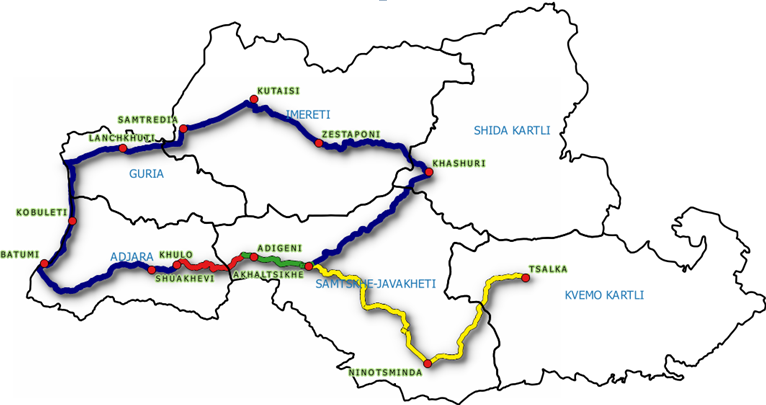
Rehabilitating The road, which can be justly claimed one of the most beautiful in Georgia, will immediately enhance the lives of rural inhabitants not just in quality of life but in as a boost to livelihoods as even in its current condition the road is a vital trading link between Ajara, Samtskhe -Javakheti and Kvemo Kartli as illustrated by the fact sheets.
Map: red one is Batumi-Akhaltsikhe Road and others are the longer routes.
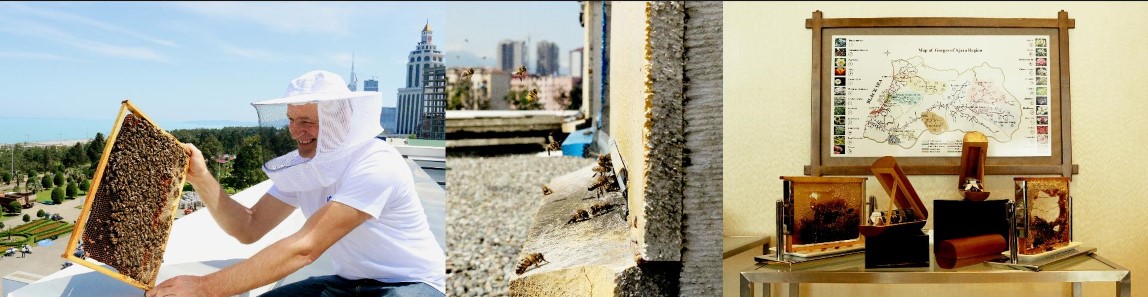
4 Beehives and their inhabitants from the high mountains of Ajara started their new life on the terrace of one of the largest Hotels in Batumi, Georgia, the Hilton Batumi, to produce honey for hotel guests. The General Manager of the Hilton, a keen birdwatcher and conservationist had the idea, seeking to showcase the beautiful countryside of Ajara and take this first step in illustrating the story of locally sourced food and the people who produce it.
By linking the hotel with the Ajara Beekeepers Business Association, the hives were installed. Urban beekeeping is increasingly popular in Europe as bee colonies decline and new ways are sought to develop a more ecologically sensitive lifestyle as urban centers grow. The Hilton also installed a honey showpiece at the breakfast buffet, of mounted honey comb, a large map of the 10 honey production gorges of mountainous Ajara and the indigenous flora on which the bees feed with the honey and comb sourced through honey producing company Matchakhela Ltd.
These initiatives which form a part of the ALCP programme’s work in the honey market system illustrate the great potential of the honey sector to feed into the promotion of Ajara as a great and varied tourist destination.
Income received from the Hotel hives will be donated to children in need in the rural municipalities.
News travels fast and perhaps other hotels may take up the initiative now it's been advertised through the Hilton chains newsletter.
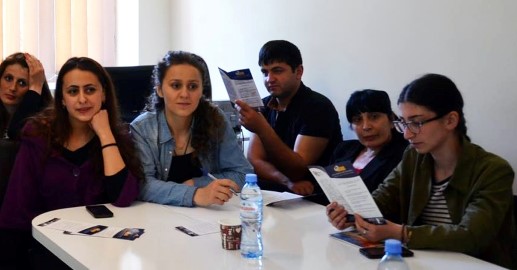
Khelvachauri Women’s Room is taking its first steps in helping women access public resources voice their opinions and participate in local self-governance. The Women’s Room model that is being replicated in Ajara was first established in three municipalities of Kvemo Kartli from 2012 and subsequently in all municipalities of Kvemo Kartli and Samstkhe-Javakheti. The first opened in Batumi with the Association of Business Women of Ajara (ABWA) in the Ajara Chamber of Commerce and Industry (ACCI) was the first of all a new type of urban and business based women’s room, with the ideas of providing business trainings and an urban connection for the municipality based women’s rooms already opened in Keda, Shuakhevi, Khulo and Khelvachauri municipalities and soon to open in Kobuleti. The rooms are proving popular with these WR’s already providing more than 1200 services in three months.
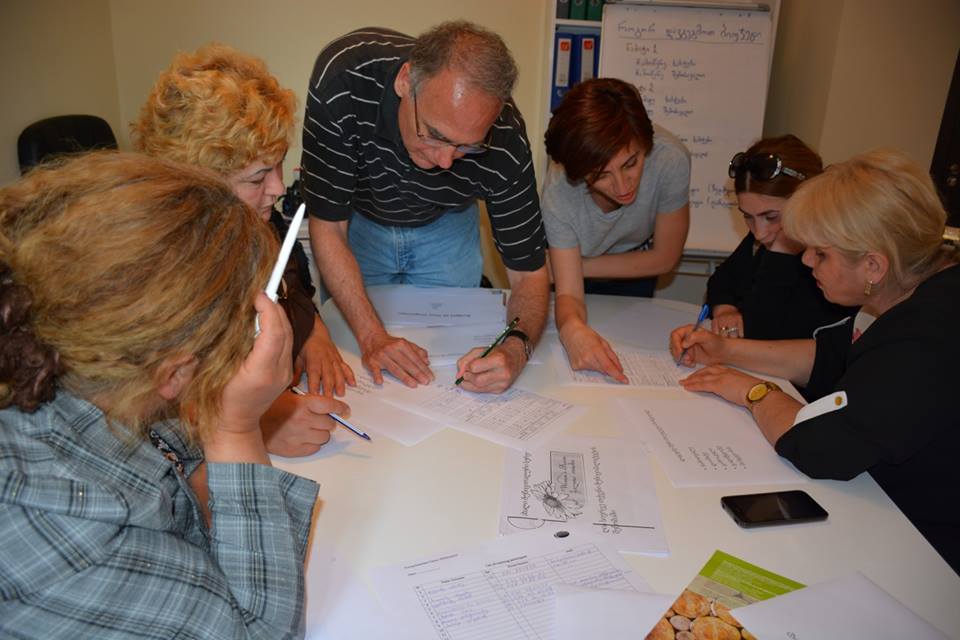
The Women’s Rooms are a municipal service, a resource and consultancy space for facilitating open dialogue between local society and municipality officials, aiming at promoting women’s participation in the decision-making at the local level and increasing their access to municipal information and services including on health care and agricultural programmes. Women’s Rooms also offer a platform for trainings and meetings, supporting new initiatives and instilling women’s active participation. The space has been taken up quickly with the Association of Young Lawyers and the School of Democracy using the rooms to raise women’s awareness on human rights, economic and educational opportunities. Visitors can use library and internet for free. All of the Women’s Rooms in Ajara are easy to access on the first floor of municipality buildings and can be freely used by people with disabilities for meeting with Gamgebeli and other officials to speak about their issues. Gamgebelis hold weekly meetings with local citizens in the W’s Rs. A Free hotline number (Khulo 0 800 100 109; Shuakhevi 0 800 000 008; Keda 0 800 100 103; Khelvachauri 0 800 100 106) allows rural women to voice their issues in the Gamgeoba.
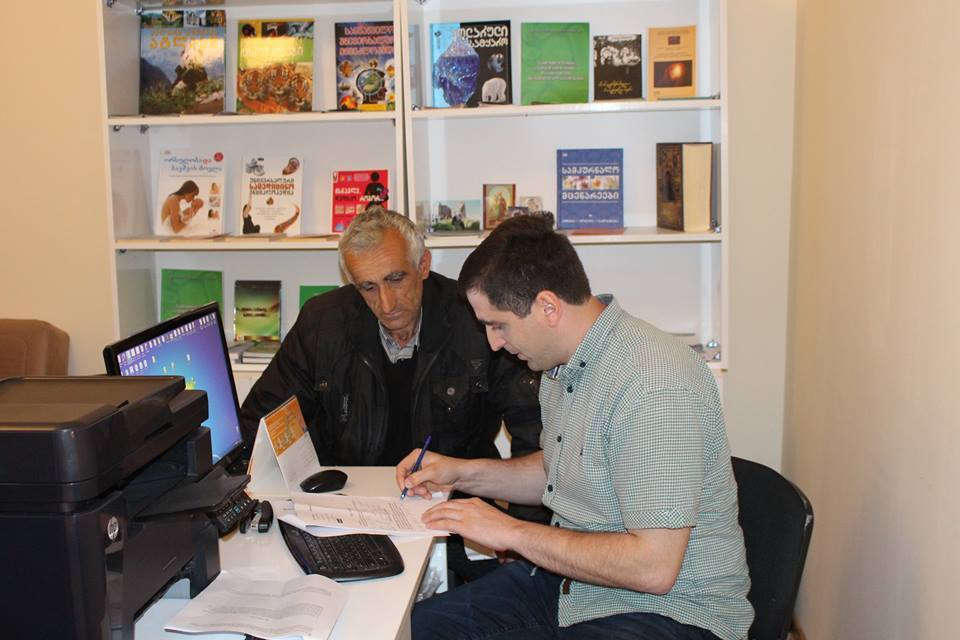
Women’s Room coordinators and municipal Gender Advisors, were trained on the importance of women involvement in decision-making using guidelines on The Application and Implementation of the Law on Gender Equality of Georgia by local self-government bodies to increase women’s participation in the community meetings, that was resulted in significant increase from 3% (2014) to 33% (2016) of women’s participation in these meetings.
To find out more about W’s Rs ongoing activities, visit Ajara (Batumi,Khulo, Shuakhevi, Keda, Khelvachauri), Kvemo Kartli (Dmanisi, Tsalka, Tetritskaro, Rustavi,Marneuli, Aspindza) and Samtskhe Javakheti (Akhaltsikhe,Adigeni, Borjomi ) W’s Rs Facebook pages.
The first Cheese Factory in Ajara, Natural Produktsia Ltd was officially opened in Dioknisi, Khulo Municipality.
Construction of the factory started in April, 2015 and has been functioning since October. Natural Produktsia Ltd is the first and only cheese factory in upper Ajara producing Imeruli cheese currently at the largest scale in Georgia. The factory is set up with modern equipment and is producing cheese in accordance with FS&H standards. The factory collects milk from 22 villages of Khulo municipality from more than 300 farmers to date, who have now have a source of daily income. The factory processes up to 6 tons of milk daily and makes Imeruli cheese, Sulguni cheese, cottage cheese and butter. It employs 23 local farmers, out of which 11 are women. The factory is the sister factory of the family enterprise Tzesari Ltd whose factory in Sakdrioni village Tsalka produces sulguni which is sold in Carrefour in Tbilisi and in the Batumi Agrarian Market, leading hotels, such as Hilton, Sheraton, Radisson; restaurants - Porto Franco, Munchen, Pier Batumi, Riviera; supermarkets like Goodwill, Nugeshi, Nikora, Ialchin, Willmart, Absolute, etc.
Djakhangir Abasov, 2500 sheep owner from Sagarejo municipality: “It is very good and almost unbelievable that we’ll bath our ship and cattle for free. We were paying to private owners 0.5 Tetri per sheep which is 100-150 GEL for a flock plus money for the chemicals”.
Over the last 18 months, programme client Agricultural video producer Mosavali has been developing technical video lessons on key aspects of livestock husbandry and beekeeping. The videos pitched at reaching farmers through social media and no longer than 3 minutes viewing time have taken off. 9 livestock and 7 beekeeping videos have been produced and uploaded to networks.



