



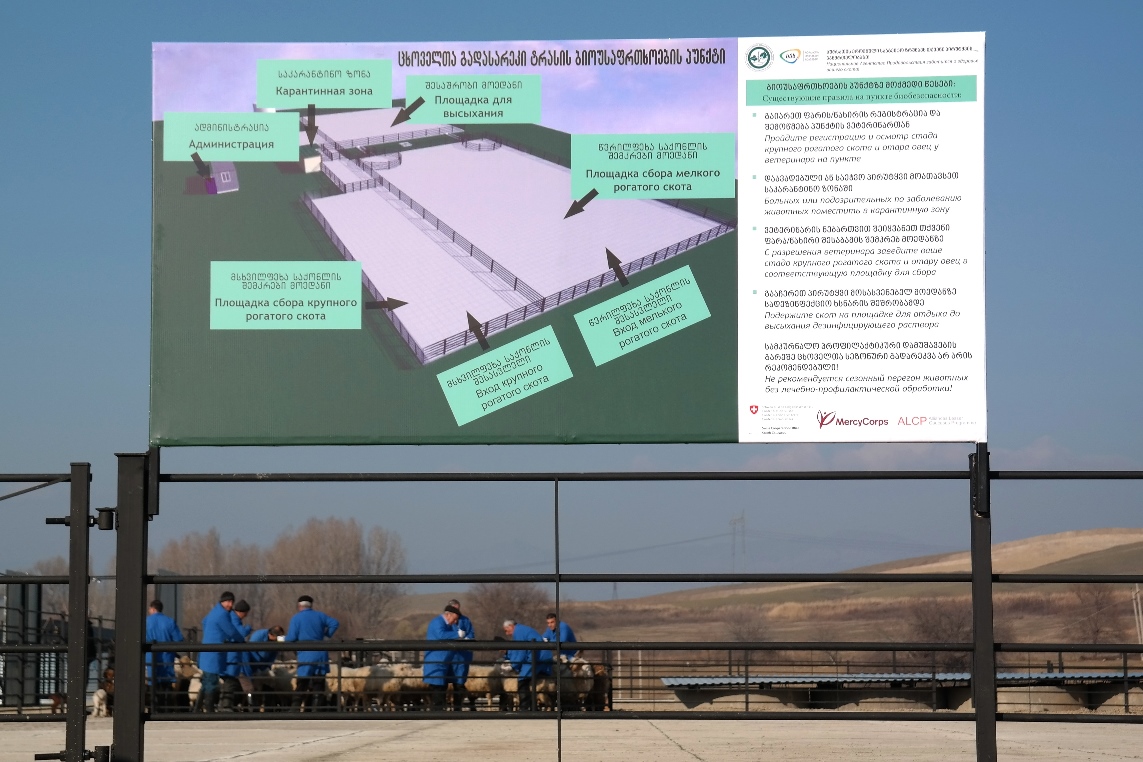
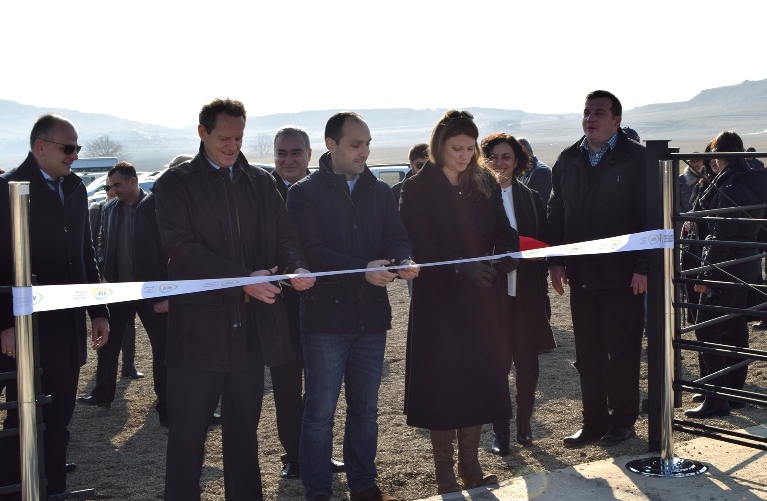
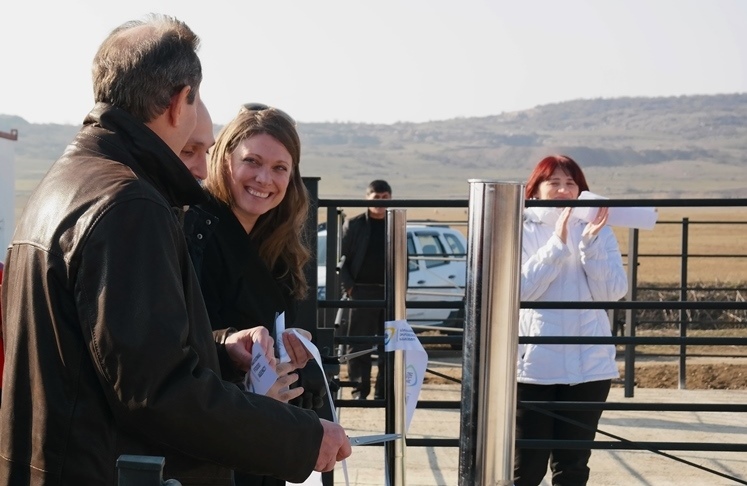
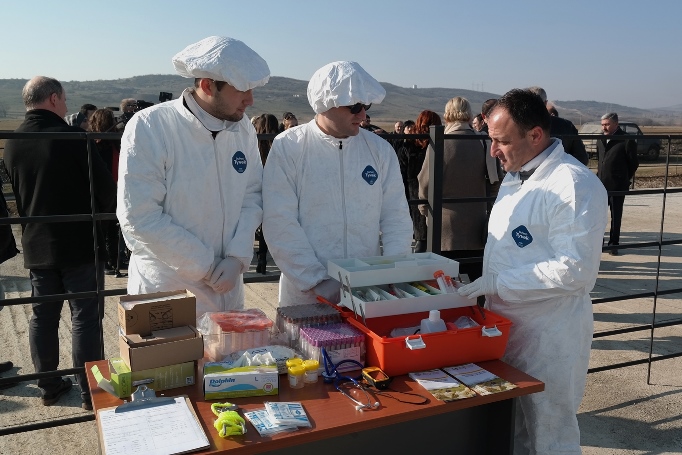
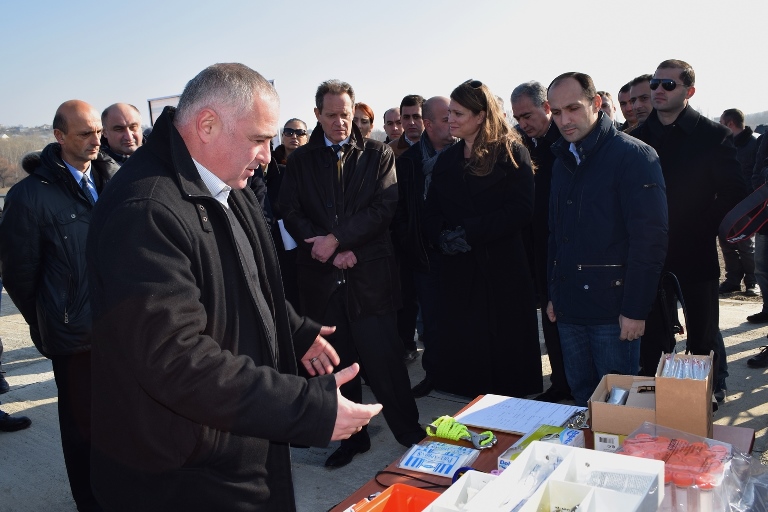
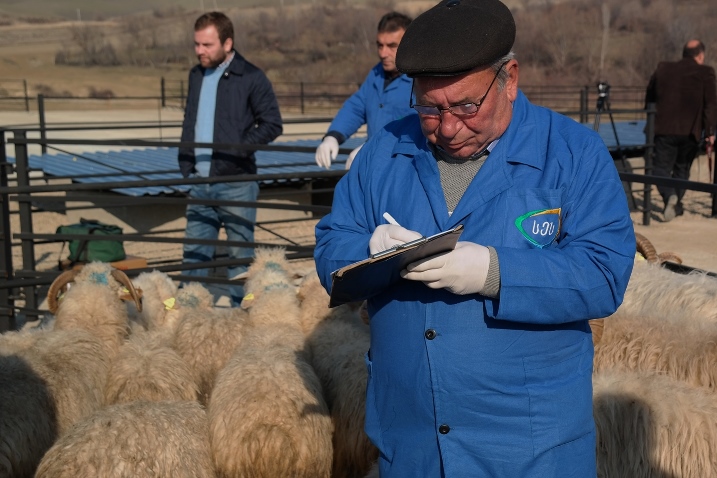
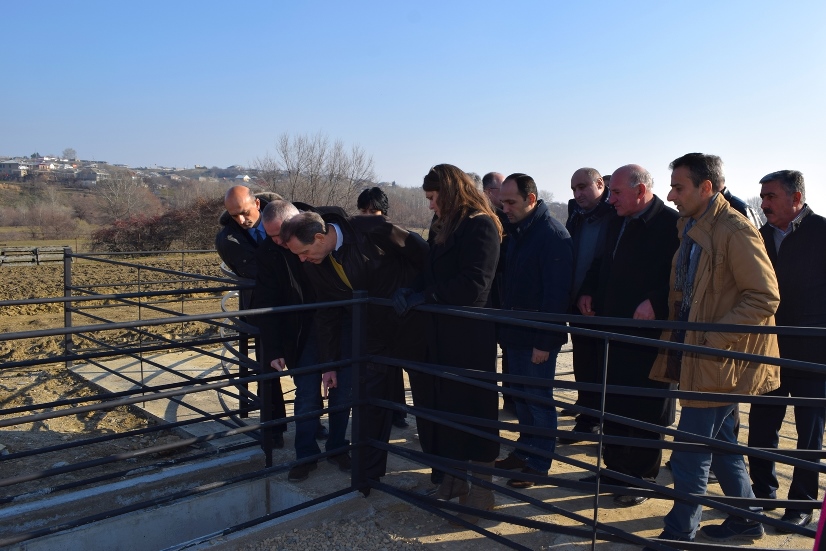
After months of intensive construction work and four and a half years of multi-stakeholder advocacy the first Bio Security Point on the AMR has been opened. By the next transhumance season spring 2016, the country will have proper infrastructure for ensuring systematic health control of the livestock in place.
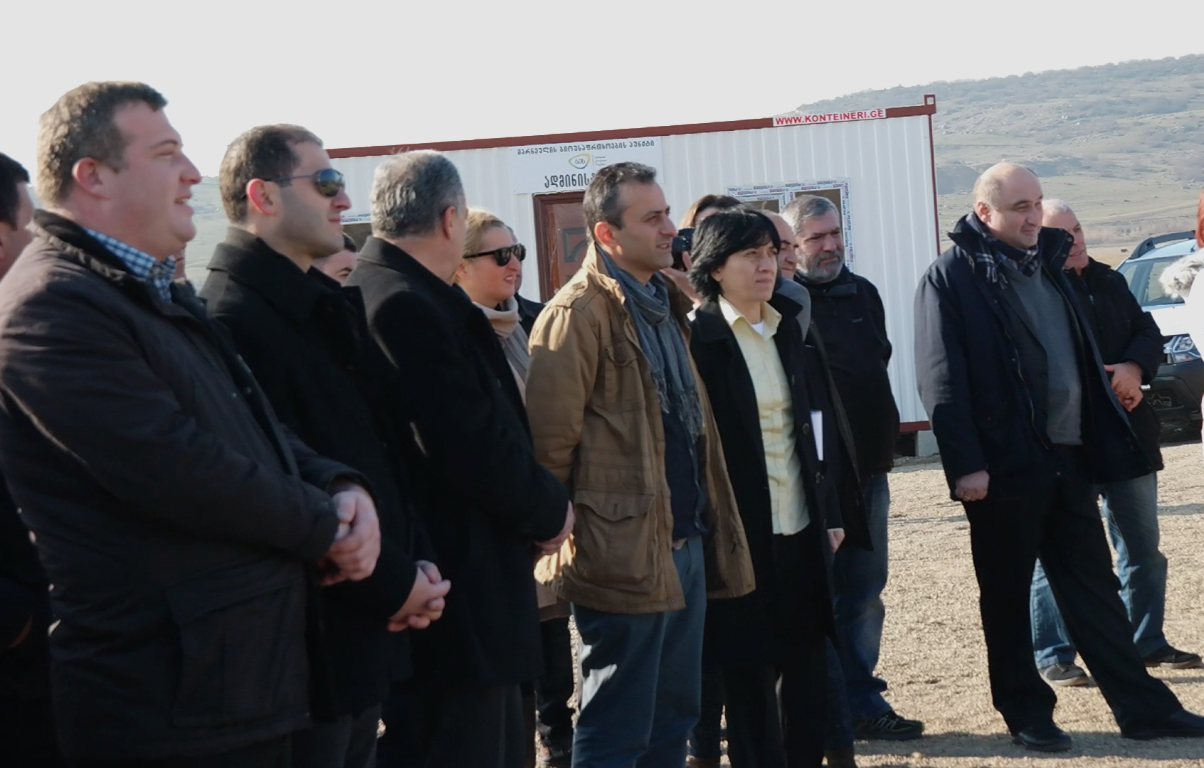
The event was attended by the Regional Director for Swiss Cooperation Office for the South Caucasus, by the Deputy Minister of Agriculture, the Head of the National Food Agency, the Governor and Gamgebelies of Kvemo Kartli region and the representatives of private and non-governmental sector. The event was widely covered by the national media.
„Sheep farming is one of the oldest sectors of Georgian agriculture which has a big potential for growth. The project is an important element of a comprehensive approach of the National Food Agency and the Ministry of Agriculture of Georgia on animal traceability and identification,” - said Olivier Bürki, Regional Director for Swiss Cooperation Office for the South Caucasus.
“This is a multi-stakeholder effort and it has just proved if you can talk sensibly together you can have results. Let’s see it as really the first step on the next stage of the road to a successful, flourishing livestock industry” - stated Helen Bradbury, Team Leader of ALCP.
The infrastructural project has been implemented as a result of joint effort of the Ministry of Agriculture, the National Food Agency and Swiss Cooperation Office (SCO) funded, Mercy corps implemented Alliances Lesser Caucasus Programme (ALCP). The current finalization of two bio-security points by the ALCP and a further four in process by the government marks a serious milestone in the future development of a profitable livestock sector in Georgia.
The previous ALCP News on the facilitation of the Animal Movement Route issue are available on the following links:
Bio Security Points - Coming Soon
Minister Publicizes Animal Movement Route Work
MOU for Building a Modern Infrastructure of Animal Movement Route
Government Momentum Builds on AMR
A documentary about the Tradition of Transhumance in Georgia
Locals, interested parties including the Minister of Agriculture of Ajara and tourists, in the height of the Batumi summer run enjoyed a new addition to the summer time calendar of events with the first Ajara Honey Festival on August 22nd on Batumi Boulevard. The festival was organized by The Beekeepers Association of Ajara, an entity belonging to the Ajara Chamber of Commerce and Industry.
Ajara is a major producer of honey in Georgia and the programme has completed a sector survey and commenced numerous interventions. The festival was a first step in promoting Ajara as a producer of high quality honey and developing a cohesive image of honey production in the region. Beekeeping in Ajara has been practiced for centuries and still includes the capturing of wild swarms and cultivating of honey in logs known as ‘Jara’.
The National Food Agency representatives met with entrepreneurs of honey and meat sectors in Kvemo Kartli and Ajara regions in July. The aim of the meetings was to inform local producers on the regulations and required standards for the quality production of meat and honey products in accordance with FS&H standards.
Food Safety and Hygiene in the Agrarian Market of Batumi was the main topic of the ALCP AJ Advisory Committee’s second meeting in Ajara region. The discussion concerned the incompliance of existing situation in Market with FS&H standards and possible risks derived from the meat and dairy products purchased there. Due to the importance and complexity of the issue, key market stakeholders such as representatives of Ajara Government, NFA and Agrarian Market participated in the meeting.
“Women in Georgia – Tradition and Contemporaneity” is a short documentary film prepared by ‘Netgazeti’ (online newspaper) about women living in Ghordjomi Community (Khulo Municipality, Ajara). Ghordjomi is one of the largest Muslim communities in Ajara and is known for its early marriage traditions, and other strict rules and attitudes towards women. The film describes the harsh daily routine of the women starting from 6 am in the morning with taking care of the cattle, children, household and the restrictions they face in daily life.
The ALCP AJ programme’s Focus Group Survey and Gender Analysis captured these issues and also noted the consequent effect on the participation of women in the decision-making processes at the community and local governmental levels which is chronically low.
The first meeting of the Regional DRR Working Group was carried out at the KK Governor Office.
The Governor of Kvemo Kartli - Paata Khizanashvili encouraged decision makers from all municipalities of the region to pay more attention on issues linked with Animal Disease Control, Pasture Usage and Disaster Risk Reduction. He noted that the municipal leaders should understand these are the issues of high importance and the new municipal working groups should have strong communication with the Governor’s office and with other municipalities of Kvemo Kartli.
By now, all seven municipalities of Kvemo Kartlli have DRR working groups coordinated by the regional government.
A new project “Closer to Nature” was launched by Batumi Botanical Garden facilitated by ALCP AJ to promote 165 school student’s involvement in biodiversity and environmental protection activities.



