



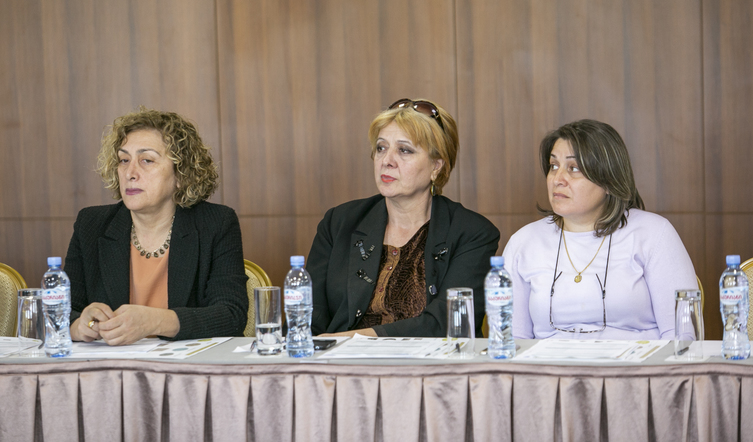
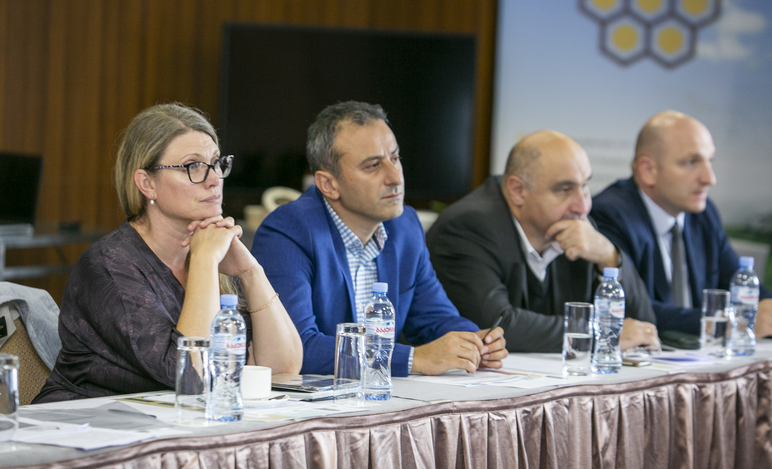
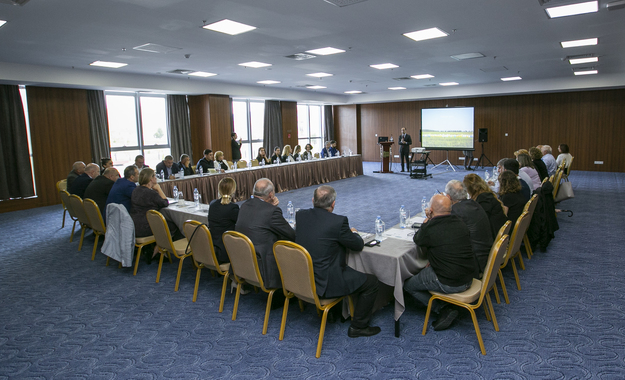
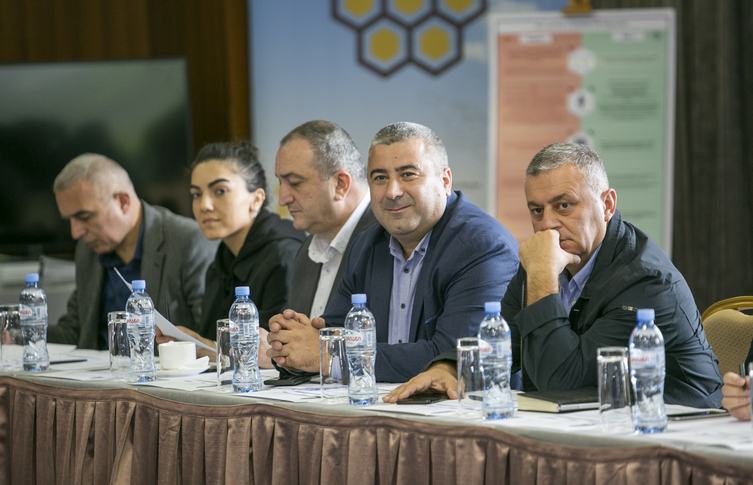
Honey testing requirements for export and laboratory testing capability and reality in Georgia were the main topics of the ALCP Second Honey Sector Advisory Committee meeting on 9th of October, 2019. The meeting gathered up to forty key stakeholders of the sector, including the Georgian Beekeepers Union (GBU), the Minister and Deputy Minister of Environment Protection and Agriculture of Georgia, Head of the National Food Agency, the Laboratory of Ministry of Agriculture (LMA), private laboratories, a honey exporter company Kakhetian Traditional Winemaking KTW.
A laboratory service subsidy scheme was presented at the meeting, that serves for supporting honey export development through creating accessible and affordable laboratory testing services for the Georgian beekeepers and honey exporters, which still remains as one of the key constrains for exporting Georgian honey abroad.
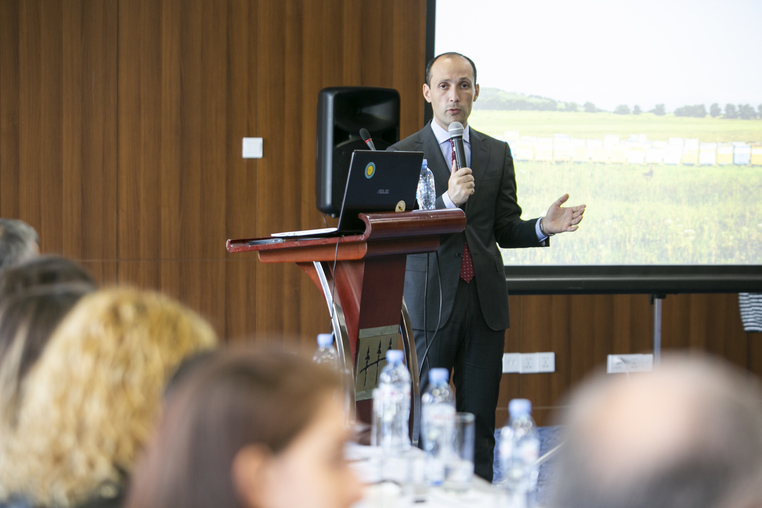
“For me, the honey sector is one of the most complex sectors in agriculture and I think the format of this meeting helps us with finding the best solutions to keep the sector going. I am pleased that today’s topic concerns honey laboratory testing, as we are determined to make honey as an export product. We have already made some important steps, like, participation in Apimondia 2019 and other important events for honey promotion. I think we can elaborate and agree on a future working model” – Levan Davitashvili, the Minister of Environment Protection and Agriculture of Georgia.
“Access to affordable laboratory services will not only decrease prime cost of honey, but will ensure quality honey to be sold at local and international markets” – stated Mikheil Tetruashvili, the GBU board member.
The Minster of Environment Protection and Agriculture of Georgia appointed a focal point in the Ministry to improve communication with beekeepers. The meeting participants agreed to continue work on the topic together with the MEPA and NFA.
The meeting was facilitated by the Swiss Agency for Development and Cooperation (SDC) project the Mercy Corps Georgia implemented the Alliances Caucasus Programme (ALCP).
Photo Source: The Ministry of Environment Protection and Agriculture of Georgia
Armenians have been living in Kvemo Kartli for centuries. According to the 2002 census 31,777 out of 497,530 Kvemo Kartli residents were Armenians. The number of Armenians is highest in Tsalka where 11,484 Armenians live, out of a total population of 20977. The advent of Armenians in Georgia was related to the movement of people during the Arab, Turk-Seljuk, Mongolian, Turkmen, Kizilbash, Ottoman Turk and other invasions. Several major settlements of Armenians took place in 1828-1829, during the Russian-Turkish war
Azerbaijanis living in Kvemo Kartli are Turkic-speaking people representing the legacy of the conquerors that came to this area at different times. in the 1926 Census they were referred to as Azerbaijanis. The Azeri population that settled in Kartli is comprised of two streams of migrants: 1. The Turkish-speaking population that was resettled between 15th-18th centuries; they went through the heaviest psychological and physical stress before they adapted to the new place. 2. Migrants who moved from one place to another to improve living conditions having adapted to the new environment. Currently the Azeri population in Georgia numbers 224,606. They mainly reside in Bolnisi, Dmanisi, Gardabani and Marneuli districts, mostly in district centers apart from in Dmanisi muniiciaplity where there are many Azeri villages. Some live in Tetritskaro and Tsalka districts.
In 1980’s the planned settlement of a large groups of eco-migrant Ajarians and Svanetians started in Tetritskaro and Tsalka municipalities. There were several streams of eco-migration up to 2003. The advent of these incomers has left its mark on Kvemo Kartli. It became richer from an ethnic, religious and language standpoint, however it also gave rise to new problems and challenges for new and old residents alike in seeking to adapt to the new cultural diversity.
The first settlement of Svans into Kvemo Kartli took place in 1987. This is when the Svans from landslide-affected Chviberi (higher Svaneti) were resettled in Dmanisi, in the houses built under a government programme. Svans started to introduce their style of life in Kvemo Kartli and establish strong communities in Kvemo Kartli.
In 2011 Alliances KK facilitated establishment of DRR Municipal Working Groups in Dmanisi, Tsalka and Tetritskaro municipalities. These groups remain to be the main point for planning and implementing of prevention measures to reduce livestock related disaster risks.



