


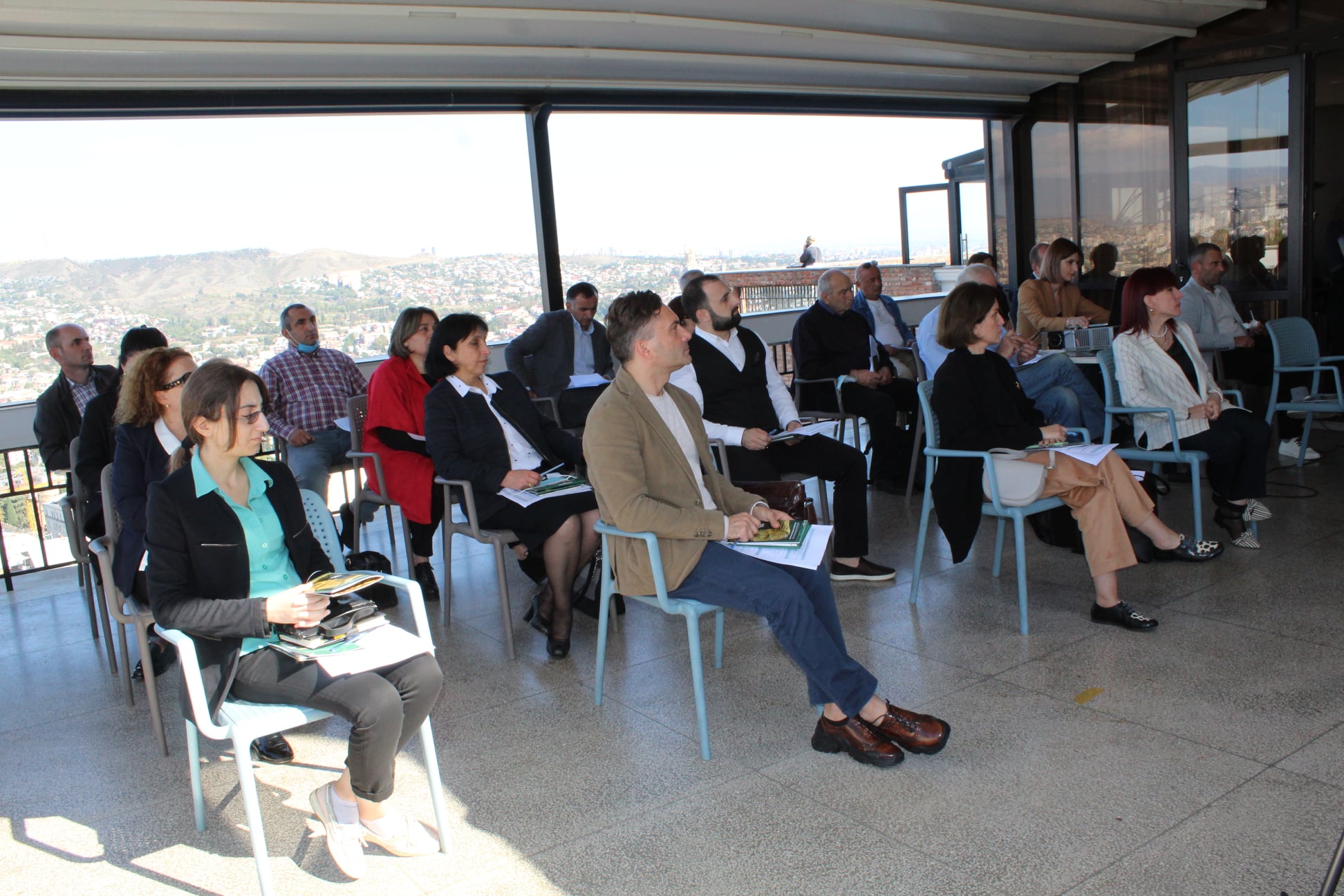
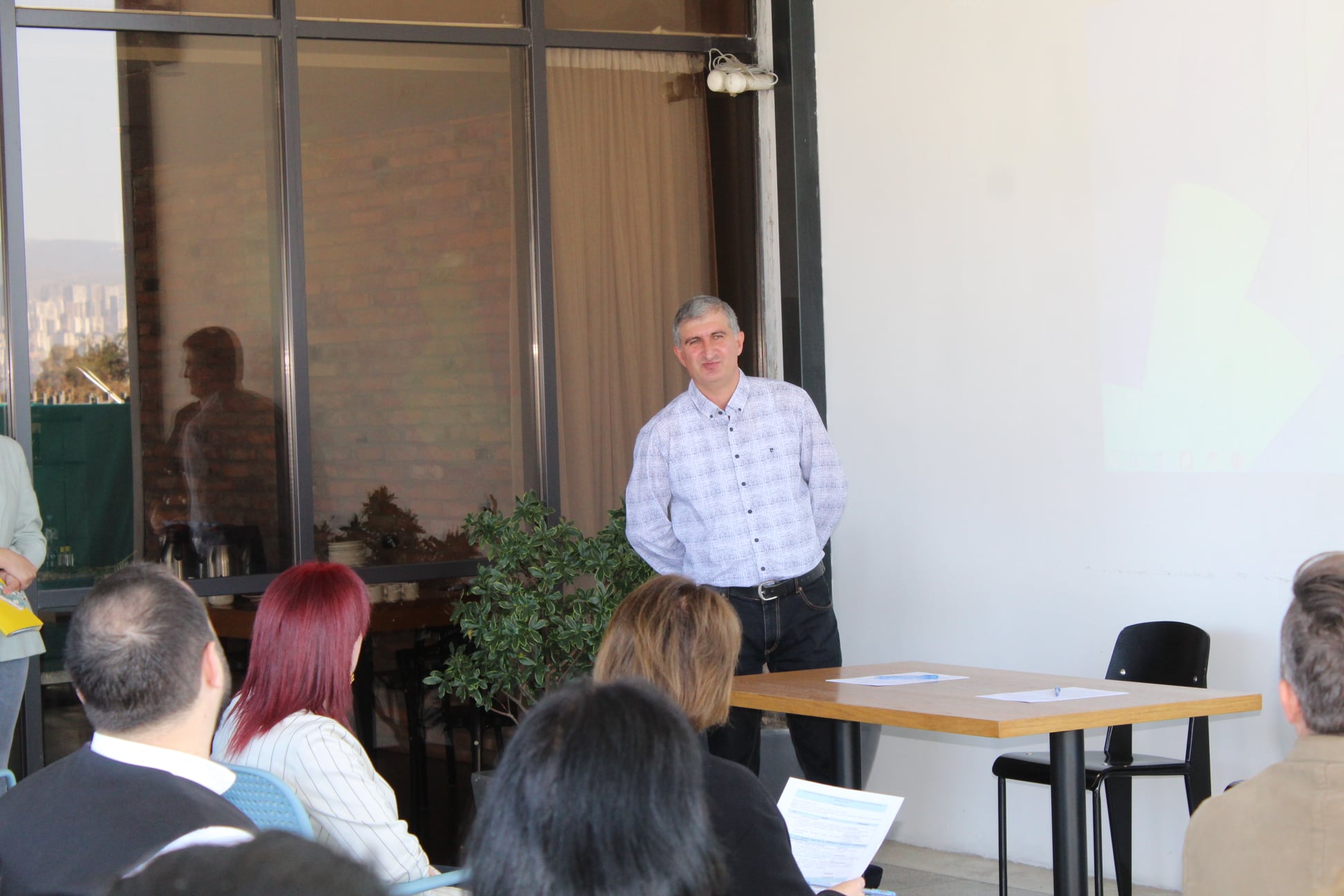
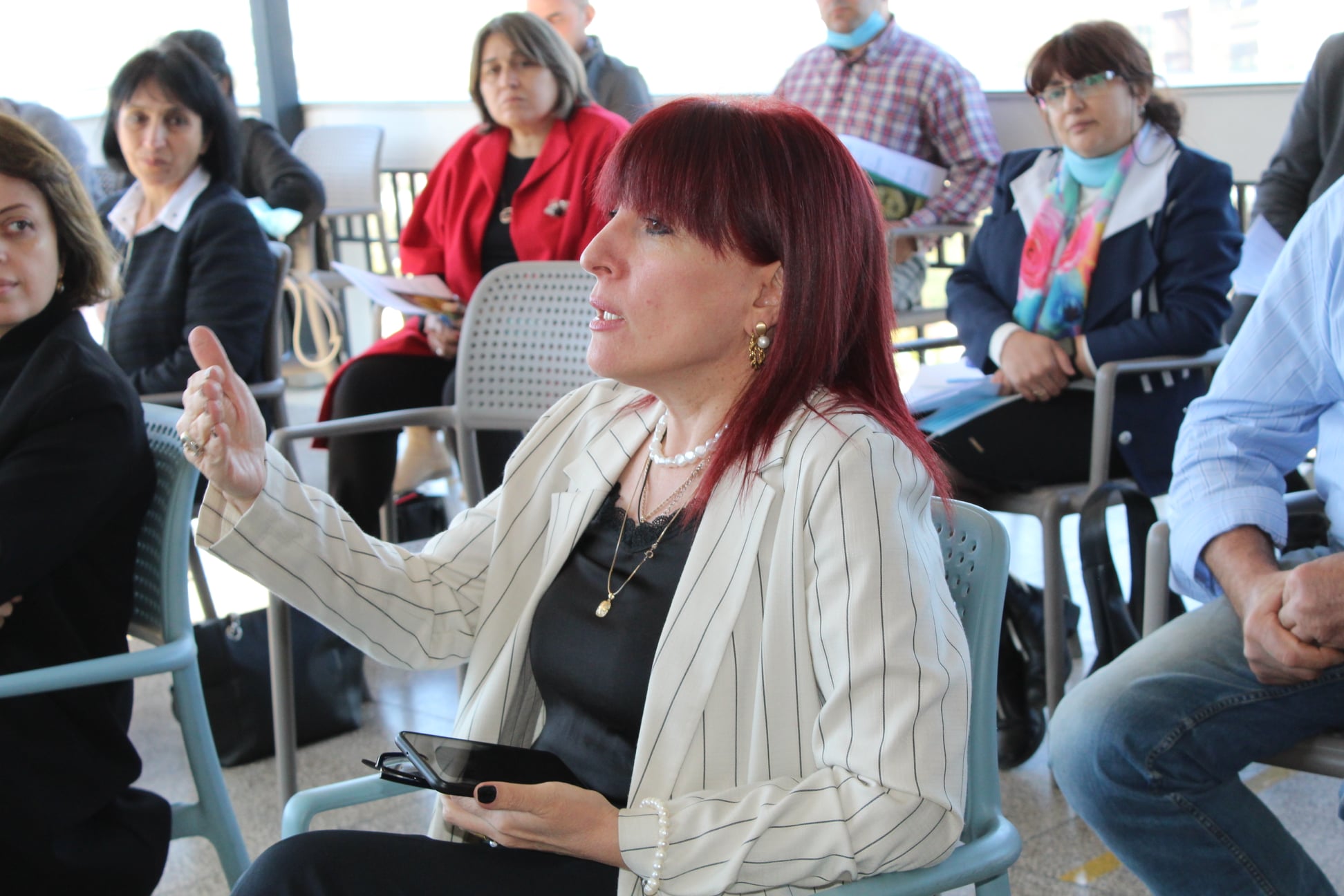
On October 8th, the Georgian Beekeepers Union (GBU) hosted representatives of thirteen VET colleges from across Georgia and sectoral skills organization Agro Duo in Tbilisi. The meeting occasioned the integration of Jara honey production as a topic in VET college beekeeping programmes, something that the Georgian Beekeepers Union have been facilitating over the last year.
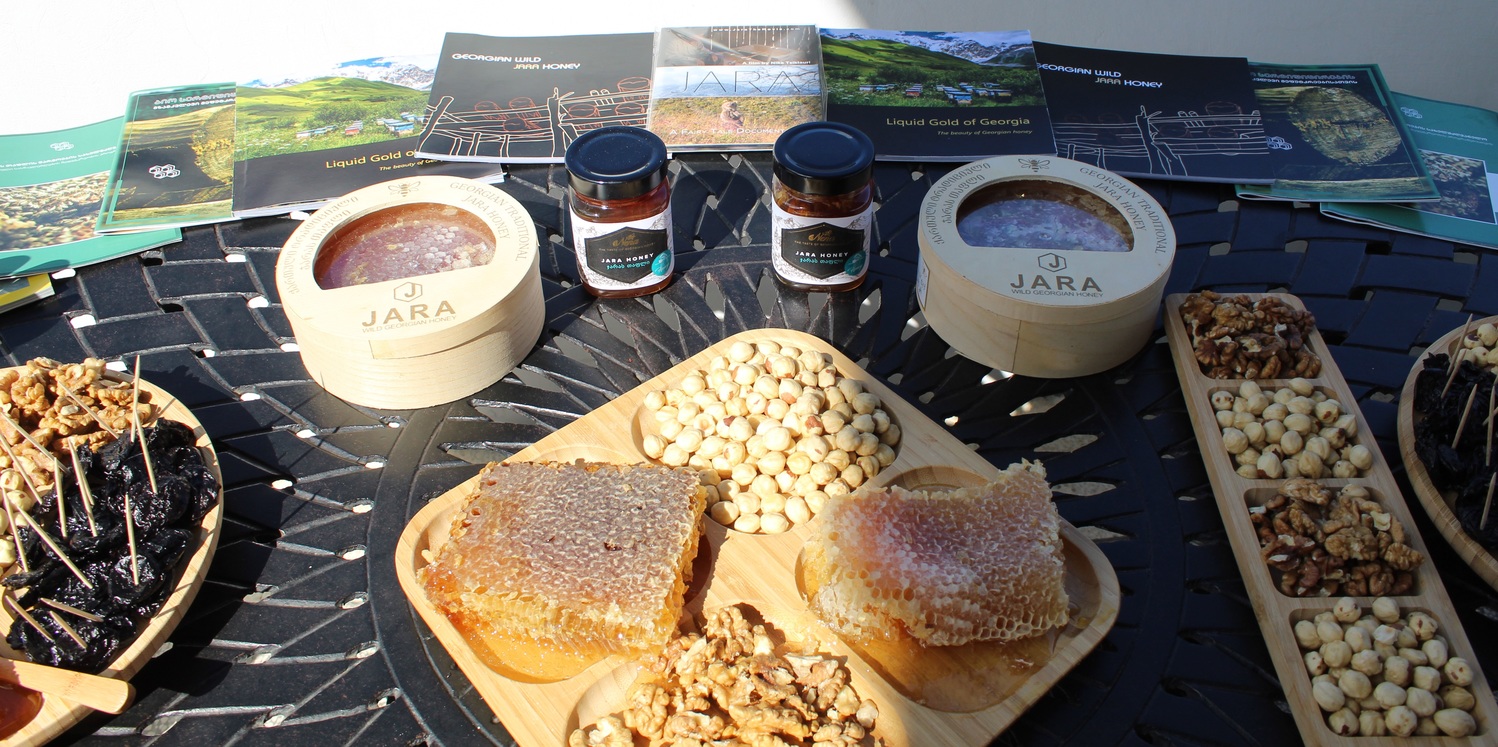
The participants received the Jara Honey Production Handbook and Bio Certification Guidelines for Beekeepers; and were introduced to two new websites www.honeyofgeorgia.com and www.jarahoney.com and a honey promotion video Discover Georgia: The Land of the Oldest Honey.
This year Akhali Talga VET College in Kobuleti and Khulo integrated the Jara materials into their one-year beekeeping programme in which twenty-eight beekeeper students are attending. At the meeting, Akhali Talga VET College shared their experience of successfully integrating the Jara materials into their beekeeping programme.
‘I had many calls before and after the meeting and I can say that the interest from the colleges is very high. We will provide support required and I am sure from the next year there will be more programmes with the Jara materials and improved content.’ – Aleko Papava, the Head of the GBU.
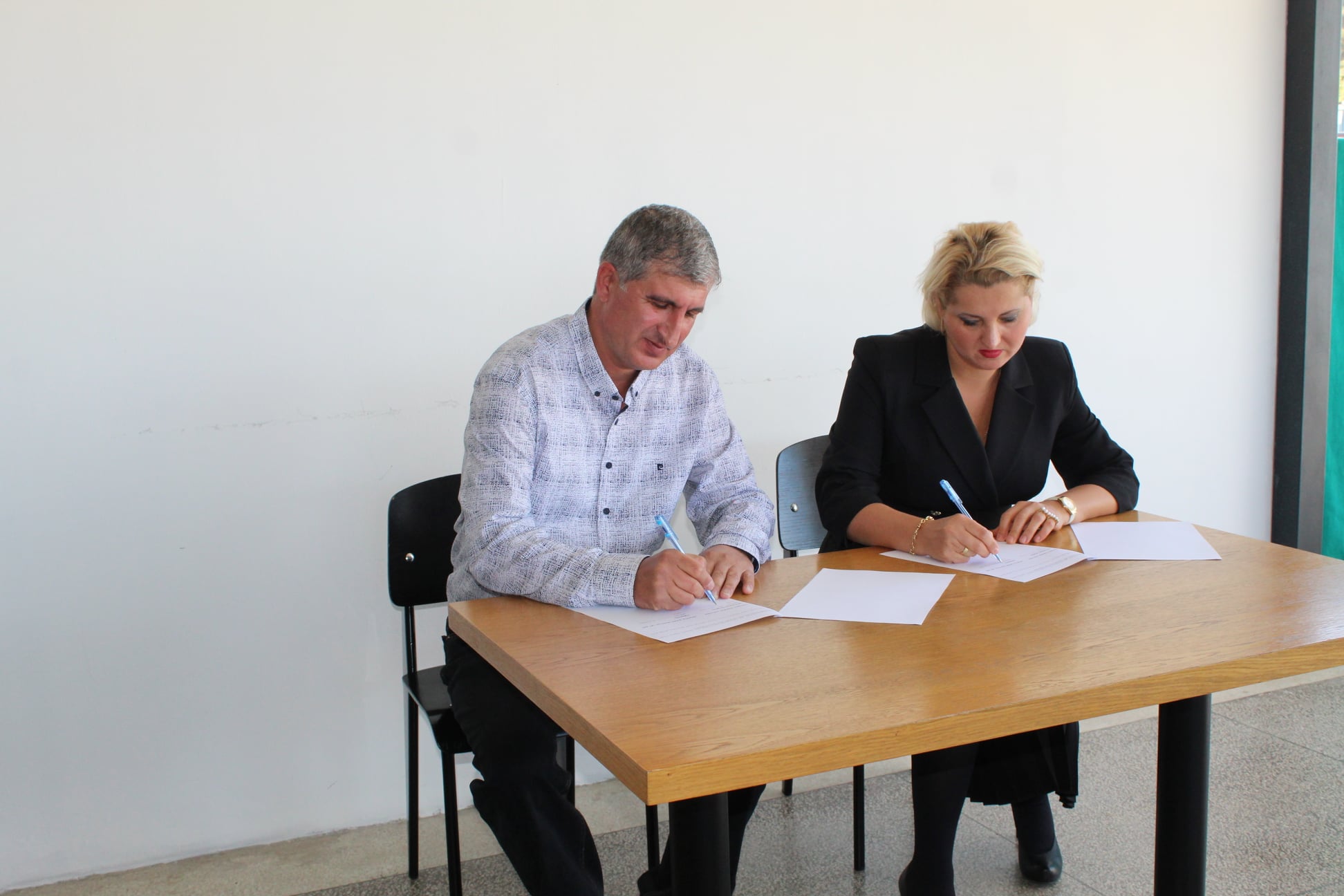
At the beginning of the meeting, the GBU and sectoral skills organization Agro Duo signed a Memorandum of Understanding pledging to work together to integrate Jara materials into the beekeeping programmes in all VET colleges in Georgia.
Jara is traditional wild beekeeping producing unique and pure honey rarely practiced nowadays, except for remote dwellings located in the subtropical and alpine zone of Georgia. However, for the first time in decades Jara production is being practiced again by new beekeepers or taken up again by those who had stopped. In 2018 the Jara Beekeepers Association was formed to represent producer interest and in the country first, twenty-three Jara beekeepers in Ajara have received Bio certification. Jara honey was commercially harvested and branded for the first time in 2018 and since then the market for Jara honey has grown in strength which is why the producers decided to become Bio Certified to further increase the value of their product. The Jara honey mark was registered this year to further protect this culturally important product.
Armenians have been living in Kvemo Kartli for centuries. According to the 2002 census 31,777 out of 497,530 Kvemo Kartli residents were Armenians. The number of Armenians is highest in Tsalka where 11,484 Armenians live, out of a total population of 20977. The advent of Armenians in Georgia was related to the movement of people during the Arab, Turk-Seljuk, Mongolian, Turkmen, Kizilbash, Ottoman Turk and other invasions. Several major settlements of Armenians took place in 1828-1829, during the Russian-Turkish war
Azerbaijanis living in Kvemo Kartli are Turkic-speaking people representing the legacy of the conquerors that came to this area at different times. in the 1926 Census they were referred to as Azerbaijanis. The Azeri population that settled in Kartli is comprised of two streams of migrants: 1. The Turkish-speaking population that was resettled between 15th-18th centuries; they went through the heaviest psychological and physical stress before they adapted to the new place. 2. Migrants who moved from one place to another to improve living conditions having adapted to the new environment. Currently the Azeri population in Georgia numbers 224,606. They mainly reside in Bolnisi, Dmanisi, Gardabani and Marneuli districts, mostly in district centers apart from in Dmanisi muniiciaplity where there are many Azeri villages. Some live in Tetritskaro and Tsalka districts.
In 1980’s the planned settlement of a large groups of eco-migrant Ajarians and Svanetians started in Tetritskaro and Tsalka municipalities. There were several streams of eco-migration up to 2003. The advent of these incomers has left its mark on Kvemo Kartli. It became richer from an ethnic, religious and language standpoint, however it also gave rise to new problems and challenges for new and old residents alike in seeking to adapt to the new cultural diversity.
The first settlement of Svans into Kvemo Kartli took place in 1987. This is when the Svans from landslide-affected Chviberi (higher Svaneti) were resettled in Dmanisi, in the houses built under a government programme. Svans started to introduce their style of life in Kvemo Kartli and establish strong communities in Kvemo Kartli.
In 2011 Alliances KK facilitated establishment of DRR Municipal Working Groups in Dmanisi, Tsalka and Tetritskaro municipalities. These groups remain to be the main point for planning and implementing of prevention measures to reduce livestock related disaster risks.



