



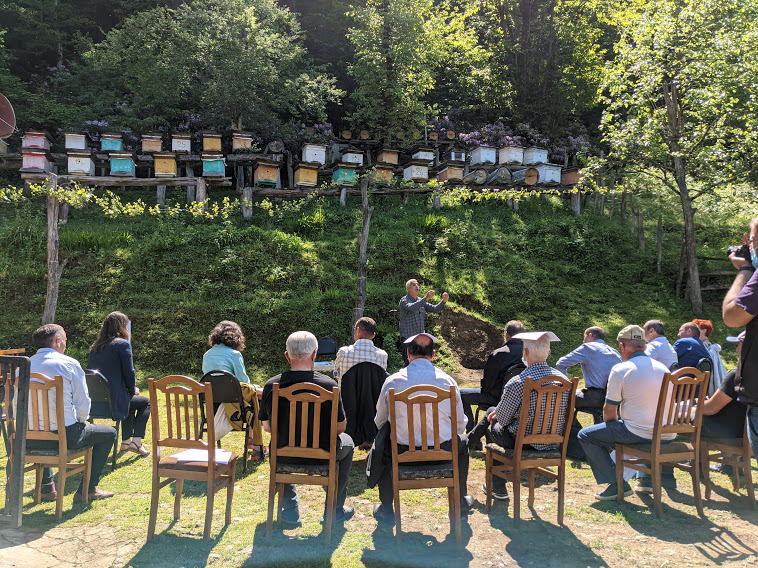
On May 18th-19th, twelve VET college representatives from seven regions of Georgia attended a Training of Trainers in Jara Honey Production hosted by the Georgian Beekeepers Union (GBU) and the Jara Beekeepers Association (JBA) in Keda, Medzibna Village.
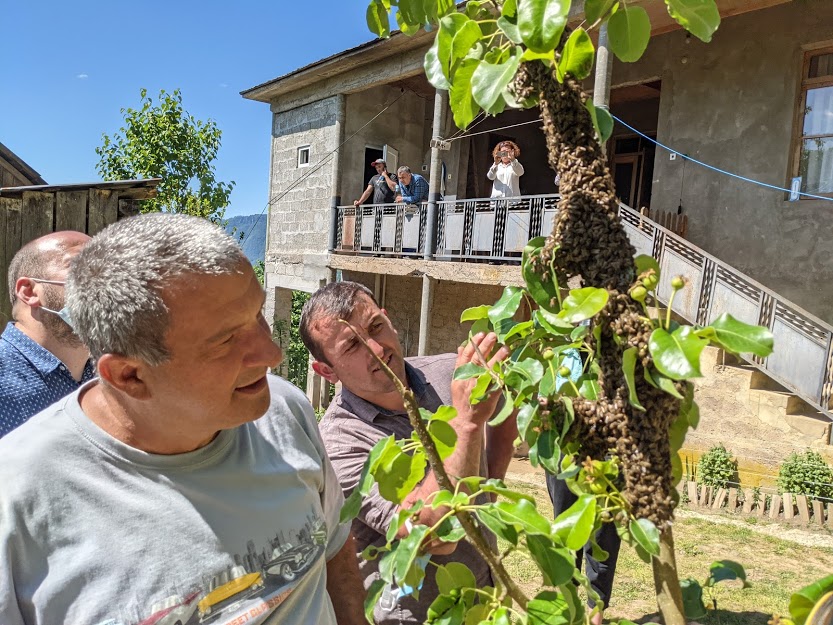
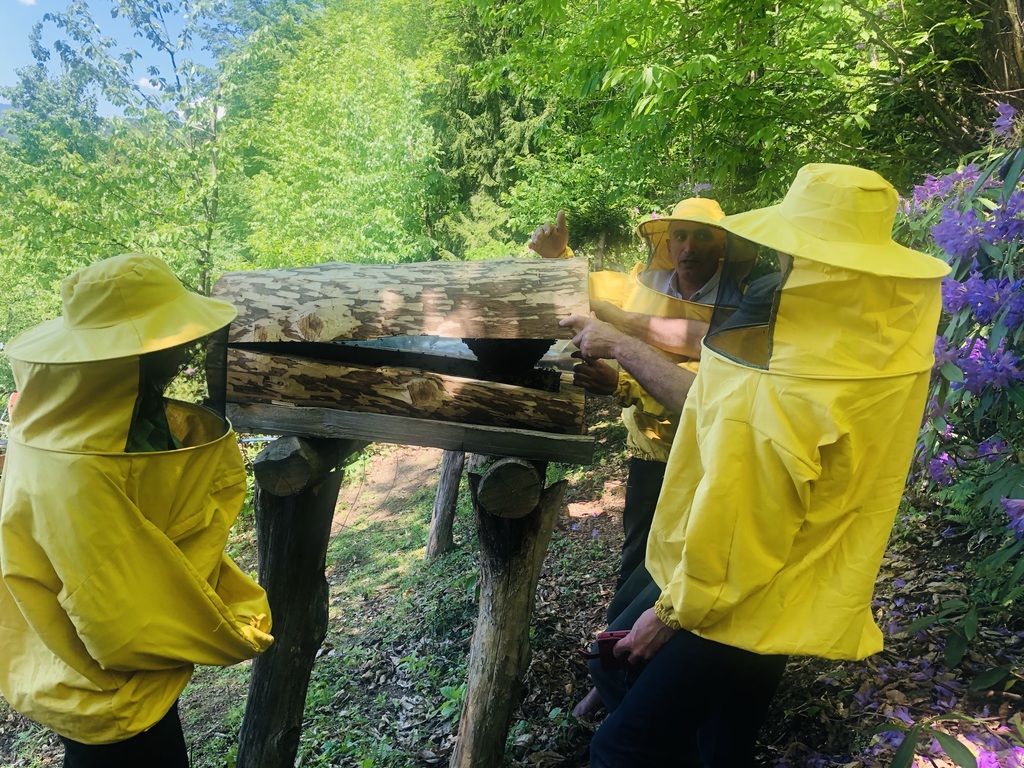
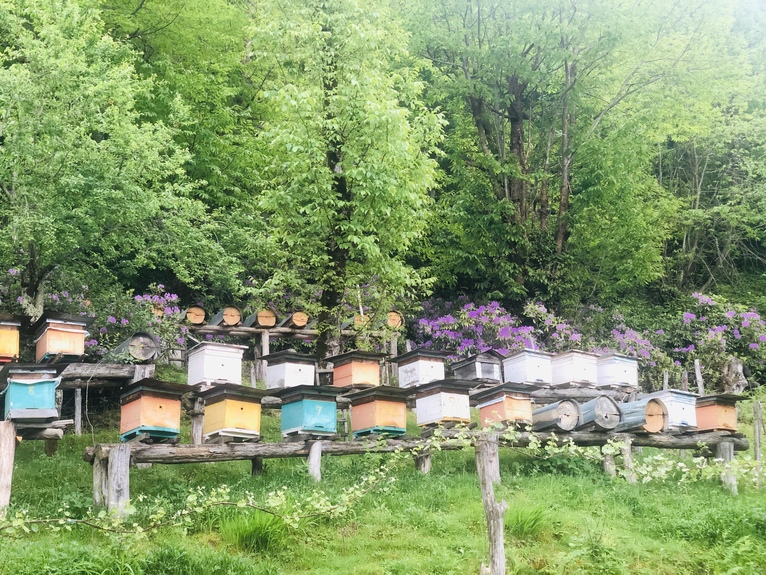
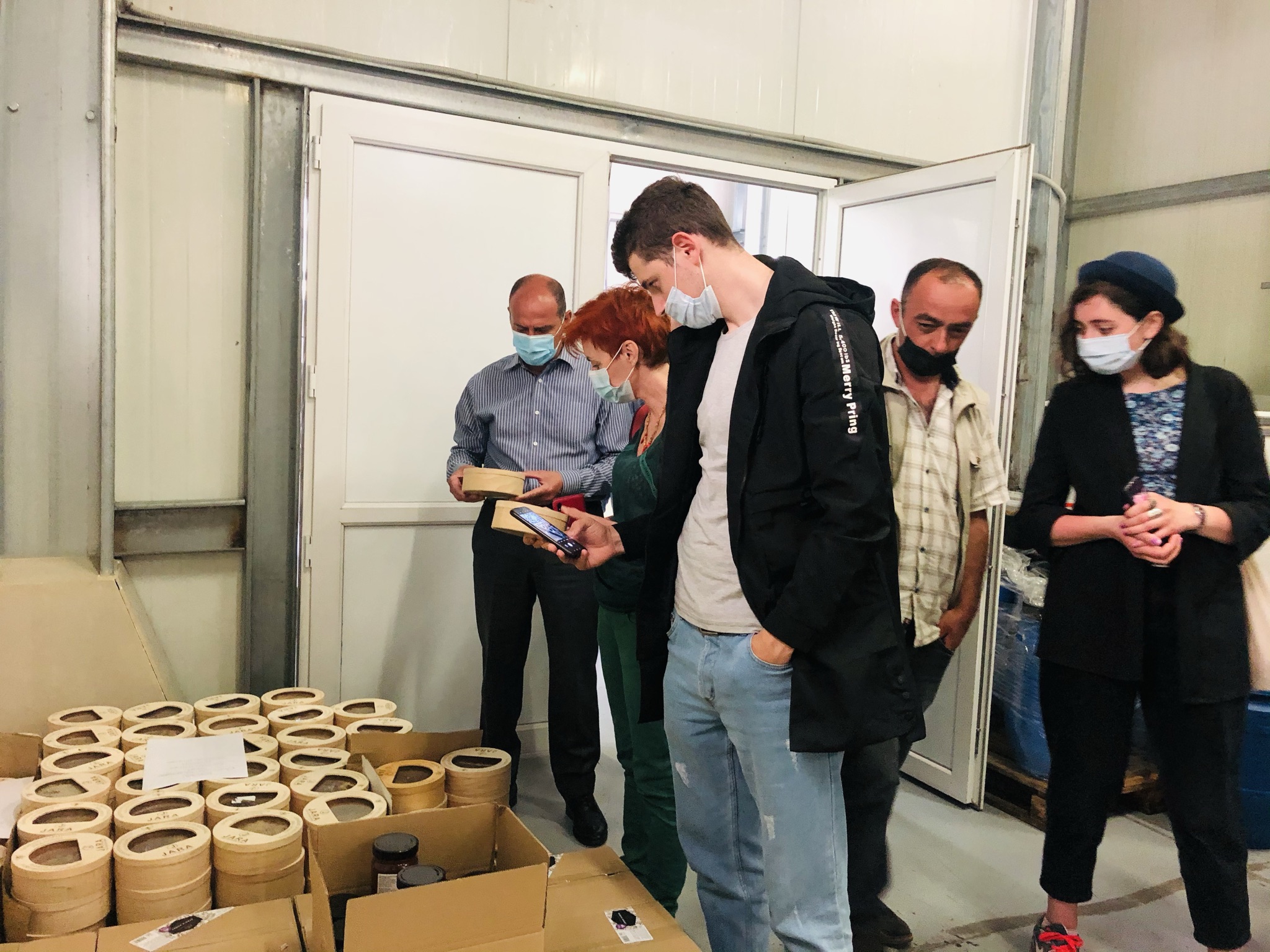
The trainees learnt how to teach beekeeping students Jara honey production and how to obtain Bio certification. They also visited a Bio certified Jara apiary and the Agro-Keda factory to see the process of Jara honey processing and packaging.
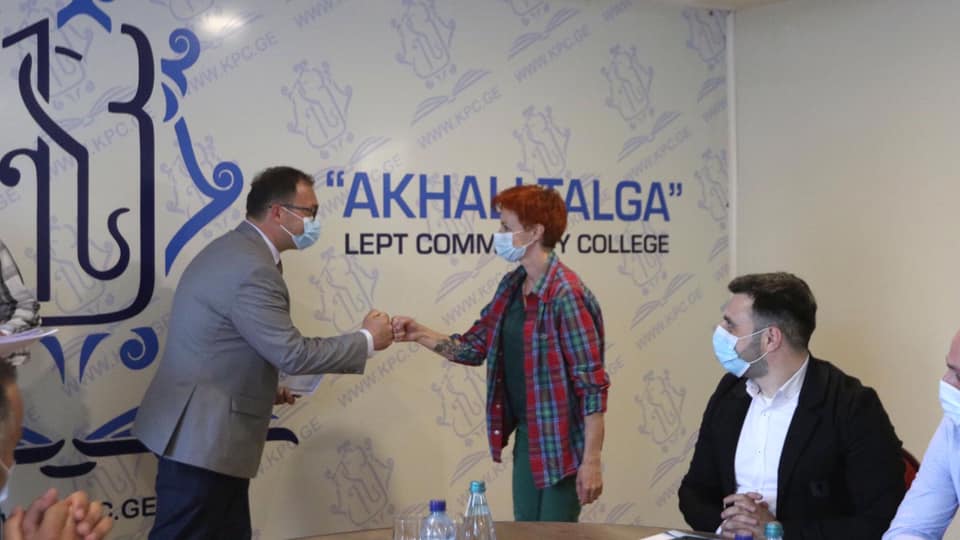
Akhali Talga VET College in Kobuleti and Khulo, who have already integrated the Jara teaching materials into their one-year beekeeping programme since October 2020, also shared their experience of including and teaching Jara production.
‘I am happy to attend this training, as I learned a lot. I am ready to teach Jara beekeeping to my students, because it will make our beekeeping programme even more interesting.’ – Ilia Khazarishvili, a lecturer at the Public College Aisi, Kakheti.
‘I am glad that all of the colleges now acknowledge that Jara teaching is an essential part of Georgian beekeeping programmes. During these two days they heard about a wide range of Jara topics, for example, Bio certification, which was impressive for them. Now they are convinced that Jara teaching has a future and this will help them to attract more students to beekeeping. They also saw the demand from businesses after visiting two Jara honey processing entities.’ - Aleko Papava, the Head of the GBU.
The training got a special mentioning by Embassy of Switzerland in Georgia, also, the Ajara Ministry of Agriculture and Ajara TV.
The National Center for Educational Quality Enhancement and sectoral skills organization Agro Duo are supporting Jara teaching integration in the VET colleges.
On June 1st, the GBU is organizing an online event Highlights So Far: Jara in VET, which is bringing together VET colleges, specialists, agro journalists, donors, and public officials to further promote Jara teaching in VET colleges and share reflections on the training.
Heather Briggs, agronomist, agro-consultant on plant productivity, international expert on cheese and journalist visited Tbilisi to hold the training for agro-journalists last week. "Batumelebi" newspaper interviewed her.
For the first time in Georgia a training on agro journalism was conducted for media representatives wishing to report specifically on rural issues and news. The main purpose of the training was to fill knowledge gaps of media practitioners in crops, livestock husbandry and agriculture management and to introduce the basics of agro journalism. Heather Briggs, an international expert and member of British Guild of Agricultural Journalists - was invited to lead a 5 day training from January 26th to February 2nd. About 50 representatives of regional, national broadcasters and printed media participated in the event. The training was organized by the Georgian Regional Media Association and facilitated by the Alliances Lesser Caucasus Programme.
By Helen Bradbury: Team Leader, Alliances Lesser Caucasus Programme
We are in an interesting conundrum. Gender in most places has been written-in to law. Bar a few notable exceptions, every country in the world, has varying degrees of success in applying universal suffrage. Fifty countries are signed up to the CEDAW convention (the UN’s Convention on the Elimination of all forms of Discrimination Against Women). On the CEDAW world map of Discrepant Government Behaviour Concerning Women, the countries shaded dark green which denotes ‘virtually no enforcement of laws consonant with CEDAW or such laws do not even exist’, are where you expect them to be and in fact they are relatively few. It is the next two categories which disturb, covering the vast majority of the globe, the mid and lighter green, where laws are partly or fully consonant with CEDAW but there is little effective enforcement or spotty enforcement of them and the issue is low priority or hit and miss. After the gains, the laws and ratifications of the last centuries it seems that we must tread very carefully indeed for we must counteract indifference, in which inertia and inactivity stop us moving forward.
Government Momentum Builds on Animal Movement Route after the years of discussion and information exchange. The biggest challenge in Georgian sheep sector – the Animal Movement Route issue has come to the point when there is a willingness and concrete plan for taking actions and reaching tangible results.
The Eco Films LTD film The Road, commissioned by ALCP KK, was shown at the BIFED - Bozcaada International Festival of Ecological Documentary on October 31, 2014. The documentary was presented in the non-competition section and highly appreciated by the audience.
In October 24th the first flocks of migrating animals went through the newly arranged bypass route in Tsintskaro village, Tetritskaro Municipality. Testing of the new route was carried out successfully - sheep, cattle, horses, donkeys, dogs and shepherds passed on the new road without any difficulties. The movement was monitored by the Tetritskaro Municipality DRR WG members and the Tsintskaro village Rep.



