



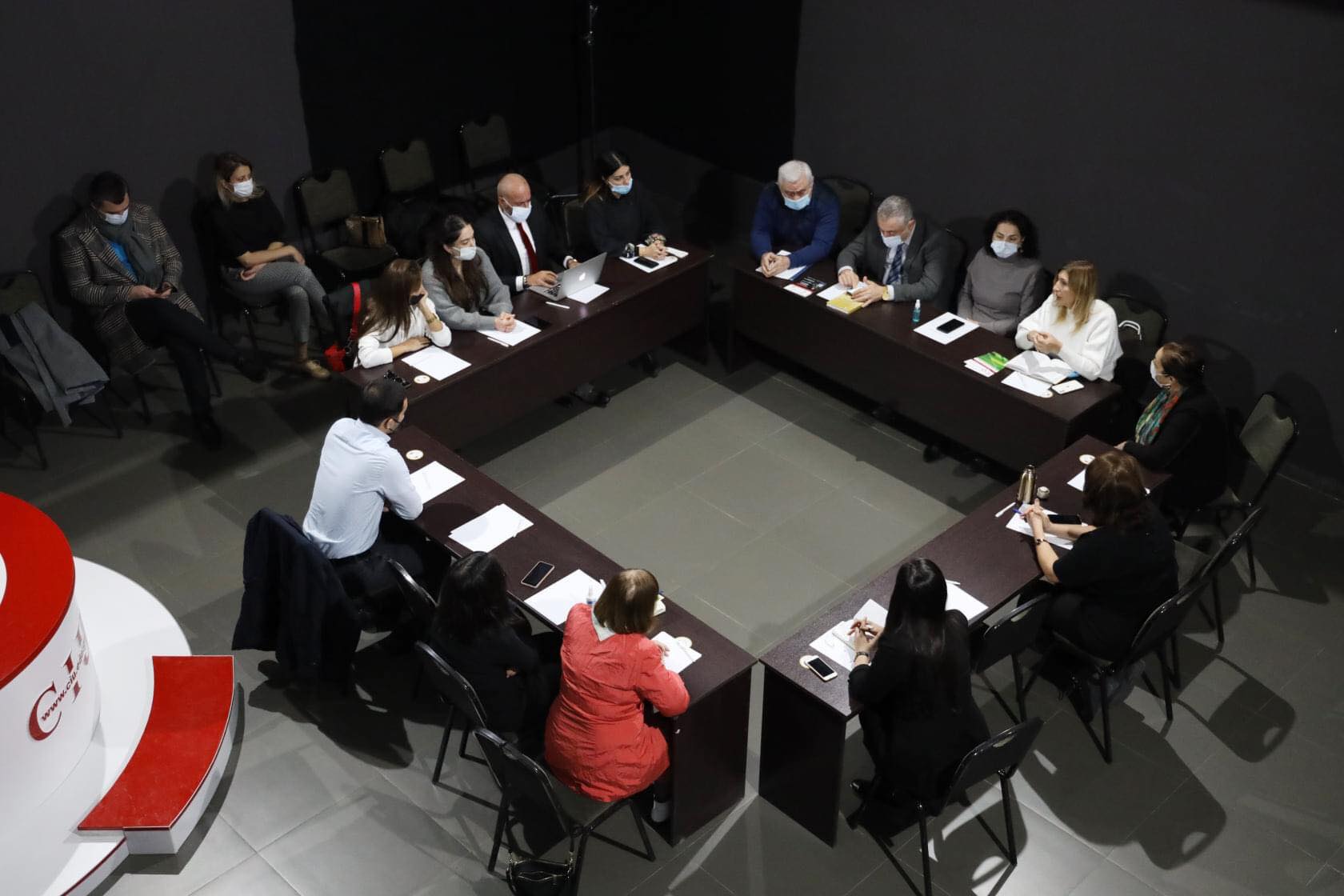
The Journalism Resource Centre (JRC), in partnership with the Society of Women for Rational Development in Azerbaijan (WARD), hosted a study visit of media and educational institution representatives of Azerbaijan.
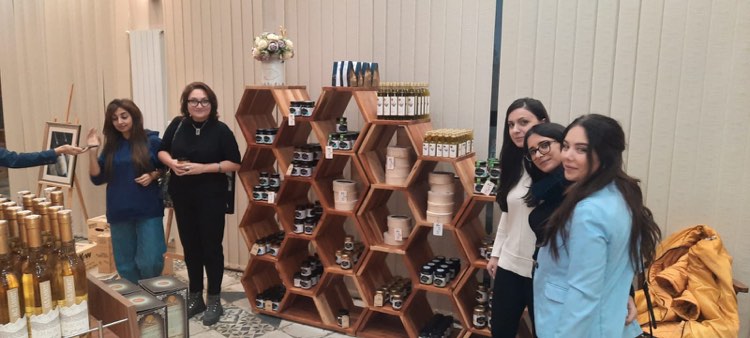
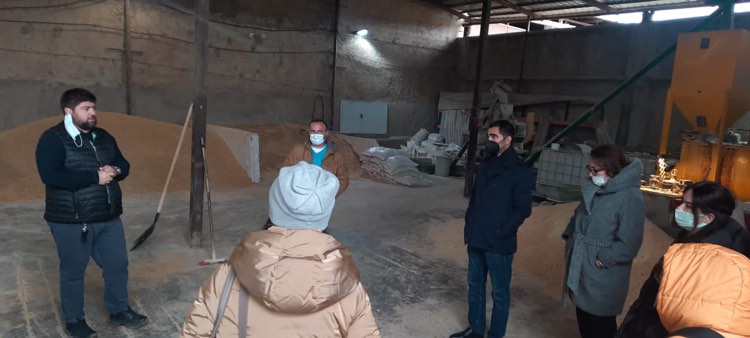
Agri-journalism students and lecturers at Caucasus International University shared agricultural journalism teaching practices. In Kakheti, they visited the farm of Beka Gonashvili, Head of the Georgian Shepherds Association, farmer, and entrepreneur. They also visited Kakhetian Traditional Winemaking to see their Jara honey and wine production and the dairy Leanka in Dedeplitskaro. The importance of education and information for farmers and producers and their cooperation with agricultural media was emphasized.
Beka Gonashvili emphasized the importance of providing quality information to farmers and producers. He is both a blogger and a farmer, so he is regularly publishing useful agriculture-related posts. The female owner of Leanka dairy talked about how the enterprise is ensuring the quality and how media is playing a significant role in this. At Kakhetian Traditional Winemaking Company particpants saw wine and Jara honey production and their export and how the Georgian Beekeepers Union is advocating the interests of honey sector representatives and supporting the awareness raising of beekeepers, such as through the national information campaign - Do’s and Don’ts of Antibiotic Use. Participants also watched a report about Jara Honey by Al Jazeera and Jara the Movie.
‘We will all together will work well for expansion the teaching of agricultural Journalism in Azerbaijan’ – Natia Kuprashvili, the Head of the JRC.
The Society Women for Rational Development (WARD) in partnership with the JRC is going to prepare a course of agricultural communication based on the study visit and share it with educational institutions in Azerbaijan.
Please see the related links: a textbook of Constructive Agricultural Journalism and video lessons added to this textbook.
ALCP photo won in the photo competition on Private Sector Development announced by DCED. Photo is taken in programme financed Wool Collecting Center and it was listed among 5 winners in condition of high competition. Winning photo will be displayed on new DCED website, visited by more than 60,000 unique users per year, and materials printed for high-profile events and publications. It will also be shown at the DCED Global Seminal in Bangkok.
After months of intensive construction work and four and a half years of multi-stakeholder advocacy the first Bio Security Point on the AMR has been opened. By the next transhumance season spring 2016, the country will have proper infrastructure for ensuring systematic health control of the livestock in place.
The event was attended by the Regional Director for Swiss Cooperation Office for the South Caucasus, by the Deputy Minister of Agriculture, the Head of the National Food Agency, the Governor and Gamgebelies of Kvemo Kartli region and the representatives of private and non-governmental sector. The event was widely covered by the national media.
Posted by Helen Bradbury: Team Leader, Alliances Lesser Caucasus Programme


ALCP has been featured on BEAM Exchange. See the story below.
Rural farmers can only grow their income when they have access to the drugs and veterinary services to keep their animals healthy and growing too. Alliances has partnered with a national veterinary inputs supply company to improve access to drugs, information and vet services for poor farmers in rural Georgia. There are strong signs competitors are seeking to replicate the model, which is also scaling up nationally and in neighbouring countries.
The challenge
Over 2 million people in rural Georgia rely on subsistence farming, typically owning less than one hectare of land. SDC has been funding a series of programmes in Southern Georgia since 2008 to improve the livelihoods of livestock farmers.
During initial surveys, Alliances learned that less than 10 per cent of farmers were accessing veterinary drugs or services in their community, in rural vet pharmacies mainly self-stocked from trips to Tbilisi. Others bought drugs when travelling to the capital. In the rural vet pharmacies a limited range of often improperly stored drugs were sold at high prices due to the resultant transaction costs. Local advice was minimal, unavailable or out of date. This had led to a lack of farmer trust in local veterinary products and services and unwillingness to invest.
Suppliers had failed to grasp the market potential of developing rural distribution, lacking both the information and capital to do so. The uncertainty about whether farmers would buy their products meant the perceived risk held suppliers back from making the first move.
Last week, NFA officials met with 19 private sector representatives from dairy and meat sectors in Akhaltsikhe, continuing a series of the meetings held in KK and AJ on new FS&H regulations. Key issues, which could restrict market access, such as form #2 requirements in meat sector and HACCP for dairy sector, were discussed.
The heavy rain and strong wind in Ajara last week saw the DRRWG hotlines have been flooded with calls in Kobuleti, Khelvachauri, Keda, Shuakhevi and Khulo municipalities. From Wednesday morning till Saturday night (November 11th-14th), the Government of Ajara and all five municipalities declared a state of emergency and announced the DRR WG hotline number on Ajara TV and online for the farmers seeking help. Municipal DRR WG members, along with a geologist and a representative from the Road Department, formed emergency response groups in each municipality to immediately respond to calls.
Construction of the two Bio Security Points (BSP) on the Animal Movement Routes in Marneuli and Rustavi is now on a final stage.
Each 2000 square meters point is already concreted and fenced and the sheep dips and cattle showers are ready and the site office in place. The 50 ton galvanized water Tanks imported from the UK are installed. For both points the NFA will hire staff including a veterinarian.



