



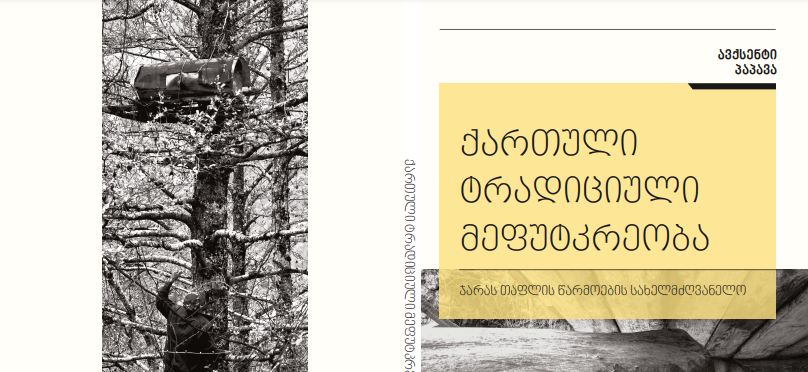
Georgian Traditional Beekeeping: Jara Honey Production is a new textbook now available for VET colleges who include a Jara component in their beekeeping courses. It is part of making the Jara beekeeping course material an accredited component in its own right from September this year.
The author Aleko Papava, who is a competent, reliable and respected beekeeper teacher and Head of the Georgian Beekeepers Union, wrote the book together with education specialists on behalf of the Georgian Beekeepers Union and Jara Beekeepers Association.
The Scientific Research Centre of Agriculture of the Ministry of Environmental Protection and Agriculture reviewed and acknowledged the book positively.
‘The book is written in a highly professional manner, materials meet the demand of the beekeeping sector in terms of bio honey production and provide comprehensive information about all the topics for studying Jara Honey Production’ – says the Centre in their letter sent to the GBU.
In June 2021, thirteen VET college representatives from seven regions of Georgia attended a Training of Trainers in Jara Honey Production and later received jara equipment. Now eight of them are integrating aspects of Jara beekeeping into different subjects of the beekeeping programmes to 106 students. Five more colleges will start soon. This textbook means that Jara Beekeeping will be taught as a separate accredited component of these courses. The newly established Vocational Skills Agency, National Center for Educational Quality Enhancement and sectoral skills organization Agro Duo are all supporting Jara teaching integration in the VET colleges.
Linked resources: Jara Honey Production Handbook; Bio Certification Guidelines for Beekeepers; www.honeyofgeorgia.com; Discover Georgia: The Land of the Oldest Honey.
Locals, interested parties including the Minister of Agriculture of Ajara and tourists, in the height of the Batumi summer run enjoyed a new addition to the summer time calendar of events with the first Ajara Honey Festival on August 22nd on Batumi Boulevard. The festival was organized by The Beekeepers Association of Ajara, an entity belonging to the Ajara Chamber of Commerce and Industry.
Ajara is a major producer of honey in Georgia and the programme has completed a sector survey and commenced numerous interventions. The festival was a first step in promoting Ajara as a producer of high quality honey and developing a cohesive image of honey production in the region. Beekeeping in Ajara has been practiced for centuries and still includes the capturing of wild swarms and cultivating of honey in logs known as ‘Jara’.
The National Food Agency representatives met with entrepreneurs of honey and meat sectors in Kvemo Kartli and Ajara regions in July. The aim of the meetings was to inform local producers on the regulations and required standards for the quality production of meat and honey products in accordance with FS&H standards.
Food Safety and Hygiene in the Agrarian Market of Batumi was the main topic of the ALCP AJ Advisory Committee’s second meeting in Ajara region. The discussion concerned the incompliance of existing situation in Market with FS&H standards and possible risks derived from the meat and dairy products purchased there. Due to the importance and complexity of the issue, key market stakeholders such as representatives of Ajara Government, NFA and Agrarian Market participated in the meeting.
“Women in Georgia – Tradition and Contemporaneity” is a short documentary film prepared by ‘Netgazeti’ (online newspaper) about women living in Ghordjomi Community (Khulo Municipality, Ajara). Ghordjomi is one of the largest Muslim communities in Ajara and is known for its early marriage traditions, and other strict rules and attitudes towards women. The film describes the harsh daily routine of the women starting from 6 am in the morning with taking care of the cattle, children, household and the restrictions they face in daily life.
The ALCP AJ programme’s Focus Group Survey and Gender Analysis captured these issues and also noted the consequent effect on the participation of women in the decision-making processes at the community and local governmental levels which is chronically low.
The first meeting of the Regional DRR Working Group was carried out at the KK Governor Office.
The Governor of Kvemo Kartli - Paata Khizanashvili encouraged decision makers from all municipalities of the region to pay more attention on issues linked with Animal Disease Control, Pasture Usage and Disaster Risk Reduction. He noted that the municipal leaders should understand these are the issues of high importance and the new municipal working groups should have strong communication with the Governor’s office and with other municipalities of Kvemo Kartli.
By now, all seven municipalities of Kvemo Kartlli have DRR working groups coordinated by the regional government.
A new project “Closer to Nature” was launched by Batumi Botanical Garden facilitated by ALCP AJ to promote 165 school student’s involvement in biodiversity and environmental protection activities.



