




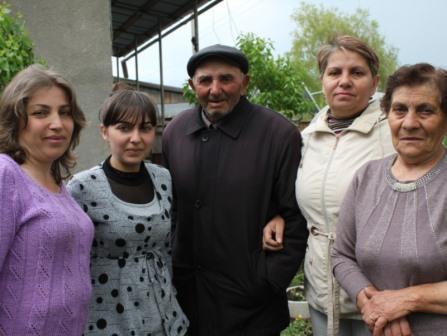
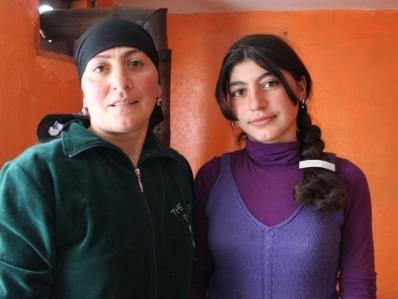
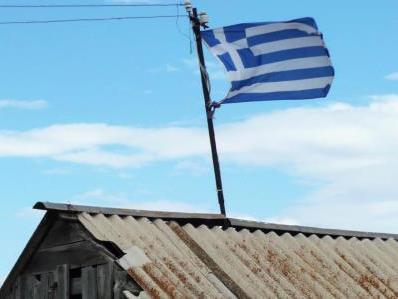
Publishing the following series of stories is an attempt to highlight the ethnic diversity of Kvemo Kartli. We are going to tell you the stories of five women living in various parts of Kvemo Kartli; these women have different lifestyles and represent different cultures, but they still have a lot in common. This is their history in stories. Stories of work, endurance, taboos, restriction, dignity, honesty and womanhood. You will not see figures and percentages here; this is not a quantitative survey. These are stories that allow us to build on those figures and percentages and enable us to develop profiles of Ajarian, Svan, Azeri, Armenian, Greek and local Georgian women’s lives, to understand their complexities and areas of commonality and to reflect this in our work as a programme.
Kvemo Kartli is one of the most ethnically diverse regions of Georgia. Ethnic diversity has developed over centuries and many contrasts and cultural differences have accumulated in this region; the study and management of these contrasts and differences and the development of models for peaceful cohabitation is not an easy task. Cultural, ethnic and language differences can be seen in every detail of life. Differences are present in rural and urban areas, in highlands and lowlands, in methods of doing business. Our objective in recording these stories was to attempt to create a profile of these women, to listen to them and build the picture of their lives, to understand the effects that culture and ethnic origin have on their lives, to see what opportunities they have and how they use or fail to use these opportunities, if they have them at all.
 |
|
|
|
|
A new project “Closer to Nature” was launched by Batumi Botanical Garden facilitated by ALCP AJ to promote 165 school student’s involvement in biodiversity and environmental protection activities.
The Memorandum of Understanding was signed between the Minister of Agriculture, the National Food Agency and SDC funded, Mercy Corps Georgia implemented ALCP on March 31st 2015. Within the framework of this memorandum ALCP will facilitate the building of two Bio-security yards with water points on the Animal Movement Route in Kvemo Kartli region, another three Bio-security yards will be financed from the State Budget.
The advisors from 5 municipalities of Ajara were trained on how to increase women participation in community meetings. Following the training facilitated by ALCP AJ, they worked with the Village Representatives and as a result of their activities, the attendance of women in these meetings has increased by 10-15%.
Very soon the Kvemo Kartli Region will have a new regional mechanism for Disaster Risk Reduction implemented by Local municipalities and the Kvemo Kartli Governor’s office. The Governor of Kvemo Kartli Paata Khizanishvili discussed this topic with the Gamgebelies of the region, deputy governors, the Mayor of Rustavi City and representatives of Alliances Lesser Caucasus Programme (ALCP) on March 11, 2015. The importance of regional coordination and the necessity of creating working groups in all municipalities were highlighted during the meeting.
The Advisory Committee was established in Ajara, which is supposed to be a forum for regional players representing national, local and regional government, civil society and the private sector to tackle key issues in agriculture sector. The participants discussed the role of the Self-governments in Disaster Risk Reduction, wildlife related issues in the region and also clarified the functions of the newly formed Municipal DRR Working Group in five municipalities of Ajara.
A kindergarten was opened on February 17th in Boslebi Village, Dmanisi municipality as a result of facilitation by the Dmanisi Women’s Room. The Kindergarten will serve 30 children not only Georgians from Boslebi Village but also from neighbor Kakliani Village which is mainly inhabited by Azeris. Four local women will be employed there.



