From the ISET Economist news (http://www.iset.ge/news/?p=3056)
By Tim Stewart
As Georgia embarks on an ambitious program to develop farmer organizations, it is worth considering both the positive and negative lessons from the experience of similar initiatives, both in Georgia and elsewhere in the developing/transition context. The piece by Tim Stewart, originally published on www.springfieldcentre.com, identifies some of the main reasons for the failure of start-up farmer organizations. The challenge for Georgia is to learn from these mistakes in planning and implementation, and ensure improved coordination among the many cooks involved (the newly created Agency for the Development of Agricultural Cooperatives, the Ministry of Agriculture, international donors, NGOs, and farmer associations).

A village in the Zestafoni area. It is a picturesque landscape, but the farms are not operating very efficiently. (Photo: Nikoloz Pkhakadze)
Someone once told me that I couldn’t be a real agriculturalist until I had at least one failed chicken project under my belt, illustrating both their ubiquity and propensity to flop. The same can be said of projects that seek to establish farmer groups (farmer organisations, cooperatives etc.) and for much the same reasons – although I believe we should learn from failure, not repeat patterns that lead to it.
Conventional programmes working in agricultural markets often include a component of forming and supporting farmer groups in their various guises. Their justification for this is the perceived benefits to small farmers that can accrue from economies of scale of production (assets, labour and inputs), marketing (reduced transaction costs and bigger volumes) and voice (representation to government etc.). My concern is that farmer group formation and support is frequently a waste of effort and money because they overwhelmingly fail, and there is little honest recognition of, let alone learning from, that awkward reality.
Literature drawn mainly from projects supports farmer group formation and strengthening as a panacea for agricultural advancement, and often backs up the case for intense external resourcing. It suggests that farmers in groups are more likely to adopt technologies than those who aren’t, or are more likely to grow project-supported crops. Proponents also highlight their significance to the supply of inputs into food production and of food to the market. Indeed, the FAO estimates that nearly 40% of Brazil’s agricultural GDP is produced through cooperatives while in Europe, 60% of agricultural produce and 50% of inputs are marketed through one.
However a glance at the 2012 “Exploring the Cooperative Economy” report from the World Cooperative Monitor, reveals an almost total cooperative vacuum in Africa and, to a lesser degree, Asia. More directly, in my work I am frequently confronted with the reality of failed farmer groups that evaporate once the project ends, with unused equipment rusting in the corner of a field, an image, which has become a cliché of dysfunctional development in the popular press. And for many people engaged in development, farmer groups are a byword for failure.
Yet as far as I can establish (and I have searched), there have been few honest and objective ex-post reviews of farmer group formation components of projects to look at failure and the reasons for failure. (If I’m wrong and there are real data on groups’ success and sustainability, please send it to me!) Failures, if reported, are attributed to external “unforeseen challenges” and written up as “lessons learned”. Farmers groups have become a prime example of the development industry’s “emperor’s new clothes syndrome”, where official views are positive and glowing and formal research and evidence are at odds with what we know to be common (naked!) reality. So, in that context, I would argue that farmer group formation is a poor way to improve the lot of farmers positively and sustainably. How much more money needs to be spent; how many more pet Farmer Field School projects do we need to implement; how many more constitutions do we need to write; how many MOUs do we need to sign or how many ‘Farming as a Business’ trainings do we need to subject farmers to, before we understand that this form of development is not working?
The factors leading to the failure of farmer groups (rapid decline post-project) are numerous, but broadly they fail because they were formed for the wrong reasons, by the wrong people and/or in the wrong way.
THE WRONG REASONS TO FORM FARMER GROUPS
Agencies often form farmer groups because it helps them – the agency – achieve economies of scale of delivering services, assets or grants to them. In addition some may feel more comfortable ethically with the transfer of expensive assets or technical assistance to a group rather than an individual. The ethos of communal ownership to cosiness of the collective is pervasive in certain quarters of the development industry, even in the face of the common observation of poorly managed group-owned assets. Farmer group membership is also too often a pre-condition for farmers to receive giveaways from agencies. Groups therefore become entities built on artificial incentives created by agencies wanting an easy repository for their resources and buying short-term transitory impact.
Clearly then, ill-conceived or self-serving reasons are the wrong ones for forming farmer groups.
THE WRONG PEOPLE TO FORM FARMER GROUPS
Agribusinesses often face problems interfacing with small farmers because of high transaction costs, small transaction sizes, poor organisation and communications and a general lack of understanding of them. Farmers are often observed to face challenges finding markets for their products or face poor terms of trade. The absence of institutions (like groups) and services which would help them overcome these challenges (supporting group formation) is often justification enough for agencies to intervene impulsively by stepping in on behalf of small farmers – telling and selling the narrative of the “farmer being exploited by the middleman”.
The problem here is not only do agencies avoid addressing the root causes of the problem that lies beyond the farmer-trader interface, but in stepping into this space by performing “farmer group services” they undermine the possibility that it will ever be solved. Rather than solutions cemented firmly and sustainably in the market system, emerging “farmer group services” are seen as a development agency space. Thus it becomes a self-fulfilling prophecy: farmers are disadvantaged in markets because of weak vertical and horizontal linkages and there are no services to address this market failure: justification enough for agencies to step in and undermine the market further…
Development agencies are also the wrong people to offer farmer group services because, typically, they are poor at business:
- They are not market based, they are subsidised and non-commercial and their success/failure isn’t dependent on a viable offer but on continued support from their donor.
- Their incentives are therefore aligned to the agendas of the donor and their own HQ, not the market.
- They are not cost-effective, indeed they are prohibitively expensive if the true cost of delivery is taken into account (drivers, cooks, HQ fund-raising etc.).
Development agencies are therefore the wrong people to form farmer groups because they are not long-term players in the market, undermine legitimate market players if they attempt to do so, and, put simply, are usually bad at business.
THE WRONG WAY TO FORM FARMER GROUPS
Agencies form farmer groups on the basis of an abstract, theoretical notion of potential benefits, or experience in distant contexts of limited relevance. Seldom do they ask the more grounded starting question: if groups are such an obviously “good thing”, why aren’t farmers forming groups already? Understanding the answer to this question would lead to understanding and addressing systemic problems in the market, or simply not wasting resources by attempting to do something that would be unsuccessful. The reasons that farmers don’t form groups are many, but often related to a lack of incentives or capacity.
Incentives: It may be that additional income does not accrue by aggregation, or that which is created may not be sufficient to overcome other issues such as distrust of others in financial matters. Other actors may be able to provide incentives that induce group formation such as a commodity buyer that provides inputs on credit. There may also be disincentives related to the wider political economy such as additional tax or administrative burdens to formal groups.
Capacity: There may be other obstacles to forming groups such as inefficient business registration procedures, weak advisory services, or a lack of adequately available information that would allow farmers to make an informed decision to form a group. This shouldn’t be seen as an open justification for agency intervention to address these directly for example through business services and setting up one-stop-shops for business registration etc. Rather it should lead to enquiry into who could and should be delivering these and why they are not.
The wrong way to form farmer groups is therefore to do it without understanding the central market failures that prevent farmers from forming them.
WHAT TO DO ABOUT IT
The problem for an agriculturalist and development practitioner like myself, is that working with farmers is fun and endlessly fascinating: it’s one of the things I got into the business for! However instead of being drawn to act impulsively on behalf of the small farmer, I think agencies would serve them better by doing more of the following three things.
Firstly, go in with their eyes and minds open, conducting ex-ante market analysis rather than making unsubstantiated assumptions about what farmers need. Don’t arrive with a farmer group solution pre-prepared and engineer an analysis to justify this. Establish the reasons that farmers are not cohesive, what incentives are shaping their behaviour and what capacities may be lacking. Get a valid answer to the key question: why isn’t the market system working?
Secondly, build and don’t undermine. Guided by the above analysis, work with relevant, long-term market players (private and public) to address the issues underlying farmers’ poor performance and low incomes.
Thirdly, be honest about and learn from failure. This is not especially difficult or time consuming to do, but I suspect is a place where many fear to tread.
My argument is not that farmer groups cannot be beneficial to farmers. Rather, by adopting a systemic approach aimed at fostering the conditions for self-organisation among market players, agencies have a far better chance of supporting small farmers – which may or may not involve farmer groups.
From the ISET Economist news (http://www.iset.ge/news/?s=survival&lang=en)
By Nino Mosiashvili
The conclusion of the Association Agreement (AA) with the European Union was euphorically acclaimed by Georgian media as well as political and economic decision makers. Part of the AA is the Deep and Comprehensive Free Trade Agreement (DCFTA). The DCFTA is intended to liberalize trade between Georgia and the EU by lowering tariffs and reducing non-tariff barriers. For agriculture, the most relevant changes relate to food safety (bacterial contaminants, pesticides, inspection, and labeling) as well as animal and plant health (phytosanitation). For the manufacturing sector, the removal of so-called “technical barriers to trade” is similarly important, with the goal being to prevent the usage of technical standards as a means to protect domestic markets from foreign competition. “If regulations are set arbitrarily, they could be used as an excuse for protectionism”, states the World Trade Organization on its homepage.
Livestock transhumance will no longer disturb Tsintskaro Village population in Tetritskaro Municipality. The local Municipal DRR Working Group initiated a new infrastructure project which will solve the problems related to the seasonal transhumance in this particular village.
From the ISET Economist news (http://www.iset.ge/news/?p=3311)
By Eric Livny
(Summary of a debate hosted by ISET as part of SDC-supported Inclusive Growth Dialog series.)
There are many reasons to love the concept of farmer cooperation (and cooperation more generally). To begin with, there is a great aesthetic value in seeing people coming together, sharing resources and helping each other. After all, instinctive collectivism was the basic condition of human existence from time immemorial. But, there are also powerful economic reasons for farmer cooperation.
The Road – a beautifully shot documentary capturing the reality and dichotomies of the people who use the ancient transhumance route; the lifeline of livestock in Georgia
A Memorandum of Understanding has been signed between the Ministry of Regional Development and Infrastructure (MRDI) and the Swiss Development Cooperation project the Mercy Corps Georgia implemented, Alliances Lesser Caucasus Programme (ALCP) in Kvemo Kartli, The aim of the memorandum is to support the ongoing outreach at local government level of practical implementation of the 2010 Georgian Gender Equality Law which will greatly aid in the general development of rural Georgian municipalities.

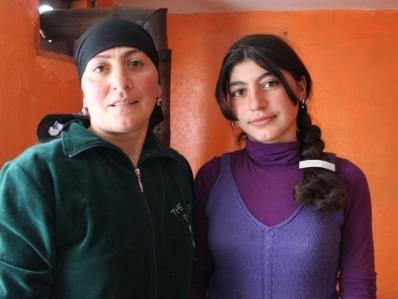
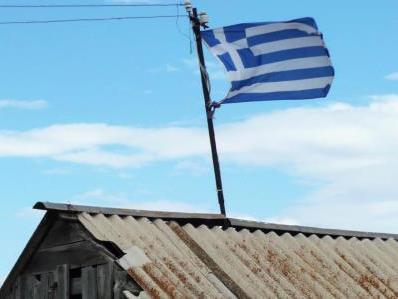
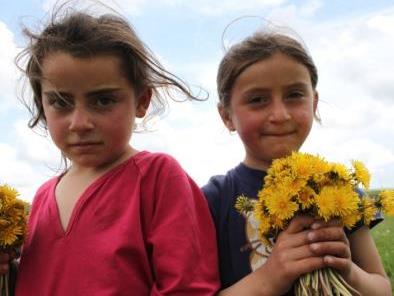
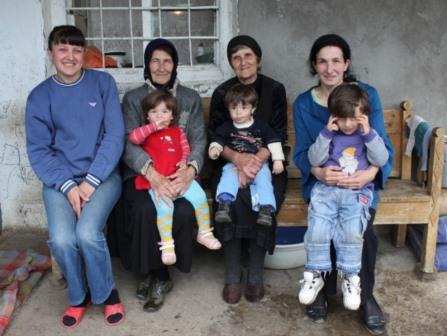
Publishing the following series of stories is an attempt to highlight the ethnic diversity of Kvemo Kartli. We are going to tell you the stories of five women living in various parts of Kvemo Kartli; these women have different lifestyles and represent different cultures, but they still have a lot in common. This is their history in stories. Stories of work, endurance, taboos, restriction, dignity, honesty and womanhood. You will not see figures and percentages here; this is not a quantitative survey. These are stories that allow us to build on those figures and percentages and enable us to develop profiles of Ajarian, Svan, Azeri, Armenian, Greek and local Georgian women’s lives, to understand their complexities and areas of commonality and to reflect this in our work as a programme.
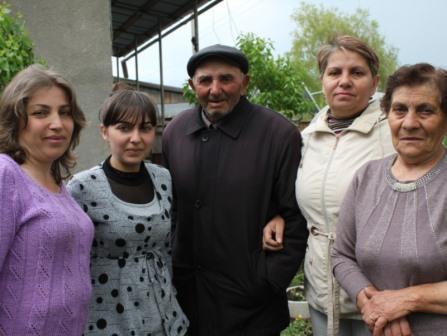
Kvemo Kartli is one of the most ethnically diverse regions of Georgia. Ethnic diversity has developed over centuries and many contrasts and cultural differences have accumulated in this region; the study and management of these contrasts and differences and the development of models for peaceful cohabitation is not an easy task. Cultural, ethnic and language differences can be seen in every detail of life. Differences are present in rural and urban areas, in highlands and lowlands, in methods of doing business. Our objective in recording these stories was to attempt to create a profile of these women, to listen to them and build the picture of their lives, to understand the effects that culture and ethnic origin have on their lives, to see what opportunities they have and how they use or fail to use these opportunities, if they have them at all.
 |
|
|
|
|