From the ISET Economist news (http://www.iset.ge/news/?p=3871)
By Eric Livny
Democracy and Freedom Watch reported October 9, that “Georgia’s controversial new immigration law may be changed”. The law, writes DFW, “has caused a wave of confusion and irritation in the country’s expat community. Prime Minister Irakli Gharibashvili … told journalists that if any defects become apparent after the enactment of the new law, ‘we’ll surely correct it.’”

Just a month earlier, confusion, irritation and public outrage were caused by another piece of Georgian legislation – a law greatly limiting the sales of non-prescription drugs (see Florian Biermann’s post). The outrage was caused by the fact that many of the drugs affected by the new law, e.g. plain painkillers, were in extremely wide use. As a result, less than two weeks after coming into force on September 11, the law was amended by the health minister, Davit Sergeenko, allowing 772 medicines to be sold over the counter, without a prescription.
One could perhaps say, as the Germans do, ende gut, alles gut. But, alles is nicht gut. The fact that such REALLY BIG MISTAKES are allowed to occur in the first place suggests that something is deeply flawed in the Georgian policymaking machine. One obvious concern is the lack of due “public policy” process. Indeed, there was nothing particularly urgent about either piece of legislation; both could have benefited from a proper technical review, “stakeholder consultations” and a public debate.
Second, and very importantly, these grand failures suggest that Georgian lawmakers lack a proper understanding as to the role of regulation in an economy, and how much of it a country like Georgia needs (or can afford).
THE BENEFITS OF PROCRASTINATION AND DEBATE
Any discussion of regulations can easily get politicized, sparking seemingly futile and lengthy political exchanges. Left-wing intellectuals would argue that regulations are there to address market failures (such as drug addiction and overconsumption of antibiotics) or protect the weak and vulnerable (e.g. by securing their jobs and providing income support). The libertarians among us would argue that the market can correct itself, and that, in any case, state paternalism is not a solution to any problem. Rather, it creates unnecessary red tape and leads to unintended consequences such as laziness, corruption, illicit economic activities (“black market”) and smuggling. State failures, according to the enlightened libertarian view, are as much of a problem as market failures.
Such a clash of ideas is quite legitimate, and – if conducted in a civil and constructive manner – should be welcome in any community and polity. For one thing, it would provide legislators with a better understanding of the “problem” they are trying to solve (if there is a problem), such as:
the incidence of antibiotic resistance among Georgians;
immigrants competing with (or creating jobs for) low-skilled Georgian workers;
the extent of land grabbing (as well as investment and job creation) by Punjabi farmers.
Ultimately, whether liberal immigration regime (or free access to medications) is to be recognized as a “problem” is about politics rather than science. Still, having some evidence to consider before rushing with regulatory “solutions” would be a good step forward. It may well be the case that, while generating “killer” headlines, a “problem” is ridiculously small in magnitude or does not even exist.
Secondly, when faced with the need to publicly defend their proposals, proponents of regulations would be forced to analyze alternative solutions while taking into account the cost factor, effectiveness in terms of actually solving the problem at hand, related corruption risks, and other types of collateral damage.
DON’T BITE OFF MORE THAN YOU CAN CHEW!
But perhaps the most ideology-free criterion of evaluating the feasibility of regulations is whether a country has the requisite human capacities and skills. Even a relatively simple regulation, such as traffic lights, may be counterproductive if not properly planned and executed. First, there is the basic question of how to regulate a given intersection (traffic lights are effective only when traffic intensity exceeds a certain threshold level, which is almost never reached at night). Second, traffic lights have to be properly timed to maximize intersection capacity and minimize delays). Poorly planned traffic lights – hello, Tbilisi! – are not only a drag on traffic but also a safety hazard.
What is true about traffic, is equally true for extremely complex regulations such as anti-trust, labor, and food safety, which Georgia has subscribed to as part of the Association Agreement with the EU. For instance, it will take years – maybe even generations – to build the necessary professional capacities within the Georgian parliament and judiciary, the competition watchdog, the economics, legal and management professions in order to implement Swedish-style anti-trust law in the Georgian context. Thankfully, for now Georgia is paying lip service to some its EU-related commitments (e.g. by creating a competition agency and copy-pasting anti-trust legislation without caring to enforce it).
The botched attempts to rewrite immigration and pharmaceuticals laws suggest that professional skills are in extremely scarce supply throughout Georgia’s bureaucracy. After all, the Georgian state is one of the youngest in the world; Georgia’s educated urban elite is a tiny sliver of the population; and even this sliver has been impoverished by many years of brain drain and outmigration. In this situation, the Georgian state should not attempt to bite off more than it can chew. It should avoid complex regulations, even when these are theoretically desirable or required by its international partners. It should certainly avoid thoughtlessly copy-pasting regulations that have been designed for other times and other places.
* * *
A short story by Leo Tolstoy titled “How much land does a man need” describes the fate of a land-hungry Russian peasant, Pakhom, who is promised as much land as he can walk around from sunrise till sunset. One condition is attached: he has to make a full circle and return to the point origin by the end of the day. To maximize his future land holdings, Pakhom sets on a rather ambitious circular route, and is too late to realize that he cannot make it back on time. He runs as fast as he can and, exhausted from the effort, drops dead at the point of origin. His servant buries him in a grave only two meters long, thus ironically answering the question posed in the title.
Georgian Traditional Beekeeping: Jara Honey Production is a new textbook now available for VET colleges who include a Jara component in their beekeeping courses. It is part of making the Jara beekeeping course material an accredited component in its own right from September this year.
The author Aleko Papava, who is a competent, reliable and respected beekeeper teacher and Head of the Georgian Beekeepers Union, wrote the book together with education specialists on behalf of the Georgian Beekeepers Union and Jara Beekeepers Association.
The Scientific Research Centre of Agriculture of the Ministry of Environmental Protection and Agriculture reviewed and acknowledged the book positively.
‘The book is written in a highly professional manner, materials meet the demand of the beekeeping sector in terms of bio honey production and provide comprehensive information about all the topics for studying Jara Honey Production’ – says the Centre in their letter sent to the GBU.
In June 2021, thirteen VET college representatives from seven regions of Georgia attended a Training of Trainers in Jara Honey Production and later received jara equipment. Now eight of them are integrating aspects of Jara beekeeping into different subjects of the beekeeping programmes to 106 students. Five more colleges will start soon. This textbook means that Jara Beekeeping will be taught as a separate accredited component of these courses. The newly established Vocational Skills Agency, National Center for Educational Quality Enhancement and sectoral skills organization Agro Duo are all supporting Jara teaching integration in the VET colleges.
Linked resources: Jara Honey Production Handbook; Bio Certification Guidelines for Beekeepers; www.honeyofgeorgia.com; Discover Georgia: The Land of the Oldest Honey.

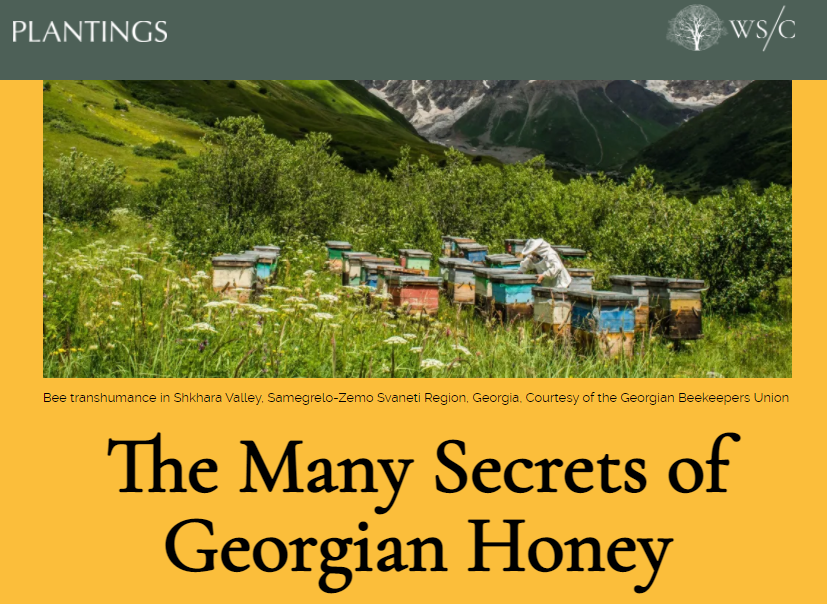
The Many Secrets of Georgian Honey, an article dedicated to the exceptional Georgian honey making, was published in the online journal Plantings by the World Sensorium Conservancy. The journal covers topics relevant to conservation and the intrinsic values of nature. The article was penned by Braden Bjella, an American culture journalist based in Eastern Europe, who takes readers to Georgian beekeeping journey with the help of the Georgian Beekeepers Union (GBU) and the Jara Beekeepers Association (JBA). As he says, “the question of Georgian honey quality is settled; now, it’s only up to the world to discover it".
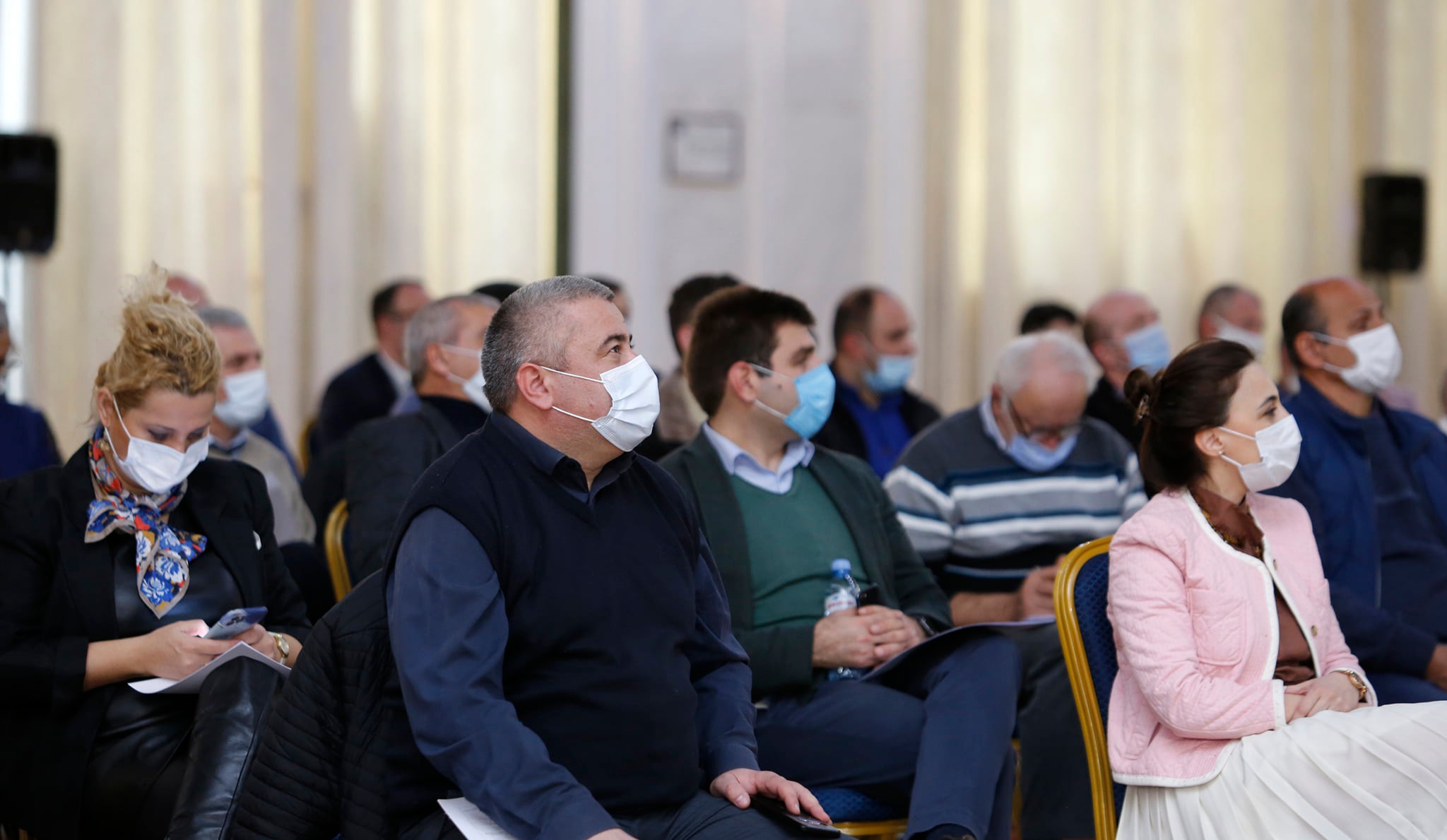
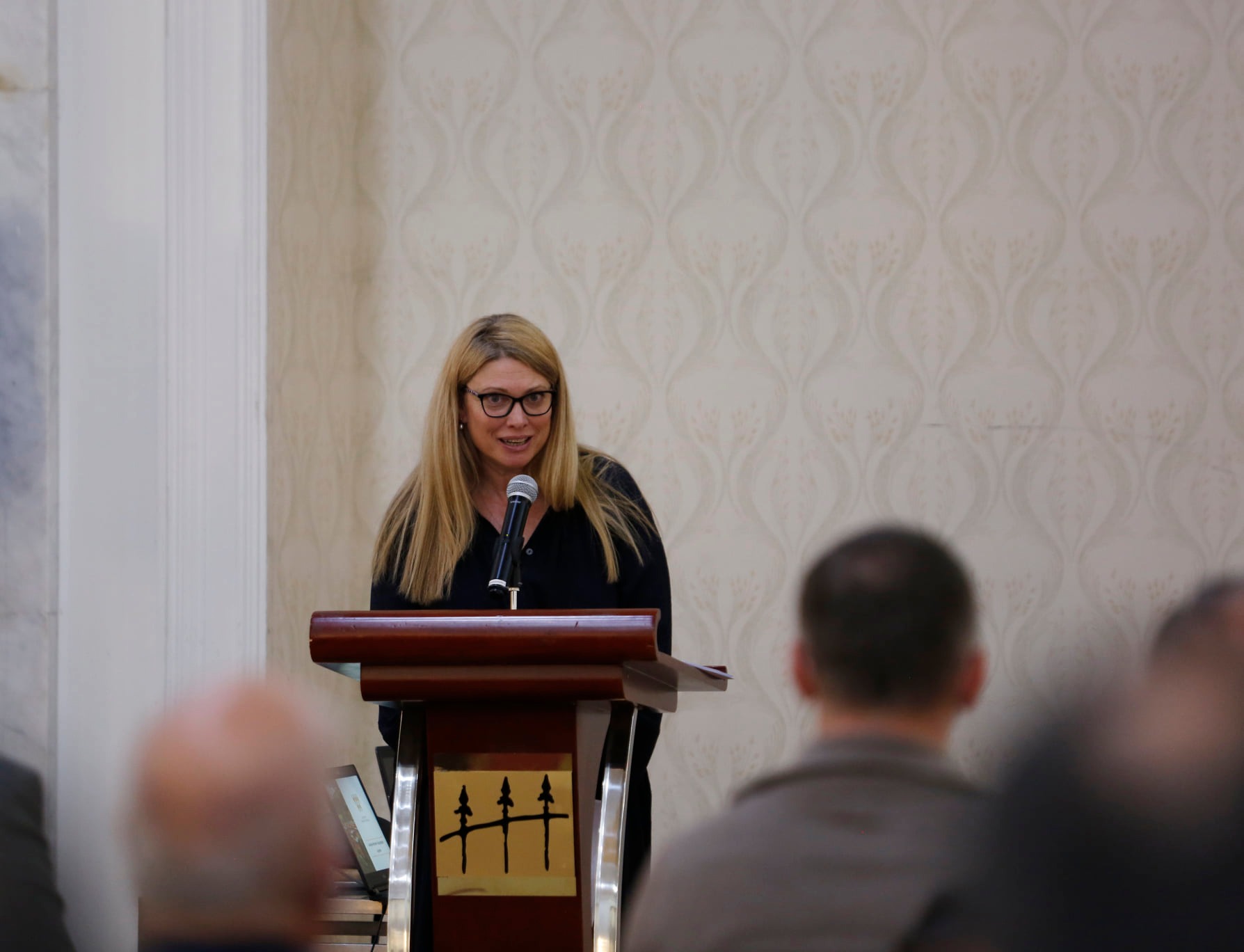
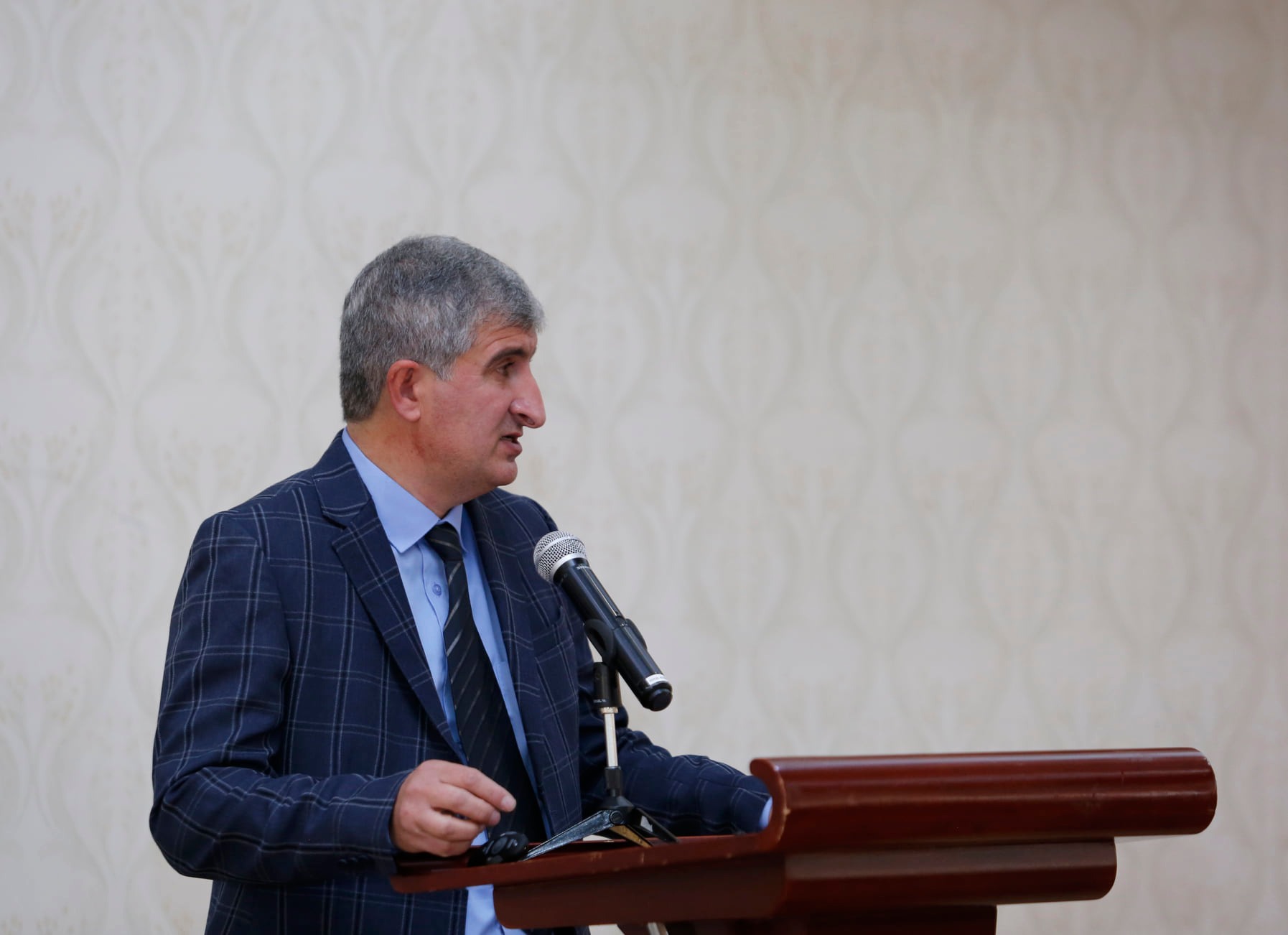
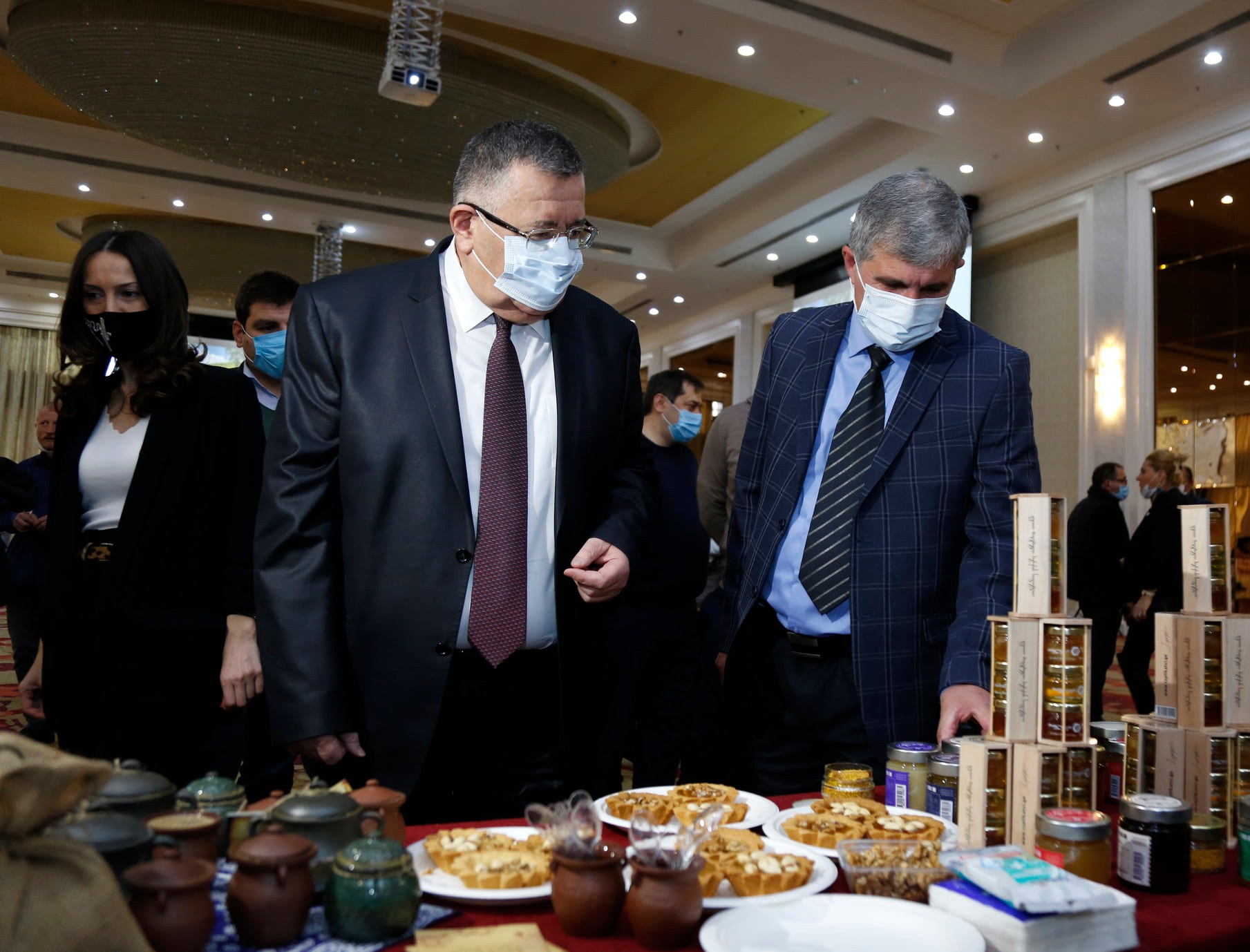
On December 20th, the Georgian Beekeepers Union (GBU) hosted an event to celebrate its third anniversary inviting key honey sector stakeholders to Hualing Tbilisi Sea Plaza.
Since 2018, the honey sector has seen huge gains under the auspices of the GBU, which is leading efforts to remove pervasive constraints to growth such as the widespread use of prohibited antibiotics and performing the role of non-governmental national representative of the honey sector. The GBU’s three years of extensive work resulted in increased honey quality, more effective governmental advocacy, better vocational education in beekeeping, including, Jara teaching, available information and trainings for beekeepers, promotion and improved image of Georgian honey at the Apimondia Congress and London Honey Awards, all that paving way for an increase of honey export.
‘There are some major developments in improving honey testing capacity, increasing awareness of Georgian honey, and opening of new export markets. The comprehensive laboratory analysis, before carried abroad, is now available in Georgia, which resulted in decreasing transaction costs.’ – Giorgi Khanishvili, the First Deputy Minister of the Environmental Protection and Agriculture of Georgia (MEPA).
‘We were able to achieve significant improvements during these three years. We are continuing cooperation with the government and other honey stakeholders to ensure production of safe and quality honey.’ – Aleko Papava, the Executive Director of the GBU.
Photo source: The MEPA
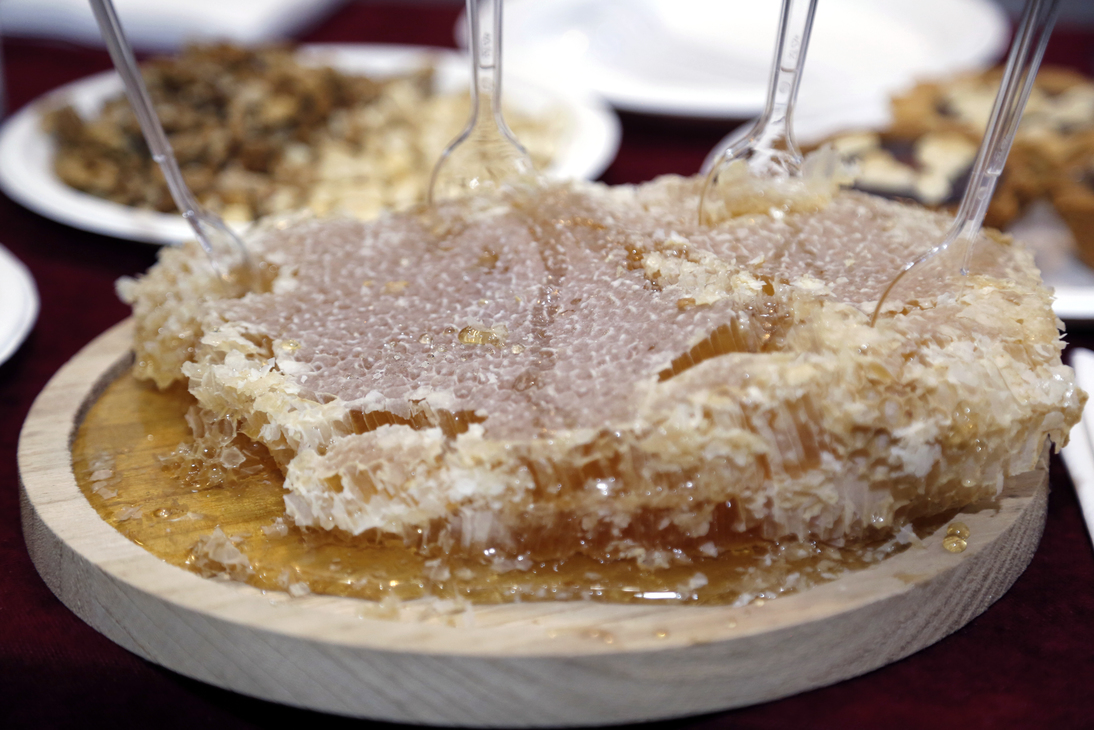
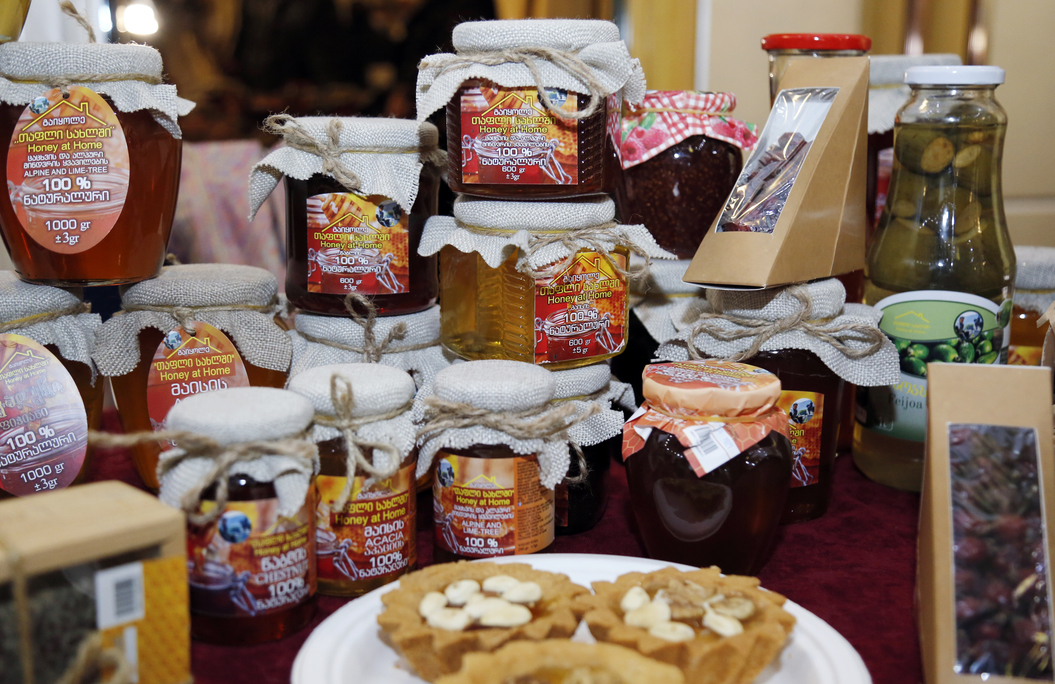
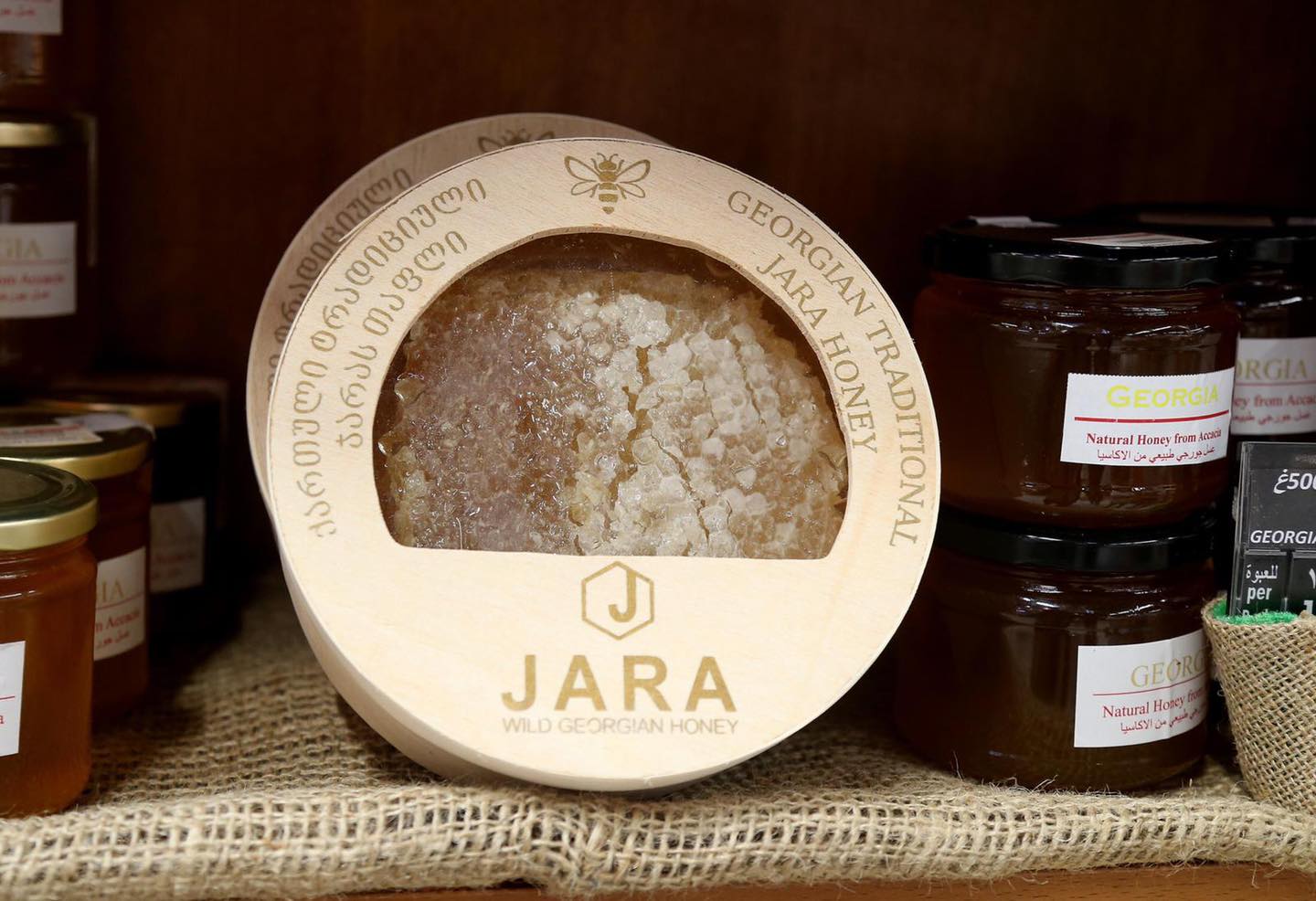
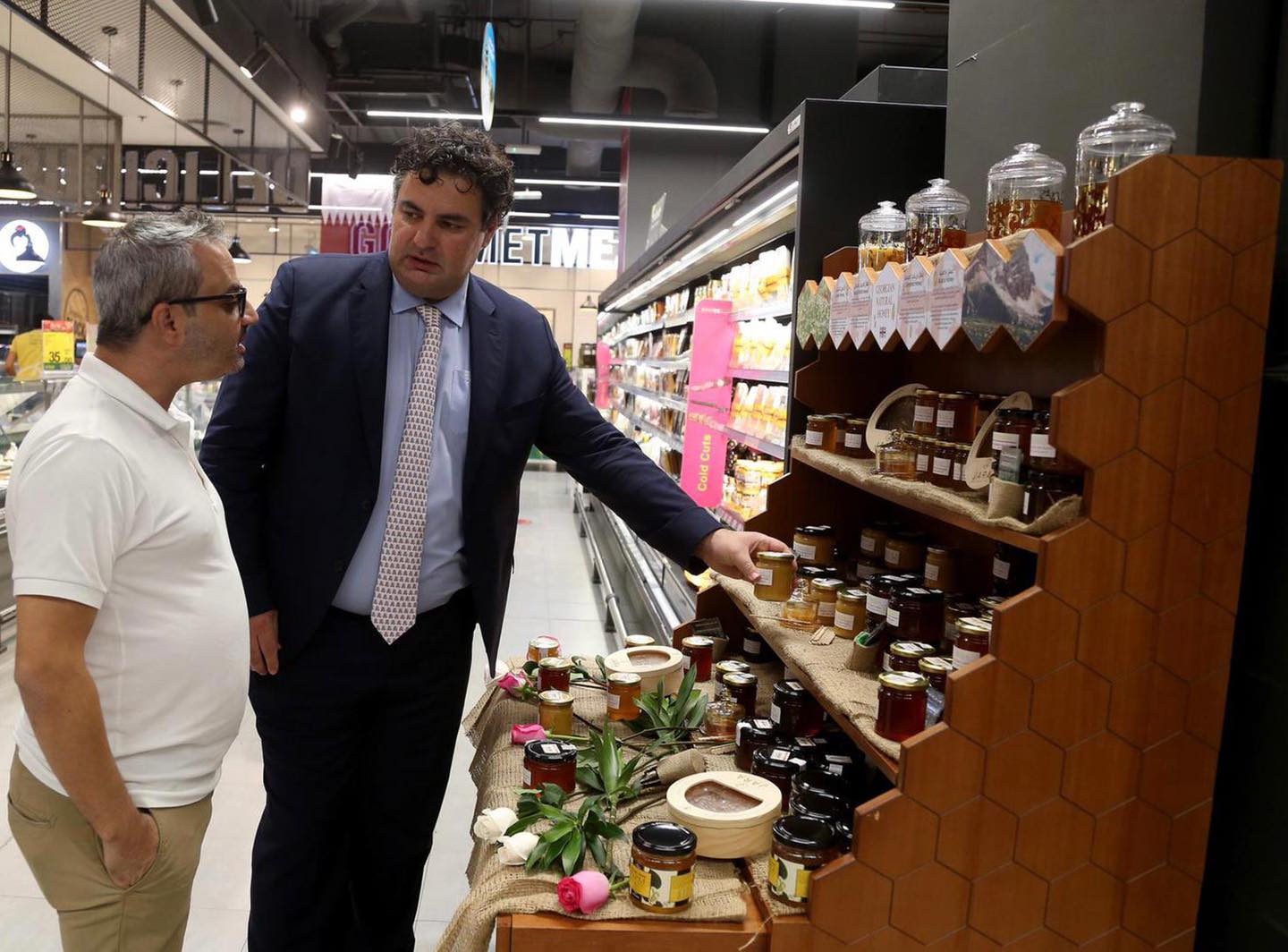
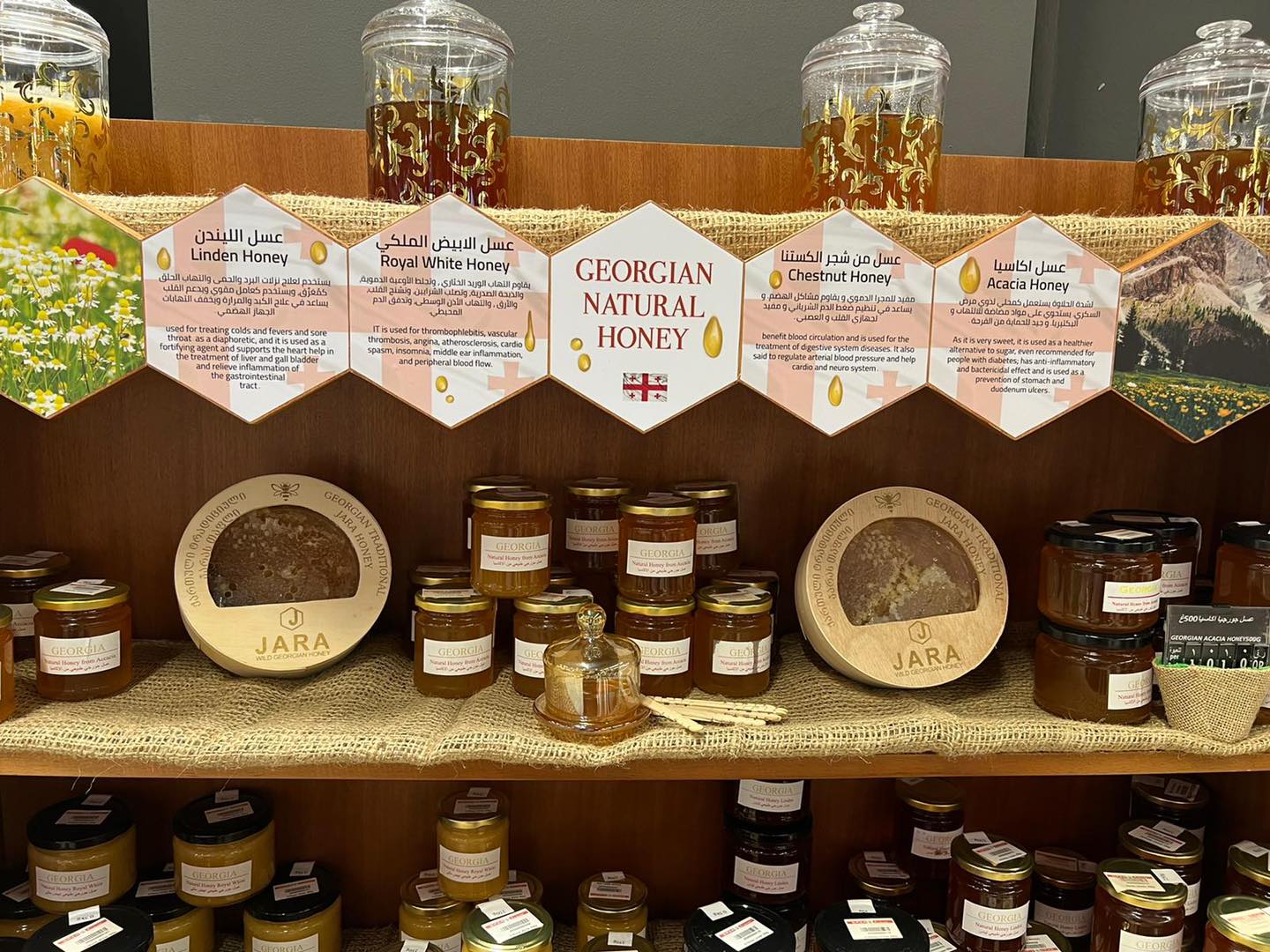
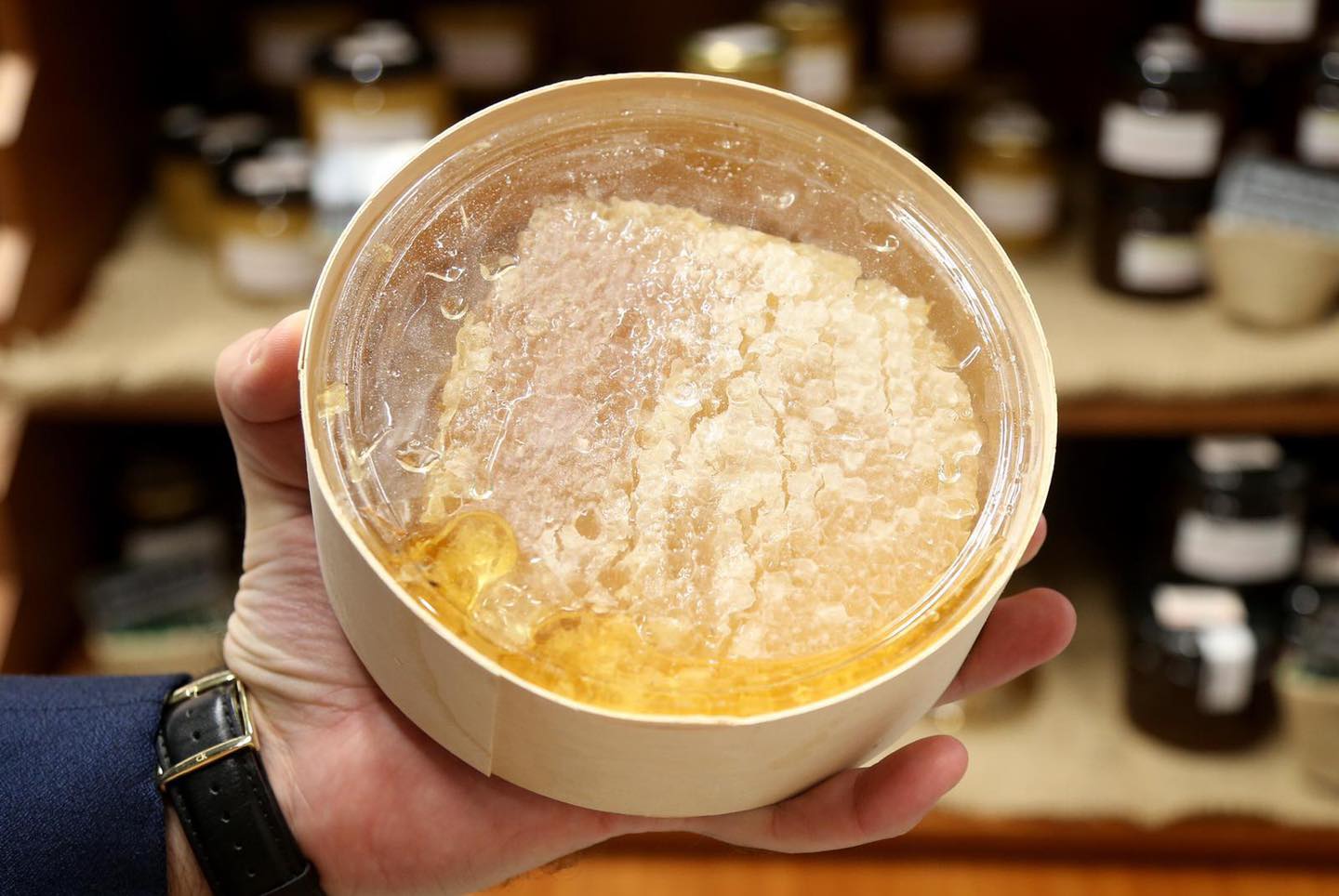
Nena Jara honey, along with other types of Georgian honey, found its place on the Georgian honey corner opened at the SPAR supermarket branch in Tawar Mall, the largest shopping mall in Doha, Qatar. Georgian honey corner will be opened in every branch of the SPAR chain. The process is backed by the Embassy of Georgia to the State of Qatar. The ALCP facilitated the export of Jara honey.
Local influential media AI Raya dedicated a comprehensive article to Georgian honey with a special highlight on Georgian beekeeping characteristics and traditional Jara.
The Qatar market seems promising. The Embassy’s previous facilitation for approval of a VET certificate, an essential requirement for honey export, has contributed to a 255% increase of Georgian honey export to Qatar in 2021 compared to 2020. The same figure saw a 350% boost in 2020.
Photo source: The Embassy of Georgia to the State of Qatar
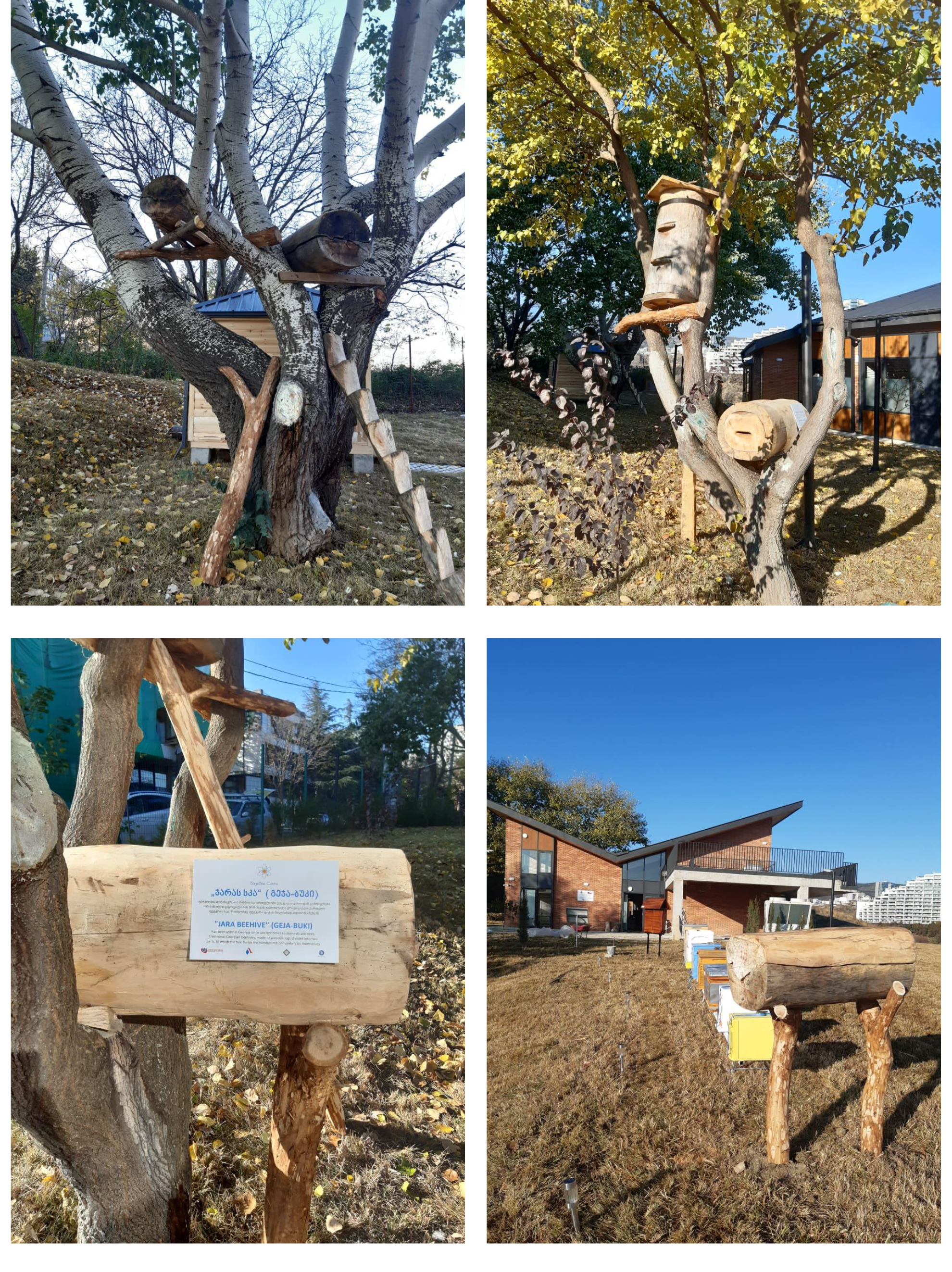
In November 2021 Jara hives took their place at the Beekeeping Regional Center, BageBee in Tbilisi for demonstration and educational purposes with the help of the Jara Beekeepers Association (JBA). The center is highly motivated to integrate Jara teaching in its beekeeping vocational programme now being developed under the project Modernization of Vocational Education and Training (VET) System Related to Agriculture - Work-based Learning. Last week, the JBA presented Jara honey to a wider audience at the Autumn Beekeeping Fair/Event, organized by the BageBee center, which was also attended by the Georgian Beekeepers Union (GBU) board members. Mutual cooperation between the GBU and the center is ongoing. The executive director of the GBU was invited to give a speech at the event and the director of the center was invited to the GBU Weekly Facebook Live meeting to present the center to the GBU member beekeepers.
Beekeeping Regional Center BageBee opened in Tbilisi in July 2021. The idea is to support the rural/urban connectivity, sustainable agriculture, and the vision of Tbilisi as a Green City.Key principles of the centre are environmental appreciation, sustainable resource use and inclusive growth. The BageBee center was built and equipped by the Czech Development Agency in the framework of the project Sustainable Development of Beekeeping in Georgia with a partnership of People in Need, Georgia, Association Agora and Tbilisi City Hall.
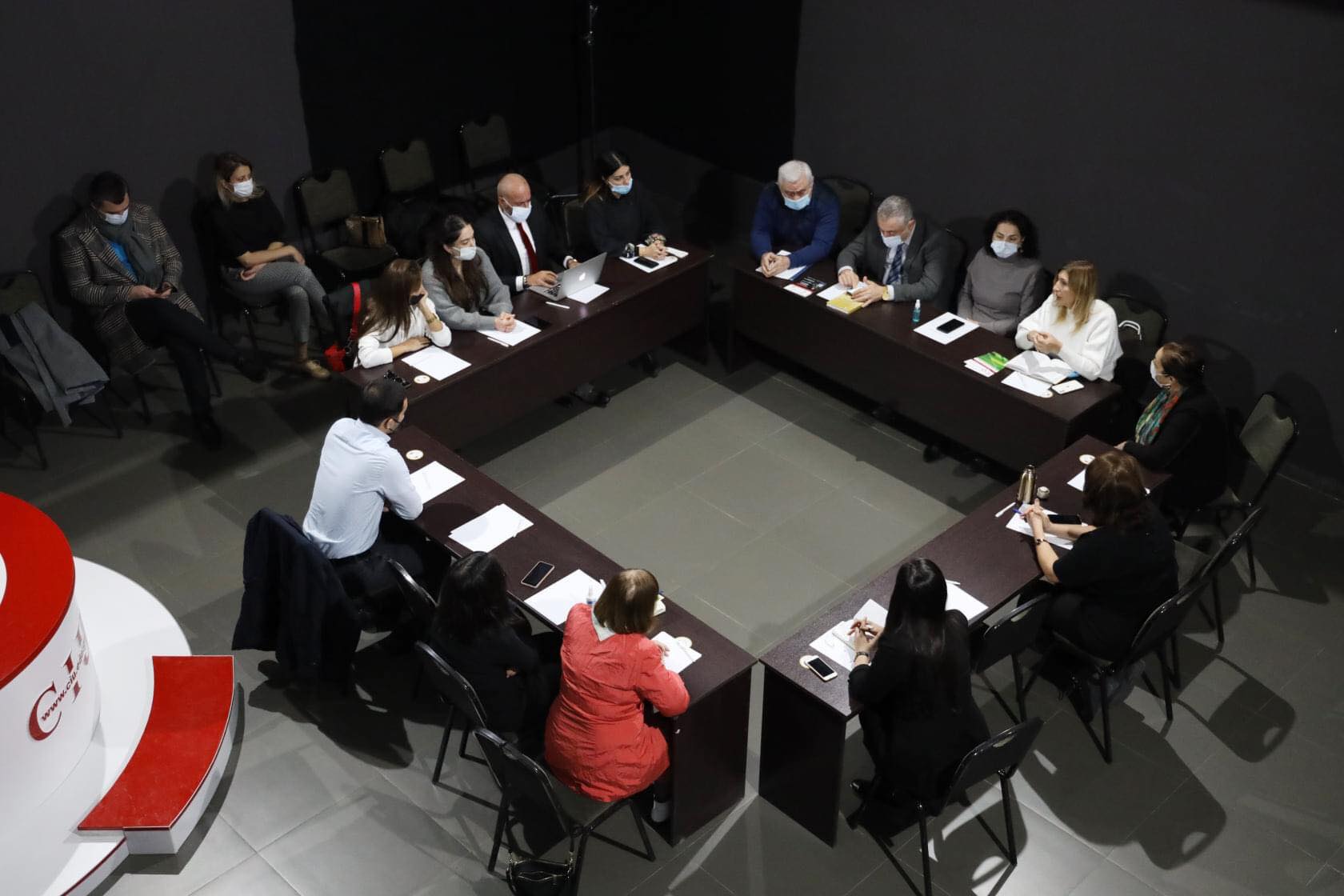
The Journalism Resource Centre (JRC), in partnership with the Society of Women for Rational Development in Azerbaijan (WARD), hosted a study visit of media and educational institution representatives of Azerbaijan.
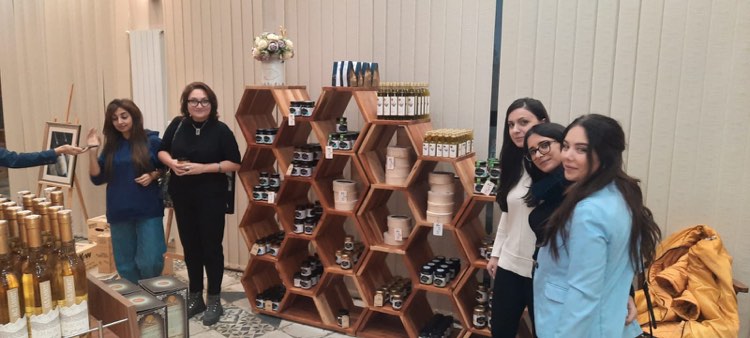
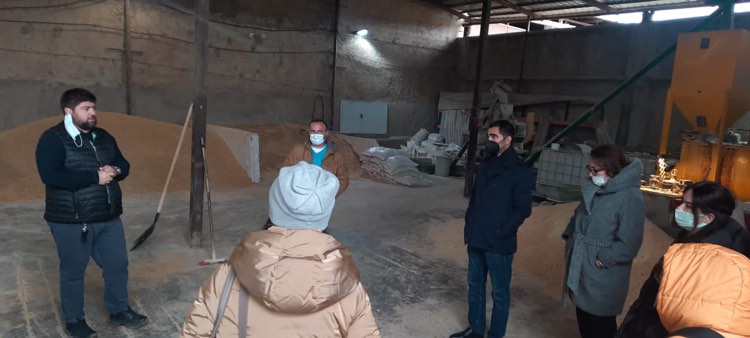
Agri-journalism students and lecturers at Caucasus International University shared agricultural journalism teaching practices. In Kakheti, they visited the farm of Beka Gonashvili, Head of the Georgian Shepherds Association, farmer, and entrepreneur. They also visited Kakhetian Traditional Winemaking to see their Jara honey and wine production and the dairy Leanka in Dedeplitskaro. The importance of education and information for farmers and producers and their cooperation with agricultural media was emphasized.
Beka Gonashvili emphasized the importance of providing quality information to farmers and producers. He is both a blogger and a farmer, so he is regularly publishing useful agriculture-related posts. The female owner of Leanka dairy talked about how the enterprise is ensuring the quality and how media is playing a significant role in this. At Kakhetian Traditional Winemaking Company particpants saw wine and Jara honey production and their export and how the Georgian Beekeepers Union is advocating the interests of honey sector representatives and supporting the awareness raising of beekeepers, such as through the national information campaign - Do’s and Don’ts of Antibiotic Use. Participants also watched a report about Jara Honey by Al Jazeera and Jara the Movie.
‘We will all together will work well for expansion the teaching of agricultural Journalism in Azerbaijan’ – Natia Kuprashvili, the Head of the JRC.
The Society Women for Rational Development (WARD) in partnership with the JRC is going to prepare a course of agricultural communication based on the study visit and share it with educational institutions in Azerbaijan.
Please see the related links: a textbook of Constructive Agricultural Journalism and video lessons added to this textbook.