



From the ISET Economist news (http://www.iset.ge/news/?p=4633)
By Eric Livny

The “do no harm” (primum non nocere) principle is well known to students of medical schools. It is one of the most fundamental maxims in medicine, as formulated, for example, in the Epidemics book of the Hippocratic Collection:
“The physician must … have two special objects in view with regard to disease, namely, to do good or to do no harm“.
Doctors are taught that medical interventions are not risk-free. Thus, when facing a “problem” one should consider whether to use a particular procedure (e.g. surgery or chemical treatment) or do NOTHING.
Not surprisingly, this very principle has applications in many fields other than healthcare. And it is high time for this principle to be studied and applied in Georgian policymaking.
THE HARM OF OVERZEALOUS “HARMONIZATION”
Ever since signing the EU Association agreement in June 2014, Georgia has embarked on a spree of initiatives seeking to “harmonize” Georgia’s legislative and regulatory environment with EU’s acquis communautaire. The aim, so it appears, is to instantly transform Georgia into a European nation.
It all started on September 1, 2014, with the introduction of new VISA AND RESIDENCY REQUIREMENTS, modeled – so the Georgian public was told – after the best EU regulations, and intended to meet EU requirements as part of the visa liberalization process.
Within just a few months, several other pieces of legislation have been drafted and submitted to parliament (a few more may be in the pipeline without any knowledge on the part of relevant businesses and civil society stakeholders), allegedly as part of the harmonization effort.
- A new law onLABOR MIGRATION, submitted to the Georgian Parliament in early 2015, sought to prevent trafficking (a goal consistent with Georgia’s obligations under the visa liberalization plan), but also (Article 16) to restrict the ability of Georgian companies to hire badly needed international experts. Hard to imagine, but true! Thanks to a concerted communication effort by the Georgian business community, and goodwill on the part of the Ministry of Economy and Sustainable Development, Article 16 was swiftly removed from the draft law.
- Recent amendments to the Georgian law onBROADCASTING (Article 64 § 2) restrict sponsorships and limit advertising to 12 minutes per hour. The idea to reduce advertising time to somewhat more civilized levels is consistent with EU rules, yet Georgia seems to be in a particular hurry to tick off this harmonization box. Whereas the Association Agreement talks about gradual “approximation” over a period of 3-5 years, Georgian parliamentarians opted to dramatically accelerate the process by making these truly life-saving amendments effective almost immediately (as of April 1, 2015). Instead of creating harmony, this kind of fast-track overzealous approximation does not allow private broadcasters any time for adjustment, jeopardizing their ability to generate income, produce high quality content, and maintain independence. Unfortunately, suggestions by Rustavi 2 and other TV channels to stagger reductions in advertising time over several years have so far fallen on deaf ears.
- Yet another example of rushed legislation that appears to ignore the interests of businesses concerns the recent decision to increase EXCISE TAXES ON ALCOHOL AND TOBACCO as of January 1, 2015. The Government’s official aim was to increase budget revenues while harmonizing Georgia’s regulatory environment with that of the EU. Yet, the manner in which the whole process was rushed raises many questions. Georgian companies were not allowed any time to adjust their investment and production decisions, leaving them with excess capacity and losses. Furthermore, the level of excise taxes on alcohol was set at a level exceeding that of many European nations. This was decided without examining relevant demand elasticities, that is, the extent to which higher taxes will affect sales and budget revenues. In a country with rich traditions in home production of high quality alcoholic drinks (that are not subject to excise taxes), demand for alcohol is likely to be quite a bit more elastic than in most European nations. After all, Georgian consumers can switch to homemade wine or chacha, spelling doom for Georgian government’s plans to raise an extra 100mln GEL in excise tax revenue.
A COMMON PATTERN?
Taken alone, none of these legislative initiatives are particularly damaging for the Georgian economy. Georgian companies would have quickly acquired the ability to handle the extra layer of bureaucracy when bringing foreign experts and workers. Broadcasters will raise per minute prices for advertising and sponsorships, and advertising companies will learn to deliver their marketing messages in fewer seconds. Forced to pay higher excise taxes, Georgians will drink less beer and more wine. Breweries will adjust production volumes or export to Azerbaijan. The Association Agreement will be implemented ahead of schedule. At least on paper.
The problem with all these initiatives is that they represent a pattern of policymaking that is very different from the European ideal which Georgia is supposed to aspire to. And, taken together, they defeat the very purpose they are supposed to serve: bring Georgia into the European family of nations.
First and foremost, the manner in which these new regulation are enacted undermines Georgia’s reputation as a great place to do business. A key consideration for new investors is stability and predictability of the business environment. Countries may certainly change their internal regulations from time to time, but this should be done in coordination with the business community, while listening to companies and allowing them sufficient time to adjust.
Second, Georgian policymakers should learn to do much better homework before coming up with new laws and regulations. To do no harm, doctors may prescribe additional X-ray or blood tests. Policymakers can employ standard tools of applied economics analysis to simulate the impact of proposed regulations on tax revenues, GDP, income and investment levels, as well as evaluate associated corruption risks. While common in Europe, none of these tools are used in Georgia. Yet another good possibility is to move in small steps, conducting policy experiments and assessing their impact.
Third, unless dealing with urgent or complicated technical matters (such as Lari devaluation), Georgia’s policymaking process could benefit from greater participation by interested parties. Practically all EU approximation measures could and should be subjected to a lengthy and inclusive process of public consultations that would increase their chances to be politically accepted. In fact, such consultations are explicitly encouraged by the EU Association Agreement.
Last but not least, the hasty attempts to tick off boxes on EU harmonization may undermine the very process of Europeanization the Georgian government is trying to promote. The use of the Association Agreement as a smokescreen for passing dubious laws not only harms Georgia’s immediate economic interests, but also plays into the hands of those political forces that aspire to bring Georgia back into the Russian fold.
* * *
The other day, I heard Giorgi Kadagidze, the governor of the National Bank of Georgia, speaking about the need for Georgia to grow at a faster pace, and how faster growth is predicated on the government’s ability to implement painful and costly adjustments. The kind of “second-generation” structural reforms envisaged by governor Kadagidze would take time to implement. Until then, however, there are many things the Georgian government could STOP DOING. In this way the government would save taxpayers money, save itself the embarrassment of backtracking and apologizing, and save Georgian businesses the nervous energy and resources that could be put to more productive uses.
It is time for the Georgian policymakers to learn the Hippocratic principle: do no harm!
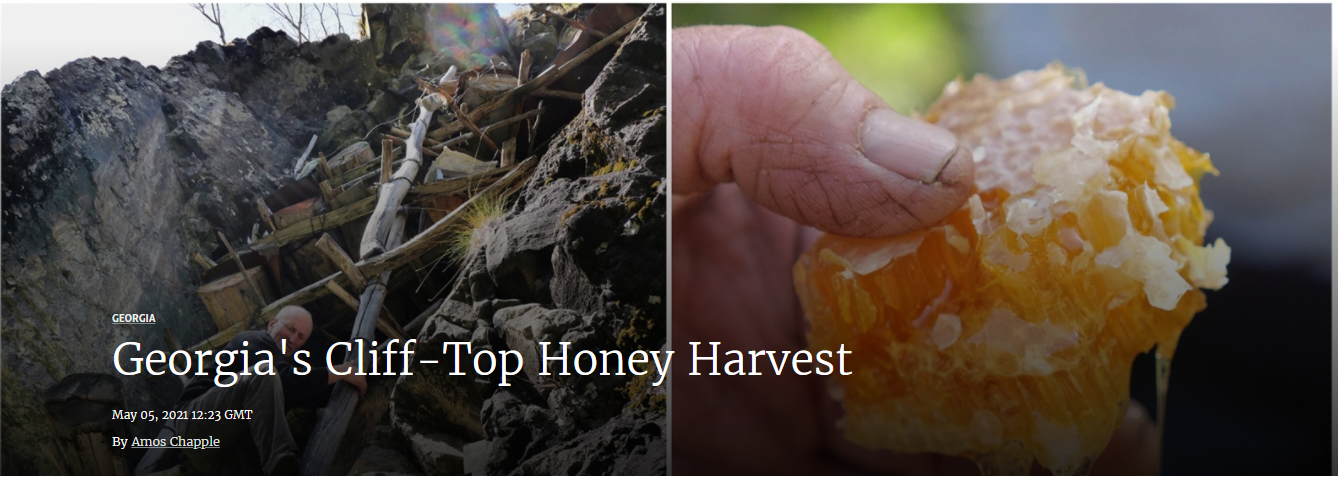
Radio Free Europe/Radio Liberty, an international media organization broadcasting in twenty-seven languages in twenty-three countries, published an article about Jara: Georgia’s Cliff-Top Honey Harvest by an international photographer/journalist Amos Chapple. He reached out to the Jara Beekeepers Association (JBA) and travelled to Ajara to see Jara beekeepers climbing heights for Jara honey harvest. Radio Tavisupleba (Radio Liberty Georgia) also put a Georgian version of the article on its website.
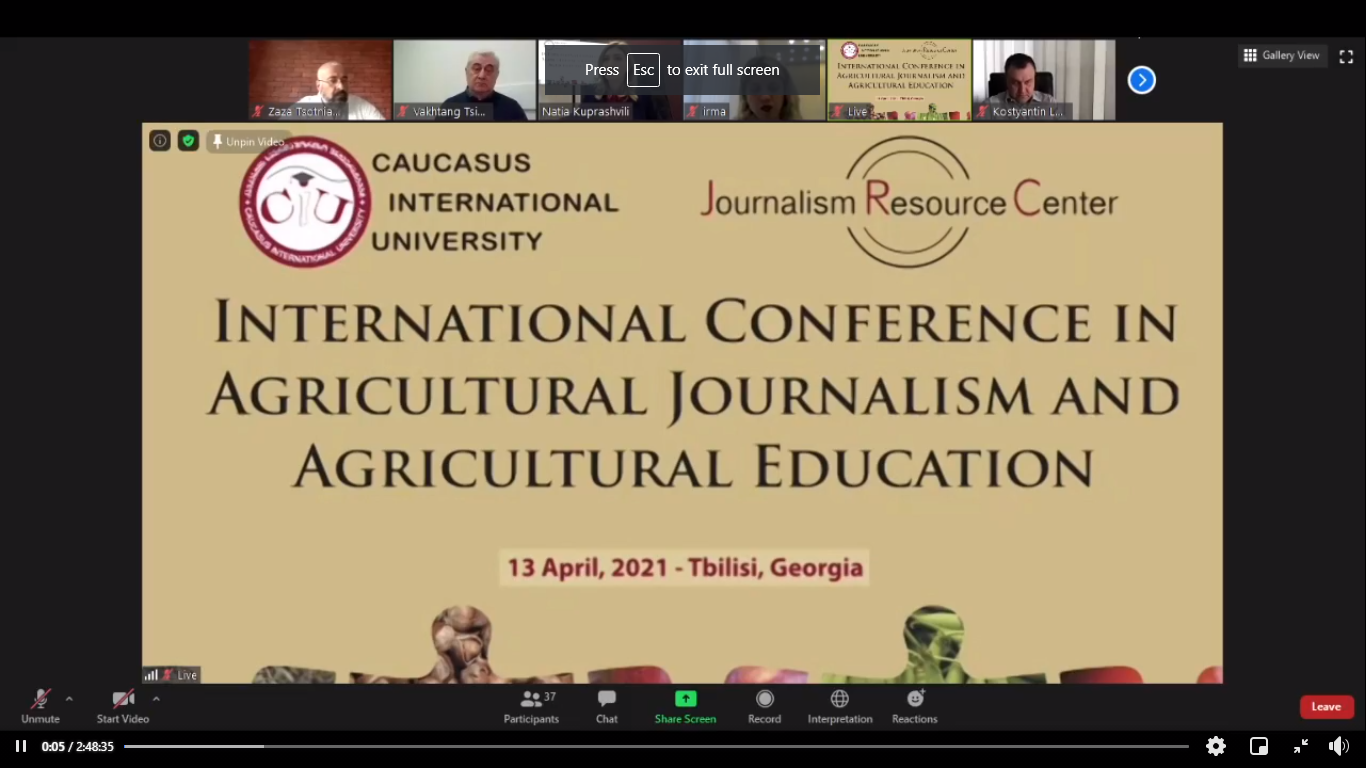
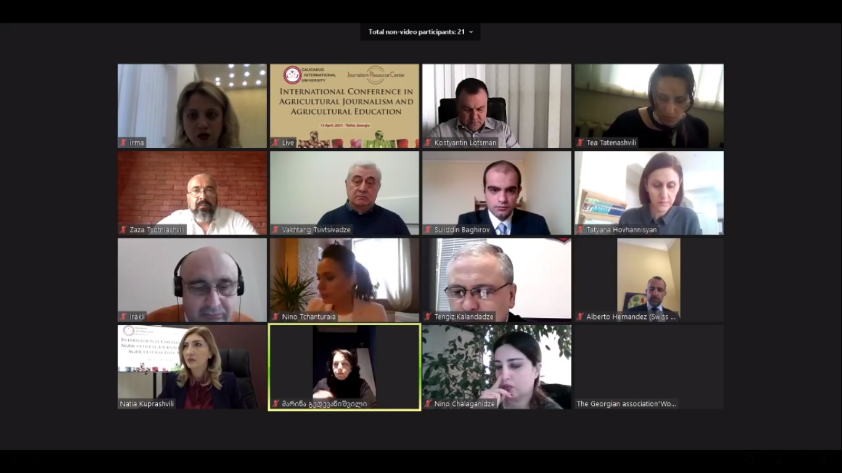
On April 13th, an online event of the Journalism Resource Center (JRC) International Conference in Agricultural Journalism and Agricultural Education brought together regional academic and media representatives from Georgia, Armenia, Azerbaijan, Moldova and Ukraine. The enthusiasm for, dedication towards and interest in agri journalism and its importance for people and youth were striking.
The Deputy Regional Director of the Swiss Cooperation Office (SCO) did the opening speech. The representatives from Georgia showed that they understand the demand for and are fully engaged in the media market for agri journalism.
‘Agri journalism is an integrated course for bachelor’s students. After Training of Trainers for lecturers we will develop a separate course. We also see the demand from students. Cooperation with media and government agencies is crucial in this regard.’ - A representative from Brusov State University in Armenia.
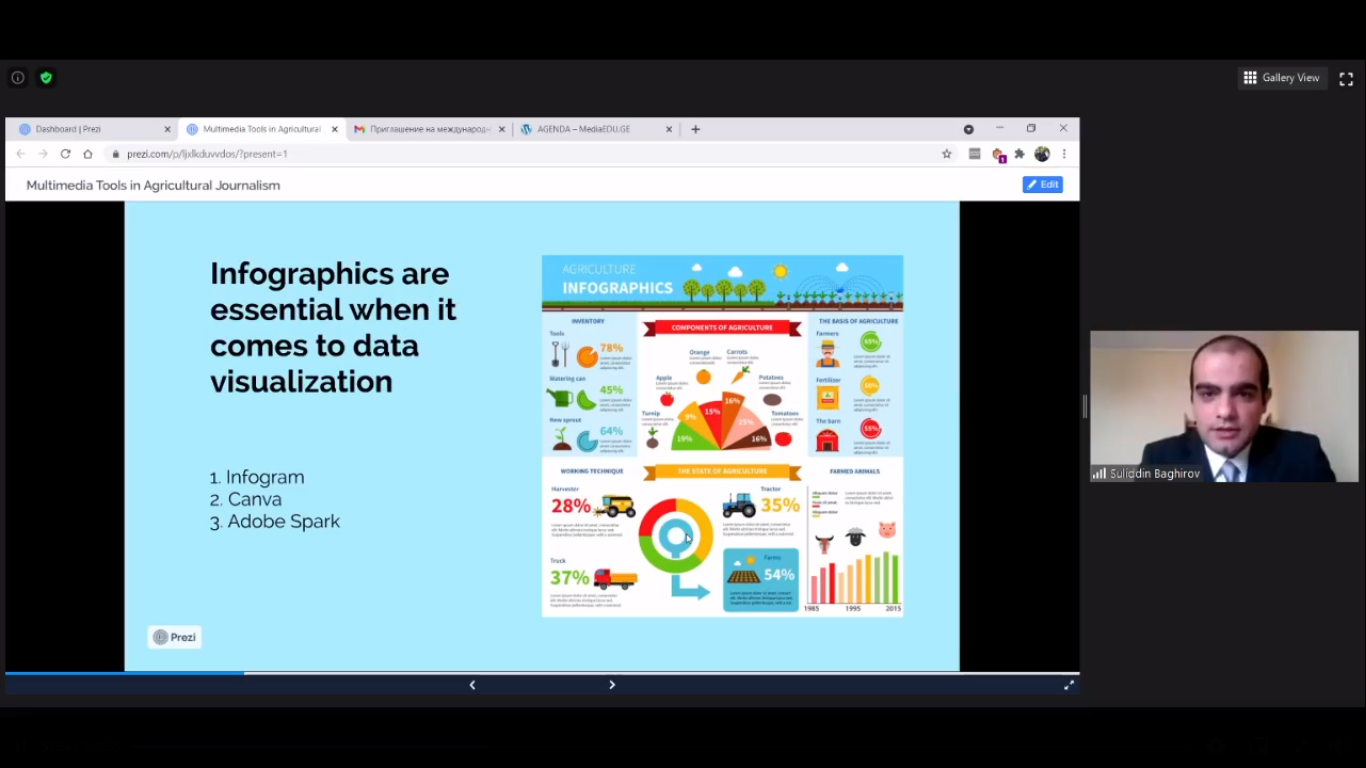
A freelance journalist from Baku talked about the usage of multimedia tools in agri journalism. The field of agri journalism is attractive but seems difficult to attain to media representatives from Moldova and Ukraine. A Producer of Volinsk Branch of National Public TV and Radio Company of Ukraine expressed his willingness to co-operate with the JRC to copy some activities related to agri journalism.
‘I am surprised by hearing about Georgia and Armenia, where agricultural education works so well’. - The LikTV Founder in Moldova, who empathized with the difficulties expressed by the representative of Ukraine and stated that universities in Moldova need to work on establishing agricultural journalism.
The ALCP Team Leader spoke about the programme support for agri journalism development in an interview on Agrogaremo TV. An agri journalism course alumni shared his experience and motivation with the JRC. A short documentary video by the JRC tells us a story about agri journalism development.
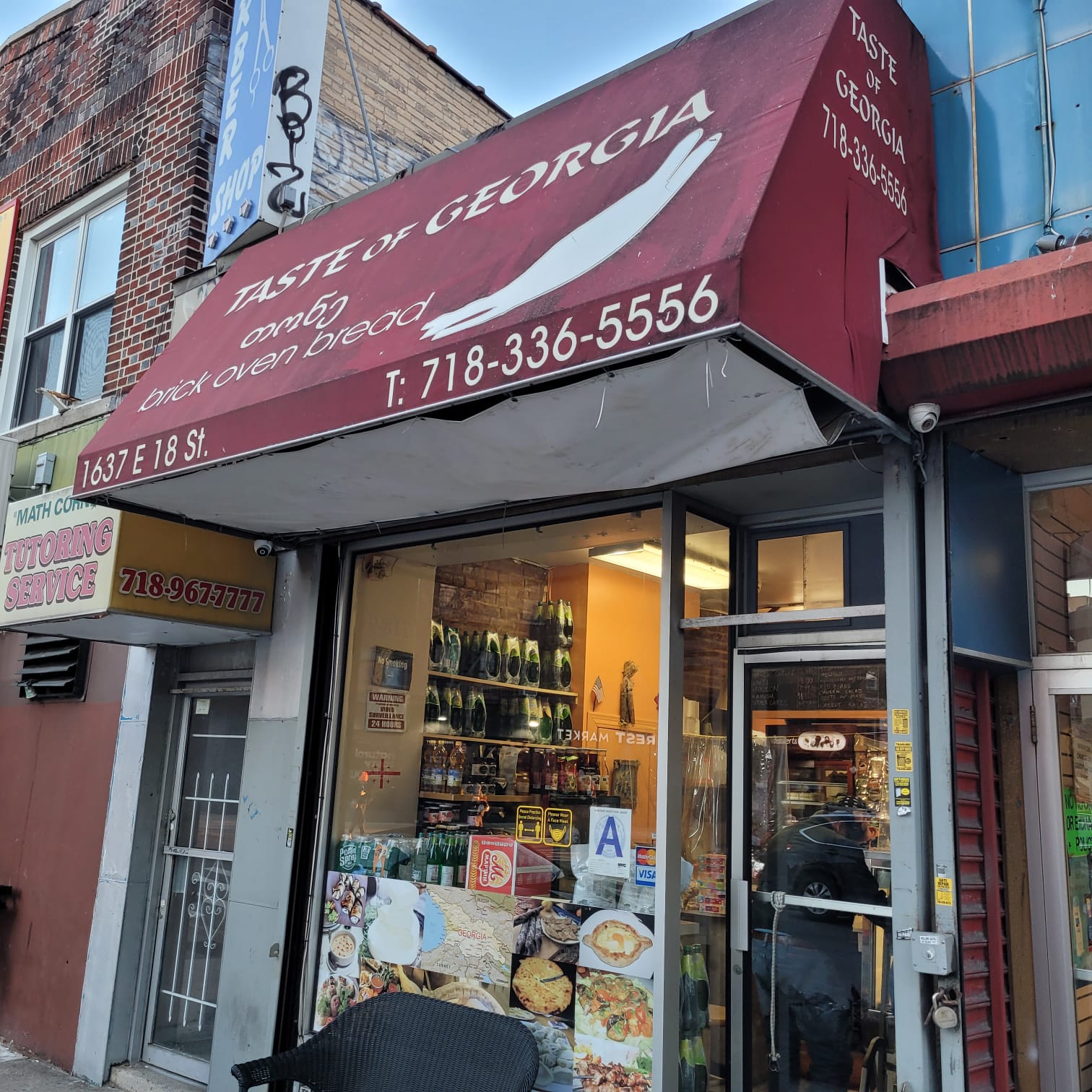
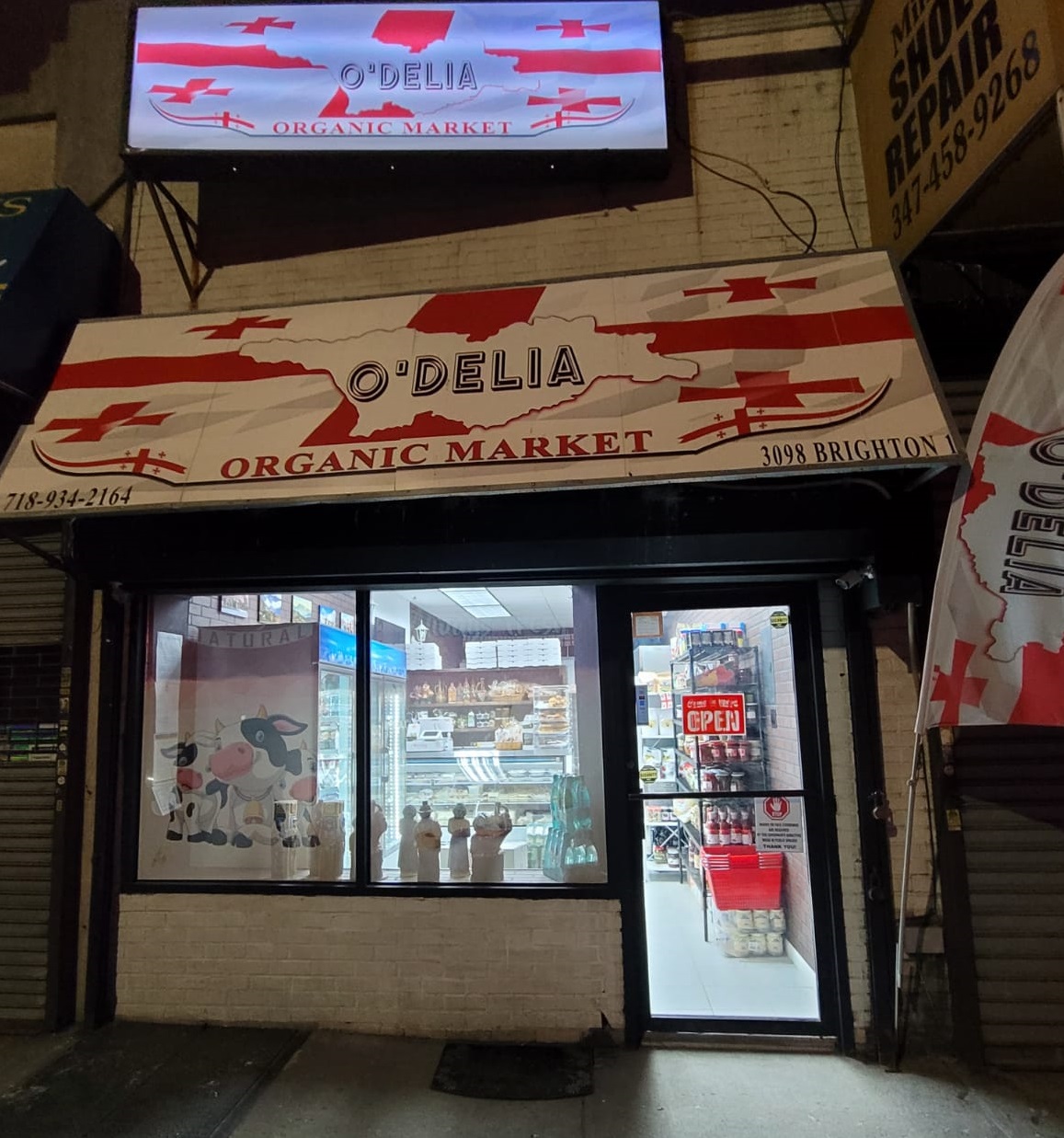
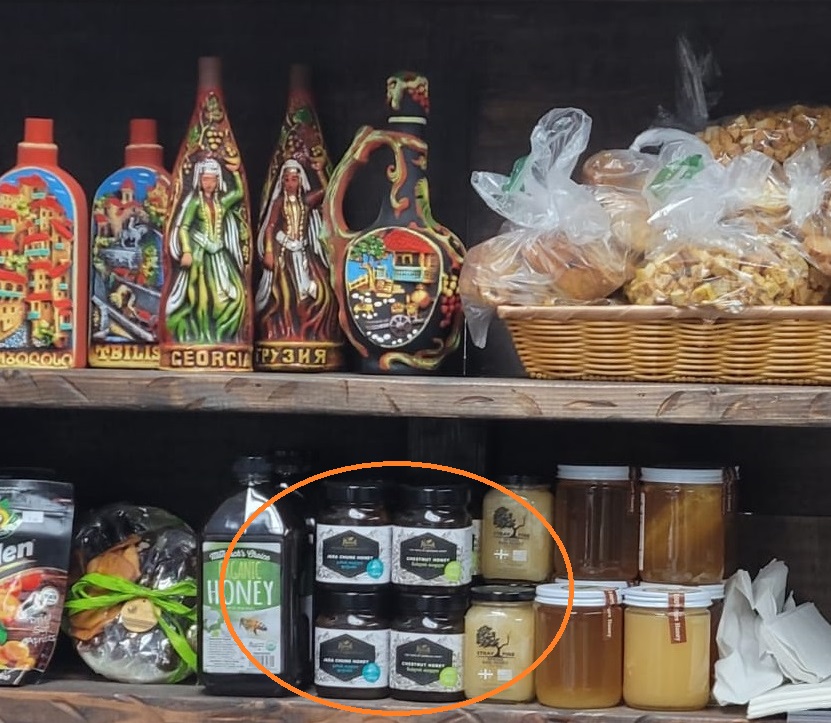
Nena a honey export company has been exporting since 2019. Chestnut and Jara honey have been sold in twenty shops in New York, Pennsylvania and New Jersey from January, 2021. Nena also exported Jara honey to Japan. And by the end of February, Bio Jara honey, a new product will be exported to the USA. Canada is a promising market and has repeated its order for the fourth time.
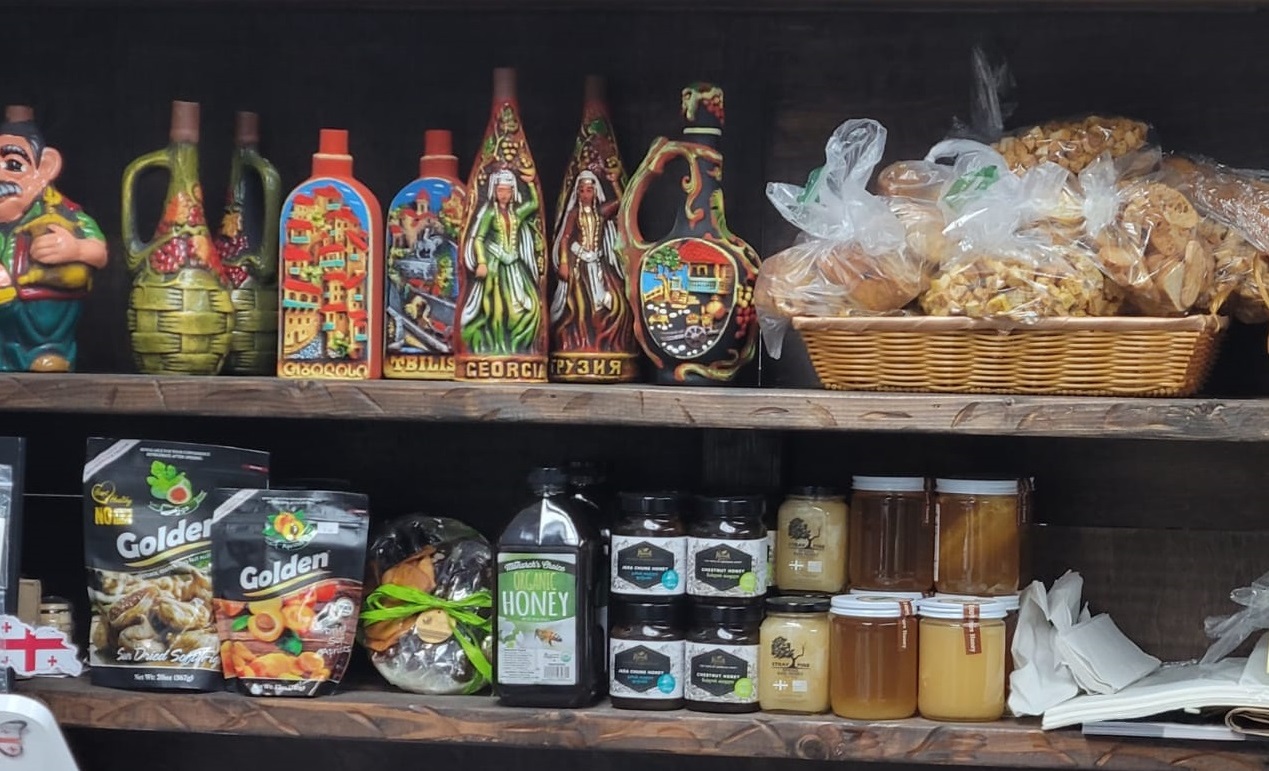
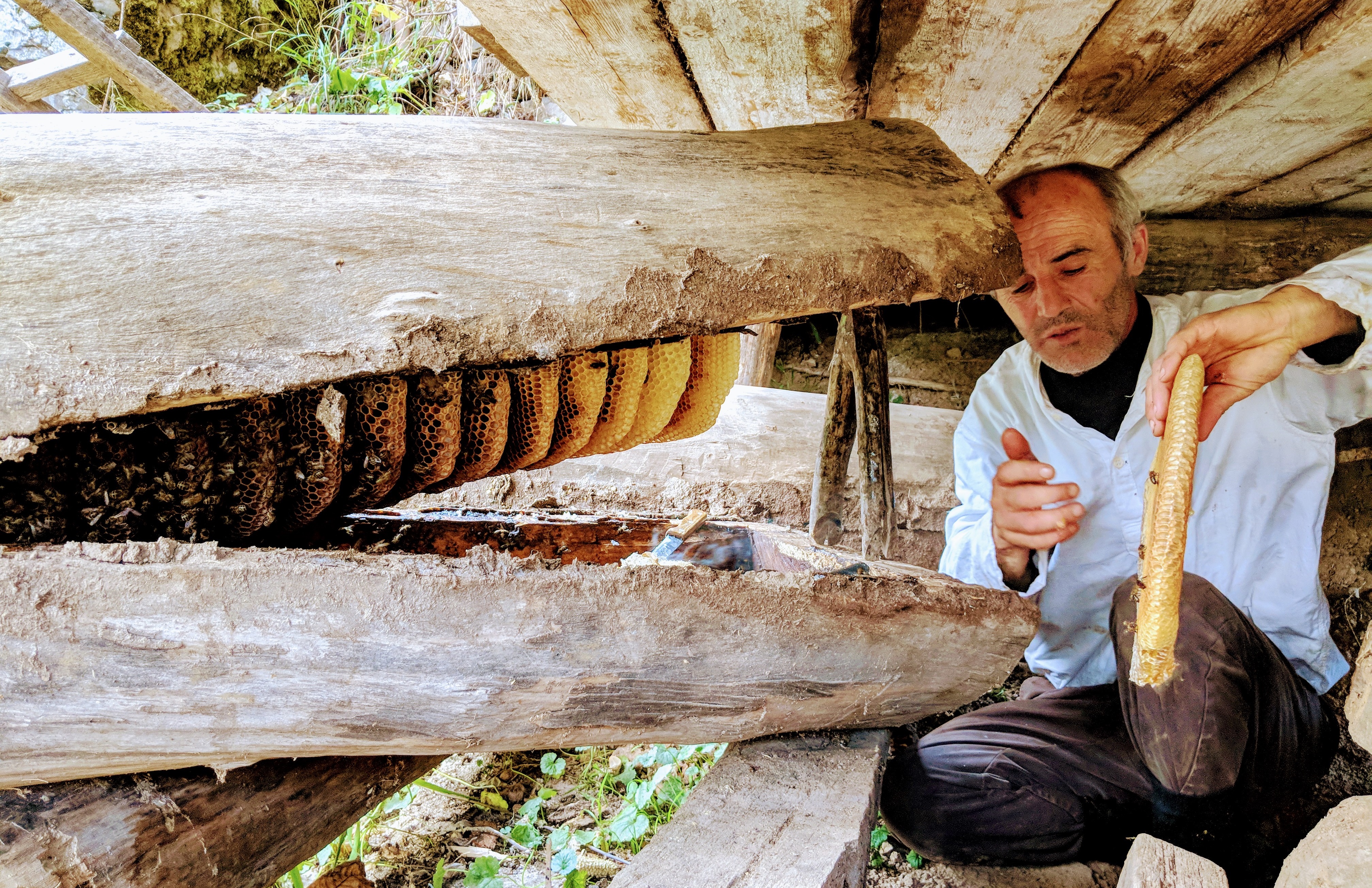
Producing honey in Jara hives has officially been granted Intangible Cultural Heritage status by the National Agency for Cultural Heritage Preservation of Georgia. The Jara Beekeepers Association (JBA) applied to the Agency back in 2020.
Jara is traditional wild beekeeping, a practice which almost died out but which has since 2014 begun a slow revival with the facilitation of the ALCP. The ancient tradition with strong roots in traditional agriculture, culture represents a unique way of life. The status recognizes Jara’s need to be preserved for future generations earning a place amongst other honourable Georgian traditions, including, Qvevri wine-making and Georgian song and dances. This status and will contribute to its further preservation and promotion.
It also brings hope and feeling of pride to those beekeepers who are continuing or are now taking Jara beekeeping up.
Jara has been on a fascinating journey since 2014. This journey includes The first commercial harvesting, registering the Jara honey mark, being promoted at the international exhibitions, first Bio certification, being taught at the VET college and reaching export markets in the US and Canada. And we can be sure, more things are on their way.
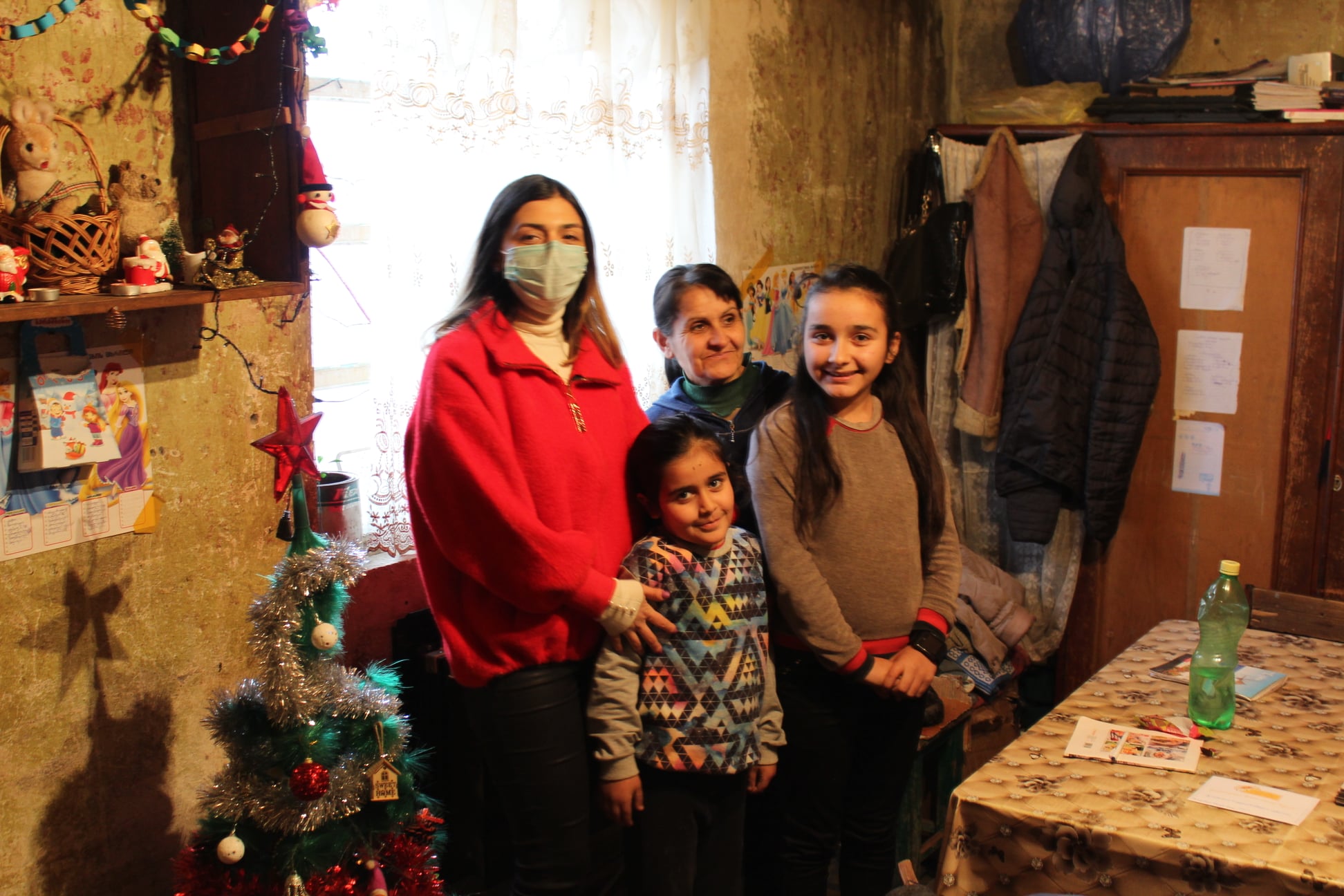
Christmas is a magical time awakening the holiday spirit in us. They say, Christmas is the spirit of giving without a thought of getting.
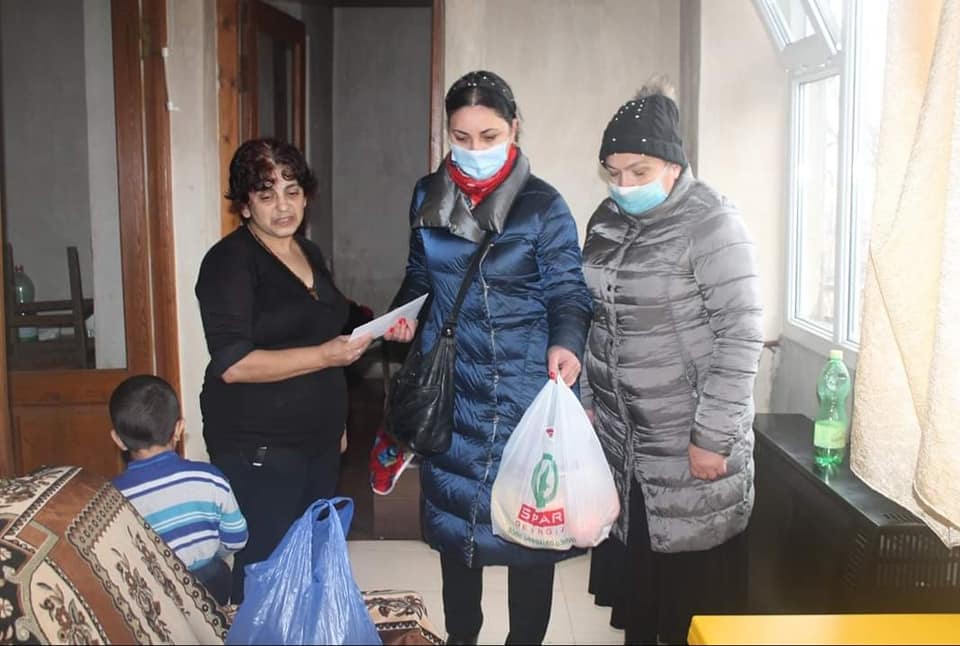
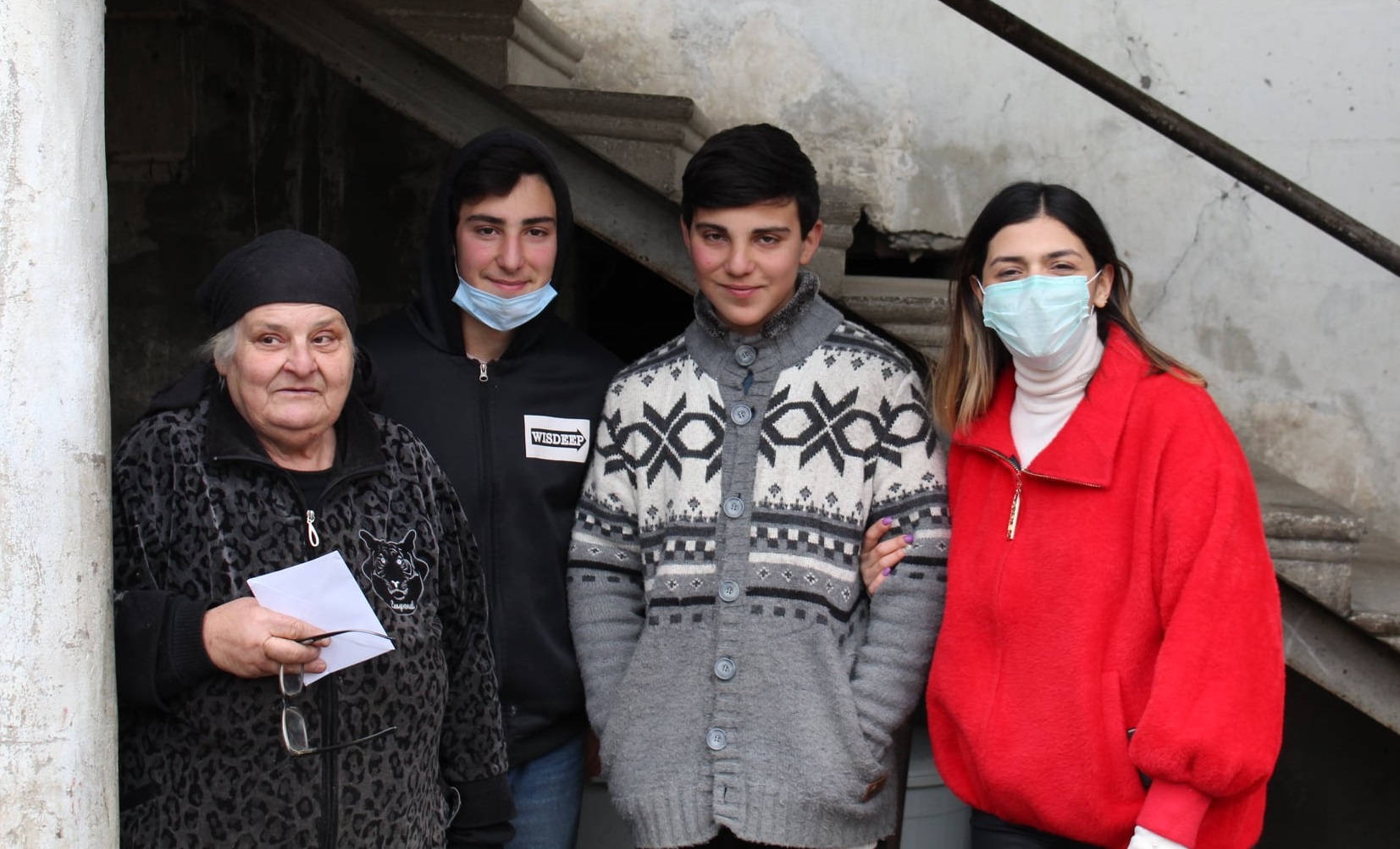
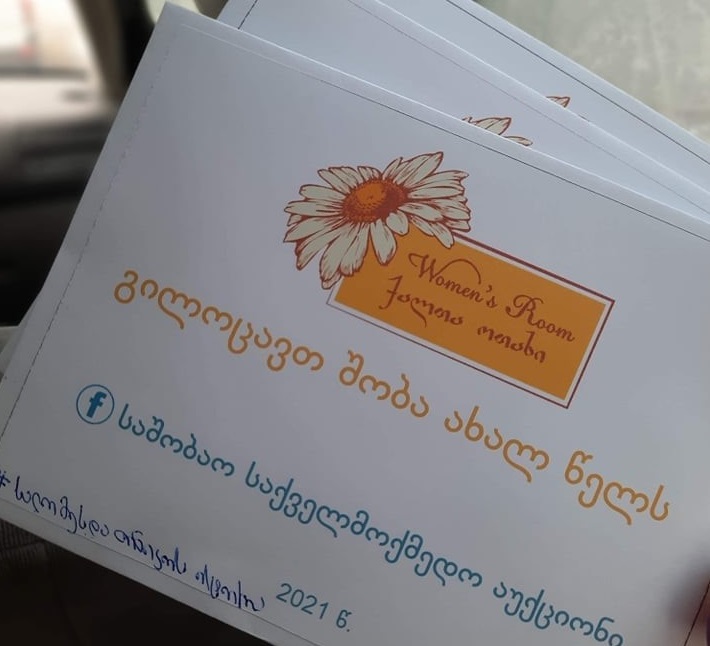
Before Christmas this year, the managers of the municipal Women’s Rooms in Kakheti, who like everyone else have adapted themselves to remote working due to the COVID-19 pandemic, established an online Christmas Charity Auction on Facebook to help families in need affected by the pandemic. The managers selected seven families in need for help. Their stories are heartbreaking; of a single mother, a victim of domestic violence, raising her children by herself, grandparents raising orphans, a child with disabilities and families with many children living in extreme poverty. Up to five hundred people joined in the auction donating or buying things in the auction with the money raised going for donation. The auction raised more than two thousand Gel over two weeks and besides money, the families received sweets, books, gifts; and special food for a girl with Celiac Disease.
The Christmas of the seven families was changed for the better. The Christmas Charity Auction finished on the 7th of January, though the online group on Facebook remains active, as the Women’s Rooms are planning to continue sharing the act of kindness with families in need and are open to anyone willing to contribute to any future auctions.
There are twenty-eight Women's Rooms in twenty-seven municipalities of four regions of Georgia. Find more about Women’s Rooms here.
An article Challenges Emerge for Women Entrepreneurs as a Result of the Covid-19 Pandemic has been published on Civil Society Portal in Georgia as part of an essay competition. The woman entrepreneur-Zeinab in the article is the Director of the dairy enterprise Tsintskaro+Ltd in Tetritskaro, Georgia. The Alliances Programme, an SDC and ADA project implemented by Mercy Corps Georgia, has been facilitating this dairy since 2016. Zeinab wrote this article by herself and won the Civil Society Portal essay competition. The article comes at the right time. We all need this kind of encouraging information during the pandemic period.
You might be interested in information on how businesses in Georgia are dealing with challenges caused by COVID-19 and can check our report COVID-19 Effects on the ALCP Clients Businesses.



