Following on from the meeting with Shorena Bziava on May 21st in Kutaisi, Alliances KK met with Davit Narmania, the Minister of Regional Development and Infrastructure of Georgia. The main purpose of the meeting was introducing the Minister with Women’s Room, a new municipal service in Dmanisi, Tetritskaro and Tsalka municipalities, facilitated by the Alliances KK programme. Mr. David was informed about the main idea of WR and the services offered there. The information about the activities, the events carried out and the number of visitors since the establishment of WRs – were also overviewed. GENDER GUIDELINS for VILLAGE REPS with flyers of Women’s Room and Newsletter were presented and discussed.
Davit Narmania is the only minister from nineteen who has an advisor on Gender issues in ministry’s staff, so he had shown the great interest in supporting the Women’s Rooms for scaling up this new municipal service to the national level.
Davit Narmania: “Based on an official letter on behalf of your programme the ministry could be prepare recommendation for all 65 municipalities countrywide, advising self-governments to have a particular employer who works specifically on Gender issue.”
At this time the Ministry works on a new law on Self-Government. Mr. Davit Narmania also expressed his readiness to consider a new amendment in this draft law which will indicate the linkage with the Law on Gender Equality 2010. Consequently having a specific stuff member on Gender issues will be guaranteed not only by MRDI’s recommendations, but regulated by the law.
In September, Minister of Regional Development and Infrastructure of Georgia David Narmania and Alliances KK Programme Director Helen Bradbury will meet to discuss further steps of cooperation.
From the ISET Economist news (http://www.iset.ge/news/?p=4633)
By Eric Livny
The “do no harm” (primum non nocere) principle is well known to students of medical schools. It is one of the most fundamental maxims in medicine, as formulated, for example, in the Epidemics book of the Hippocratic Collection:
“The physician must … have two special objects in view with regard to disease, namely, to do good or to do no harm“.
Doctors are taught that medical interventions are not risk-free. Thus, when facing a “problem” one should consider whether to use a particular procedure (e.g. surgery or chemical treatment) or do NOTHING.
Not surprisingly, this very principle has applications in many fields other than healthcare. And it is high time for this principle to be studied and applied in Georgian policymaking.
Heather Briggs, agronomist, agro-consultant on plant productivity, international expert on cheese and journalist visited Tbilisi to hold the training for agro-journalists last week. "Batumelebi" newspaper interviewed her.
For the first time in Georgia a training on agro journalism was conducted for media representatives wishing to report specifically on rural issues and news. The main purpose of the training was to fill knowledge gaps of media practitioners in crops, livestock husbandry and agriculture management and to introduce the basics of agro journalism. Heather Briggs, an international expert and member of British Guild of Agricultural Journalists - was invited to lead a 5 day training from January 26th to February 2nd. About 50 representatives of regional, national broadcasters and printed media participated in the event. The training was organized by the Georgian Regional Media Association and facilitated by the Alliances Lesser Caucasus Programme.
By Helen Bradbury: Team Leader, Alliances Lesser Caucasus Programme
We are in an interesting conundrum. Gender in most places has been written-in to law. Bar a few notable exceptions, every country in the world, has varying degrees of success in applying universal suffrage. Fifty countries are signed up to the CEDAW convention (the UN’s Convention on the Elimination of all forms of Discrimination Against Women). On the CEDAW world map of Discrepant Government Behaviour Concerning Women, the countries shaded dark green which denotes ‘virtually no enforcement of laws consonant with CEDAW or such laws do not even exist’, are where you expect them to be and in fact they are relatively few. It is the next two categories which disturb, covering the vast majority of the globe, the mid and lighter green, where laws are partly or fully consonant with CEDAW but there is little effective enforcement or spotty enforcement of them and the issue is low priority or hit and miss. After the gains, the laws and ratifications of the last centuries it seems that we must tread very carefully indeed for we must counteract indifference, in which inertia and inactivity stop us moving forward.
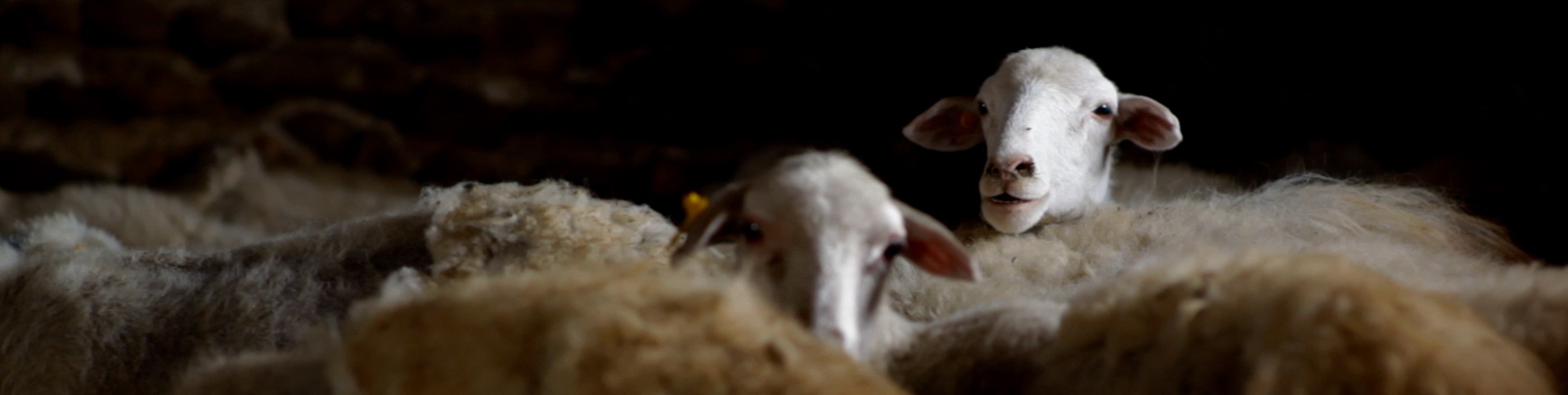
Government Momentum Builds on Animal Movement Route after the years of discussion and information exchange. The biggest challenge in Georgian sheep sector – the Animal Movement Route issue has come to the point when there is a willingness and concrete plan for taking actions and reaching tangible results.
The Eco Films LTD film The Road, commissioned by ALCP KK, was shown at the BIFED - Bozcaada International Festival of Ecological Documentary on October 31, 2014. The documentary was presented in the non-competition section and highly appreciated by the audience.