Posted by Helen Bradbury: Team Leader, Alliances Lesser Caucasus Programme

Rural farmers can only grow their income when they have access to the drugs and veterinary services to keep their animals healthy and growing too. Alliances has partnered with a national veterinary inputs supply company to improve access to drugs, information and vet services for poor farmers in rural Georgia. There are strong signs competitors are seeking to replicate the model, which is also scaling up nationally and in neighbouring countries.
The challenge
Over 2 million people in rural Georgia rely on subsistence farming, typically owning less than one hectare of land. SDC has been funding a series of programmes in Southern Georgia since 2008 to improve the livelihoods of livestock farmers.
During initial surveys, Alliances learned that less than 10 per cent of farmers were accessing veterinary drugs or services in their community, in rural vet pharmacies mainly self-stocked from trips to Tbilisi. Others bought drugs when travelling to the capital. In the rural vet pharmacies a limited range of often improperly stored drugs were sold at high prices due to the resultant transaction costs. Local advice was minimal, unavailable or out of date. This had led to a lack of farmer trust in local veterinary products and services and unwillingness to invest.
Suppliers had failed to grasp the market potential of developing rural distribution, lacking both the information and capital to do so. The uncertainty about whether farmers would buy their products meant the perceived risk held suppliers back from making the first move.
Delivering drugs and services to rural farmers
Alliances’ vision was for farmers to have access to a broad range of quality medicines at a competitive price with advice to go with it. The means to achieve this was for drug manufacturers to invest in improved distribution systems to pharmacies in towns and villages. This included setting up new village-based pharmacies and providing additional training for pharmacists so they could deal with common livestock illnesses and diseases, local veterinarians and farmers to develop the market. This improvement in access and service quality would improve productivity for farmers, increase sales for drug companies, and enable them to self-finance further growth and expansion.
Intervention development and learning
Alliances decided to partner with Roki Ltd. because it was working with more pharmacies than other manufacturers, Roki was also investing in local production of generic medicines of its own, producing 40 per cent of their medicines within Georgia, and provided some limited trainings for vets, pharmacists and farmers. Roki’s vision was aligned with Alliances: it felt that its future development depended on improved management of its distribution systems, customer relations and pharmacist capacity.
Most importantly, however, they were the right people. The chemistry was right, ideas flowed, and they had a strong social ethos towards farmers which aligned with the programme.
Alliances were able to use its market research to demonstrate a large market for drugs amongst farmers in rural regions. The Alliances co-investment equipped the vet pharmacies whilst the company invested in drug distribution. Specifically Roki supported high potential pharmacies with wholesale rates for drugs, advertising for vet products an expanded set of trainings and a hotline service for vets and pharmacists.
Women’s economic empowerment was core to programme strategy, with gender disaggregated research data and training and advertising designed to reach women, however early results showed that the majority of the customers reached by these pharmacies were male. To respond, Alliances worked with Roki to create a new model of satellite veterinary pharmacies. These were closer to villages and accessible by women who rarely travel to town centres.
Drugs and services for 70,000 farmers
With support from Alliances, Roki has facilitated the opening of 44 new pharmacies, leading to increased access to veterinary drugs and services for over 70,000 farmers. Roki has expanded the model to include 284 further veterinary pharmacies in other parts of Georgia, and 11 other vet pharmacies have copied the model, resulting in over 250,000 Georgian farmers having access to veterinary services.
In Georgia, a key competitor in the supply of vet drugs is starting to replicate the business model, by importing identical medicines, creating an identical distribution chain and offering training to its pharmacies. In Azerbaijan Roki has partnered with Real Vet a company with outreach to 350 vet pharmacies. Drugs are being exported to Armenia and Turkmenistan. Roki now produces 70 per cent of its own medicines at its now HACCP and ISO compliant factory in Tbilisi and has become a founder member and advocate in industry related fora in an increasingly burgeoning sector.
Livestock transhumance will no longer disturb Tsintskaro Village population in Tetritskaro Municipality. The local Municipal DRR Working Group initiated a new infrastructure project which will solve the problems related to the seasonal transhumance in this particular village.
From the ISET Economist news (http://www.iset.ge/news/?p=3311)
By Eric Livny
(Summary of a debate hosted by ISET as part of SDC-supported Inclusive Growth Dialog series.)
There are many reasons to love the concept of farmer cooperation (and cooperation more generally). To begin with, there is a great aesthetic value in seeing people coming together, sharing resources and helping each other. After all, instinctive collectivism was the basic condition of human existence from time immemorial. But, there are also powerful economic reasons for farmer cooperation.
The Road – a beautifully shot documentary capturing the reality and dichotomies of the people who use the ancient transhumance route; the lifeline of livestock in Georgia
A Memorandum of Understanding has been signed between the Ministry of Regional Development and Infrastructure (MRDI) and the Swiss Development Cooperation project the Mercy Corps Georgia implemented, Alliances Lesser Caucasus Programme (ALCP) in Kvemo Kartli, The aim of the memorandum is to support the ongoing outreach at local government level of practical implementation of the 2010 Georgian Gender Equality Law which will greatly aid in the general development of rural Georgian municipalities.
From the ISET Economist news (http://www.iset.ge/news/?p=3056)
By Tim Stewart
As Georgia embarks on an ambitious program to develop farmer organizations, it is worth considering both the positive and negative lessons from the experience of similar initiatives, both in Georgia and elsewhere in the developing/transition context. The piece by Tim Stewart, originally published on www.springfieldcentre.com, identifies some of the main reasons for the failure of start-up farmer organizations. The challenge for Georgia is to learn from these mistakes in planning and implementation, and ensure improved coordination among the many cooks involved (the newly created Agency for the Development of Agricultural Cooperatives, the Ministry of Agriculture, international donors, NGOs, and farmer associations).

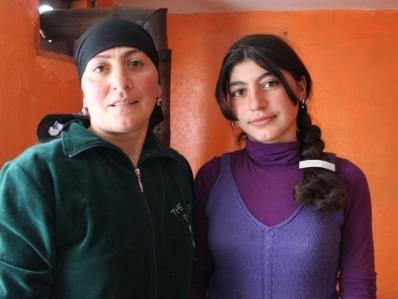
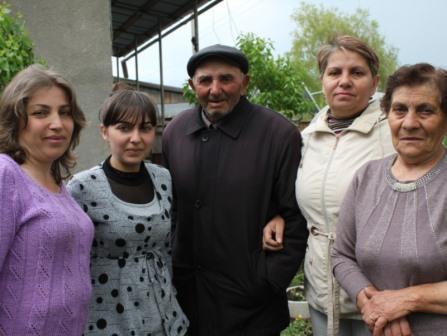
Publishing the following series of stories is an attempt to highlight the ethnic diversity of Kvemo Kartli. We are going to tell you the stories of five women living in various parts of Kvemo Kartli; these women have different lifestyles and represent different cultures, but they still have a lot in common. This is their history in stories. Stories of work, endurance, taboos, restriction, dignity, honesty and womanhood. You will not see figures and percentages here; this is not a quantitative survey. These are stories that allow us to build on those figures and percentages and enable us to develop profiles of Ajarian, Svan, Azeri, Armenian, Greek and local Georgian women’s lives, to understand their complexities and areas of commonality and to reflect this in our work as a programme.
Kvemo Kartli is one of the most ethnically diverse regions of Georgia. Ethnic diversity has developed over centuries and many contrasts and cultural differences have accumulated in this region; the study and management of these contrasts and differences and the development of models for peaceful cohabitation is not an easy task. Cultural, ethnic and language differences can be seen in every detail of life. Differences are present in rural and urban areas, in highlands and lowlands, in methods of doing business. Our objective in recording these stories was to attempt to create a profile of these women, to listen to them and build the picture of their lives, to understand the effects that culture and ethnic origin have on their lives, to see what opportunities they have and how they use or fail to use these opportunities, if they have them at all.
 |
|
|
|
|