Posted by Helen Bradbury: Team Leader, Alliances Lesser Caucasus Programme

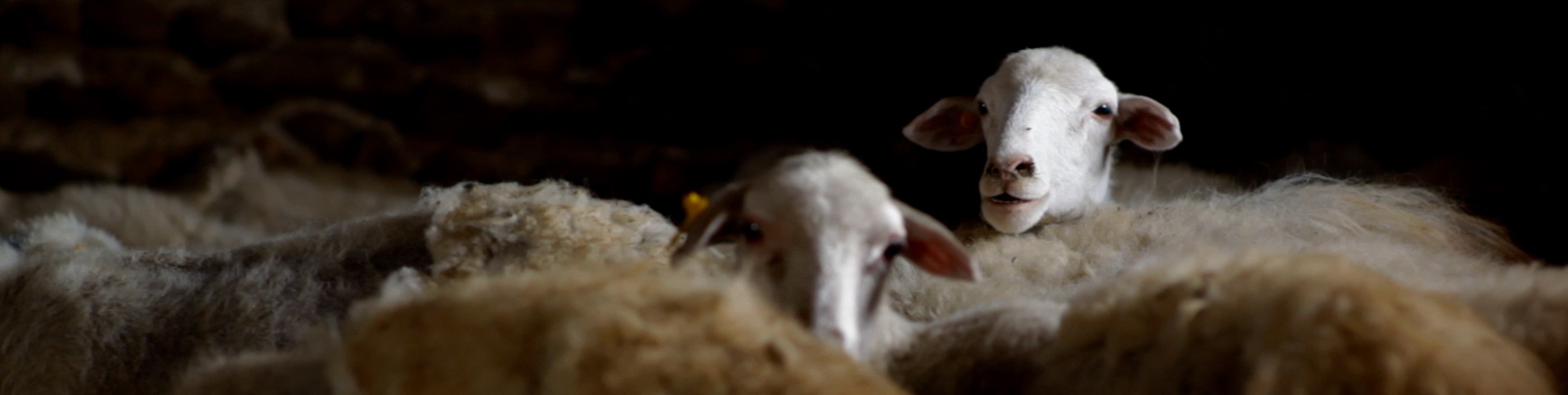
Rural farmers can only grow their income when they have access to the drugs and veterinary services to keep their animals healthy and growing too. Alliances has partnered with a national veterinary inputs supply company to improve access to drugs, information and vet services for poor farmers in rural Georgia. There are strong signs competitors are seeking to replicate the model, which is also scaling up nationally and in neighbouring countries.
The challenge
Over 2 million people in rural Georgia rely on subsistence farming, typically owning less than one hectare of land. SDC has been funding a series of programmes in Southern Georgia since 2008 to improve the livelihoods of livestock farmers.
During initial surveys, Alliances learned that less than 10 per cent of farmers were accessing veterinary drugs or services in their community, in rural vet pharmacies mainly self-stocked from trips to Tbilisi. Others bought drugs when travelling to the capital. In the rural vet pharmacies a limited range of often improperly stored drugs were sold at high prices due to the resultant transaction costs. Local advice was minimal, unavailable or out of date. This had led to a lack of farmer trust in local veterinary products and services and unwillingness to invest.
Suppliers had failed to grasp the market potential of developing rural distribution, lacking both the information and capital to do so. The uncertainty about whether farmers would buy their products meant the perceived risk held suppliers back from making the first move.
Delivering drugs and services to rural farmers
Alliances’ vision was for farmers to have access to a broad range of quality medicines at a competitive price with advice to go with it. The means to achieve this was for drug manufacturers to invest in improved distribution systems to pharmacies in towns and villages. This included setting up new village-based pharmacies and providing additional training for pharmacists so they could deal with common livestock illnesses and diseases, local veterinarians and farmers to develop the market. This improvement in access and service quality would improve productivity for farmers, increase sales for drug companies, and enable them to self-finance further growth and expansion.
Intervention development and learning
Alliances decided to partner with Roki Ltd. because it was working with more pharmacies than other manufacturers, Roki was also investing in local production of generic medicines of its own, producing 40 per cent of their medicines within Georgia, and provided some limited trainings for vets, pharmacists and farmers. Roki’s vision was aligned with Alliances: it felt that its future development depended on improved management of its distribution systems, customer relations and pharmacist capacity.
Most importantly, however, they were the right people. The chemistry was right, ideas flowed, and they had a strong social ethos towards farmers which aligned with the programme.
Alliances were able to use its market research to demonstrate a large market for drugs amongst farmers in rural regions. The Alliances co-investment equipped the vet pharmacies whilst the company invested in drug distribution. Specifically Roki supported high potential pharmacies with wholesale rates for drugs, advertising for vet products an expanded set of trainings and a hotline service for vets and pharmacists.
Women’s economic empowerment was core to programme strategy, with gender disaggregated research data and training and advertising designed to reach women, however early results showed that the majority of the customers reached by these pharmacies were male. To respond, Alliances worked with Roki to create a new model of satellite veterinary pharmacies. These were closer to villages and accessible by women who rarely travel to town centres.
Drugs and services for 70,000 farmers
With support from Alliances, Roki has facilitated the opening of 44 new pharmacies, leading to increased access to veterinary drugs and services for over 70,000 farmers. Roki has expanded the model to include 284 further veterinary pharmacies in other parts of Georgia, and 11 other vet pharmacies have copied the model, resulting in over 250,000 Georgian farmers having access to veterinary services.
In Georgia, a key competitor in the supply of vet drugs is starting to replicate the business model, by importing identical medicines, creating an identical distribution chain and offering training to its pharmacies. In Azerbaijan Roki has partnered with Real Vet a company with outreach to 350 vet pharmacies. Drugs are being exported to Armenia and Turkmenistan. Roki now produces 70 per cent of its own medicines at its now HACCP and ISO compliant factory in Tbilisi and has become a founder member and advocate in industry related fora in an increasingly burgeoning sector.
The Memorandum of Understanding was signed between the Minister of Agriculture, the National Food Agency and SDC funded, Mercy Corps Georgia implemented ALCP on March 31st 2015. Within the framework of this memorandum ALCP will facilitate the building of two Bio-security yards with water points on the Animal Movement Route in Kvemo Kartli region, another three Bio-security yards will be financed from the State Budget.
The advisors from 5 municipalities of Ajara were trained on how to increase women participation in community meetings. Following the training facilitated by ALCP AJ, they worked with the Village Representatives and as a result of their activities, the attendance of women in these meetings has increased by 10-15%.
Very soon the Kvemo Kartli Region will have a new regional mechanism for Disaster Risk Reduction implemented by Local municipalities and the Kvemo Kartli Governor’s office. The Governor of Kvemo Kartli Paata Khizanishvili discussed this topic with the Gamgebelies of the region, deputy governors, the Mayor of Rustavi City and representatives of Alliances Lesser Caucasus Programme (ALCP) on March 11, 2015. The importance of regional coordination and the necessity of creating working groups in all municipalities were highlighted during the meeting.
The Advisory Committee was established in Ajara, which is supposed to be a forum for regional players representing national, local and regional government, civil society and the private sector to tackle key issues in agriculture sector. The participants discussed the role of the Self-governments in Disaster Risk Reduction, wildlife related issues in the region and also clarified the functions of the newly formed Municipal DRR Working Group in five municipalities of Ajara.
A kindergarten was opened on February 17th in Boslebi Village, Dmanisi municipality as a result of facilitation by the Dmanisi Women’s Room. The Kindergarten will serve 30 children not only Georgians from Boslebi Village but also from neighbor Kakliani Village which is mainly inhabited by Azeris. Four local women will be employed there.
From the ISET Economist news (http://www.iset.ge/news/?p=4633)
By Eric Livny
The “do no harm” (primum non nocere) principle is well known to students of medical schools. It is one of the most fundamental maxims in medicine, as formulated, for example, in the Epidemics book of the Hippocratic Collection:
“The physician must … have two special objects in view with regard to disease, namely, to do good or to do no harm“.
Doctors are taught that medical interventions are not risk-free. Thus, when facing a “problem” one should consider whether to use a particular procedure (e.g. surgery or chemical treatment) or do NOTHING.
Not surprisingly, this very principle has applications in many fields other than healthcare. And it is high time for this principle to be studied and applied in Georgian policymaking.