



From the ISET Economist news (http://www.iset.ge/news/?p=3056)
By Tim Stewart
As Georgia embarks on an ambitious program to develop farmer organizations, it is worth considering both the positive and negative lessons from the experience of similar initiatives, both in Georgia and elsewhere in the developing/transition context. The piece by Tim Stewart, originally published on www.springfieldcentre.com, identifies some of the main reasons for the failure of start-up farmer organizations. The challenge for Georgia is to learn from these mistakes in planning and implementation, and ensure improved coordination among the many cooks involved (the newly created Agency for the Development of Agricultural Cooperatives, the Ministry of Agriculture, international donors, NGOs, and farmer associations).

A village in the Zestafoni area. It is a picturesque landscape, but the farms are not operating very efficiently. (Photo: Nikoloz Pkhakadze)
Someone once told me that I couldn’t be a real agriculturalist until I had at least one failed chicken project under my belt, illustrating both their ubiquity and propensity to flop. The same can be said of projects that seek to establish farmer groups (farmer organisations, cooperatives etc.) and for much the same reasons – although I believe we should learn from failure, not repeat patterns that lead to it.
Conventional programmes working in agricultural markets often include a component of forming and supporting farmer groups in their various guises. Their justification for this is the perceived benefits to small farmers that can accrue from economies of scale of production (assets, labour and inputs), marketing (reduced transaction costs and bigger volumes) and voice (representation to government etc.). My concern is that farmer group formation and support is frequently a waste of effort and money because they overwhelmingly fail, and there is little honest recognition of, let alone learning from, that awkward reality.
Literature drawn mainly from projects supports farmer group formation and strengthening as a panacea for agricultural advancement, and often backs up the case for intense external resourcing. It suggests that farmers in groups are more likely to adopt technologies than those who aren’t, or are more likely to grow project-supported crops. Proponents also highlight their significance to the supply of inputs into food production and of food to the market. Indeed, the FAO estimates that nearly 40% of Brazil’s agricultural GDP is produced through cooperatives while in Europe, 60% of agricultural produce and 50% of inputs are marketed through one.
However a glance at the 2012 “Exploring the Cooperative Economy” report from the World Cooperative Monitor, reveals an almost total cooperative vacuum in Africa and, to a lesser degree, Asia. More directly, in my work I am frequently confronted with the reality of failed farmer groups that evaporate once the project ends, with unused equipment rusting in the corner of a field, an image, which has become a cliché of dysfunctional development in the popular press. And for many people engaged in development, farmer groups are a byword for failure.
Yet as far as I can establish (and I have searched), there have been few honest and objective ex-post reviews of farmer group formation components of projects to look at failure and the reasons for failure. (If I’m wrong and there are real data on groups’ success and sustainability, please send it to me!) Failures, if reported, are attributed to external “unforeseen challenges” and written up as “lessons learned”. Farmers groups have become a prime example of the development industry’s “emperor’s new clothes syndrome”, where official views are positive and glowing and formal research and evidence are at odds with what we know to be common (naked!) reality. So, in that context, I would argue that farmer group formation is a poor way to improve the lot of farmers positively and sustainably. How much more money needs to be spent; how many more pet Farmer Field School projects do we need to implement; how many more constitutions do we need to write; how many MOUs do we need to sign or how many ‘Farming as a Business’ trainings do we need to subject farmers to, before we understand that this form of development is not working?
The factors leading to the failure of farmer groups (rapid decline post-project) are numerous, but broadly they fail because they were formed for the wrong reasons, by the wrong people and/or in the wrong way.
THE WRONG REASONS TO FORM FARMER GROUPS
Agencies often form farmer groups because it helps them – the agency – achieve economies of scale of delivering services, assets or grants to them. In addition some may feel more comfortable ethically with the transfer of expensive assets or technical assistance to a group rather than an individual. The ethos of communal ownership to cosiness of the collective is pervasive in certain quarters of the development industry, even in the face of the common observation of poorly managed group-owned assets. Farmer group membership is also too often a pre-condition for farmers to receive giveaways from agencies. Groups therefore become entities built on artificial incentives created by agencies wanting an easy repository for their resources and buying short-term transitory impact.
Clearly then, ill-conceived or self-serving reasons are the wrong ones for forming farmer groups.
THE WRONG PEOPLE TO FORM FARMER GROUPS
Agribusinesses often face problems interfacing with small farmers because of high transaction costs, small transaction sizes, poor organisation and communications and a general lack of understanding of them. Farmers are often observed to face challenges finding markets for their products or face poor terms of trade. The absence of institutions (like groups) and services which would help them overcome these challenges (supporting group formation) is often justification enough for agencies to intervene impulsively by stepping in on behalf of small farmers – telling and selling the narrative of the “farmer being exploited by the middleman”.
The problem here is not only do agencies avoid addressing the root causes of the problem that lies beyond the farmer-trader interface, but in stepping into this space by performing “farmer group services” they undermine the possibility that it will ever be solved. Rather than solutions cemented firmly and sustainably in the market system, emerging “farmer group services” are seen as a development agency space. Thus it becomes a self-fulfilling prophecy: farmers are disadvantaged in markets because of weak vertical and horizontal linkages and there are no services to address this market failure: justification enough for agencies to step in and undermine the market further…
Development agencies are also the wrong people to offer farmer group services because, typically, they are poor at business:
- They are not market based, they are subsidised and non-commercial and their success/failure isn’t dependent on a viable offer but on continued support from their donor.
- Their incentives are therefore aligned to the agendas of the donor and their own HQ, not the market.
- They are not cost-effective, indeed they are prohibitively expensive if the true cost of delivery is taken into account (drivers, cooks, HQ fund-raising etc.).
Development agencies are therefore the wrong people to form farmer groups because they are not long-term players in the market, undermine legitimate market players if they attempt to do so, and, put simply, are usually bad at business.
THE WRONG WAY TO FORM FARMER GROUPS
Agencies form farmer groups on the basis of an abstract, theoretical notion of potential benefits, or experience in distant contexts of limited relevance. Seldom do they ask the more grounded starting question: if groups are such an obviously “good thing”, why aren’t farmers forming groups already? Understanding the answer to this question would lead to understanding and addressing systemic problems in the market, or simply not wasting resources by attempting to do something that would be unsuccessful. The reasons that farmers don’t form groups are many, but often related to a lack of incentives or capacity.
Incentives: It may be that additional income does not accrue by aggregation, or that which is created may not be sufficient to overcome other issues such as distrust of others in financial matters. Other actors may be able to provide incentives that induce group formation such as a commodity buyer that provides inputs on credit. There may also be disincentives related to the wider political economy such as additional tax or administrative burdens to formal groups.
Capacity: There may be other obstacles to forming groups such as inefficient business registration procedures, weak advisory services, or a lack of adequately available information that would allow farmers to make an informed decision to form a group. This shouldn’t be seen as an open justification for agency intervention to address these directly for example through business services and setting up one-stop-shops for business registration etc. Rather it should lead to enquiry into who could and should be delivering these and why they are not.
The wrong way to form farmer groups is therefore to do it without understanding the central market failures that prevent farmers from forming them.
WHAT TO DO ABOUT IT
The problem for an agriculturalist and development practitioner like myself, is that working with farmers is fun and endlessly fascinating: it’s one of the things I got into the business for! However instead of being drawn to act impulsively on behalf of the small farmer, I think agencies would serve them better by doing more of the following three things.
Firstly, go in with their eyes and minds open, conducting ex-ante market analysis rather than making unsubstantiated assumptions about what farmers need. Don’t arrive with a farmer group solution pre-prepared and engineer an analysis to justify this. Establish the reasons that farmers are not cohesive, what incentives are shaping their behaviour and what capacities may be lacking. Get a valid answer to the key question: why isn’t the market system working?
Secondly, build and don’t undermine. Guided by the above analysis, work with relevant, long-term market players (private and public) to address the issues underlying farmers’ poor performance and low incomes.
Thirdly, be honest about and learn from failure. This is not especially difficult or time consuming to do, but I suspect is a place where many fear to tread.
My argument is not that farmer groups cannot be beneficial to farmers. Rather, by adopting a systemic approach aimed at fostering the conditions for self-organisation among market players, agencies have a far better chance of supporting small farmers – which may or may not involve farmer groups.
The ‘Georgian Milk’ mark has been registered in the National Intellectual Property Centre of Georgia - Saqpatenti. The mark is now protected to avoid falsification and strengthen the ownership of Business Institute of Georgia, an independent body which will regularly audit dairies granted license to use the mark.
Eighteen dairy enterprises have already applied to use the mark.
The new ‘Georgian Milk’ mark will distinguish dairy products made from natural raw milk.
Information per enterprise will be published online on a www.georgianmilk.ge website which will come online at beginning of March. This will allow consumers to look up the products they are buying using a unique register number printed on the label.
A national promotion campaign conducted by GMA international marketing company to introduce the mark to the public and retailers will be rolled out from the end of next month.
A presentation of a new ‘Georgian Milk’ mark was held on the 22nd of January at Hotels & Preference Hualing Tbilisi.
Up to 150 dairy enterprises and representatives of supermarkets, agri markets, sectoral associations and Government Agencies participated in the meeting.
The new ‘Georgian Milk’mark will distinguish dairy products made from natural raw milk. The ‘Georgian Milk’ mark will be found only on dairy products produced from Georgian natural raw milk and which do not contain milk powder and/or any vegetable oils. The purpose of the mark is to promote products made from Georgian natural raw milk, which will help consumers make informed decisions while buying milk and other dairy products. A recent large national consumer survey by the Caucasus Research Resource Centre of urban consumers across Georgia showed that consumers want to be able to buy ‘ecologically clean’ dairy products, meaning clean milk that comes from healthy grass fed cattle and dairy products produced in clean regulated enterprises. The research found that the majority of consumers had difficulty in identifying or being able to buy such products as these products are currently undifferentiated in shops. The ‘Georgian Milk’ mark will therefore solve this problem.
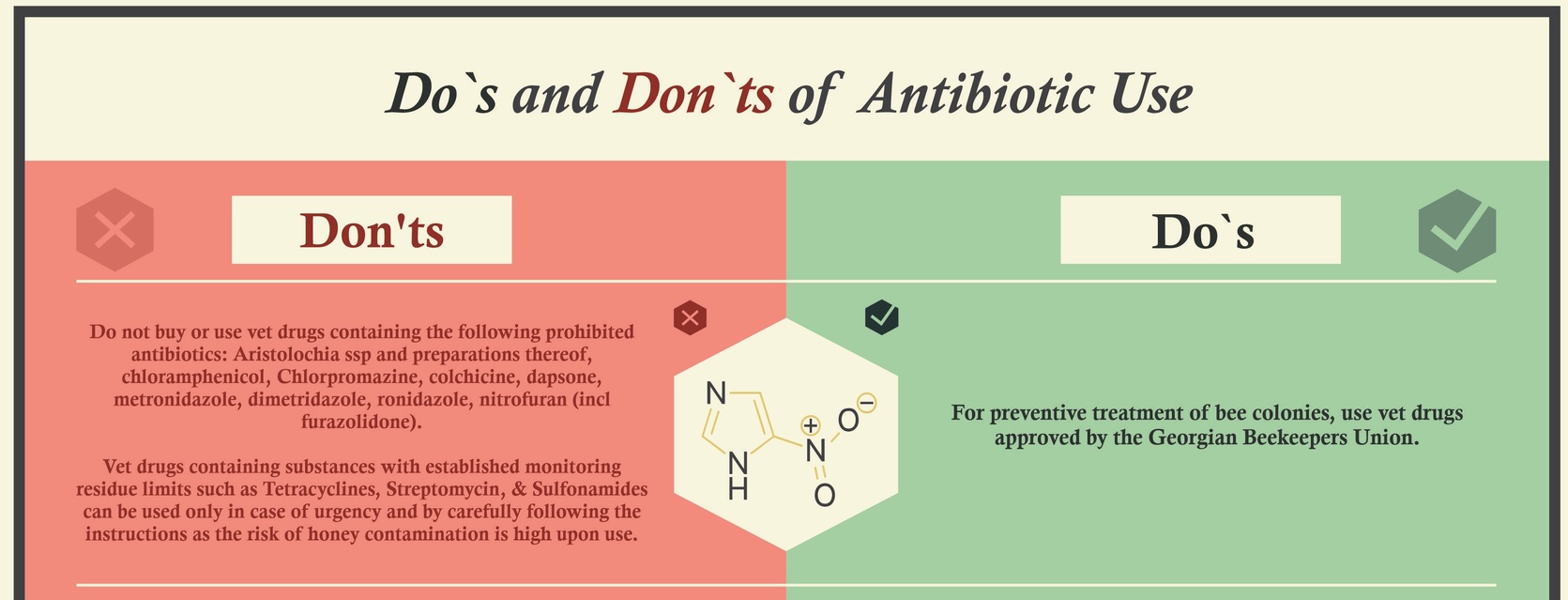
The ALCP facilitated the Georgian Beekeepers Union to develop infographic regards Do’s and Don’ts of Antibiotic Use, providing guidelines for the beekeepers on proper usage of antibiotics and preventing honey and beeswax from contamination with the antibiotics. The full version of the infographic is available here.
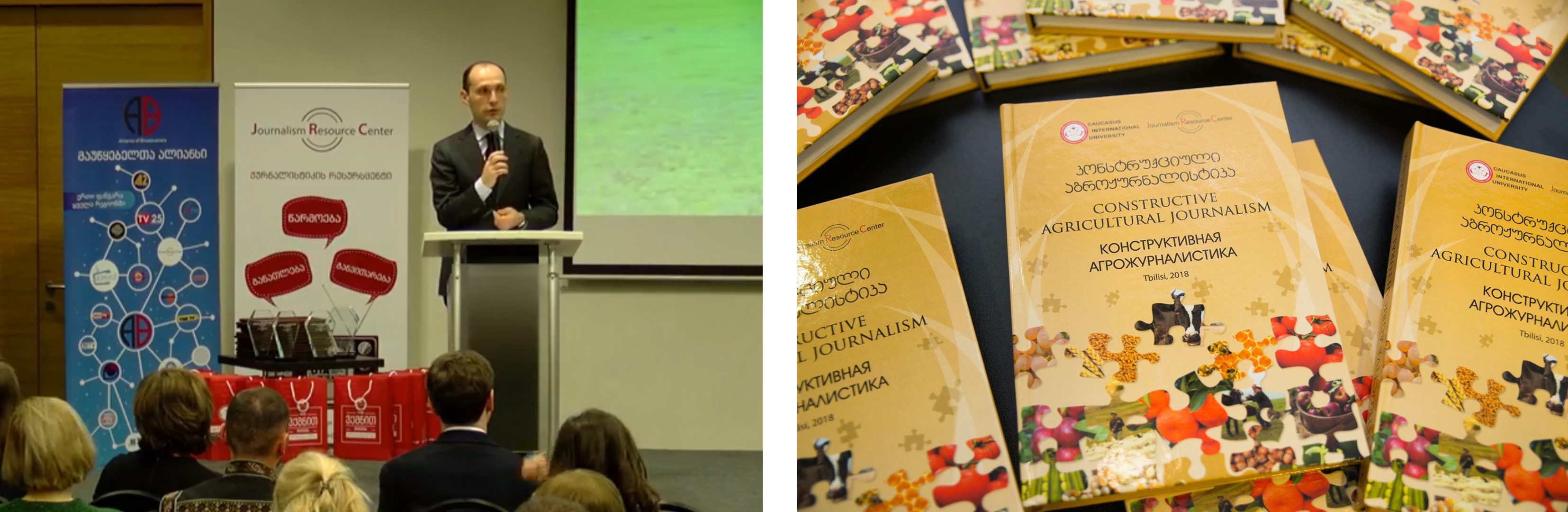
On December 26th, the Journalism Resource Centre presented its second edition of the agri journalism module. About hundred guests from the government, business and academic sphere attended the event.
The Minister of Environmental Protection and Agriculture of Georgia, Levan Davitashvili stated: ‘I am very glad to hear about all the initiatives related to agri journalism. Education is very important in agriculture for ensuring information dissemination for farmers. The door of the Minister of Agriculture is open for you at any time and our partnership with regional media is very important.’
The agri module was created for inclusion in BA in journalism degrees. Now, ten universities across Georgia have the agri journalism module established in their curriculum, lasting one semester with a total of 15 credit hours. Four more universities are about to do the same this year. 369 students have undergone the course in Georgia to date. Now those initiatives are ready for transfer to Armenia and Azerbaijan.
During the event, the Journalism Resource Centre awarded farmers and specialists within the agricultural sector. The Best Female Farmer of the Year award was given to beekeeper Mariam Kiladze; the Best Vet of the Year was Giorgi Tcikhelashvili from Dmanisi, he is 25 years-old who graduated from the Vet Department at Agrarian University and went back to Dmanisi and is working as a vet. The Best Male Farmer award was given to shepherd Giorgi Imerlishvili. Credo and the EBRD were recognized as financial institutions that supports agriculture, and SDC Project Mercy Corps Alliances Caucasus Programme for supporting agri media journalism.
At the end of the event, the Journalism Resource Centre announced the establishment of the Agro Guild, which unites journalists and media organizations, businesses, farmers, public officials, and universities and sets up annual or bi-annual advisory committees. The members of media associations and the JRC also announced that they are planning to establish an Agri TV program, the pilot of which will start in three months.
Follow this link for additional news regarding the event.
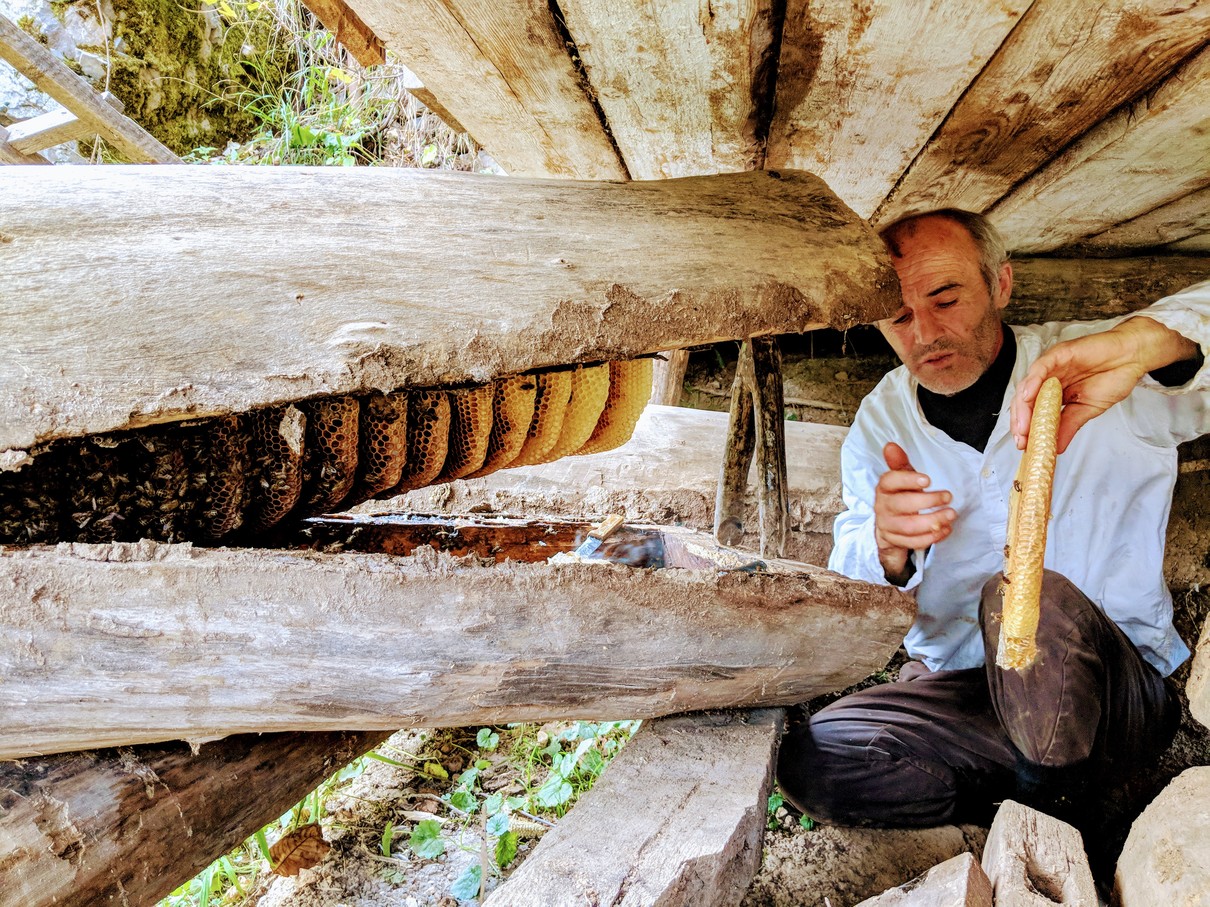
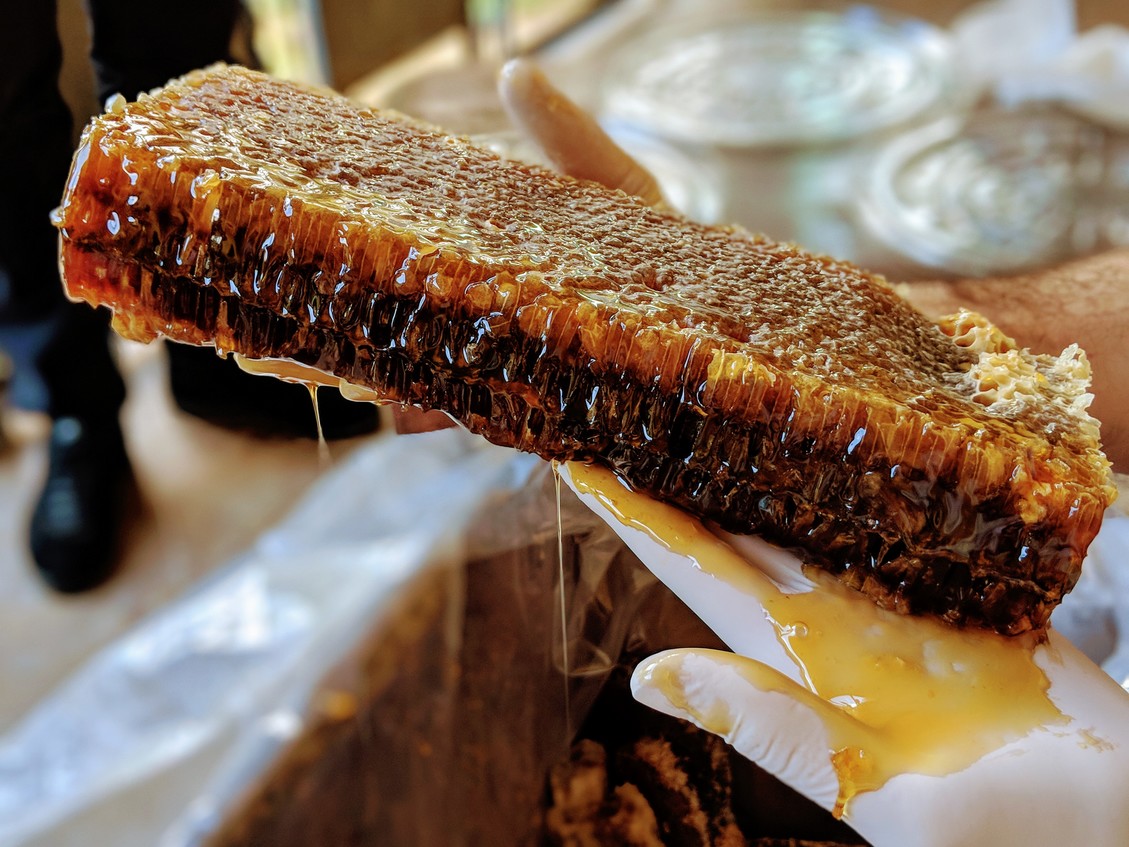
For the first time ever, twenty Jara producers have sold their entire crop of Jara to a commercial enterprise. Jara honey will soon be available in shops in Georgia.
See photos below.
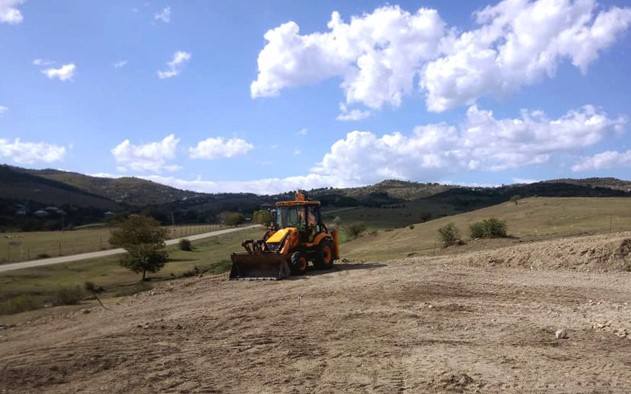
The construction of a new Veterinary Surveillance Point has recently started in Bolnisi municipality. The works will be finished in December 2018. The point will be the six and final point in the Veterinary Surveillance network throughout the Animal Movement Route.
During five transhumance seasons in 2016-2018 total 1.4 million heads of sheep and cattle were treated against ecto-parasites free of charge at all operational Veterinary Surveillance Points in Rustavi, Marneuli, Signagi, Dedoplistskaro and Kvareli municipalities.



