



Government Momentum Builds on Animal Movement Route after the years of discussion and information exchange. The biggest challenge in Georgian sheep sector – the Animal Movement Route issue has come to the point when there is a willingness and concrete plan for taking actions and reaching tangible results.
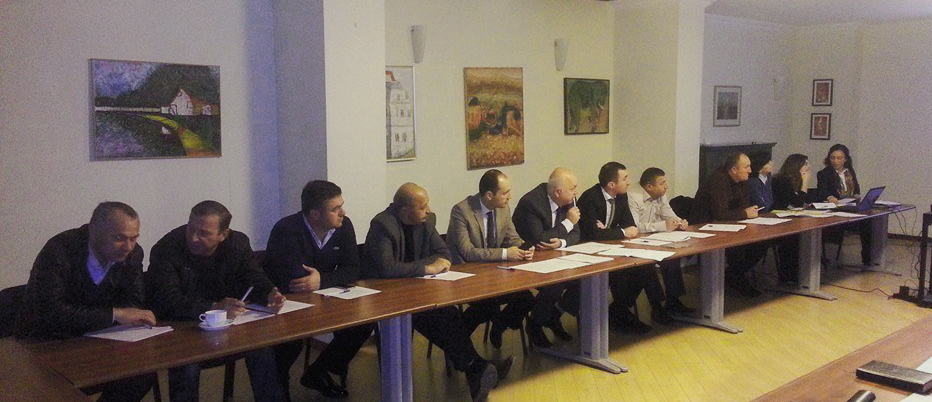
On November 20th, all main stakeholders of the Animal Movement Route gathered to plan further steps regarding the route infrastructure and management. The meeting was facilitated by Alliances Lesser Caucasus programme. There is no doubt that proper infrastructure of Animal Movement Route and existence of disease control mechanism during transhumance is key to sheep farming development. But lack of a clear action plan and coordinated activities – have been the subject of the dispute for years. The international consultant from UK - Edward Hamer was invited in October by ALCP for advising and designing the Animal Movement Route (please follow the link). The simple, practical recommendations – 11 action points for improving the AMR and drawings with estimated budgets prepared by the expert - were introduced to the interested parties.
Now, the infrastructural plan is available, coordinated action from the side of authorities becomes even more vital for the successful implementation of the project. For accelerating the decision-making process the Ministry of Agriculture and the Ministry of Economics, the Shepherds Association and the Municipalities agreed to work closely together. For ensuing enhanced coordination a special Web Forum will be established and administered by the MOA.
The recently rehabilitated bypass Route in Tsintskaro Village is a perfect example how the coordinated work of central and local government can lead to real solution in livestock transhumance related issues. Hopefully the Tsintskaro precedent will be the first, but not single step taken towards a rehabilitated route and a revitalized livestock industry in Georgia.
The Ministry of Agriculture through the National Food Agency has posted details of the construction of the six Bio Security Points on the Animal Movement Route, the construction of two of which have started this month.
Minister of Agriculture Otar Danelia stated.
“It is very important that concrete steps toward the development of the livestock sector have been taken. Rehabilitation and modernization of the Animal Movement Route has started. Building modern standard Bio Security Points will promote animal health protection and will reduce the spread of animal disease” – he said.
Locals, interested parties including the Minister of Agriculture of Ajara and tourists, in the height of the Batumi summer run enjoyed a new addition to the summer time calendar of events with the first Ajara Honey Festival on August 22nd on Batumi Boulevard. The festival was organized by The Beekeepers Association of Ajara, an entity belonging to the Ajara Chamber of Commerce and Industry.
Ajara is a major producer of honey in Georgia and the programme has completed a sector survey and commenced numerous interventions. The festival was a first step in promoting Ajara as a producer of high quality honey and developing a cohesive image of honey production in the region. Beekeeping in Ajara has been practiced for centuries and still includes the capturing of wild swarms and cultivating of honey in logs known as ‘Jara’.
The National Food Agency representatives met with entrepreneurs of honey and meat sectors in Kvemo Kartli and Ajara regions in July. The aim of the meetings was to inform local producers on the regulations and required standards for the quality production of meat and honey products in accordance with FS&H standards.
Food Safety and Hygiene in the Agrarian Market of Batumi was the main topic of the ALCP AJ Advisory Committee’s second meeting in Ajara region. The discussion concerned the incompliance of existing situation in Market with FS&H standards and possible risks derived from the meat and dairy products purchased there. Due to the importance and complexity of the issue, key market stakeholders such as representatives of Ajara Government, NFA and Agrarian Market participated in the meeting.
“Women in Georgia – Tradition and Contemporaneity” is a short documentary film prepared by ‘Netgazeti’ (online newspaper) about women living in Ghordjomi Community (Khulo Municipality, Ajara). Ghordjomi is one of the largest Muslim communities in Ajara and is known for its early marriage traditions, and other strict rules and attitudes towards women. The film describes the harsh daily routine of the women starting from 6 am in the morning with taking care of the cattle, children, household and the restrictions they face in daily life.
The ALCP AJ programme’s Focus Group Survey and Gender Analysis captured these issues and also noted the consequent effect on the participation of women in the decision-making processes at the community and local governmental levels which is chronically low.
The first meeting of the Regional DRR Working Group was carried out at the KK Governor Office.
The Governor of Kvemo Kartli - Paata Khizanashvili encouraged decision makers from all municipalities of the region to pay more attention on issues linked with Animal Disease Control, Pasture Usage and Disaster Risk Reduction. He noted that the municipal leaders should understand these are the issues of high importance and the new municipal working groups should have strong communication with the Governor’s office and with other municipalities of Kvemo Kartli.
By now, all seven municipalities of Kvemo Kartlli have DRR working groups coordinated by the regional government.



