



Government Momentum Builds on Animal Movement Route after the years of discussion and information exchange. The biggest challenge in Georgian sheep sector – the Animal Movement Route issue has come to the point when there is a willingness and concrete plan for taking actions and reaching tangible results.
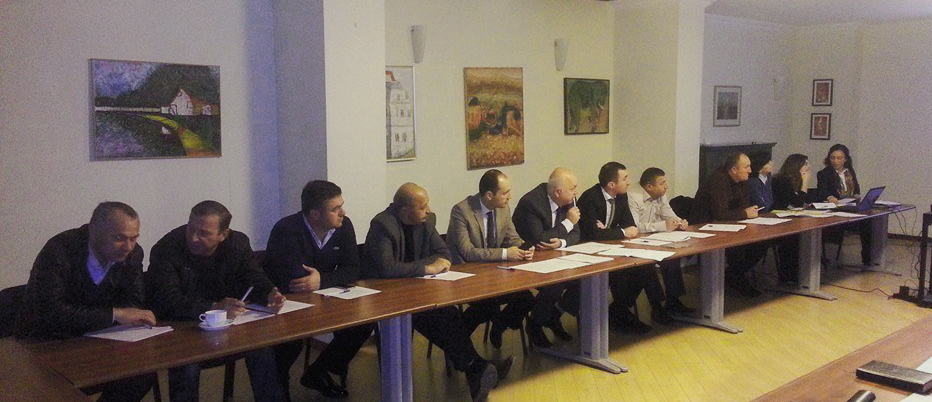
On November 20th, all main stakeholders of the Animal Movement Route gathered to plan further steps regarding the route infrastructure and management. The meeting was facilitated by Alliances Lesser Caucasus programme. There is no doubt that proper infrastructure of Animal Movement Route and existence of disease control mechanism during transhumance is key to sheep farming development. But lack of a clear action plan and coordinated activities – have been the subject of the dispute for years. The international consultant from UK - Edward Hamer was invited in October by ALCP for advising and designing the Animal Movement Route (please follow the link). The simple, practical recommendations – 11 action points for improving the AMR and drawings with estimated budgets prepared by the expert - were introduced to the interested parties.
Now, the infrastructural plan is available, coordinated action from the side of authorities becomes even more vital for the successful implementation of the project. For accelerating the decision-making process the Ministry of Agriculture and the Ministry of Economics, the Shepherds Association and the Municipalities agreed to work closely together. For ensuing enhanced coordination a special Web Forum will be established and administered by the MOA.
The recently rehabilitated bypass Route in Tsintskaro Village is a perfect example how the coordinated work of central and local government can lead to real solution in livestock transhumance related issues. Hopefully the Tsintskaro precedent will be the first, but not single step taken towards a rehabilitated route and a revitalized livestock industry in Georgia.
A new project “Closer to Nature” was launched by Batumi Botanical Garden facilitated by ALCP AJ to promote 165 school student’s involvement in biodiversity and environmental protection activities.
The Memorandum of Understanding was signed between the Minister of Agriculture, the National Food Agency and SDC funded, Mercy Corps Georgia implemented ALCP on March 31st 2015. Within the framework of this memorandum ALCP will facilitate the building of two Bio-security yards with water points on the Animal Movement Route in Kvemo Kartli region, another three Bio-security yards will be financed from the State Budget.
The advisors from 5 municipalities of Ajara were trained on how to increase women participation in community meetings. Following the training facilitated by ALCP AJ, they worked with the Village Representatives and as a result of their activities, the attendance of women in these meetings has increased by 10-15%.
Very soon the Kvemo Kartli Region will have a new regional mechanism for Disaster Risk Reduction implemented by Local municipalities and the Kvemo Kartli Governor’s office. The Governor of Kvemo Kartli Paata Khizanishvili discussed this topic with the Gamgebelies of the region, deputy governors, the Mayor of Rustavi City and representatives of Alliances Lesser Caucasus Programme (ALCP) on March 11, 2015. The importance of regional coordination and the necessity of creating working groups in all municipalities were highlighted during the meeting.
The Advisory Committee was established in Ajara, which is supposed to be a forum for regional players representing national, local and regional government, civil society and the private sector to tackle key issues in agriculture sector. The participants discussed the role of the Self-governments in Disaster Risk Reduction, wildlife related issues in the region and also clarified the functions of the newly formed Municipal DRR Working Group in five municipalities of Ajara.
A kindergarten was opened on February 17th in Boslebi Village, Dmanisi municipality as a result of facilitation by the Dmanisi Women’s Room. The Kindergarten will serve 30 children not only Georgians from Boslebi Village but also from neighbor Kakliani Village which is mainly inhabited by Azeris. Four local women will be employed there.



