



Fifty-seven years old Vazha Kedelidze from Kedlebi Village, Khulo is one of ten students who enrolled in the beekeeping programme at Akhali Talgha vocational college in August.
Vazha retired from his position as a fireman five years ago. Soon after, his wife had a severe injury that left her unable to take care of their farm. As Vazha says, beekeeping is now the mainstay of his family. His beekeeper friend helped him to arrange an apiary of twenty hives.
‘I discovered that beekeeping is a philosophy on its own. Sometimes I sit for hours and observe bees working. I am trying to understand the process.’- Vazha says.
As a beginner beekeeper, Vazha is striving for knowledge and struggling to gain comprehensive information, as internet sources are not targeted to beginner beekeepers and he needed something hands on. He then heard about the beekeeping course at the Akhali Talgha VET collegein Khulo.
‘I do not know curriculum details yet, but I am sure I will get answers to my questions and I am looking forward to starting the learning process.’ – Says Vazha.
Vazha was even more surprised when he found out a Jara beekeeping module:
‘I had heard about Jara from villagers and television. It is a fascinating and very unique tradition. Last year, I even made six Jara hives and could not proceed further due to a lack of knowledge. So, I am glad that I will learn more about this traditional beekeeping.’ – Says Vazha.
Akhali Talga VET college in Ajara is the first college in Georgia to have integrated Jara teaching in their beekeeping programme. They will teach the integrated programme from this semester to twenty-eight students.
In total, there are ten VET colleges in Georgia with either a two month or one-year beekeeping course. The Georgian Beekeepers Union (GBU), along with the Jara Beekeepers Association (JBA), is now facilitating the integration of Jara module into beekeeping programmes of these ten colleges in cooperation with the sectoral skills organization Agro Duo and the Ministry of Education, Science, Culture and Sport of Georgia. The JBA developed the Jara Honey Production Handbook: for Beekeeping Programmes at VET Colleges.
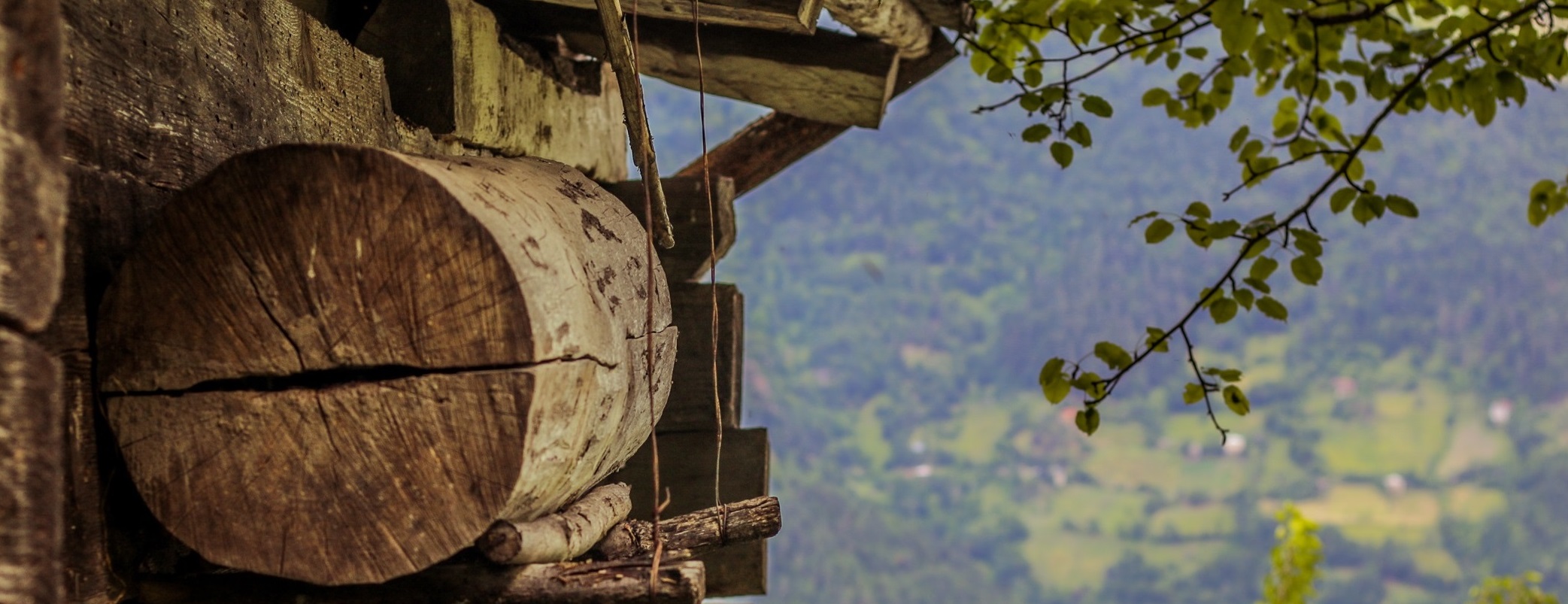
Jara is traditional wild beekeeping, rarely practiced nowadays, except for remote dwellings located in the subtropical and alpine zones of Western Georgia, namely, Ajara, emphasizing the importance of co-existence between humans and wild nature. It is a family activity led by a family head, with strong roots in traditional agriculture practice, culture and a way of living as a whole. That makes Jara unique. However, due to a limited market, it was nearly fading outback in 2014 when the ALCP found out about it, and this is when the Jara journey began. It is now growing in 2018 the first commercial Jara harvest was 500kg it is now over 3 tonnes. Twenty-three Jara beekeepers are now Bio Certified and many people such as Vazha are anxious to start. Jara is a high value product with very strong demand it retails for 90 Gel/kg.
The OLMA trade show – a Swiss Agricultural and Food Fair has been held every year since 1943 in St. Gallen, Switzerland. The year’s 74th exhibition was held from 8-18 of October. 623 exhibitors and 375000 visitors attended the show.
The Swiss Agency for Development and Cooperation (SDC) was the one of the exhibitors this year. The SDC created 8 country stands including that of the Swiss Cooperation Office for the South Caucasus.
Name: Natural Produktsia Ltd
Place: Dioknisi Village, Khulo Municipality
Type of business: Cheese Factory
Product: Imeruli Cheese
Suppliers: about 450 women from 13 villages of Khulo
Current production per day: 5 tons of milk (700 kg of cheese)
The Problem
The 450 women now selling milk directly to the milk collectors of the Natural Produktsia Ltd Factory in Dioknisi, Khulo used to make cheese from their milk. Women are responsible for milking the household cattle and making the cheese, butter, sour cream and cottage cheese which is then sold as an important part of the family’s livelihood.
Selling these products however is hard and uncertain. The journey by marshutka to Batumi Agrarian Market can take up to 4 hours on bad roads. It is taken to the market by husbands or other male family members or sent with the driver and met by a relative who then tries to sell it. There is no guarantee of a sale and often the family is forced to accept a low price from the market vendors rather than take it home again.
The NFA announced a tender on September 28th for the construction of two further Bio Security Points of the same design in Dedoplistskaro and Sighnaghi municipalities. The tender winner company was identified on October 5th.
For the first time in Georgia 6 universities will soon offer specialized courses on agricultural journalism.
The universities in Batumi, Kutaisi, Gori, Telavi, Akhaltcikhe and Caucasus International Universities in Tbilisi who already offer academic programmes on journalism, mass communications and agricultural education will now add agro journalism. The course prospective tutors have just had Training of Trainers for two days.
Following work in KK and SJ the Women’s Room model is being replicated in Ajara region, where Ajara Chamber of Commerce and Industry (ACCI) is proving an invaluable partner by opening the first Women’s Room at the Association of Business Women of Ajara (ABWA).
The “Women’s Room” will open up opportunities for the ABWA in terms of coordinating activities, trainings, advocacy raising meetings and information sharing. All these will contribute into stimulating women’s entrepreneurship and economic empowerment and attracting more women members to the association.
The Ministry of Agriculture through the National Food Agency has posted details of the construction of the six Bio Security Points on the Animal Movement Route, the construction of two of which have started this month.
Minister of Agriculture Otar Danelia stated.
“It is very important that concrete steps toward the development of the livestock sector have been taken. Rehabilitation and modernization of the Animal Movement Route has started. Building modern standard Bio Security Points will promote animal health protection and will reduce the spread of animal disease” – he said.



