



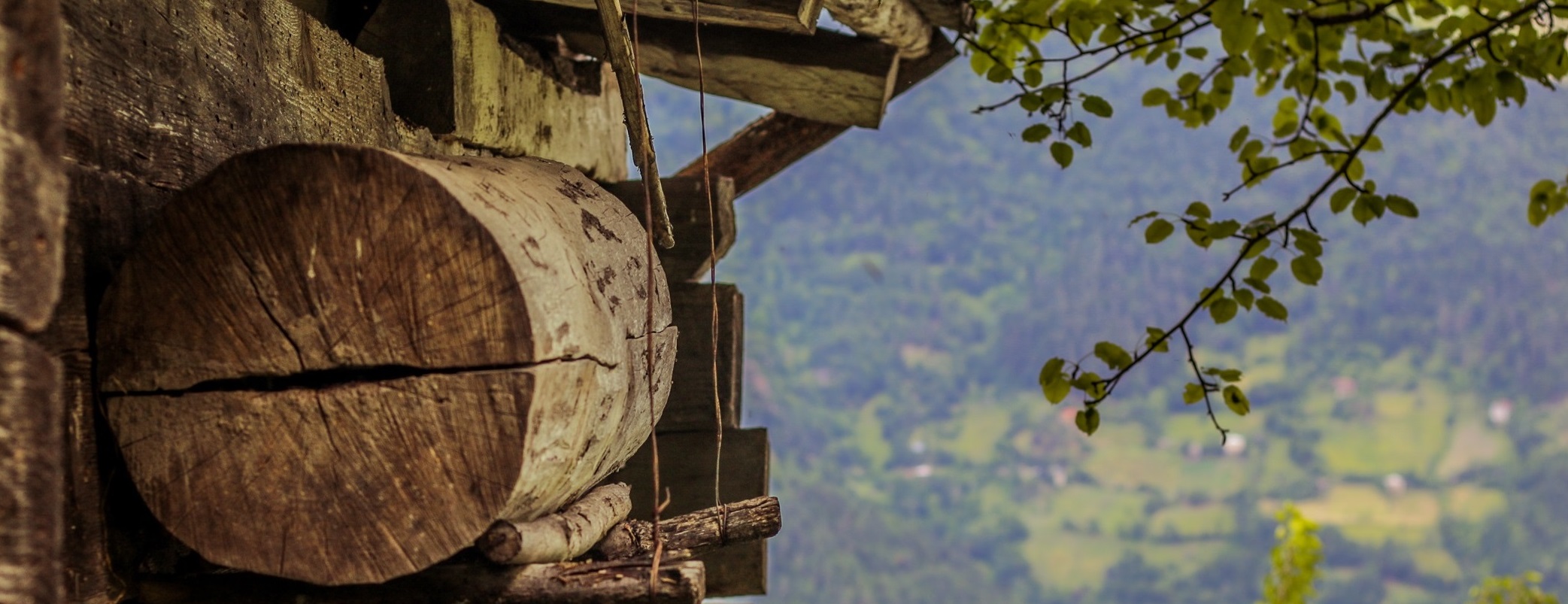
Fifty-seven years old Vazha Kedelidze from Kedlebi Village, Khulo is one of ten students who enrolled in the beekeeping programme at Akhali Talgha vocational college in August.
Vazha retired from his position as a fireman five years ago. Soon after, his wife had a severe injury that left her unable to take care of their farm. As Vazha says, beekeeping is now the mainstay of his family. His beekeeper friend helped him to arrange an apiary of twenty hives.
‘I discovered that beekeeping is a philosophy on its own. Sometimes I sit for hours and observe bees working. I am trying to understand the process.’- Vazha says.
As a beginner beekeeper, Vazha is striving for knowledge and struggling to gain comprehensive information, as internet sources are not targeted to beginner beekeepers and he needed something hands on. He then heard about the beekeeping course at the Akhali Talgha VET collegein Khulo.
‘I do not know curriculum details yet, but I am sure I will get answers to my questions and I am looking forward to starting the learning process.’ – Says Vazha.
Vazha was even more surprised when he found out a Jara beekeeping module:
‘I had heard about Jara from villagers and television. It is a fascinating and very unique tradition. Last year, I even made six Jara hives and could not proceed further due to a lack of knowledge. So, I am glad that I will learn more about this traditional beekeeping.’ – Says Vazha.
Akhali Talga VET college in Ajara is the first college in Georgia to have integrated Jara teaching in their beekeeping programme. They will teach the integrated programme from this semester to twenty-eight students.
In total, there are ten VET colleges in Georgia with either a two month or one-year beekeeping course. The Georgian Beekeepers Union (GBU), along with the Jara Beekeepers Association (JBA), is now facilitating the integration of Jara module into beekeeping programmes of these ten colleges in cooperation with the sectoral skills organization Agro Duo and the Ministry of Education, Science, Culture and Sport of Georgia. The JBA developed the Jara Honey Production Handbook: for Beekeeping Programmes at VET Colleges.
Jara is traditional wild beekeeping, rarely practiced nowadays, except for remote dwellings located in the subtropical and alpine zones of Western Georgia, namely, Ajara, emphasizing the importance of co-existence between humans and wild nature. It is a family activity led by a family head, with strong roots in traditional agriculture practice, culture and a way of living as a whole. That makes Jara unique. However, due to a limited market, it was nearly fading outback in 2014 when the ALCP found out about it, and this is when the Jara journey began. It is now growing in 2018 the first commercial Jara harvest was 500kg it is now over 3 tonnes. Twenty-three Jara beekeepers are now Bio Certified and many people such as Vazha are anxious to start. Jara is a high value product with very strong demand it retails for 90 Gel/kg.
Mercy Corps, Alliances KK has contracted “Eco Films” a Georgian independent wildlife film company to create a documentary about shepherds of Kvemo Kartli region. In the film “Two Week to Reach the Clouds” the process of animal movement from winter pastures in Kakheti to summer pastures in Kvemo Kartli will be depicted following a herder family during two-week-long trip from the lowlands to the highlands. The aim of the documentary is to show the cultural-traditional context of Georgian sheep farming based on the example of one sheep farmer family and its herd. The film will also show social as well as economic importance of the sheep migration and associated problems within the context of Georgia’s diversified nature and landscape.
The Feasibility Study for the Animal Movement Rout and animal disease notification and control, two key topics were discussed on the 4th advisory committee on the 29th of March. At the beginning of the meeting the Alliances KK Programme Director Ms. Helen Bradbury provided a brief presentation concerning the interventions of the programme.
These Guidelines for the Application and Implementation of the Law on Gender Equality of Georgia by Local Self Government Bodies was developed with members of the Local Self Governments of Dmanisi, Tsalka and Tetritskaro municipalities in line with an initiative supported by the Regional Government of Kvemo Kartli



