Fifty-seven years old Vazha Kedelidze from Kedlebi Village, Khulo is one of ten students who enrolled in the beekeeping programme at Akhali Talgha vocational college in August.
Vazha retired from his position as a fireman five years ago. Soon after, his wife had a severe injury that left her unable to take care of their farm. As Vazha says, beekeeping is now the mainstay of his family. His beekeeper friend helped him to arrange an apiary of twenty hives.
‘I discovered that beekeeping is a philosophy on its own. Sometimes I sit for hours and observe bees working. I am trying to understand the process.’- Vazha says.
As a beginner beekeeper, Vazha is striving for knowledge and struggling to gain comprehensive information, as internet sources are not targeted to beginner beekeepers and he needed something hands on. He then heard about the beekeeping course at the Akhali Talgha VET collegein Khulo.
‘I do not know curriculum details yet, but I am sure I will get answers to my questions and I am looking forward to starting the learning process.’ – Says Vazha.
Vazha was even more surprised when he found out a Jara beekeeping module:
‘I had heard about Jara from villagers and television. It is a fascinating and very unique tradition. Last year, I even made six Jara hives and could not proceed further due to a lack of knowledge. So, I am glad that I will learn more about this traditional beekeeping.’ – Says Vazha.
Akhali Talga VET college in Ajara is the first college in Georgia to have integrated Jara teaching in their beekeeping programme. They will teach the integrated programme from this semester to twenty-eight students.
In total, there are ten VET colleges in Georgia with either a two month or one-year beekeeping course. The Georgian Beekeepers Union (GBU), along with the Jara Beekeepers Association (JBA), is now facilitating the integration of Jara module into beekeeping programmes of these ten colleges in cooperation with the sectoral skills organization Agro Duo and the Ministry of Education, Science, Culture and Sport of Georgia. The JBA developed the Jara Honey Production Handbook: for Beekeeping Programmes at VET Colleges.
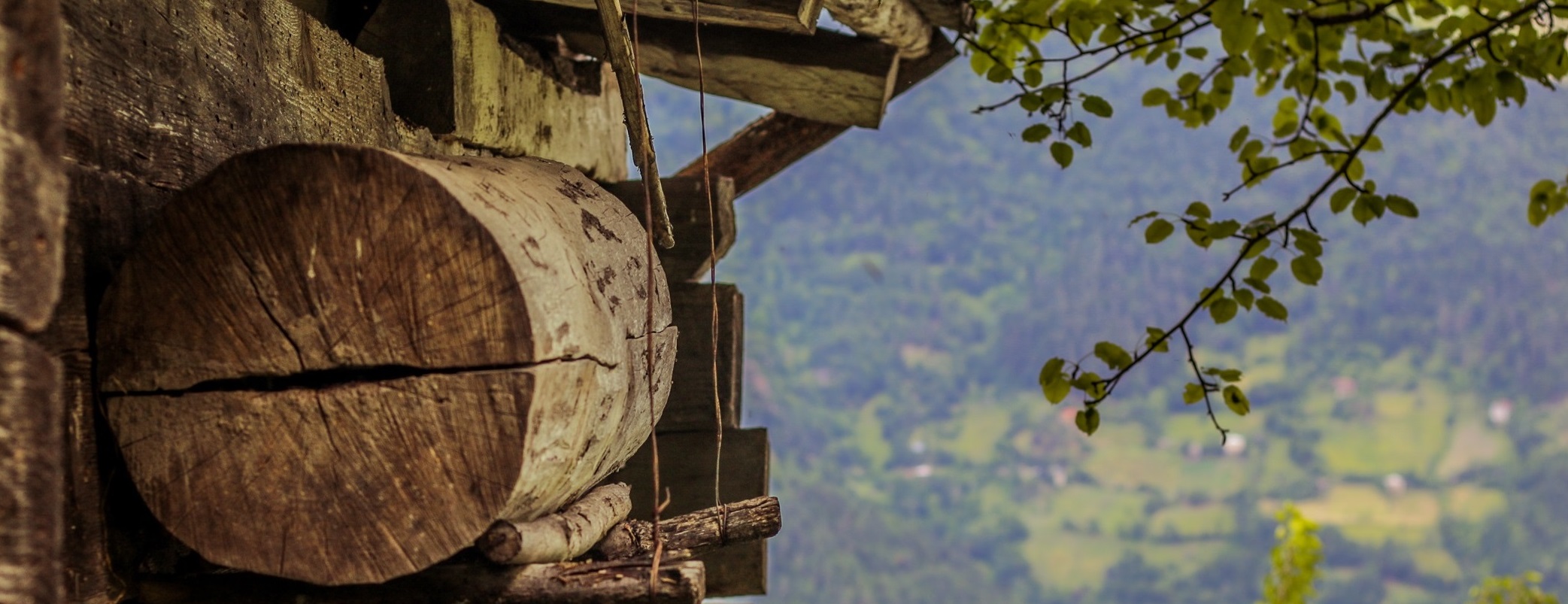
Jara is traditional wild beekeeping, rarely practiced nowadays, except for remote dwellings located in the subtropical and alpine zones of Western Georgia, namely, Ajara, emphasizing the importance of co-existence between humans and wild nature. It is a family activity led by a family head, with strong roots in traditional agriculture practice, culture and a way of living as a whole. That makes Jara unique. However, due to a limited market, it was nearly fading outback in 2014 when the ALCP found out about it, and this is when the Jara journey began. It is now growing in 2018 the first commercial Jara harvest was 500kg it is now over 3 tonnes. Twenty-three Jara beekeepers are now Bio Certified and many people such as Vazha are anxious to start. Jara is a high value product with very strong demand it retails for 90 Gel/kg.
The Memorandum of Understanding was signed between the Minister of Agriculture, the National Food Agency and SDC funded, Mercy Corps Georgia implemented ALCP on March 31st 2015. Within the framework of this memorandum ALCP will facilitate the building of two Bio-security yards with water points on the Animal Movement Route in Kvemo Kartli region, another three Bio-security yards will be financed from the State Budget.
The advisors from 5 municipalities of Ajara were trained on how to increase women participation in community meetings. Following the training facilitated by ALCP AJ, they worked with the Village Representatives and as a result of their activities, the attendance of women in these meetings has increased by 10-15%.
Very soon the Kvemo Kartli Region will have a new regional mechanism for Disaster Risk Reduction implemented by Local municipalities and the Kvemo Kartli Governor’s office. The Governor of Kvemo Kartli Paata Khizanishvili discussed this topic with the Gamgebelies of the region, deputy governors, the Mayor of Rustavi City and representatives of Alliances Lesser Caucasus Programme (ALCP) on March 11, 2015. The importance of regional coordination and the necessity of creating working groups in all municipalities were highlighted during the meeting.
The Advisory Committee was established in Ajara, which is supposed to be a forum for regional players representing national, local and regional government, civil society and the private sector to tackle key issues in agriculture sector. The participants discussed the role of the Self-governments in Disaster Risk Reduction, wildlife related issues in the region and also clarified the functions of the newly formed Municipal DRR Working Group in five municipalities of Ajara.
A kindergarten was opened on February 17th in Boslebi Village, Dmanisi municipality as a result of facilitation by the Dmanisi Women’s Room. The Kindergarten will serve 30 children not only Georgians from Boslebi Village but also from neighbor Kakliani Village which is mainly inhabited by Azeris. Four local women will be employed there.
From the ISET Economist news (http://www.iset.ge/news/?p=4633)
By Eric Livny
The “do no harm” (primum non nocere) principle is well known to students of medical schools. It is one of the most fundamental maxims in medicine, as formulated, for example, in the Epidemics book of the Hippocratic Collection:
“The physician must … have two special objects in view with regard to disease, namely, to do good or to do no harm“.
Doctors are taught that medical interventions are not risk-free. Thus, when facing a “problem” one should consider whether to use a particular procedure (e.g. surgery or chemical treatment) or do NOTHING.
Not surprisingly, this very principle has applications in many fields other than healthcare. And it is high time for this principle to be studied and applied in Georgian policymaking.