



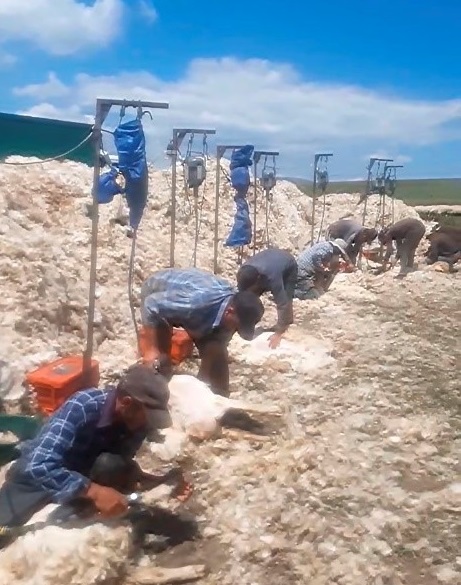
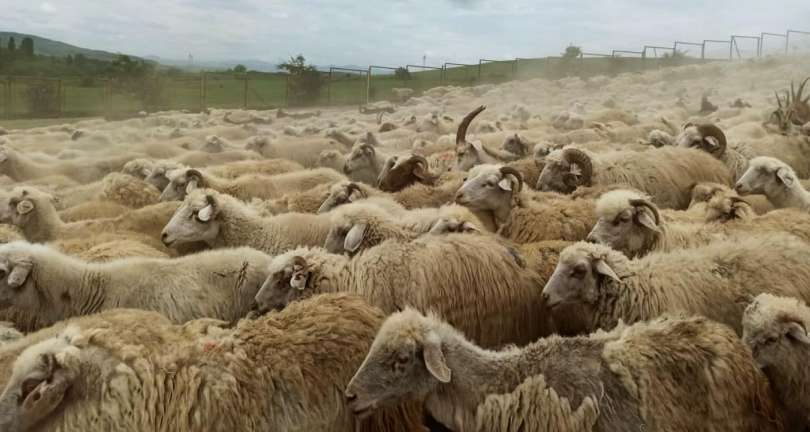
In 2018, while thinking about improving the quality of supplied wool, the Georgian Wool Company purchased twelve sheep shearing machines and trained a group of twelve shepherds, to provide a shearing service to sheep farmers. The service is available on the pastures at the beginning of spring and at the end of summer, when sheep are usually sheared in Georgia. This year, up to five-hundred farmers were served, with hundred thousand sheep sheared.
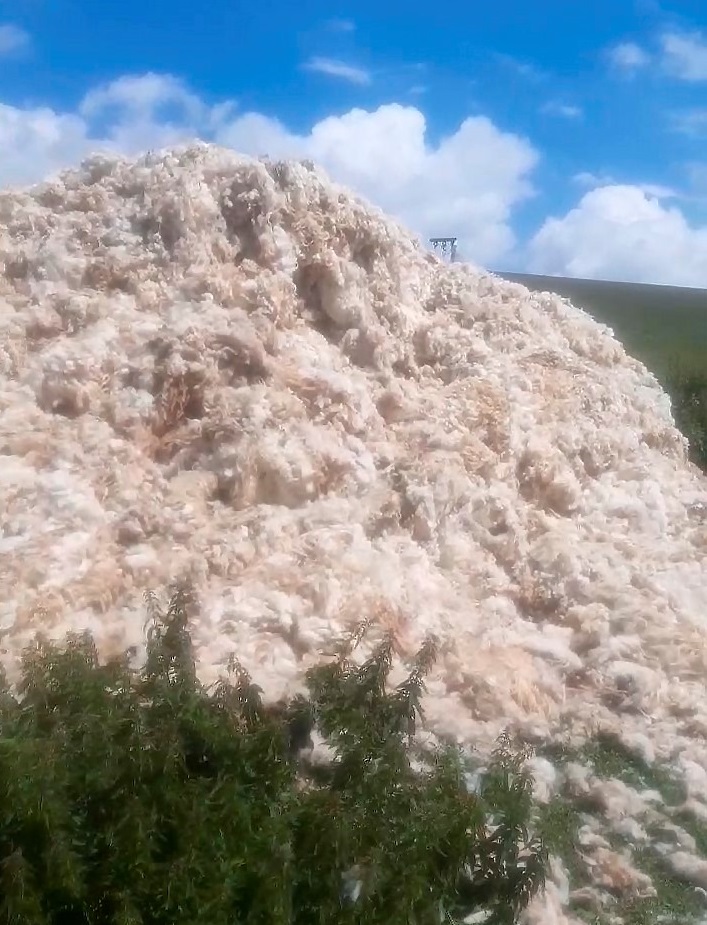
Before, the wool suppliers of the company sheared sheep by hand, which damaged wool fiber and the quality of wool was poor. It took time with only up to thirty sheep sheared a day. The sheep farmers had to ensure the workforce for shearing by hand, they also had to arrange wool storage space in pastures and transportation of wool from pastures to wool collection centers. Incompliant shearing and storage was decreasing the quality of wool and causing about a ten percent loss (up to thirty kilos), which was usually left on pastures polluting the local environment.
Now, the sheep shearing machines prevent damaging of wool fiber and respectively, the quality of wool has been improved. The company’s sheep shearing machine service includes storage and transportation of wool from pastures to the company`s warehouse in Tbilisi. Sheep shearing is now time-efficient with up to hundred sheep/day sheared by one trained shepherd. While shearing of thousand sheep by hand took at least three days, now the same is done just in one day. For the company it means a stable supply of wool in better, cleaner quality; For farmers it translates into reduced transaction costs, time and about 0.7 Gel saved per sheep.
The Georgian Wool Company first exported wool to the United Kingdom back in 2016. Ukraine, Kazakhstan, India, Afghanistan are now among top wool export destinations. Along with growing demand, improving quality has become a particular interest of the company.
A few days ago all Self-Governing cities and municipalities in the country received a recommendation from the Ministry of Regional Development and Infrastructure to appoint an advisor on Gender Equity in each one to support implementation of the Law on Gender Equality 2010 and the action plan.
Two cases of Anthrax were identified in Tsalka Municipality during August 2013. According to the NFA representative Jemal Dekanadze, one cow died due to contracting Anthrax in Beshtasheni Village, Tsalka on August 8th. A blood test sent to Tbilisi Veterinary laboratory was confirmed positive for Anthrax. However, as reported by the Local Independent Vet from Tsalka Municipality, about 5 heads of dead cattle with clinical signs of Anthrax that were not laboratory tested were also observed in the local farms of the village.
Two cows died and a man has been infected due to contracting Anthrax in Patara Toneti Village, Tetritskaro Municipality. According to the representative of the NFA – Shota Poilarashvili the first cow died on July 17th, although the blood samples for laboratory testing were taken only by July 26th. During ten days the infected carcass had been abandoned in the ravine of the village.
Following on from the meeting with Shorena Bziava on May 21st in Kutaisi, Alliances KK met with Davit Narmania, the Minister of Regional Development and Infrastructure of Georgia. The main purpose of the meeting was introducing the Minister with Women’s Room, a new municipal service in Dmanisi, Tetritskaro and Tsalka municipalities, facilitated by the Alliances KK programme. Mr. David was informed about the main idea of WR and the services offered there. The information about the activities, the events carried out and the number of visitors since the establishment of WRs – were also overviewed. GENDER GUIDELINS for VILLAGE REPS with flyers of Women’s Room and Newsletter were presented and discussed.
Two cows died due to contracting Anthrax in Useinkendi, Karabulakhi Community, Dmanisi municipality on 13th May 2013. As the deputy of Gamgebeli Dato Petviashvili stated, a blood sample was taken from only one dead cattle and Tbilisi Veterinary Laboratory has subsequently confirmed the animal death was caused by Anthrax. The local government put Karabulakhi under quarantine for two weeks. The NFA commenced mandatory vaccination in the village and approximately 250 heads of livestock were vaccinated.
On 21st of May a meeting was held with Shorena Bziava, Gender Equality Council secretary at Georgian Parliament in Kutaisi. Alliances KK representatives introduced the programme Gender activities - a new municipal service Women’s Room and Guidelines for the Village Reps.



