Azerbaijanis living in Kvemo Kartli are Turkic-speaking people representing the legacy of the conquerors that came to this area at different times. in the 1926 Census they were referred to as Azerbaijanis. The Azeri population that settled in Kartli is comprised of two streams of migrants: 1. The Turkish-speaking population that was resettled between 15th-18th centuries; they went through the heaviest psychological and physical stress before they adapted to the new place. 2. Migrants who moved from one place to another to improve living conditions having adapted to the new environment. Currently the Azeri population in Georgia numbers 224,606. They mainly reside in Bolnisi, Dmanisi, Gardabani and Marneuli districts, mostly in district centers apart from in Dmanisi muniiciaplity where there are many Azeri villages. Some live in Tetritskaro and Tsalka districts.
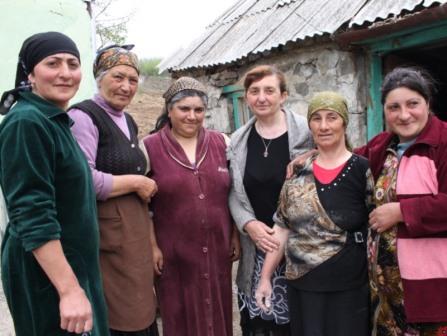
The village of Kamarlo is located next to the picturesque Lake Yaguflo. A worn-down road leads to the village located eight kilometres from the town of Dmanisi. According to the last census in Georgia performed in 2002, the population of the village was 713 people; all of them ethnic Azeris. Pikria Abdulaeva is amongst the village’s residents. She belongs to both cultures. She is an Azeri from her father’s side and Georgian from her mother’s. Azeri is the language of the village. Pikria speaks Georgian and served as the interpreter for our visit. Our arrival in the village caused a stir and the women invited by Pikria started arriving at the home of Phanura Kurbanova. In the garden the women explained how they make kizyak or fuel for winter. First, cow manure is leveled to the same thickness and is left to dry. Later, it is cut into pieces with a shovel. The pieces are then stacked in a sunny and ventilated place where they will be left to dry through summer and autumn, until the cold weather begins. This process turns the material into fuel. Kizyak is often made by women and children. The women then listed every activity they had performed that day from making bread to tending cattle to putting up wallpaper. Shoes were removed to enter the house.
The women recounted their memory of state farms. “Now it is easier, because there are no state farms. We used to work from morning until night and then come home and continue working in the house. In autumn, sometimes they would give ten tons of potatoes to each family and we had to manage this ourselves, carrying them, drying them, loading them, selling them or storing them for winter”. But for others, the state farms are associated with better times. Guliaz Gajieva is over 100 years old. she herself asserts she is 112. “We worked a lot but it was good work. I was even invited into the Central Committee of the Party as a leading worker, once”. Guliaz used to milk cows.
The women were enjoying the conversation. First, they maintained the attitude that “everything is good” and did not talk about problems. Gradually, however, they opened up. Out of the ten women who articipated in the conversation, four were divorced, half of them had lost husbands or sons, two women were married at the age of 14 and one of them had been bride-kidnapped. Often, women are complicit in these kidnappings. Gulazar was kidnapped as a bride for Pikria’s (her now mother in law’s) cousin. She was 14 and the groom was 26. Now Gulazar and Pikria share the same last name and are on good terms with each other, despite Pikria’s involvement in the kidnapping 17 years ago. Gulazar gave birth when she was 17. She had the baby in Baku and told the doctor about the circumstances surrounding her marriage. The Doctor sent a message to the village, saying “one of your young girls was forced into marriage at the age of 14! Take some measures!” The young husband could easily have been brought to justice for the forced marriage but they managed to avoid this through the help of some acquaintances in the right places. “Why didn’t you spare the girl?”, we asked Pikria. “Why?”, she answers. “Now, she has such a handsome husband who is the representative of the rural council”. Gulazar, who was listening, laughed along with the story as well.
The other women related stories of their marriages. Kheyala had not been bride-kidnapped but, rather, was matched with her husband when she was 14. She lived in the neighbouring village of Salamalik where there only was an elementary school which did not take her beyond the fourth grade. Before marrying, she lived with her parents where she looked after the household. She says, “If we had had a better school, then maybe they would not have married me off at such early age”. Kheyala has three children and added that three children are enough and that she will not let her daughter marry before she turns 19 or 20.
The issue with daughters is a critical one. On the one hand, the mothers do not want their daughters to have the same lives they did. On the other, they see that it is not easy to change the situation.
Alida Nasibova is 42 years old. She related the hard story of her divorce ten years ago. Alida is now raising her only child, a daughter. Her ex-husband has since died. Alida works as a teacher of the lower grades in the village school and provides every incentive she can to her daughter to study. She has big hopes that she will be able to change her life by getting an education. Pikria works at the village school as a teacher of Georgian. She says that the attendance of younger students is much better than the attendance of the older ones. Pikria says that her son is the only graduate who is continuing his education in Tbilisi. The majority of school graduates do not continue their studies.
 |
 |
Villagers travel to Baku fairly often, not for education but to visit relatives or for short-term work. Migration within Georgia is hampered by the language barrier which means that they do not travel much to other districts in Georgia. Phanura is a widow of over a year and wears a mourning kerchief and almost never smiles but she is quick, responsive and open and does everything quickly and silently. For her guests she made khinkali which consisted of thinly rolled boiled dough with butter and a sauce made from sour milk with herbs and spices. Sakna Gajieva is Phanura’s neighbour who came to speak with us briefly before getting back to baking bread at her house. She gave us hot bread for the way back and Phanura gave us some cheese as well. We were very touched by their hospitality, help and openness.
Georgian Honey under Nena brand has successfully entered the Hong Kong market with a repeat order received soon after the first one. Hong Kong is the new market for Nena honey following USA, Canada, Japan and UAE.

Three Georgian honey producers received Silver Quality Award in the quality category at the London International Honey Awards. These companies were supported by the Embassy of Georgia to the UK and the Georgian Beekeepers Union (GBU) to participate in this prestigious competition in London for the first time among 290 honeys from 20 countries.
The purpose of the LONDON HONEY AWARDScompetitions is to inform honey-growers, honey producers, beekeepers, processors, and retailers, who distribute their standardized products legally, to preserve and to ameliorate the quality of their branded product by promoting high-quality honey products in every aspect of the spectrum of its use and consumption.
The awarded Georgian honey producers are Nena Chestnut Honey / KTW, Nena Jara Bio Honey / KTW, Ninotsminda Honey (Alpine) / Cooperative KODY and Chestnut Honey / Rukhi Queen
You can see here the post of the embassy on Facebook.

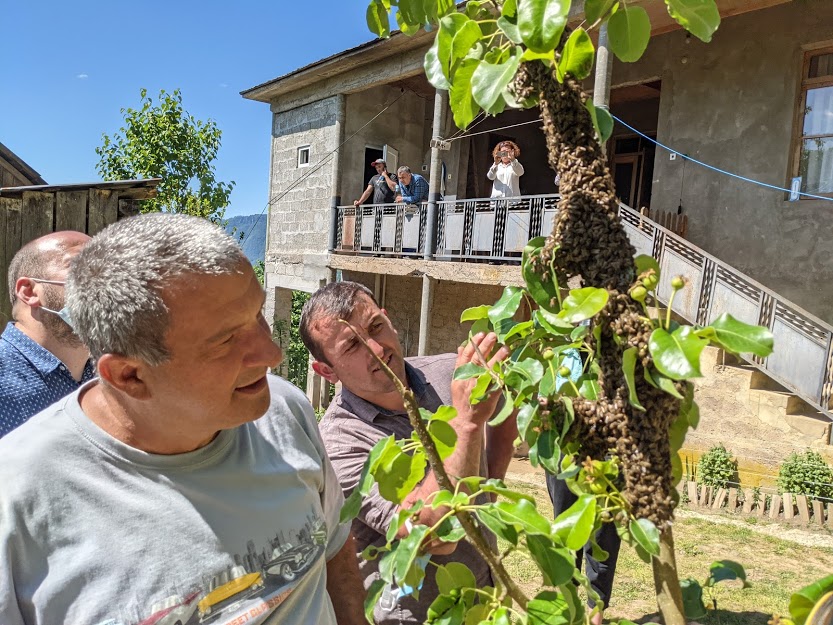
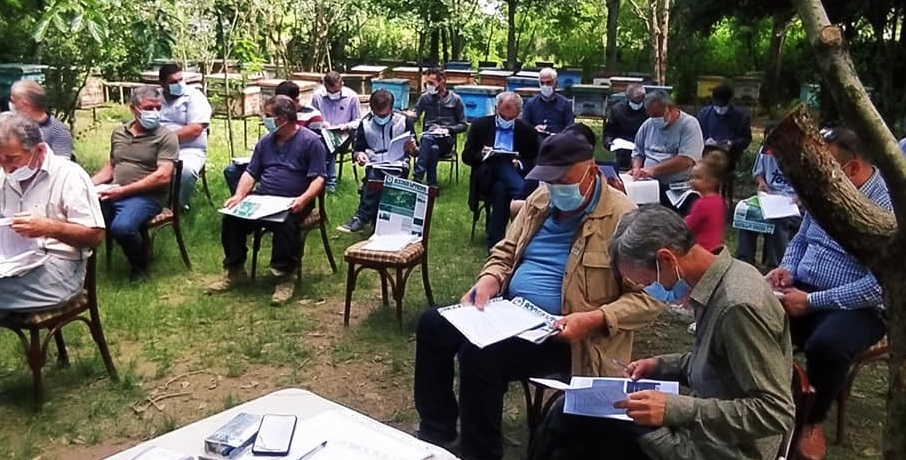
On May 27th-28th, more than two thousand beekeepers in all regions of Georgia attended a training on bee treatment practices as a response to the massive bee colonies collapse this year. The Georgian Beekeepers Union (GBU) initiated and advocated the first nationwide trainings with the Rural Development Agency (RDA) based on the online research data gathered. The GBU developed a trainer’s handbook and Varroa Treatment guideline, which was translated and available for Azerbaijani and Armenian beekeepers; and delivered a Training of Trainers for eighty-five beekeepers.
‘Beekeepers received important information about new methodology how to treat Varroa. This was the first training organized in coordination with the GBU, which is the main actor in the beekeeping sector and our collaboration will continue.’ – Lasha Shalamberidze, the Head of the Regional Relations Department at the RDA.
‘I think, a key outcome of these trainings is that our Union expanded its team across Georgia. We now have the representatives in each municipality and we will continue teaching and delivering important information to the beekeepers.’ – Aleko Papava, the Head of the GBU.
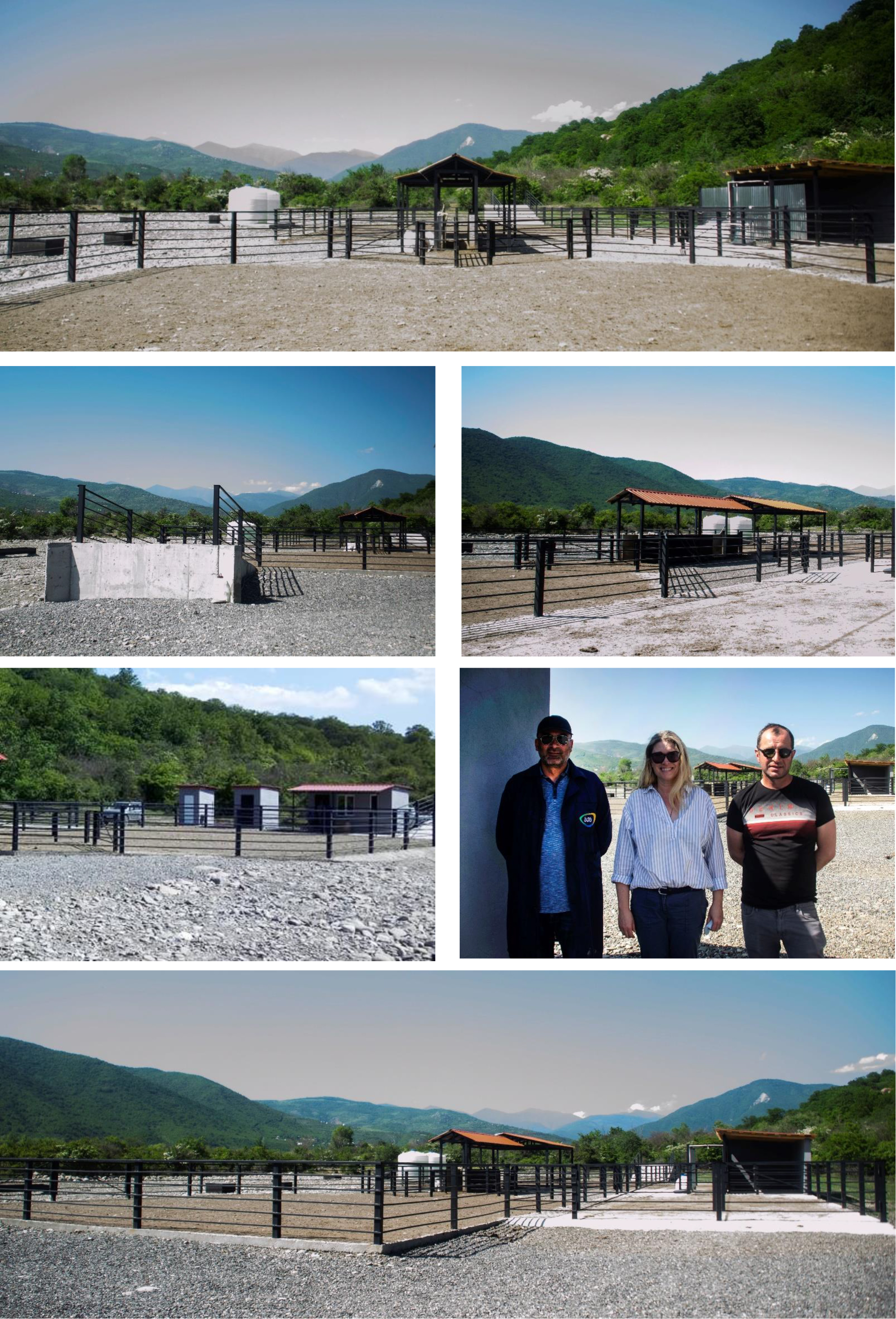
A seventh Veterinary Surveillance Point (VSP) of the National Food Agency (NFA) opened recently in Dusheti municipality to serve nomadic farmers migrating on the north part of the Animal Movement Route of Georgia. This is the first and the only VSP in Mtskheta-Mtianeti region, where disinfection of sheep and cattle against ecto-parasites is provided by the State. Up to 100,000 head of sheep will be dipped there during every transhumance season, free of charge.
The point was constructed by the NFA following the petition of shepherds from the region at the ALCP’s 11th Advisory Committee meeting and was approved by the Minister of Environmental Protection & Agriculture – Levan Davitashvili in March 2019, based on the positive benefits of the existing points.
In 2015 the VSP model was created by the ALCP commissioned British livestock expert Edward Hamer and an MOU was signed between the Ministry of Agriculture, the NFA and the ALCP to construct six VSPs, two of them were financed by the programme and four by the State. In 2016-2018 all six points were finalized and opened. This year additional water points were also opened on the route. The VSP’s record and monitor the nomadic sheep and cattle population and underpin Georgia’s credibility in livestock export markets.
As Dick Whittington found out the London streets are not literally paved with gold. However four Georgian honey companies are participating in a celebration of the liquid kind. The London International Honey Awards held from May 30-31st, have two main award categories: quality and design, and feature honeys from all over the world, from Canada to the Mediterranean to New Zealand and everything in between. Competition is fierce. The four Georgian honey companies, Nena, Rukhi Queen, Honey and Irinola Company and Cooperative Kodi, were supported to participate by the Embassy of Georgia to the UK and the Georgian Beekeepers Union (GBU).

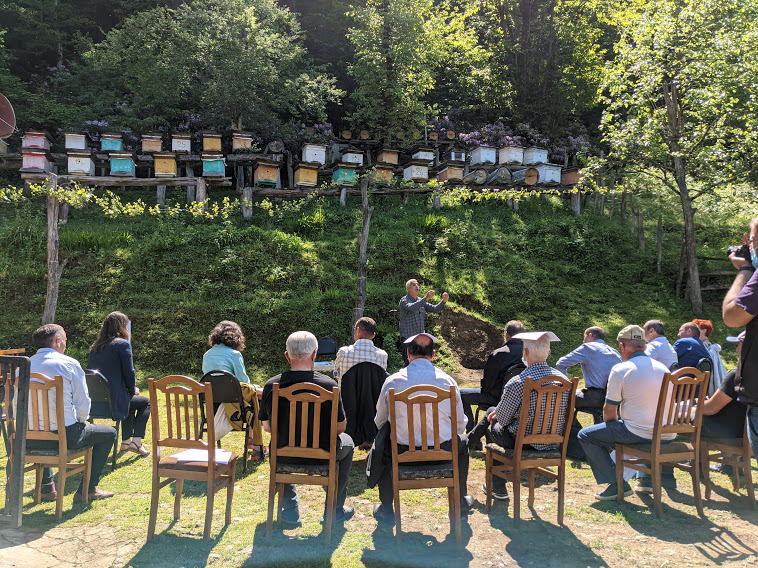
On May 18th-19th, twelve VET college representatives from seven regions of Georgia attended a Training of Trainers in Jara Honey Production hosted by the Georgian Beekeepers Union (GBU) and the Jara Beekeepers Association (JBA) in Keda, Medzibna Village.
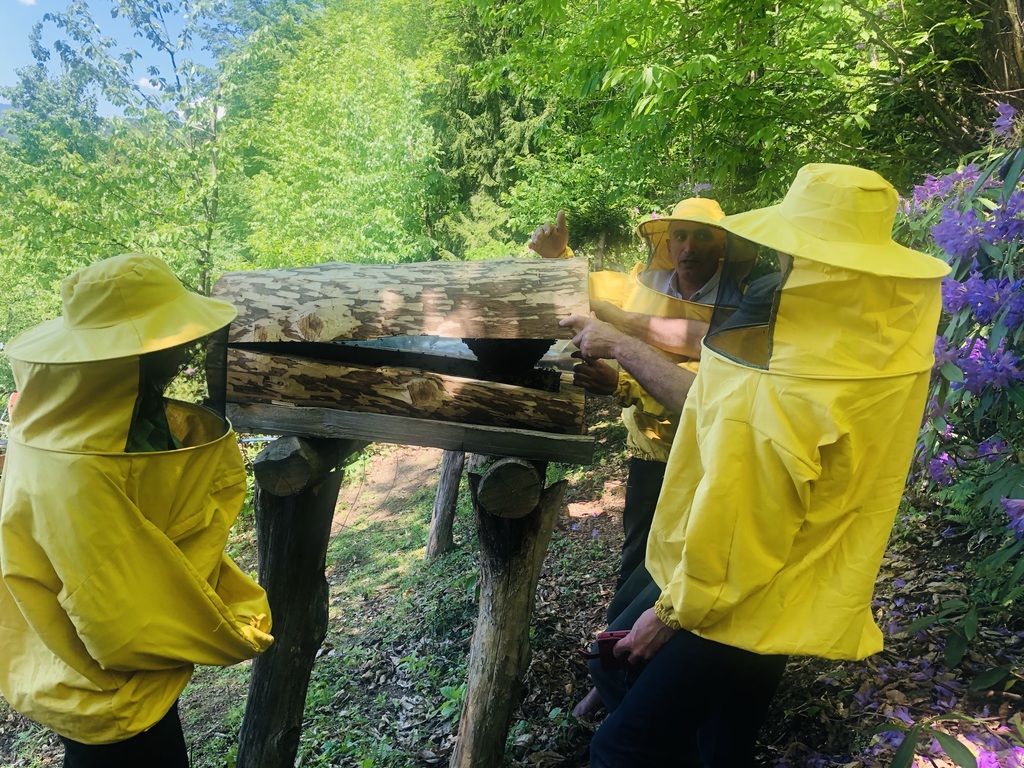
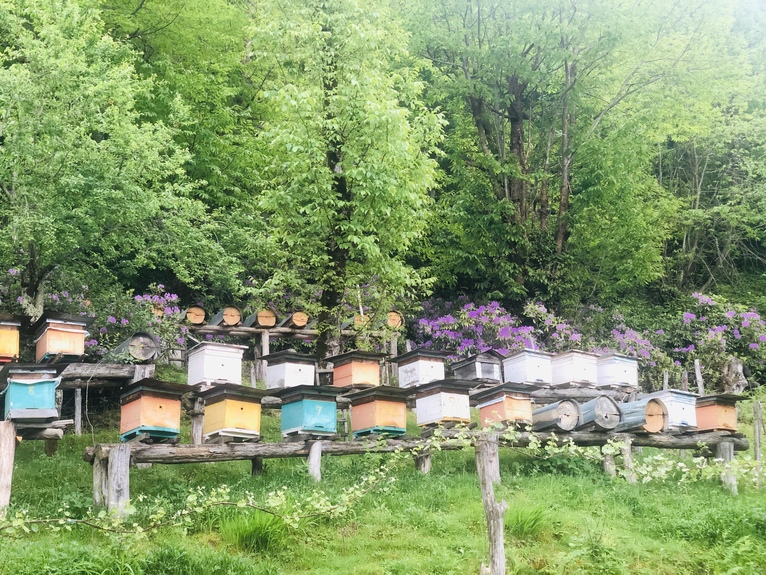
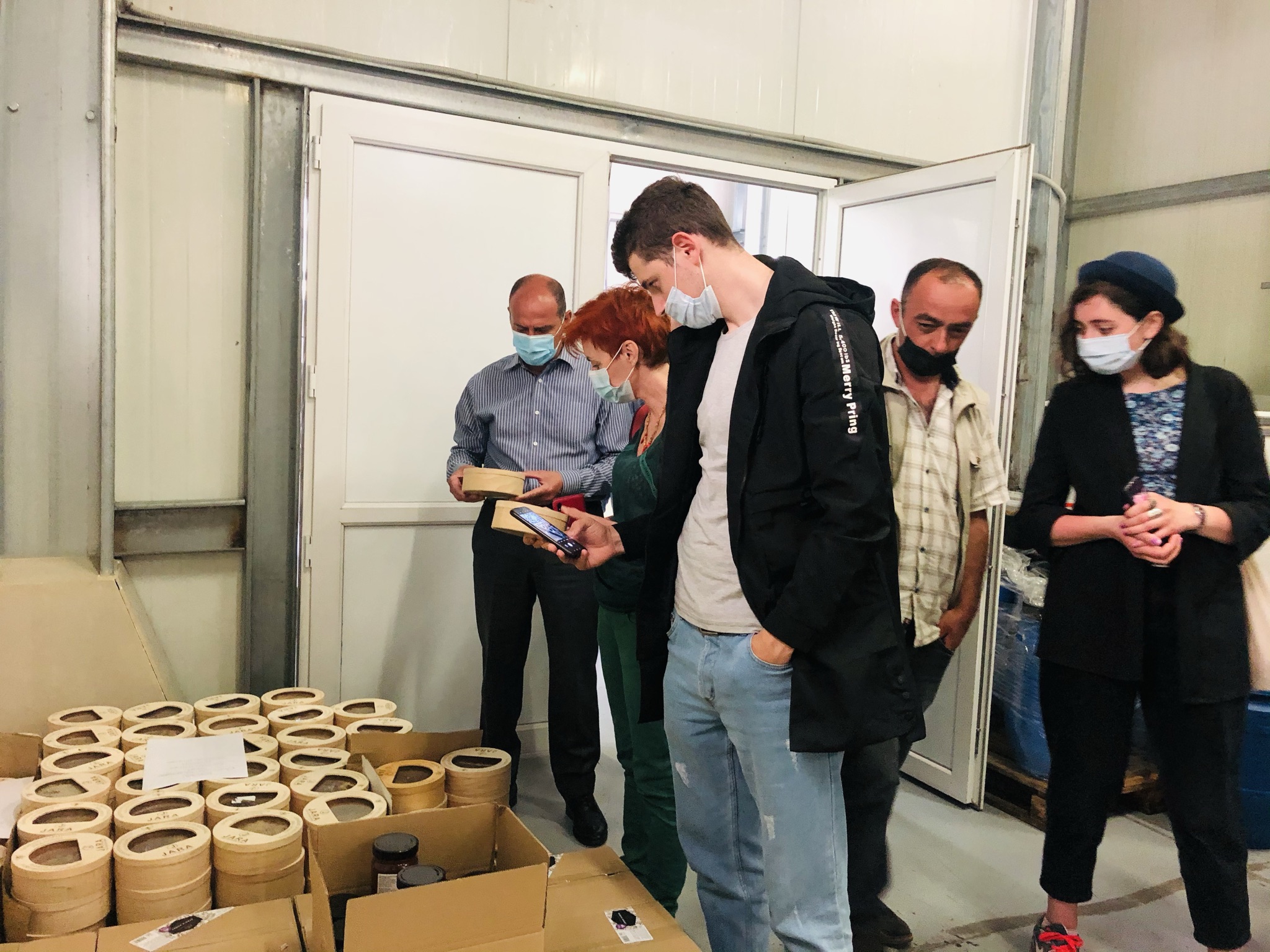
The trainees learnt how to teach beekeeping students Jara honey production and how to obtain Bio certification. They also visited a Bio certified Jara apiary and the Agro-Keda factory to see the process of Jara honey processing and packaging.
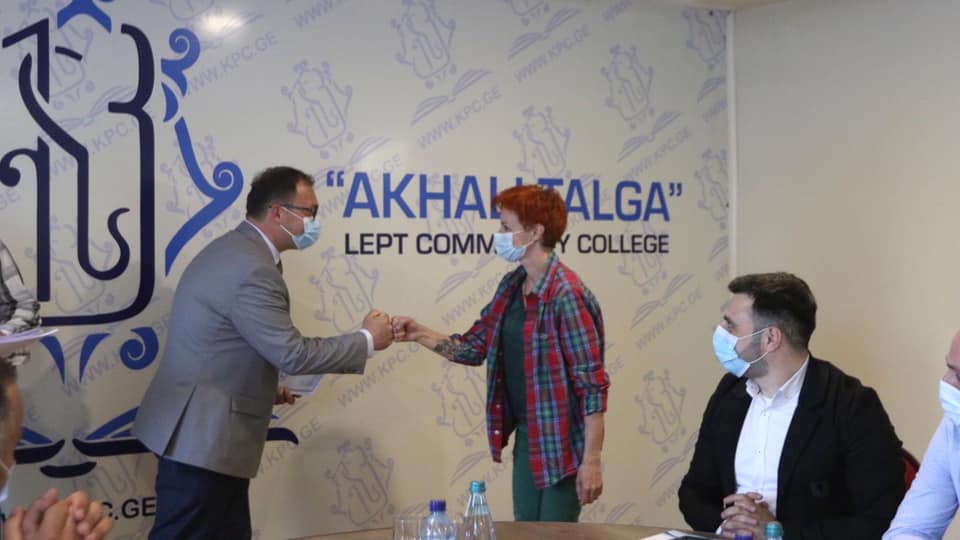
Akhali Talga VET College in Kobuleti and Khulo, who have already integrated the Jara teaching materials into their one-year beekeeping programme since October 2020, also shared their experience of including and teaching Jara production.
‘I am happy to attend this training, as I learned a lot. I am ready to teach Jara beekeeping to my students, because it will make our beekeeping programme even more interesting.’ – Ilia Khazarishvili, a lecturer at the Public College Aisi, Kakheti.
‘I am glad that all of the colleges now acknowledge that Jara teaching is an essential part of Georgian beekeeping programmes. During these two days they heard about a wide range of Jara topics, for example, Bio certification, which was impressive for them. Now they are convinced that Jara teaching has a future and this will help them to attract more students to beekeeping. They also saw the demand from businesses after visiting two Jara honey processing entities.’ - Aleko Papava, the Head of the GBU.
The National Center for Educational Quality Enhancement and sectoral skills organization Agro Duo are supporting Jara teaching integration in the VET colleges.
On June 1st, the GBU is organizing an online event Highlights So Far: Jara in VET, which is bringing together VET colleges, specialists, agro journalists, donors, and public officials to further promote Jara teaching in VET colleges and share reflections on the training.