From the ISET Economist news (http://www.iset.ge/news/?s=survival&lang=en)
By Nino Mosiashvili
The conclusion of the Association Agreement (AA) with the European Union was euphorically acclaimed by Georgian media as well as political and economic decision makers. Part of the AA is the Deep and Comprehensive Free Trade Agreement (DCFTA). The DCFTA is intended to liberalize trade between Georgia and the EU by lowering tariffs and reducing non-tariff barriers. For agriculture, the most relevant changes relate to food safety (bacterial contaminants, pesticides, inspection, and labeling) as well as animal and plant health (phytosanitation). For the manufacturing sector, the removal of so-called “technical barriers to trade” is similarly important, with the goal being to prevent the usage of technical standards as a means to protect domestic markets from foreign competition. “If regulations are set arbitrarily, they could be used as an excuse for protectionism”, states the World Trade Organization on its homepage.

It is clear that all these agreements require unilateral adjustment of Georgian regulations to European standards. Georgia is economically too small to impose its preferences on Europe. This is stated quite frankly in the AA, when it says that it aims to “support the efforts of Georgia to develop its economic potential via international cooperation, also through the approximation of its legislation to that of the European Union”.
Whether these unilateral adjustments are beneficial for Georgia is not generally clear. European regulations do not necessarily reflect “best international practice”. In democracies, laws and regulations come about through the lobbying efforts of political interest groups much more than through rational planning. In the future, internal political decisions made in the European Union will be relevant for Georgia much more than they were previously, and it will be more difficult to pursue policies tailored to the specific situation of Georgia.
Yet Georgia hopes that the convergence to European standards will make it easier for Georgian firms to access the European market. Most critical in this respect is Georgian agriculture, as it is the sector employing the bulk of the Georgian labor force, while it is at the same time dramatically lagging behind European productivity levels. In 2013, Georgia’s agriculture accounted for only 9.3% of the Georgian gross domestic product but employed about half of the labor force. Thus, one of the benchmarks for evaluating the usefulness of the DCFTA will be its impact on Georgian agriculture.
THROWN INTO THE WATER – WILL IT SWIM?
The impacts of the DCFTA for Georgia were assessed in a report with the lengthy title Trade Sustainability Impact Assessment in support of negotiations of a DCFTA between the EU and Georgia and the Republic of Moldova. It was written by a consortium consisting of the Dutch consulting company Ecorys and the The Center for Social and Economic Research (CASE), a Warsaw-based think tank. On a broad level, the report estimates that due to trade liberalization with the EU the national income of Georgia will increase by 291.9 million euro in the long run, corresponding to a GDP growth of 4.3%. This goes along with an increase in Georgian exports and imports by 12% and 7.5%, respectively, leading to an improvement of the Georgian trade balance. But what about agriculture?
According to the study, the DCFTA will have different effects on different agricultural products, and the overall picture is very ambivalent. The output of some product categories will increase, namely vegetable oils and fats (+6.7%), vegetables, fruits, nuts, and oilseeds(+3.4%), and animal products (+3.1%), while for many other products, the output is expected to shrink, e.g. livestock and meat products (-14.8%), other processed foods (-8.8%),beverages and tobacco (-4.0%), sugar (-2.4%), and other crops (-2.0%). The report attributes the increases to reductions of EU tariffs on Georgian exports and the decreases to the reduction of Georgian tariffs on goods imported from the EU. These numbers, if they say something about the true developments, suggest that parts of Georgia’s agricultural sector will get under severe pressure due to increased competition with European producers.
ECONOMIC DARWINISM
What are the implications for Georgian agricultural policy? Some of the producers will benefit from the integration into the European market, as they can stand the pressure and even expand in this highly competitive environment. Other producers are likely to run into essentially insoluble problems. One particularly beneficial category in this respect is vegetables, fruits, nuts, and oilseeds, because some of the products in that category (e.g. hazelnuts) are labor intensive and serve niche markets. This implies that more people can be employed in the production of these goods, making the transformation to a modern, efficient agriculture less painful, and it means that competition is lower and margins are higher. If policy recognizes these advantages, producers in that category might become “national champions”.
Currently, vegetables, fruits and nuts are in Georgia primarily produced by small and medium sized farmers. Due to lack of greenhouses the production is seasonal. Yet farms can be consolidated and technical equipment can be upgraded. In the end, it will be relevant that Georgia has fundamental advantages in the production of goods in that category, namely clean soils, little usage of chemicals, a relatively large amount of available land for cultivation, and a long tradition in vegetable and fruit production.
Moreover, about half of Georgia’s current export of vegetables, fruits, and nuts already goes to the EU, which means that Georgian producers already have “a foot in the door”. Currently, the exports almost entirely consist of hazelnuts (there are no tariffs, as hazelnuts are already covered by the GSP+ regime, and hazelnuts easily satisfy sanitary and phyto-sanitary standards). Thus, while the DCFTA may not change Georgia’s hazelnuts export to the EU significantly, there may be other niche products in this category, like berries and other kinds of nuts, which may benefit from the DCFTA, for example through adjustments of Georgian regulations regarding product packaging.
It will be important that policy will subscribe to what one might call “Economic Darwinism” – do not try to keep those producers alive that are incapable of surviving, but instead create good circumstances for those that have a future in Georgia.
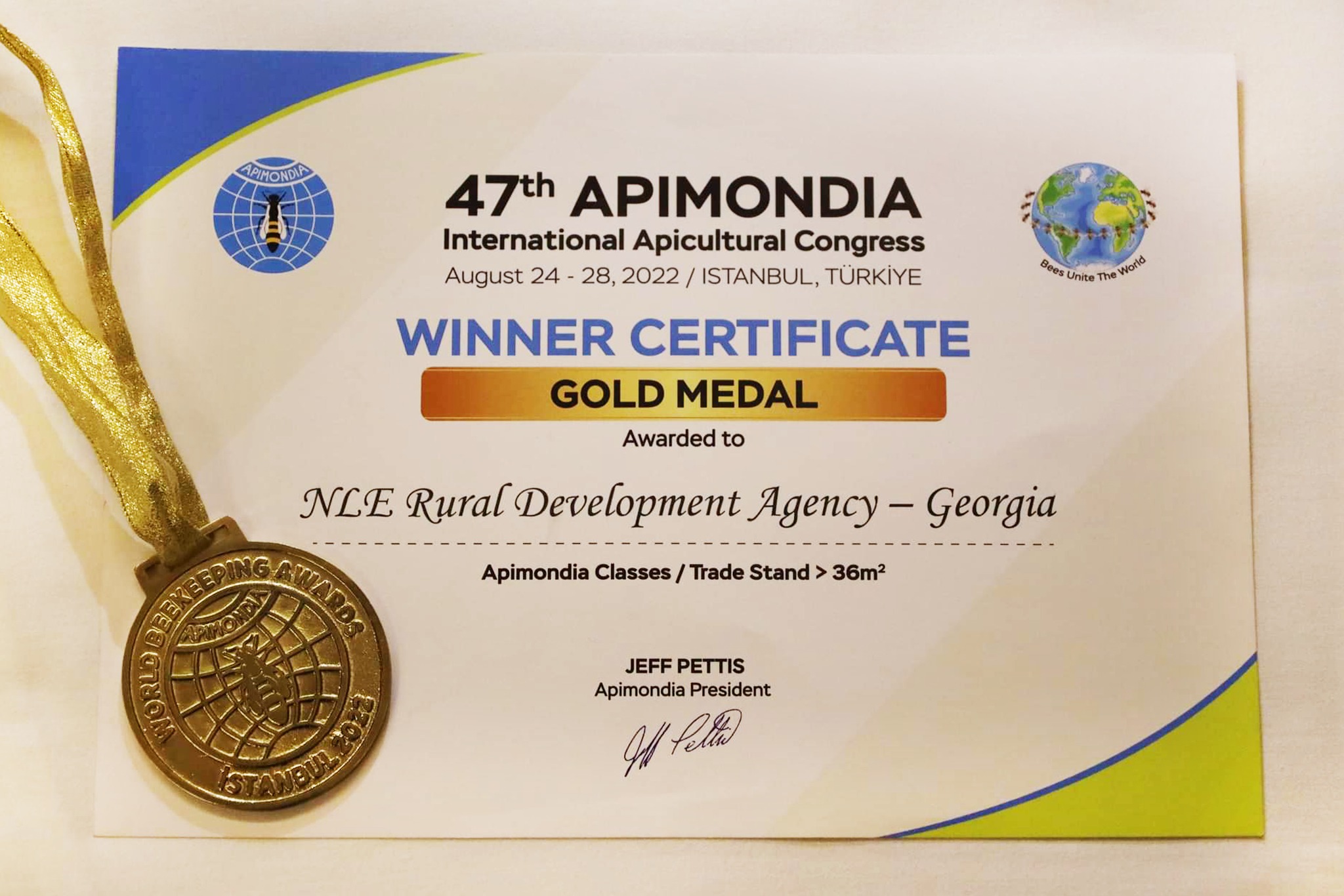
The Rural Development Agency (RDA), representing Georgia at the 47th Apimondia Congress 2022 in Istanbul, Turkey, was awarded a Gold Medal for outstanding design of a trade stand in the 36 square meters category. Georgia was selected from among twelve other nominees.
This year was distinguished by the strongest ever representation of Georgian beekeeping at the Apimondia Congress. Now it is the third time that Georgia has attended. Eight honey producing and exporting companies exhibited on the winning Georgia stand, showcasing honey, queen bees, and other beekeeping products including cosmetics.
The congress proved highly profitable for the Georgian representatives in establishing linkages, potential partnerships and experience sharing with beekeeping associations the Beekeeping Association of Slovenia, the Slovak Beekeepers Association and the Turkey Beekeepers’ Association. The potential for Jara honey to apply for Fairtrade certification was discussed with Fairtrade International representatives. Representatives and judges of the London Honey Awards also visited the Georgian stand. A few Georgian companies have won silver and bronze at the award in 2022. A strong representation to the third London Honey Awards in 2023 by the Georgian Beekeepers Union members will be facilitated by the programme.
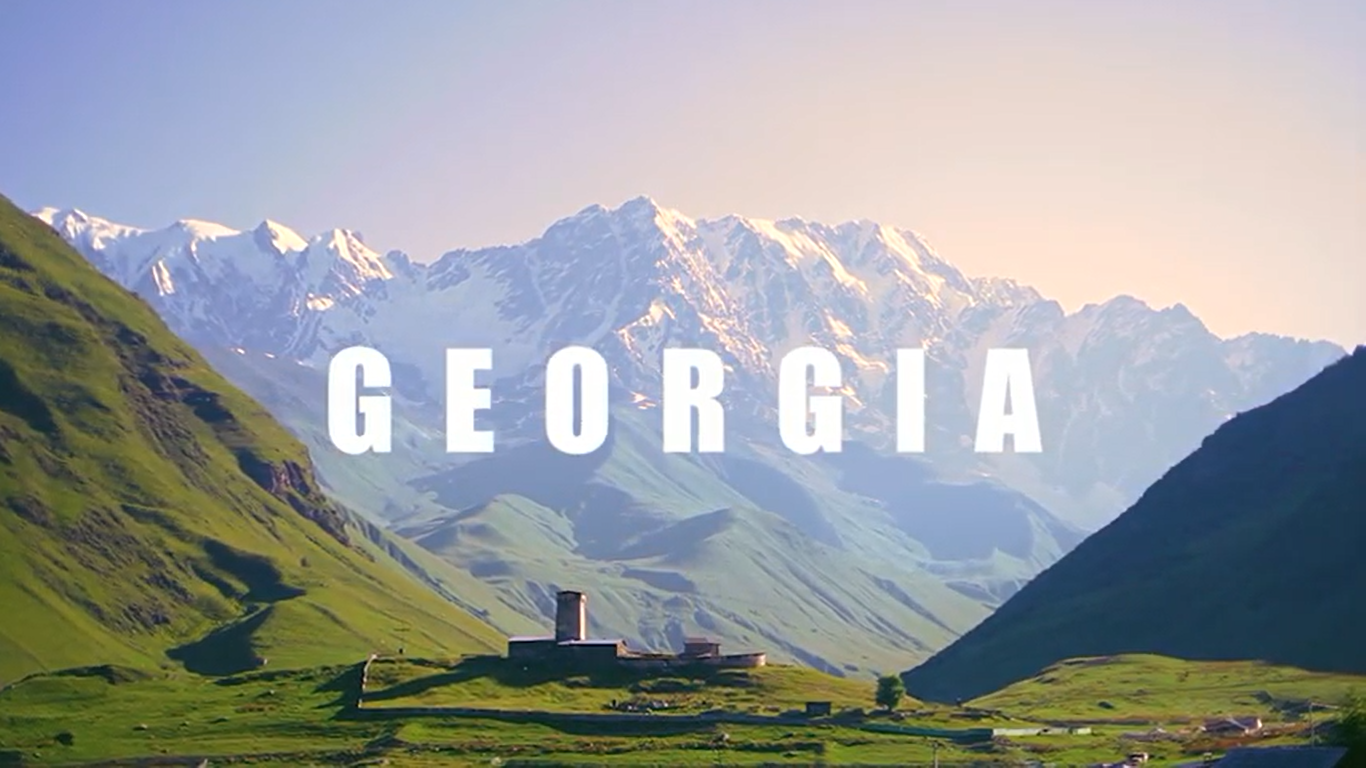
The 47th Apimondia Congress 2022, the most significant event in beekeeping worldwide, will take place from 24th to 28th August in Istanbul, Turkey. For the third time and with the strongest representation to date, the Georgian Beekeepers Union (GBU) and eight member companies will showcase the Georgian honey sector with the full financial sponsorship of the Rural Development Agency (RDA) under the Ministry of Environmental Protection and Agriculture of Georgia (MEPA).
The eight honey producing and exporting companies who will exhibit different types of Georgian honey, including, bio Jara honey are: KTW Agro Keda, Rukhi Queen, Geo Natural, Cooperative Racha Natural Products, Api Geo, Tapli Sakhlshi, Cooperative Ska, Ska-Kodala.
A short movie on Georgian beekeeping produced for the event will be showing in the Georgian booth. An e-poster presentation in the Beekeeping Economy section in the academic conference side of the Expo entitled A Revival of Georgian Traditional Beekeeping – Jara Beekeeping will be showcased as well.
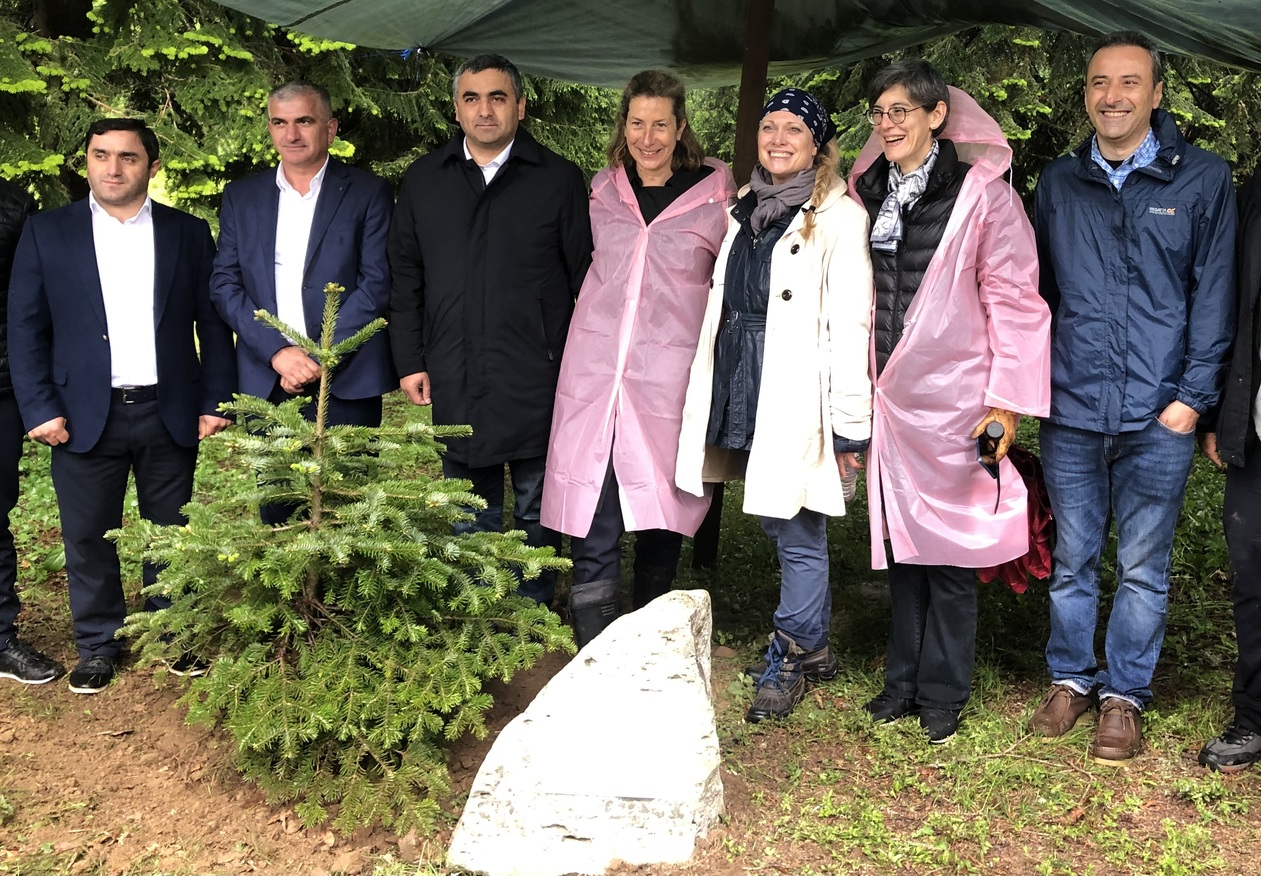
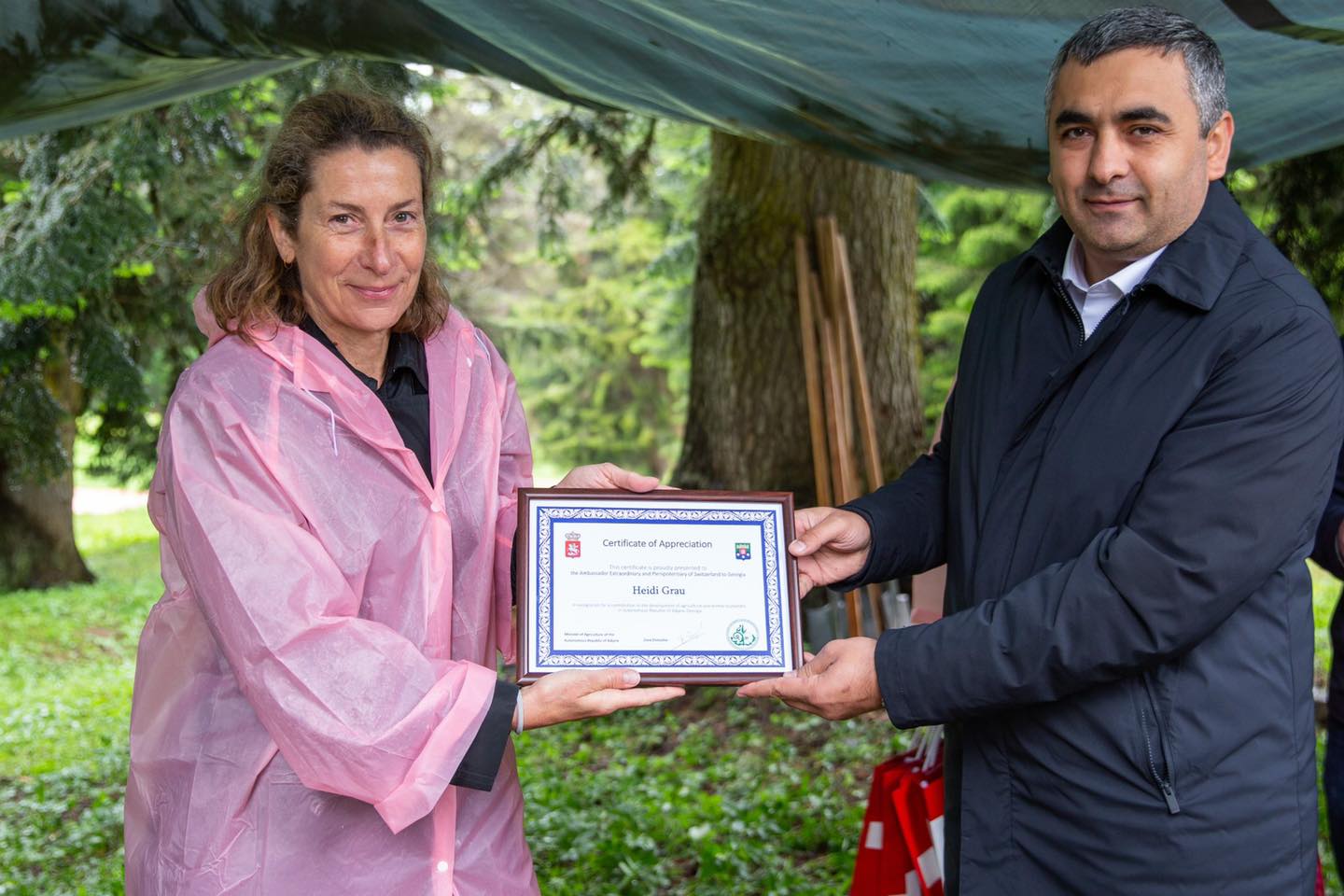
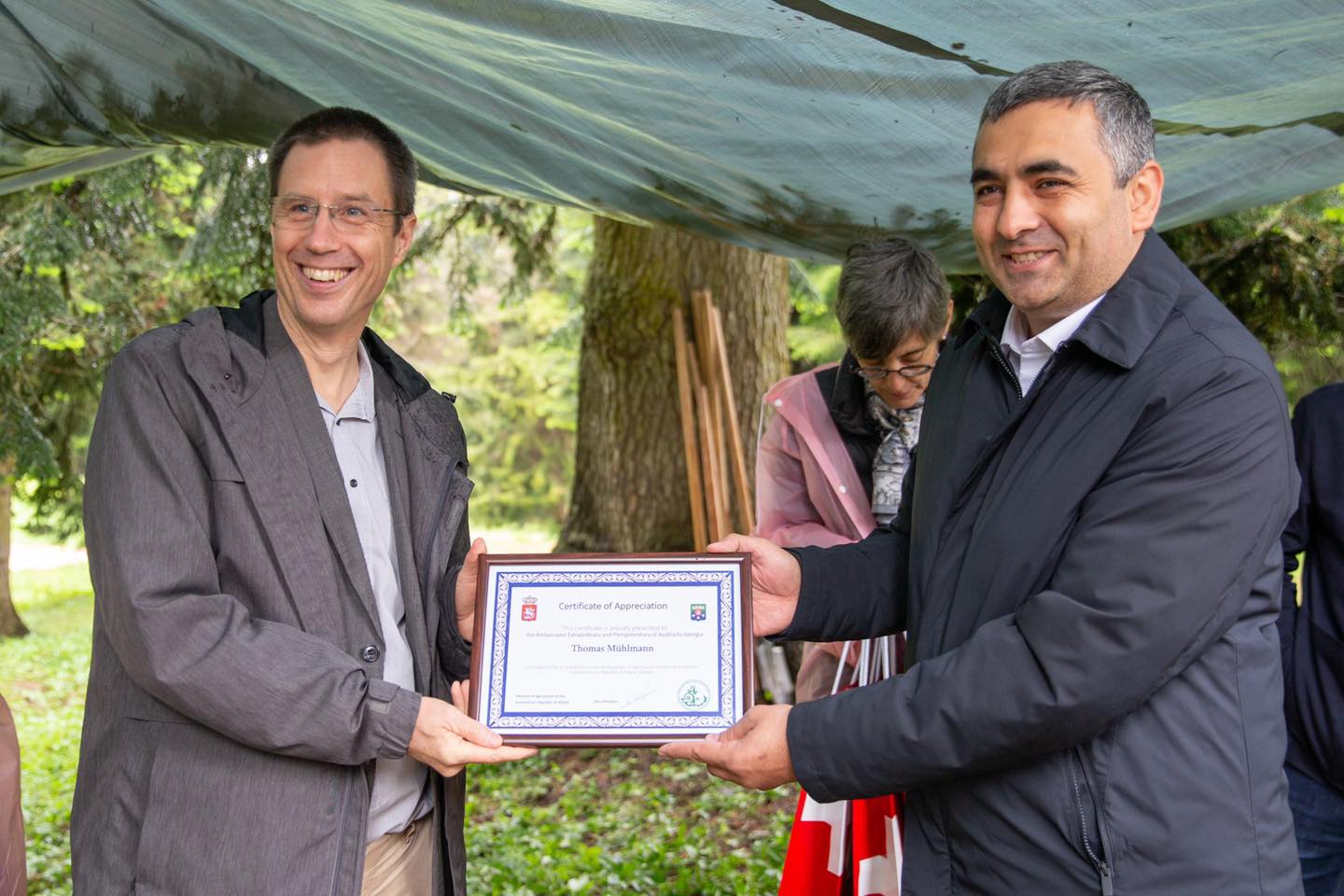
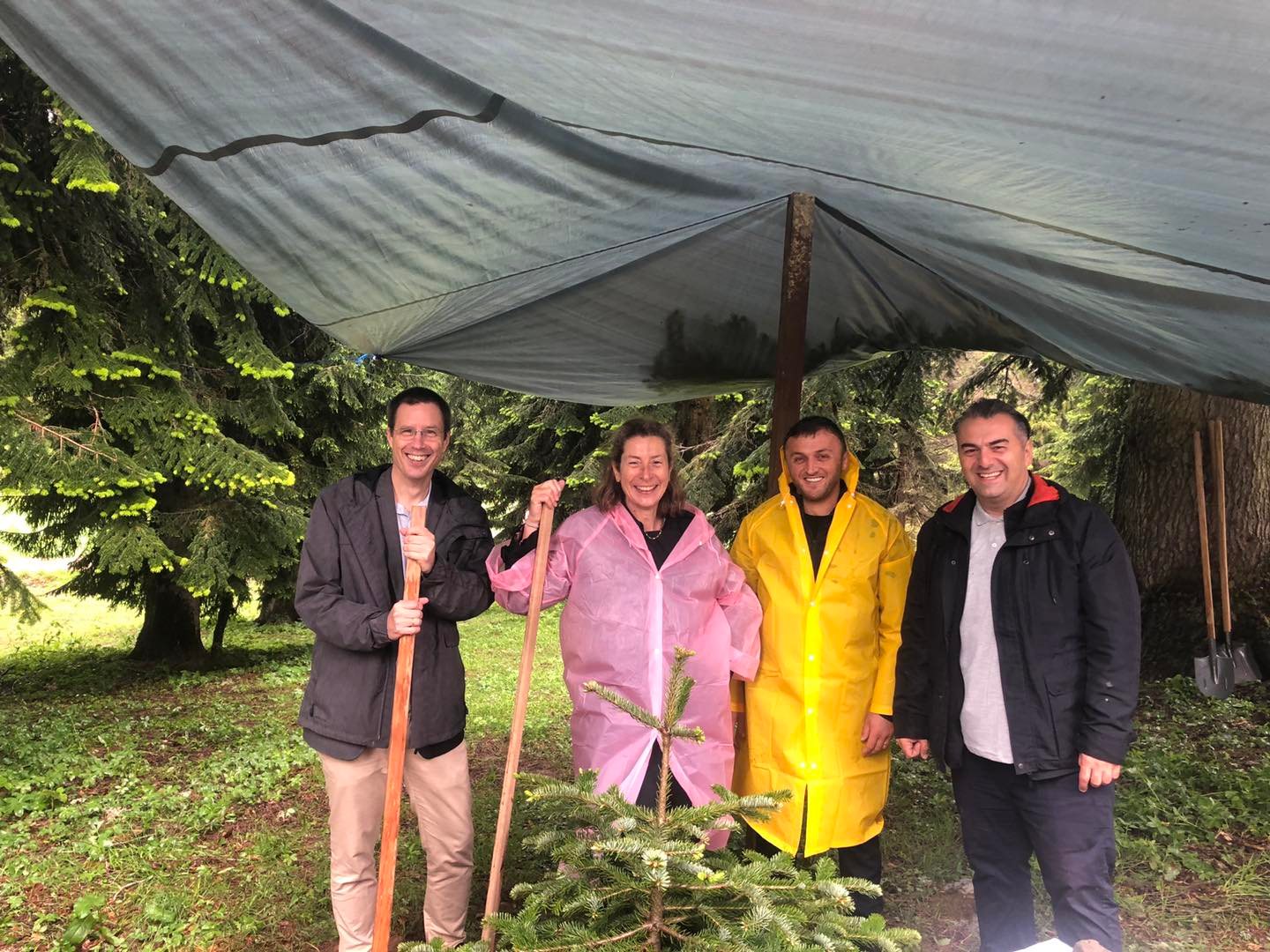
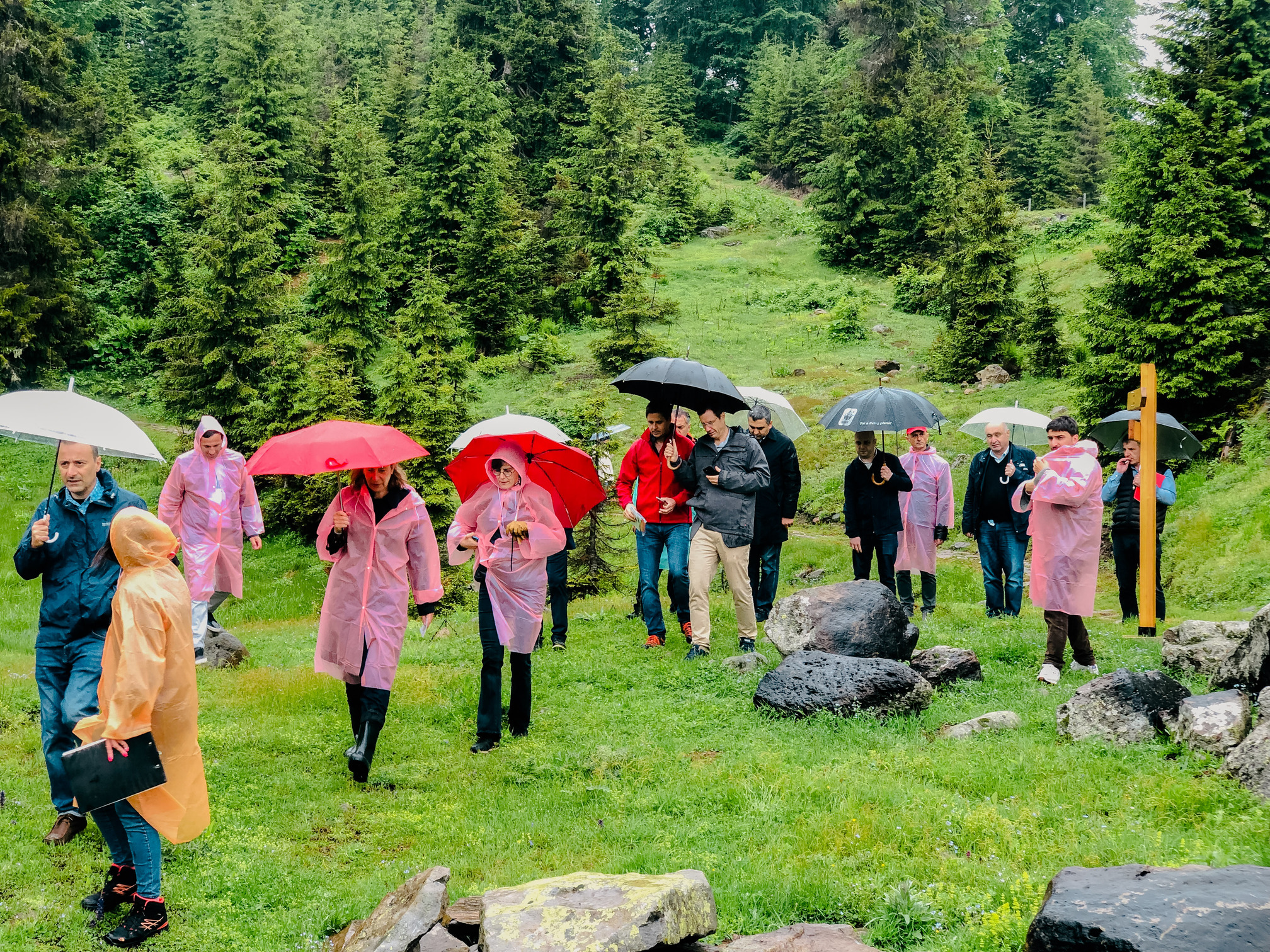
On June 22nd, On the occasion of the 30th Anniversary of Diplomatic Relations between Switzerland and Georgia, as well as Austria with Georgia, Ambassador of Switzerland to Georgia, H. E. Heidi Grau and Ambassador of Austria to Georgia, H. E. Thomas Muehlmann planted a tree in the Goderdzi Alpine Garden. The Minister of Agriculture of Ajara AR, Zaza Shavadze and the Deputy Mayor of Khulo, Nadim Vasadze joined the event. The Goderdzi Alpine Garden is an important tourist destination in mountainous Ajara and a testimony of biodiversity and cultural richness of the region.
Both ambassadors picked up on the theme of needing to balance development with sustainability and care for nature and that the garden is an excellent example of this. While the Director of Batumi Botanical Garden, Irakli Archaia emphasized the importance of the garden and initiated the idea of copying the model of the garden in other municipalities. The minister of Agriculture of Ajara, Zaza Shavadze stated thatcreating and supporting new opportunities for rural development is the key goal of the strategic framework of relations of Switzerland and Austria with Ajara region.
H.E. Heidi Grau noted the excellent results achieved by ALCP in creating job and income opportunities for the rural population, including by supporting the production of Jara honey, and was pleased to announce that
‘Switzerland is engaging in a new phase of the ALCP project, together with Austria and joined by Sweden, until 2026, with a total budget of USD 6.5 million. This will allow to further facilitate production in beekeeping, dairy and meat, wild botanicals and silk, as well as support the development of the Goderdzi Botanical Garden, for the benefit of women and men living in mountainous regions,’ Ambassador of Switzerland to Georgia, H. E. Heidi Grau said.
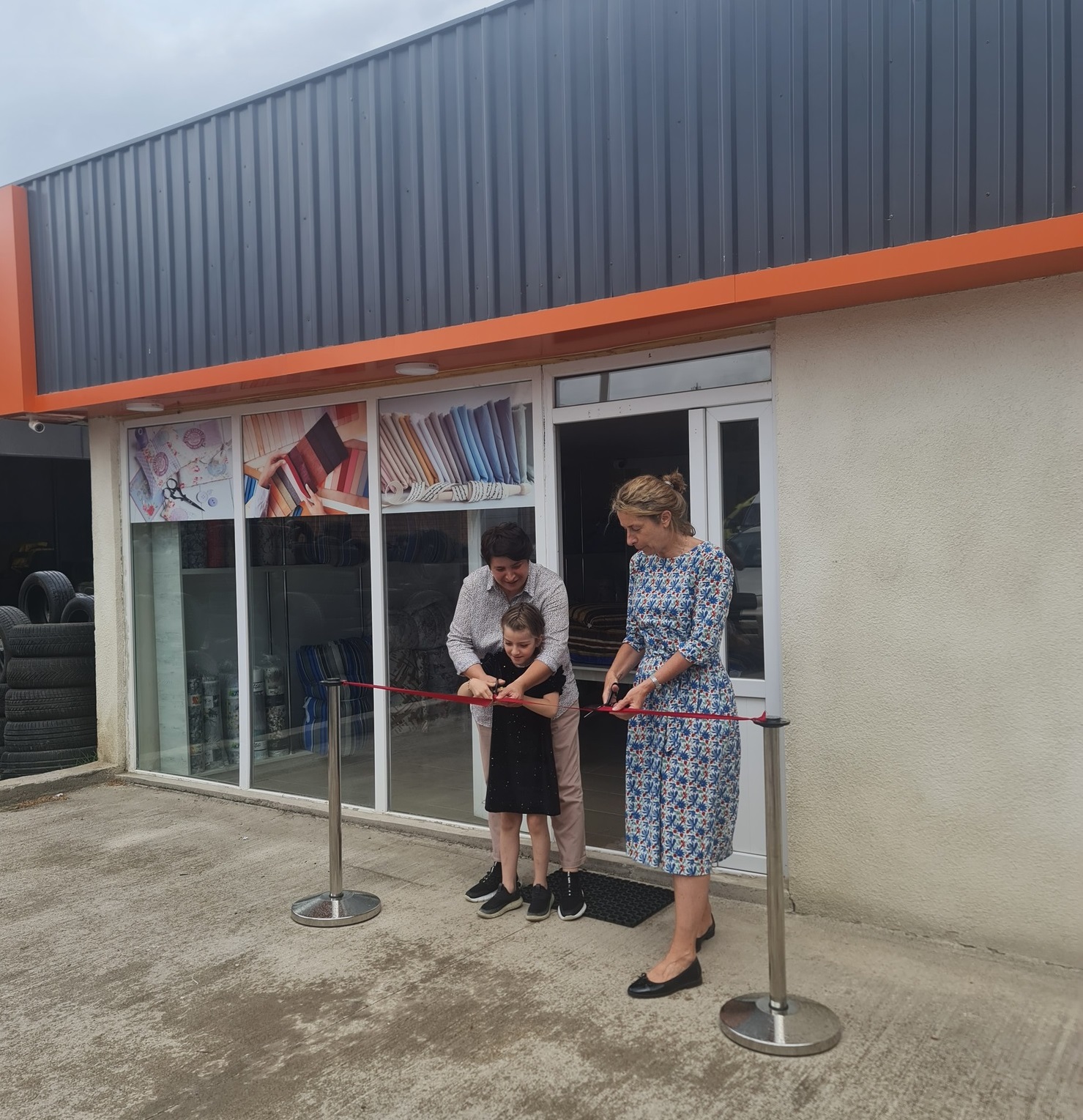
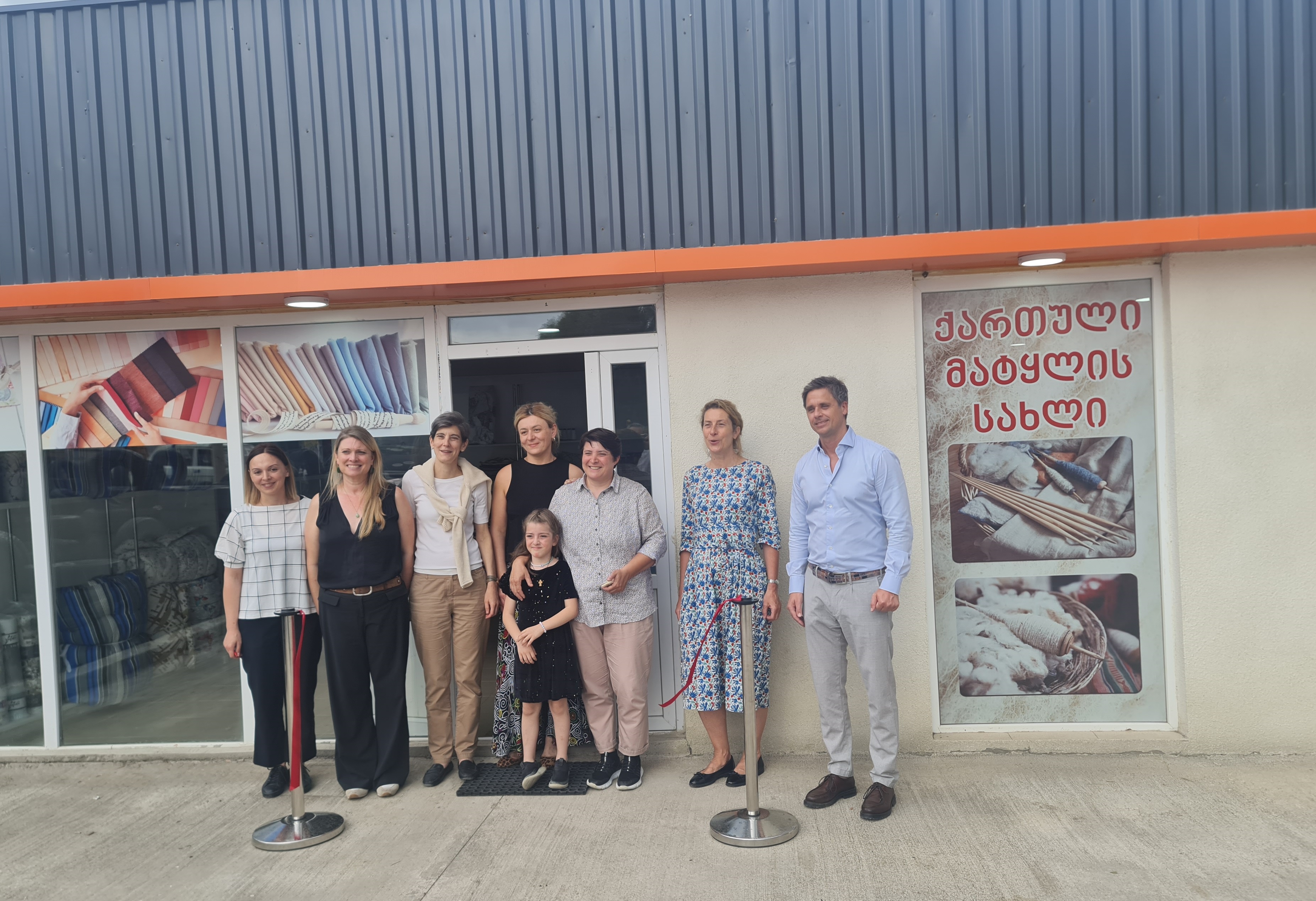
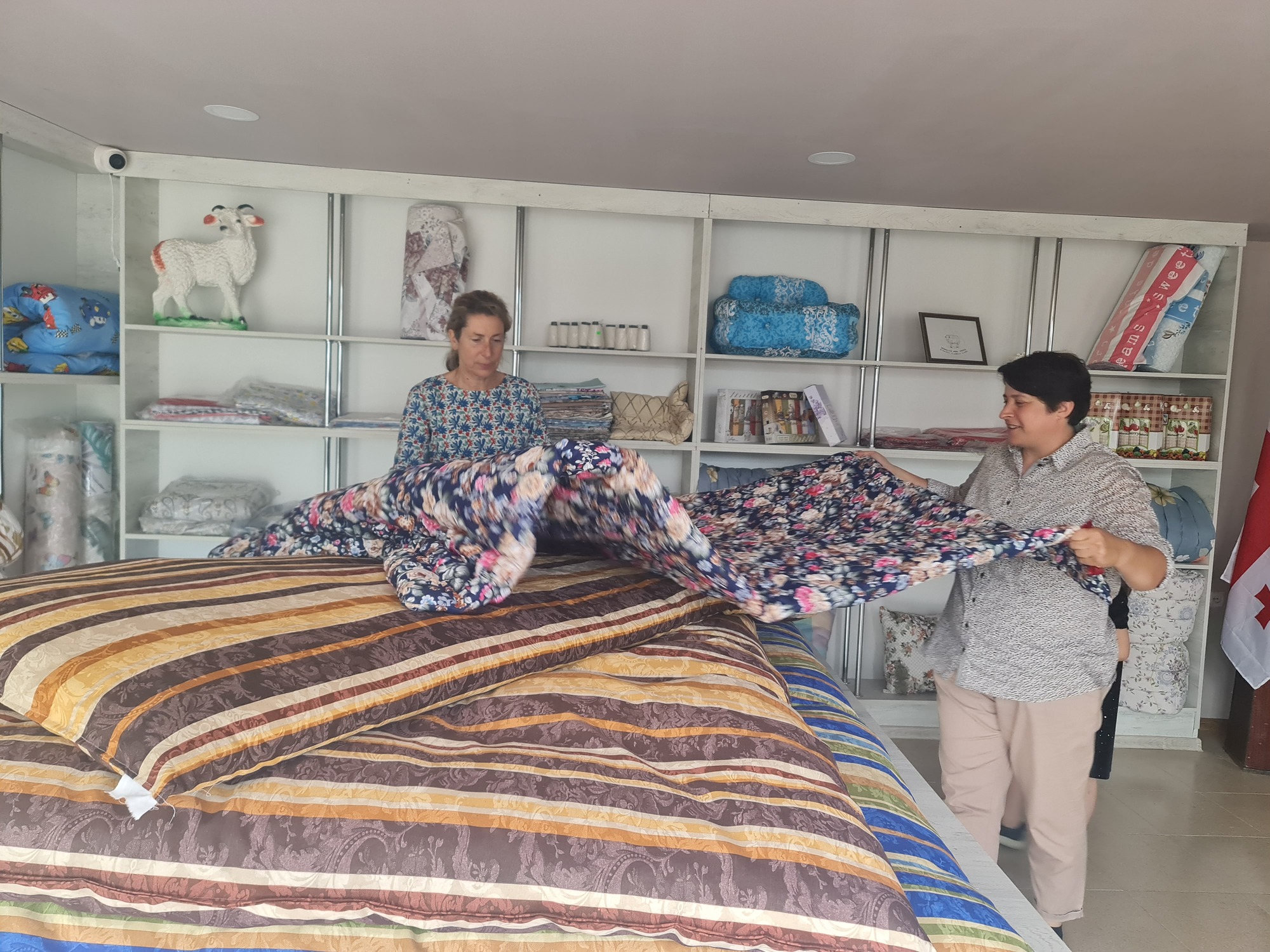
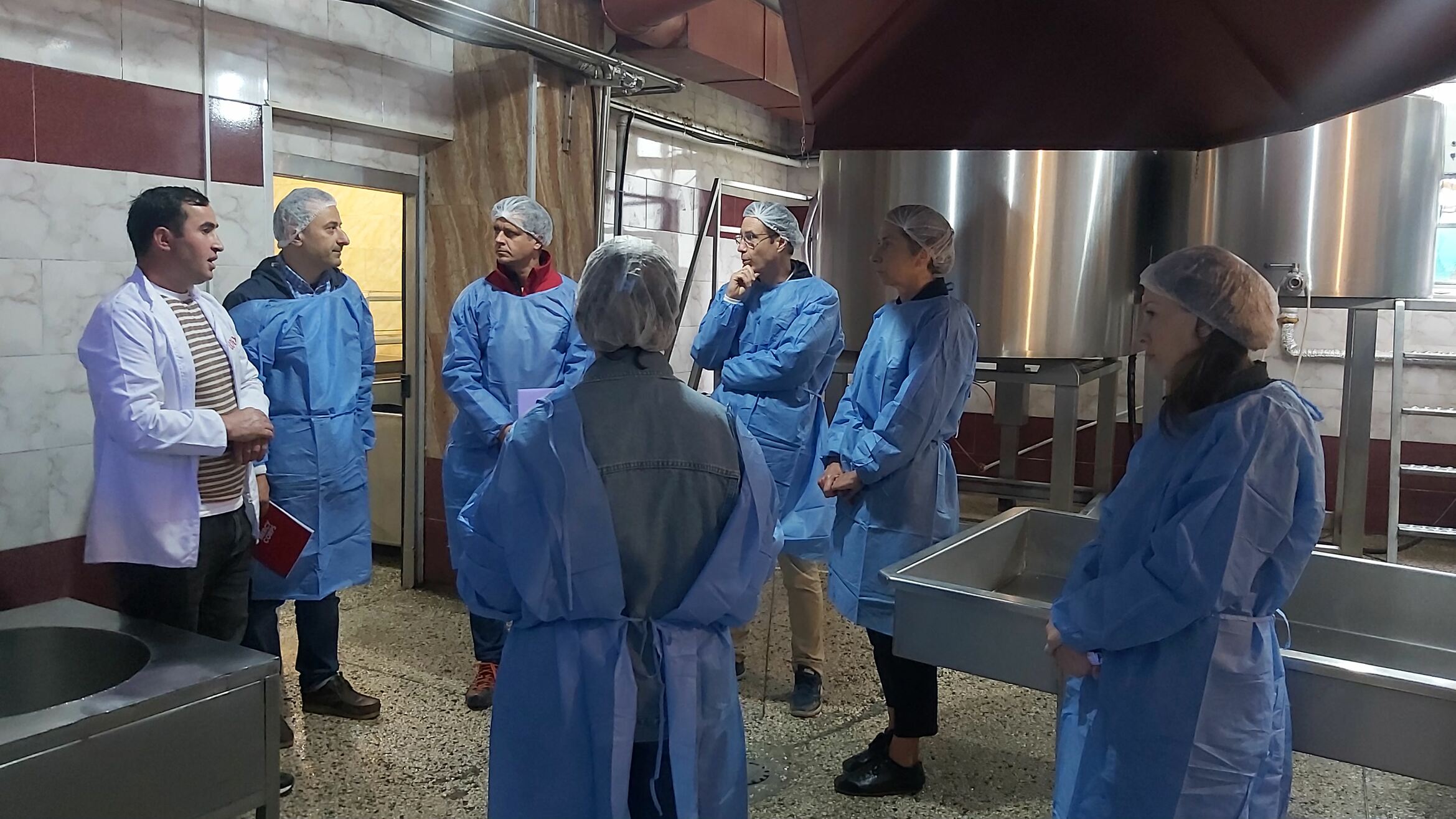
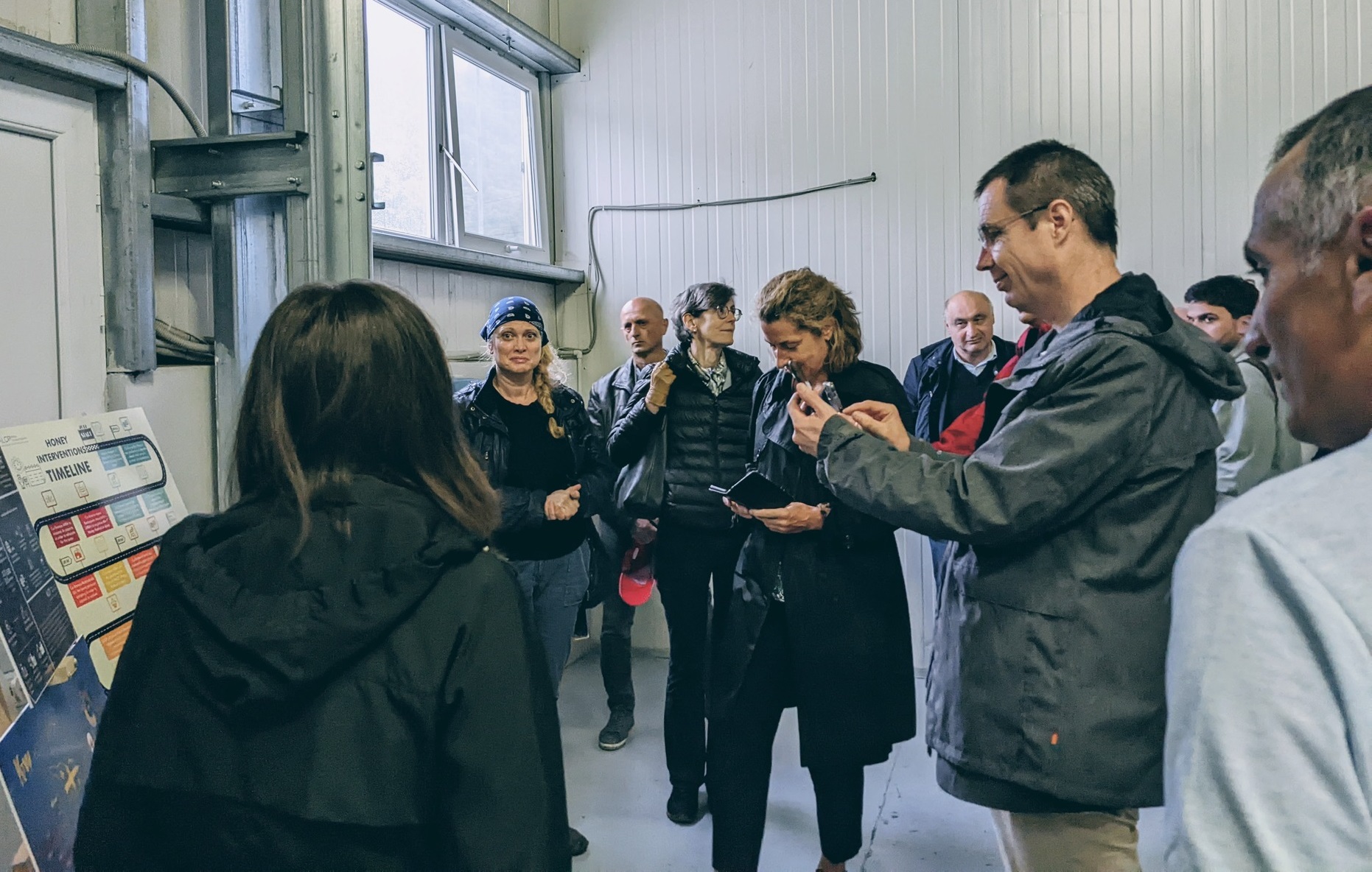
The delegation visited Wool House in Klde Village, Samtskhe-Javakheti, the Georgian Milk Mark dairy enterprise, Natural Produktsia Ltd in Dioknisi Village, Khulo and honey processing factory, Agro Keda Ltd.
The Austrian Ambassador H.E. Thomas Muehlmann underlined, that support in further development of the wool sector, as well as support in uniting the voices of beekeepers through support to their professional union created new opportunities for development for the rural population.
‘Support to rural and local development is a key aim of the new framework strategy of Austria with Georgia. We believe, that with joint efforts European countries will bring more experience and novelties to Georgia, which will trigger further development of the country,’ Austrian Ambassador H.E. Thomas Muehlmann said.
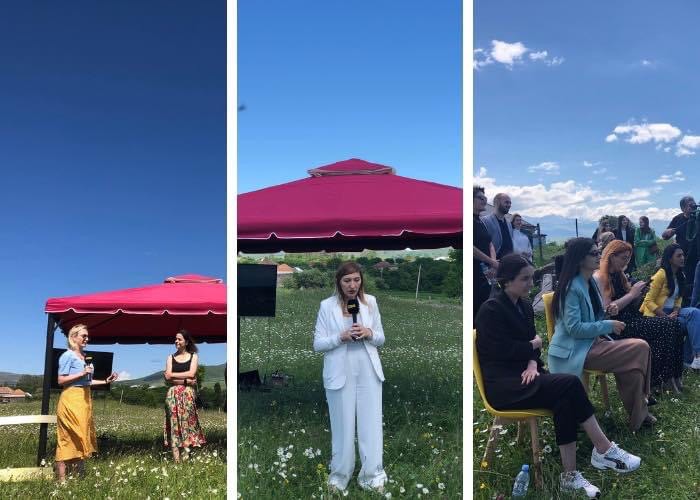
On June 16th the Journalism Resource Centre celebrated the opening of the first local TV media TOK TV in Tsalka municipality. Three local journalists attended journalism courses on reporting for one month. As Tsalka is a multiethnic municipality the journalists represent Georgian, Azerbaijani and Armenian communities.
‘We will report on the issues that are important in increasing transparency and accountability among the general population and local officials. Reports related to agricultural issues will be one of the main topics for our work. Local people will be engaged in the decision-making around ongoing local development. Especially, this is important after the newly opened tourist attraction in Dashbashi Canyon.’ - Local Journalist Nazi Meshveliani said.
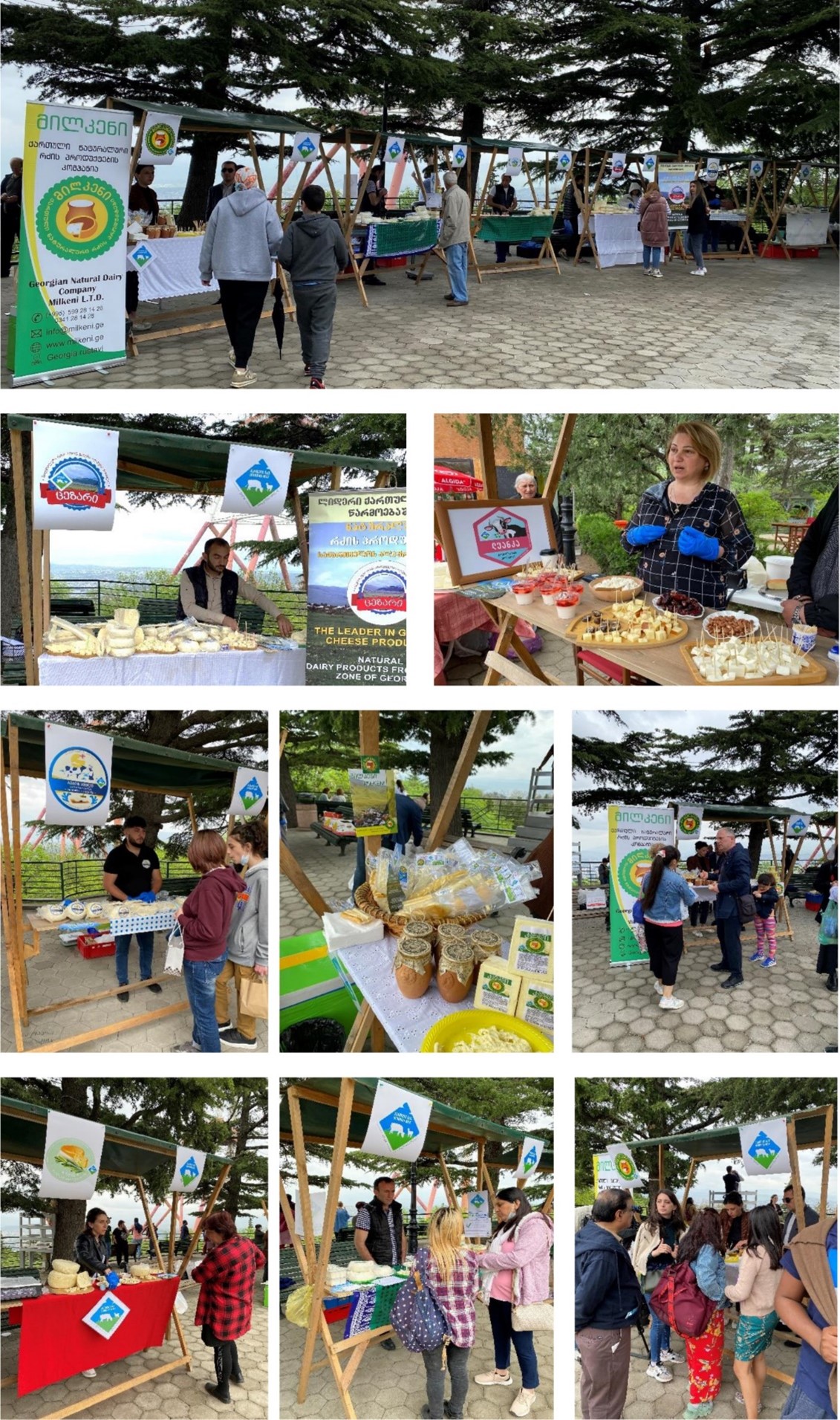
The Cheese and Tea Exhibition showcasing Georgian traditional, as well as foreign produce was held at Mtatsminda Park on May 1st, 2022. Ten dairies with the Georgian Milk Mark (GMM) - Milkeni, Tsintskaro +, Meskhuri Gemo, Bebo’s Kveli, Suamta, Leanka, Alpuri Javakheti, Dertseli’s Nobati, Naturaluri Rdzis Gemo, Tsezari presented their products at the event organized by Anna Mikadze-Chikvaidze, the Head of the Cheese Producers Guild. Visitors tasted cheese and got to know about the GMM. Butter with spices, a new product by Milkeni, was their favourite.
‘The GMM contributed a lot to make this event happen. I am thankful to them for giving me an opportunity to discover amazing products, like butter with spices. I am glad that the GMM promotes raw milk production’ - Event founder Anna Mikadze-Chikvaidze praised the development of the GMM in her Facebook posts.
Created in 2019, the GMM has twenty dairies currently using the mark. The GMM products are available in Madagoni, Spar, Tserti, Magniti, Smart, Ori Nabiji, Nikora, Zgapari, Fresco, Carrefour, Goodwill, Daily, Billion and Willmart supermarket chains.
A comprehensive online portal www.georgianmilk.ge provides a profile per enterprise allowing consumers to look up the products they are buying using a unique registration number printed on the label.
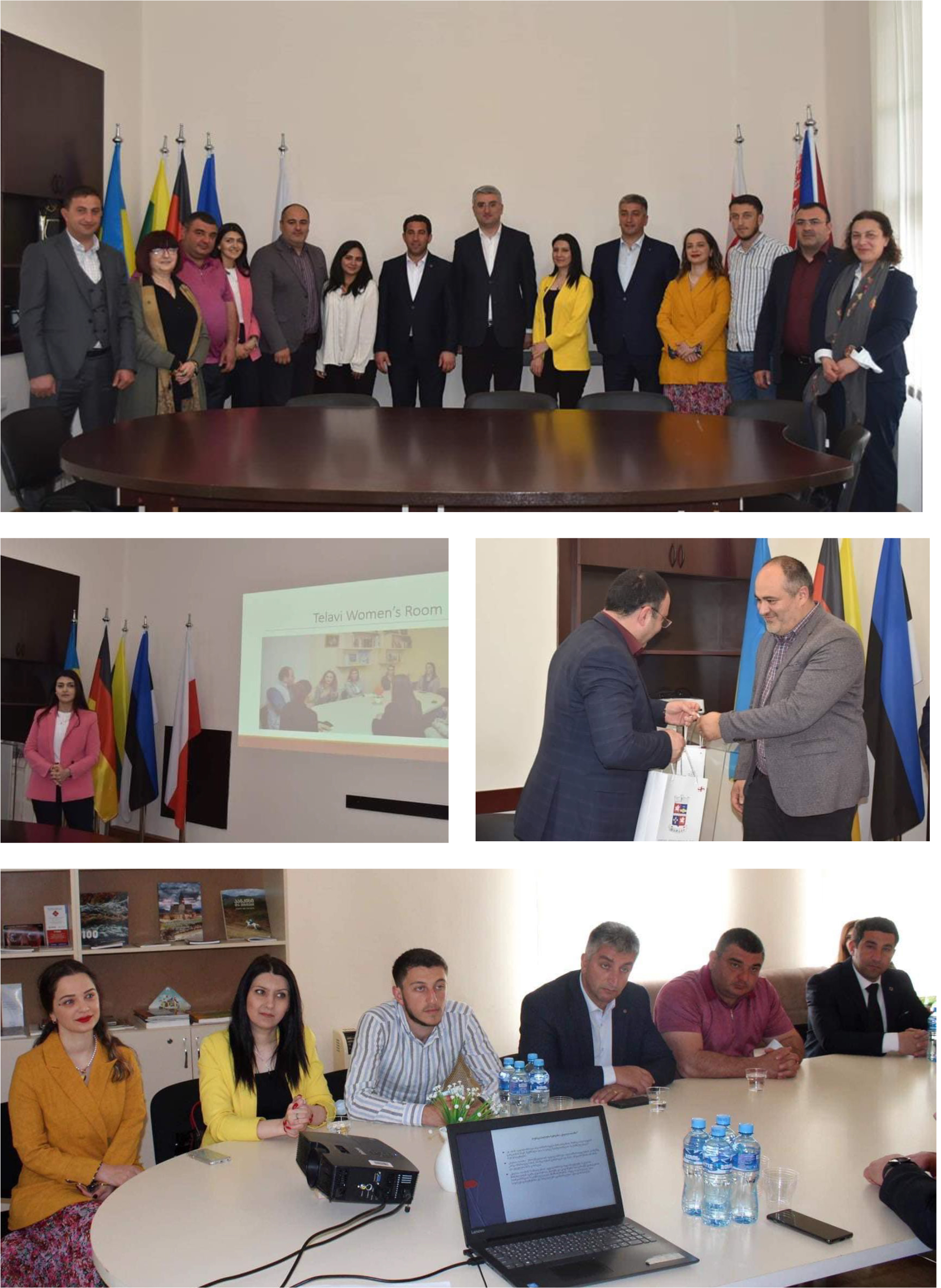
For three days from 11-14 April, the Women’s Rooms Union of Georgia NGO hosted an Armenian delegation of the Mayors of Alaverdi, Tumanyan and Tashir municipalities of Armenia, their three Women’s Rooms managers, representatives of Lori Region Governor’s office and the Association of Lawyers Community NGO. These three municipalities in Armenia have now all instituted Women’s Rooms and were in Georgia to learn more about their operation and potential and to strengthen links in the region.
They met the mayors and deputy mayors of Akhmeta and Telavi municipalities, and a representative of Kakheti Governor’s office and visited the rooms. The Women’s Room managers of both municipalities did presentations on their work.
‘It was a very interesting and useful visit. We have just established the Women’s Room service in our municipality and, as we’ve copied the Georgian model, it was necessary for us to see how this it works here,’ – Suren Tumanyan, the mayor of Tumanyan municipality said.
‘After this visit we clearly see how to use our Women’s Rooms and make sure that our women and girls are involved in local decision making through the Women’s Room as it was done in Georgia,’ – Edgar Arshakyan, the mayor of Tashir municipality said.
One of the main goals of the municipal Women’s Rooms in Georgia is to support women’s entrepreneurship by helping them write business proposals, connect with other women entrepreneurs and access the trainings and information. Participants visited social enterprise Skhivi, where women are making traditional enamel jewelry and accessories, the shop of entrepreneur Tamar Mikeladze, who is making handmade soaps and candles under the brand name Kumpa, and a local female beekeeper.
‘We are impressed with the results of Georgian Women’s Rooms regarding women’s economic empowerment. The managers here had business plan writing and fundraising trainings to help local women to start their own businesses. We are looking forward to doing the same in Armenia,’ – Sasun Khechumyan, the mayor of Alaverdi said.
‘In Lori region there are five municipalities in total, out of which three municipalities have already opened the Women’s Rooms. We are ready to support the opening of this service in the other two municipalities as well,’ – Alik Sahakyan, the representative of Lori Governor’s office said.
This study tour has laid the foundation for future cooperation between Georgian and Armenian municipalities. Alaverdi and Akhmeta municipalities have decided to become twin towns and the Women’s Rooms Union is going to continue cooperation with these Armenia municipalities.
Background information: From 2011 to date the SDC and ADA funded Mercy Corps implemented Alliances Caucasus Programme has been facilitating the establishment and scaling up the municipal Women’s Rooms in Georgia and Armenia. 32 Women’s Rooms in Georgia and three Women’s Rooms in Armenia have been opened so far. The Women’s Rooms are owned by local governments and are used to facilitate access to public decision making, goods and economic opportunities. The Women’s Rooms Union was formed in 2021 to represent the rooms and facilitate their interests.
The information about the visit was posted on a Facebook pages of Telavi and Akhmeta City Halls.
Local TV Tanamgzavri made two news items about the visit. Please, follow the links below:
Meeting at Telavi City Hall * Visiting Local Women Entrepreneurs
Follow the link to watch The Women’s Rooms Promo Video