From the ISET Economist news (http://www.iset.ge/news/?s=survival&lang=en)
By Nino Mosiashvili
The conclusion of the Association Agreement (AA) with the European Union was euphorically acclaimed by Georgian media as well as political and economic decision makers. Part of the AA is the Deep and Comprehensive Free Trade Agreement (DCFTA). The DCFTA is intended to liberalize trade between Georgia and the EU by lowering tariffs and reducing non-tariff barriers. For agriculture, the most relevant changes relate to food safety (bacterial contaminants, pesticides, inspection, and labeling) as well as animal and plant health (phytosanitation). For the manufacturing sector, the removal of so-called “technical barriers to trade” is similarly important, with the goal being to prevent the usage of technical standards as a means to protect domestic markets from foreign competition. “If regulations are set arbitrarily, they could be used as an excuse for protectionism”, states the World Trade Organization on its homepage.

It is clear that all these agreements require unilateral adjustment of Georgian regulations to European standards. Georgia is economically too small to impose its preferences on Europe. This is stated quite frankly in the AA, when it says that it aims to “support the efforts of Georgia to develop its economic potential via international cooperation, also through the approximation of its legislation to that of the European Union”.
Whether these unilateral adjustments are beneficial for Georgia is not generally clear. European regulations do not necessarily reflect “best international practice”. In democracies, laws and regulations come about through the lobbying efforts of political interest groups much more than through rational planning. In the future, internal political decisions made in the European Union will be relevant for Georgia much more than they were previously, and it will be more difficult to pursue policies tailored to the specific situation of Georgia.
Yet Georgia hopes that the convergence to European standards will make it easier for Georgian firms to access the European market. Most critical in this respect is Georgian agriculture, as it is the sector employing the bulk of the Georgian labor force, while it is at the same time dramatically lagging behind European productivity levels. In 2013, Georgia’s agriculture accounted for only 9.3% of the Georgian gross domestic product but employed about half of the labor force. Thus, one of the benchmarks for evaluating the usefulness of the DCFTA will be its impact on Georgian agriculture.
THROWN INTO THE WATER – WILL IT SWIM?
The impacts of the DCFTA for Georgia were assessed in a report with the lengthy title Trade Sustainability Impact Assessment in support of negotiations of a DCFTA between the EU and Georgia and the Republic of Moldova. It was written by a consortium consisting of the Dutch consulting company Ecorys and the The Center for Social and Economic Research (CASE), a Warsaw-based think tank. On a broad level, the report estimates that due to trade liberalization with the EU the national income of Georgia will increase by 291.9 million euro in the long run, corresponding to a GDP growth of 4.3%. This goes along with an increase in Georgian exports and imports by 12% and 7.5%, respectively, leading to an improvement of the Georgian trade balance. But what about agriculture?
According to the study, the DCFTA will have different effects on different agricultural products, and the overall picture is very ambivalent. The output of some product categories will increase, namely vegetable oils and fats (+6.7%), vegetables, fruits, nuts, and oilseeds(+3.4%), and animal products (+3.1%), while for many other products, the output is expected to shrink, e.g. livestock and meat products (-14.8%), other processed foods (-8.8%),beverages and tobacco (-4.0%), sugar (-2.4%), and other crops (-2.0%). The report attributes the increases to reductions of EU tariffs on Georgian exports and the decreases to the reduction of Georgian tariffs on goods imported from the EU. These numbers, if they say something about the true developments, suggest that parts of Georgia’s agricultural sector will get under severe pressure due to increased competition with European producers.
ECONOMIC DARWINISM
What are the implications for Georgian agricultural policy? Some of the producers will benefit from the integration into the European market, as they can stand the pressure and even expand in this highly competitive environment. Other producers are likely to run into essentially insoluble problems. One particularly beneficial category in this respect is vegetables, fruits, nuts, and oilseeds, because some of the products in that category (e.g. hazelnuts) are labor intensive and serve niche markets. This implies that more people can be employed in the production of these goods, making the transformation to a modern, efficient agriculture less painful, and it means that competition is lower and margins are higher. If policy recognizes these advantages, producers in that category might become “national champions”.
Currently, vegetables, fruits and nuts are in Georgia primarily produced by small and medium sized farmers. Due to lack of greenhouses the production is seasonal. Yet farms can be consolidated and technical equipment can be upgraded. In the end, it will be relevant that Georgia has fundamental advantages in the production of goods in that category, namely clean soils, little usage of chemicals, a relatively large amount of available land for cultivation, and a long tradition in vegetable and fruit production.
Moreover, about half of Georgia’s current export of vegetables, fruits, and nuts already goes to the EU, which means that Georgian producers already have “a foot in the door”. Currently, the exports almost entirely consist of hazelnuts (there are no tariffs, as hazelnuts are already covered by the GSP+ regime, and hazelnuts easily satisfy sanitary and phyto-sanitary standards). Thus, while the DCFTA may not change Georgia’s hazelnuts export to the EU significantly, there may be other niche products in this category, like berries and other kinds of nuts, which may benefit from the DCFTA, for example through adjustments of Georgian regulations regarding product packaging.
It will be important that policy will subscribe to what one might call “Economic Darwinism” – do not try to keep those producers alive that are incapable of surviving, but instead create good circumstances for those that have a future in Georgia.
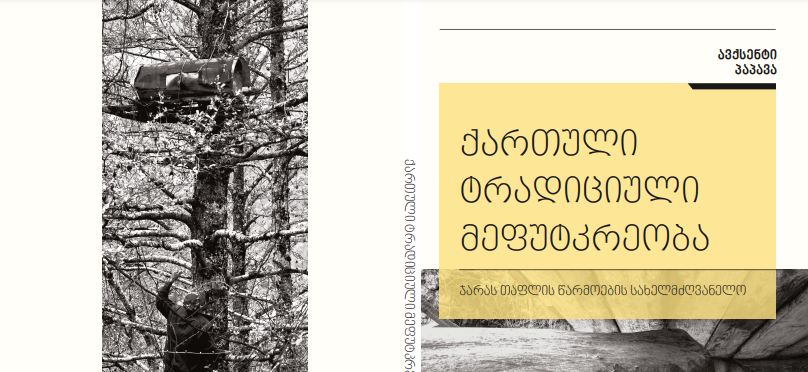
Georgian Traditional Beekeeping: Jara Honey Production is a new textbook now available for VET colleges who include a Jara component in their beekeeping courses. It is part of making the Jara beekeeping course material an accredited component in its own right from September this year.
The author Aleko Papava, who is a competent, reliable and respected beekeeper teacher and Head of the Georgian Beekeepers Union, wrote the book together with education specialists on behalf of the Georgian Beekeepers Union and Jara Beekeepers Association.
The Scientific Research Centre of Agriculture of the Ministry of Environmental Protection and Agriculture reviewed and acknowledged the book positively.
‘The book is written in a highly professional manner, materials meet the demand of the beekeeping sector in terms of bio honey production and provide comprehensive information about all the topics for studying Jara Honey Production’ – says the Centre in their letter sent to the GBU.
In June 2021, thirteen VET college representatives from seven regions of Georgia attended a Training of Trainers in Jara Honey Production and later received jara equipment. Now eight of them are integrating aspects of Jara beekeeping into different subjects of the beekeeping programmes to 106 students. Five more colleges will start soon. This textbook means that Jara Beekeeping will be taught as a separate accredited component of these courses. The newly established Vocational Skills Agency, National Center for Educational Quality Enhancement and sectoral skills organization Agro Duo are all supporting Jara teaching integration in the VET colleges.
Linked resources: Jara Honey Production Handbook; Bio Certification Guidelines for Beekeepers; www.honeyofgeorgia.com; Discover Georgia: The Land of the Oldest Honey.
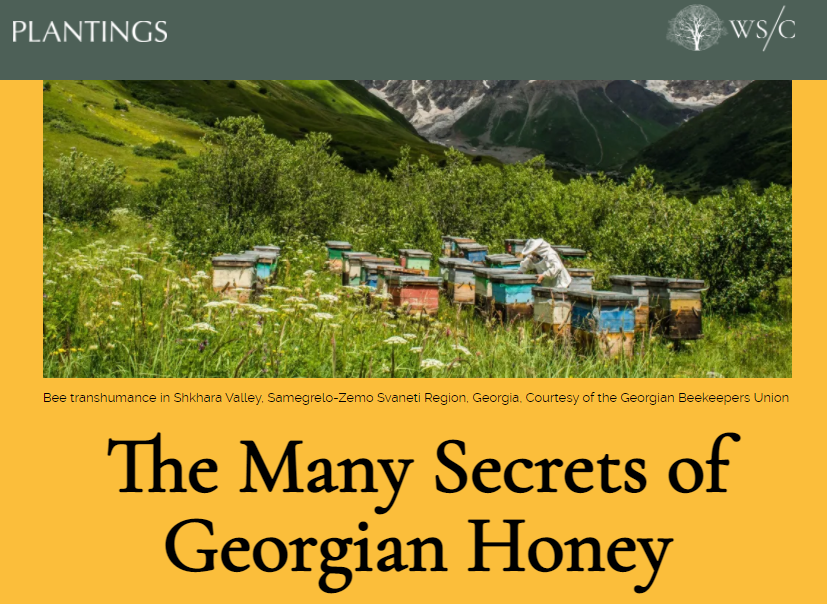
The Many Secrets of Georgian Honey, an article dedicated to the exceptional Georgian honey making, was published in the online journal Plantings by the World Sensorium Conservancy. The journal covers topics relevant to conservation and the intrinsic values of nature. The article was penned by Braden Bjella, an American culture journalist based in Eastern Europe, who takes readers to Georgian beekeeping journey with the help of the Georgian Beekeepers Union (GBU) and the Jara Beekeepers Association (JBA). As he says, “the question of Georgian honey quality is settled; now, it’s only up to the world to discover it".
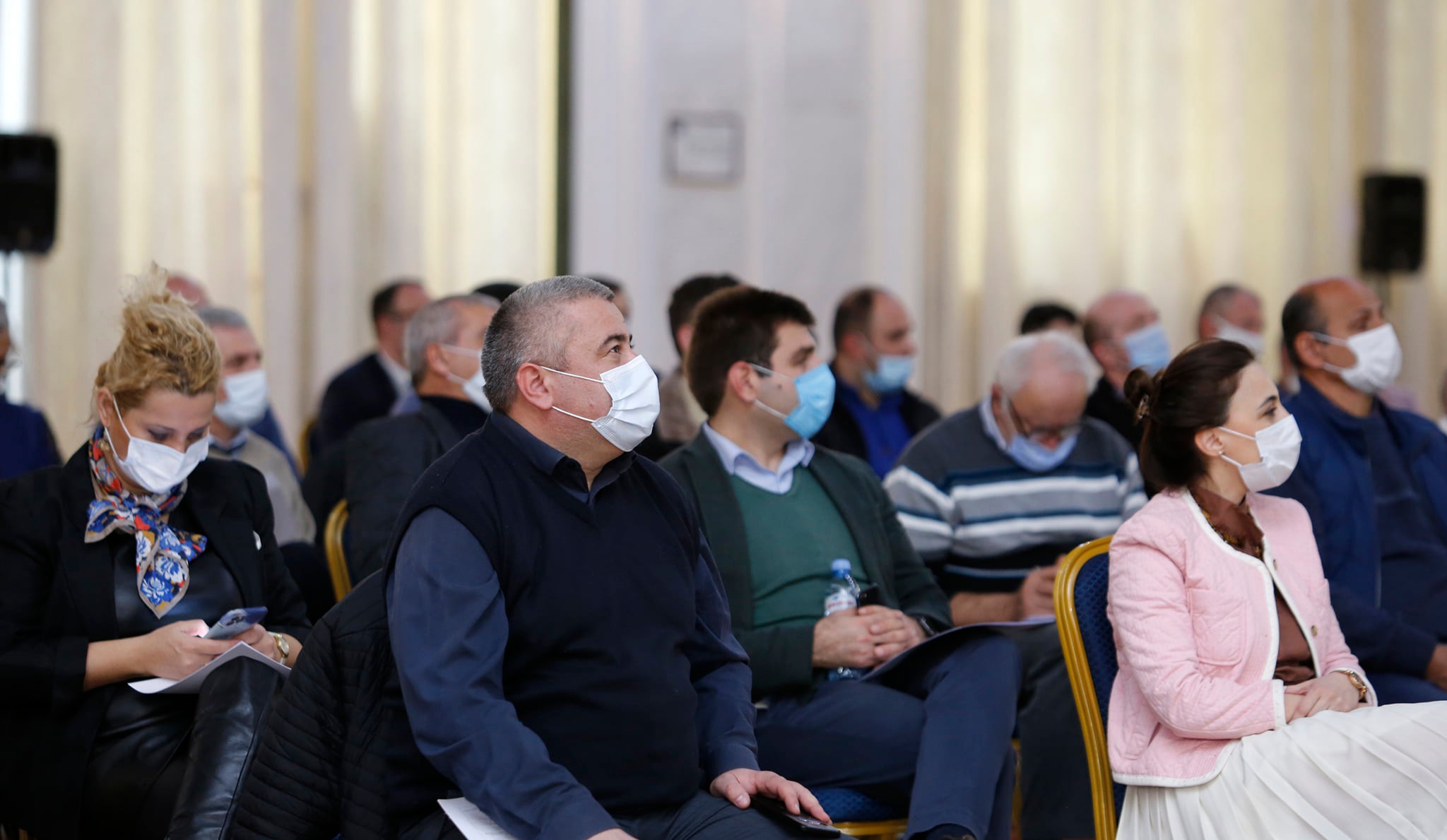
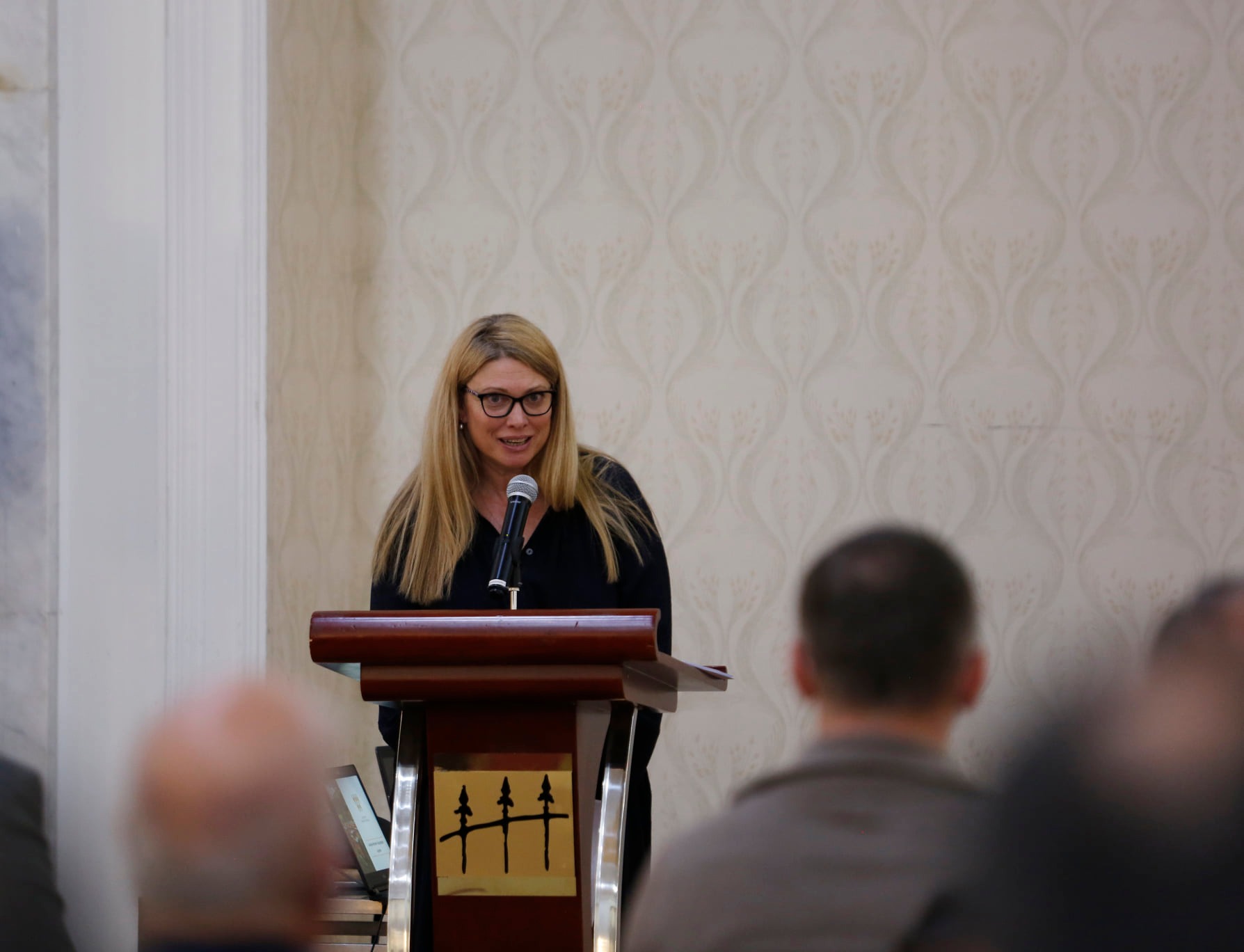
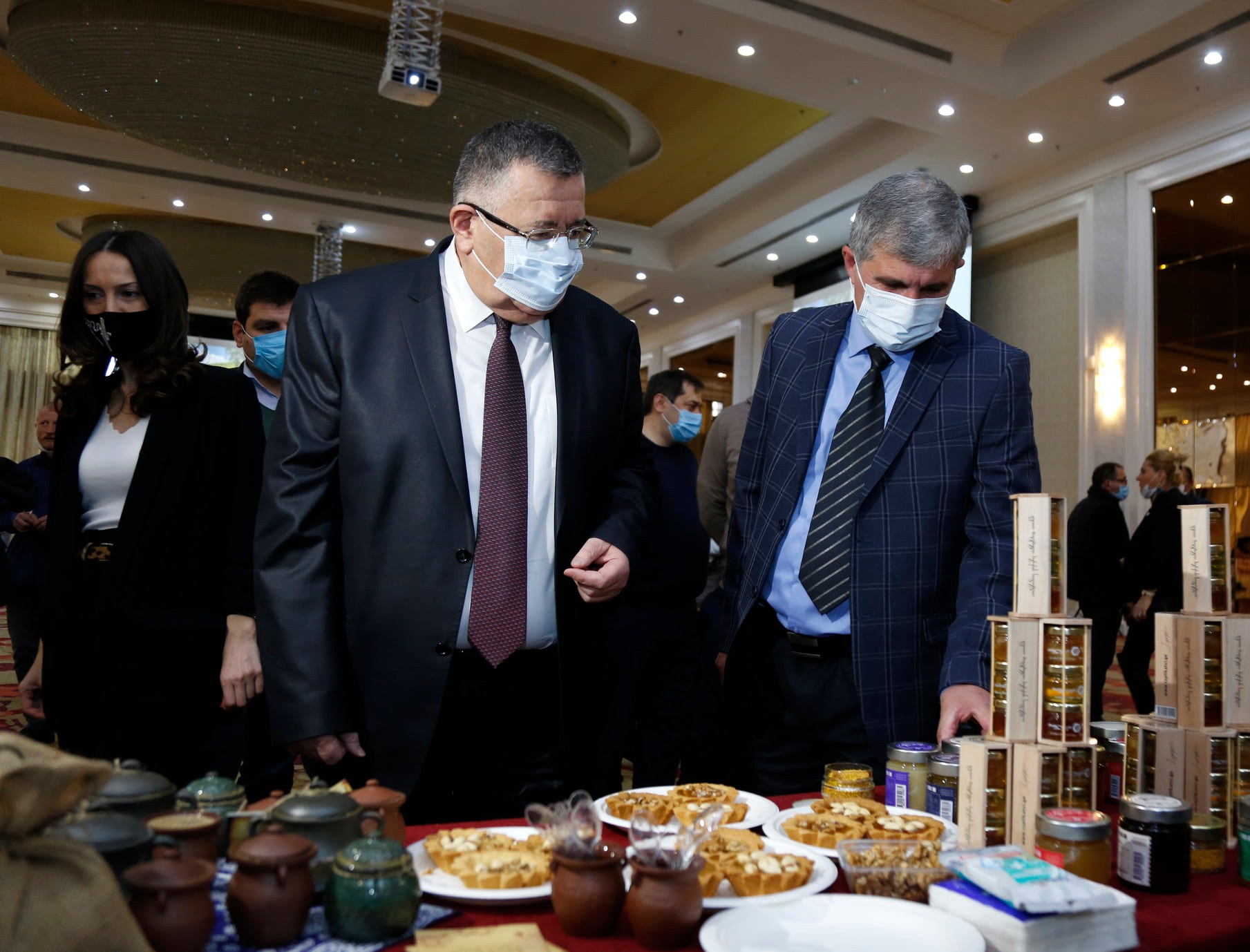
On December 20th, the Georgian Beekeepers Union (GBU) hosted an event to celebrate its third anniversary inviting key honey sector stakeholders to Hualing Tbilisi Sea Plaza.
Since 2018, the honey sector has seen huge gains under the auspices of the GBU, which is leading efforts to remove pervasive constraints to growth such as the widespread use of prohibited antibiotics and performing the role of non-governmental national representative of the honey sector. The GBU’s three years of extensive work resulted in increased honey quality, more effective governmental advocacy, better vocational education in beekeeping, including, Jara teaching, available information and trainings for beekeepers, promotion and improved image of Georgian honey at the Apimondia Congress and London Honey Awards, all that paving way for an increase of honey export.
‘There are some major developments in improving honey testing capacity, increasing awareness of Georgian honey, and opening of new export markets. The comprehensive laboratory analysis, before carried abroad, is now available in Georgia, which resulted in decreasing transaction costs.’ – Giorgi Khanishvili, the First Deputy Minister of the Environmental Protection and Agriculture of Georgia (MEPA).
‘We were able to achieve significant improvements during these three years. We are continuing cooperation with the government and other honey stakeholders to ensure production of safe and quality honey.’ – Aleko Papava, the Executive Director of the GBU.
Photo source: The MEPA
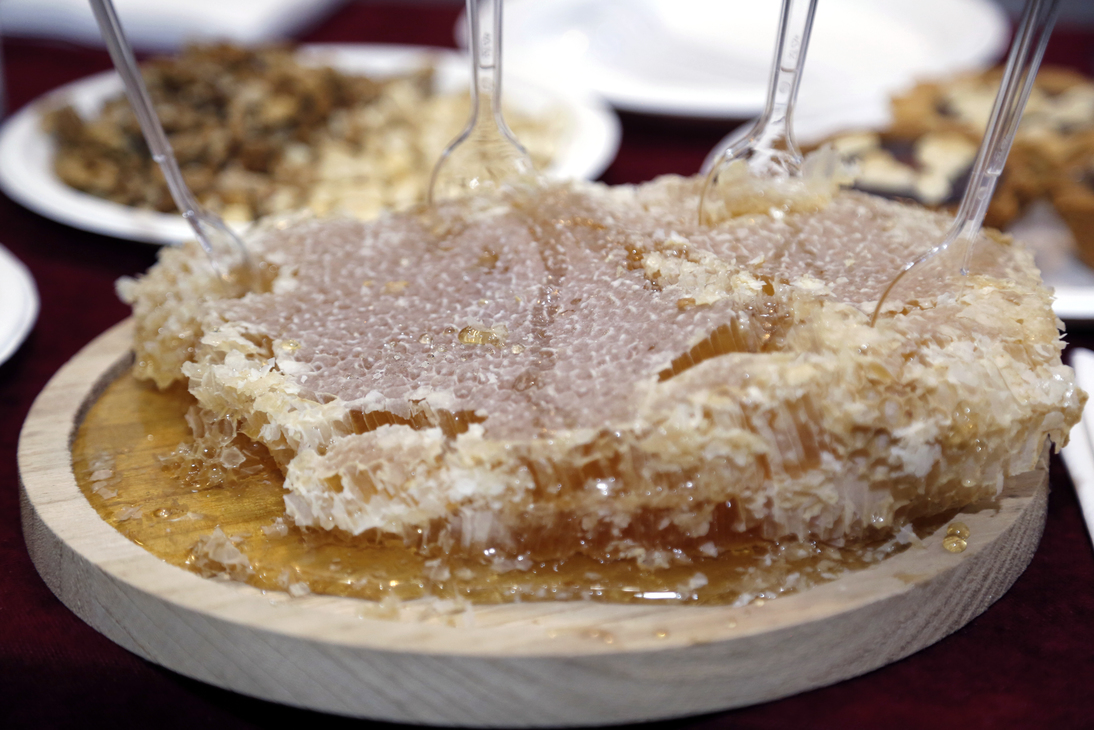
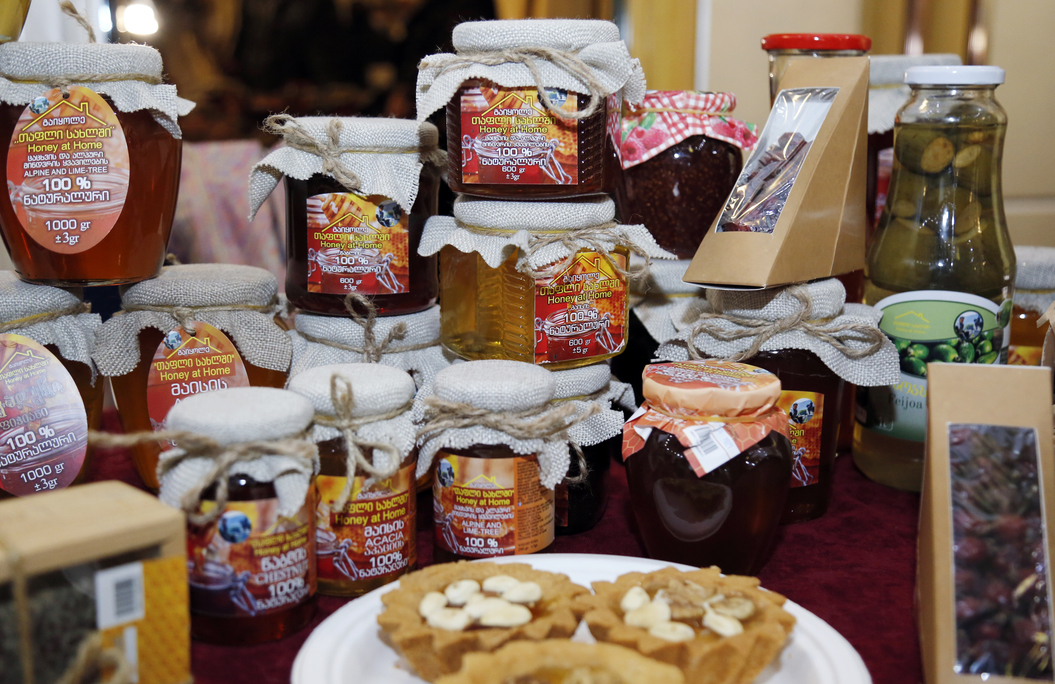
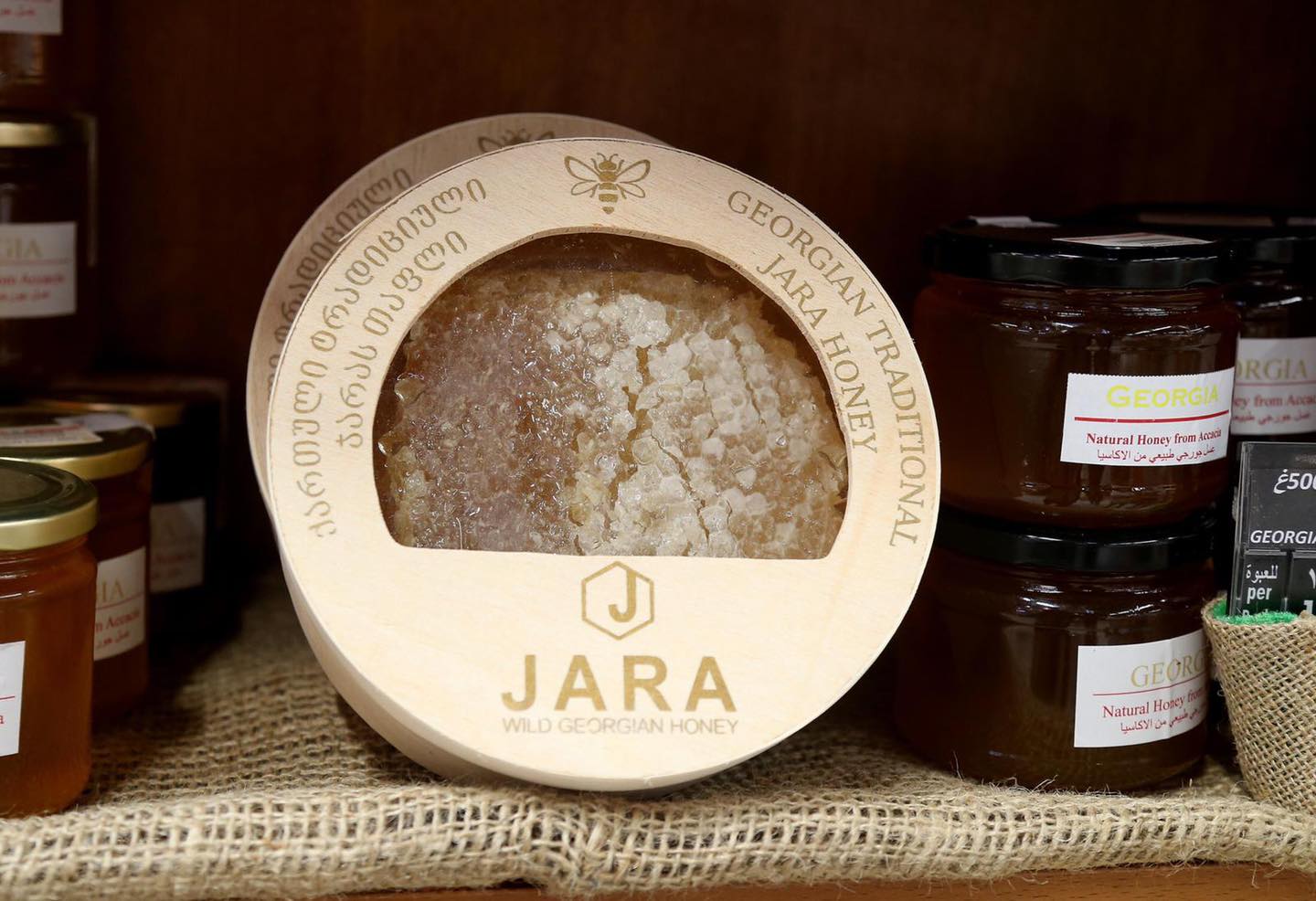
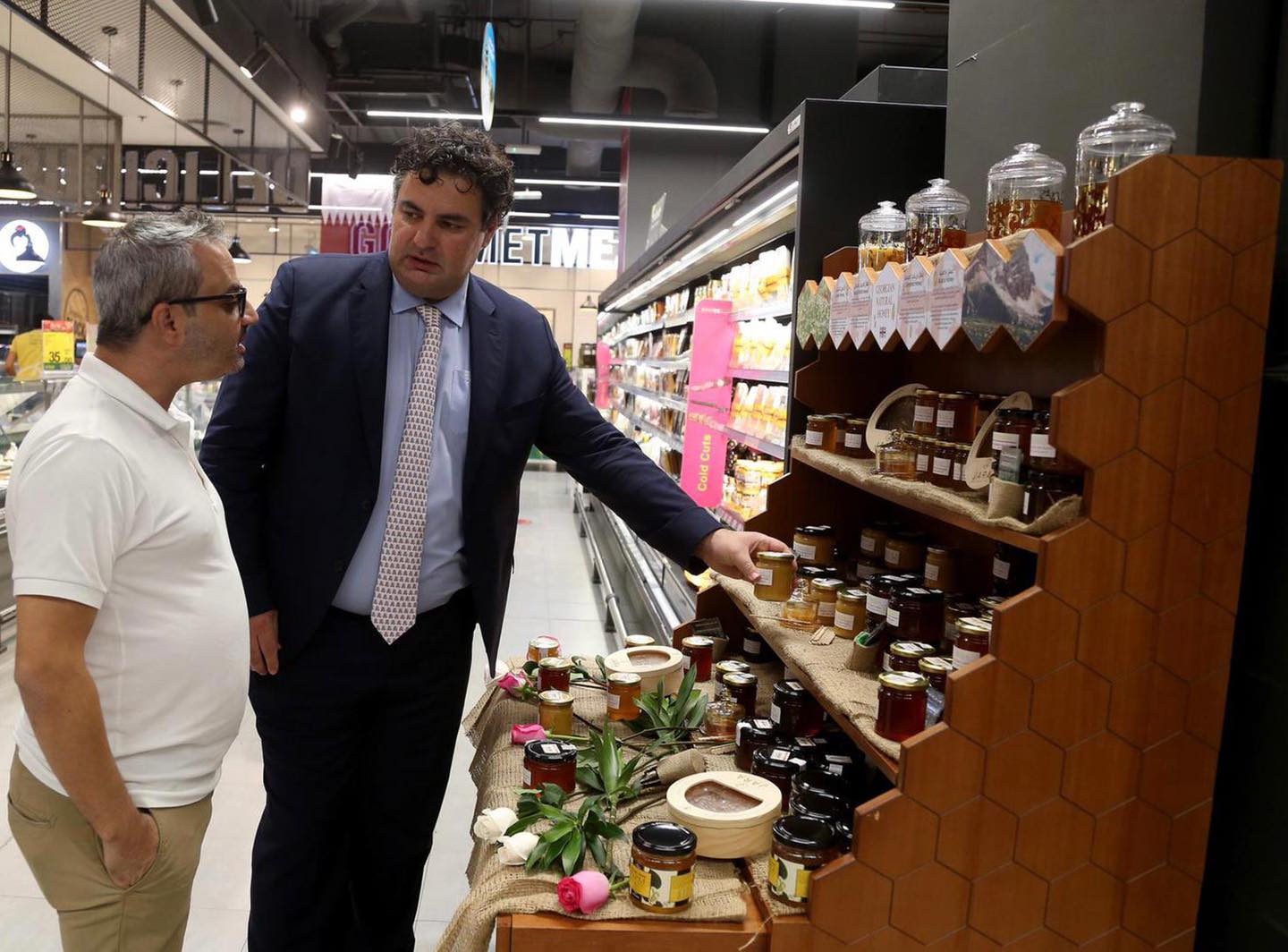
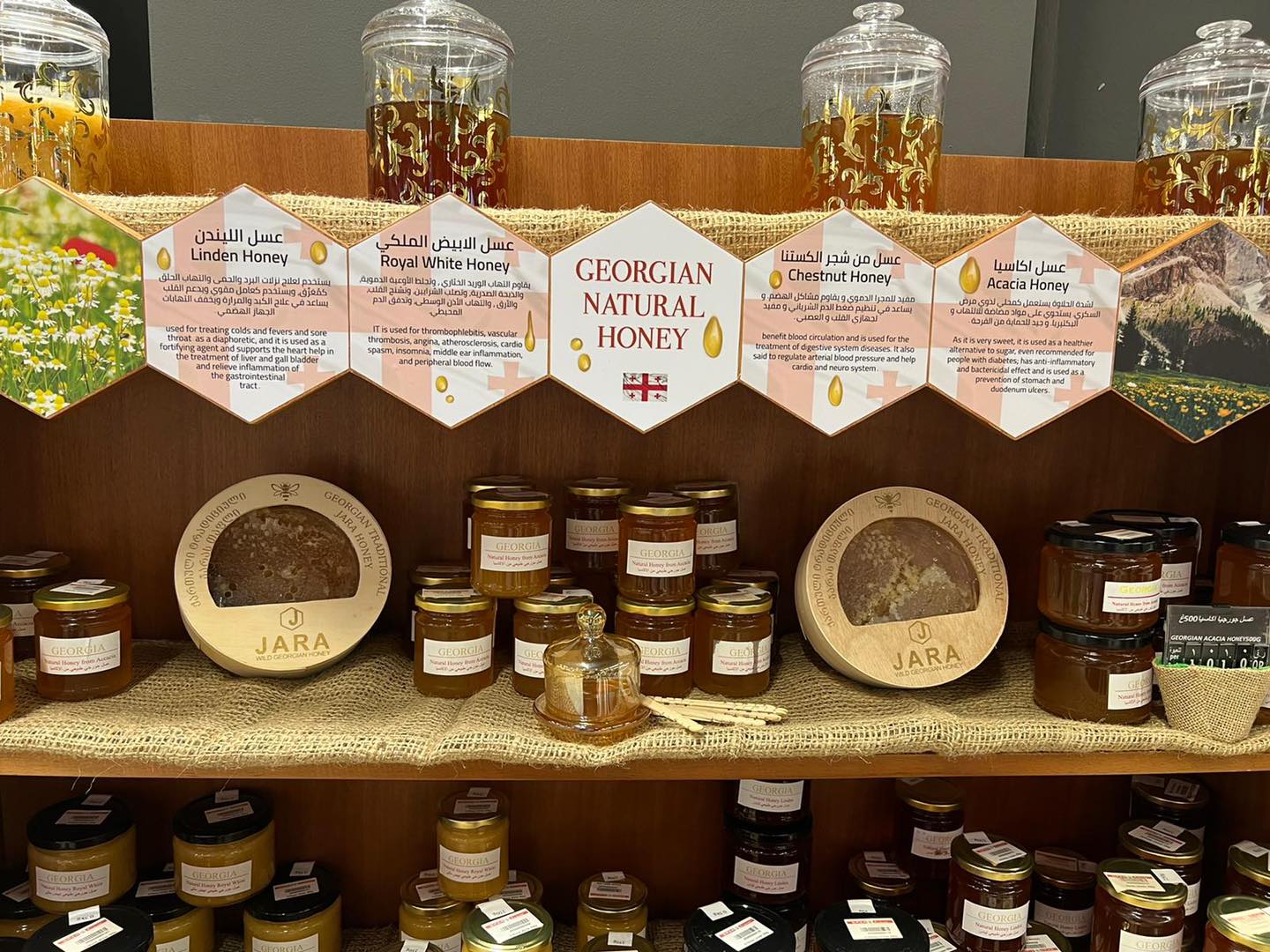
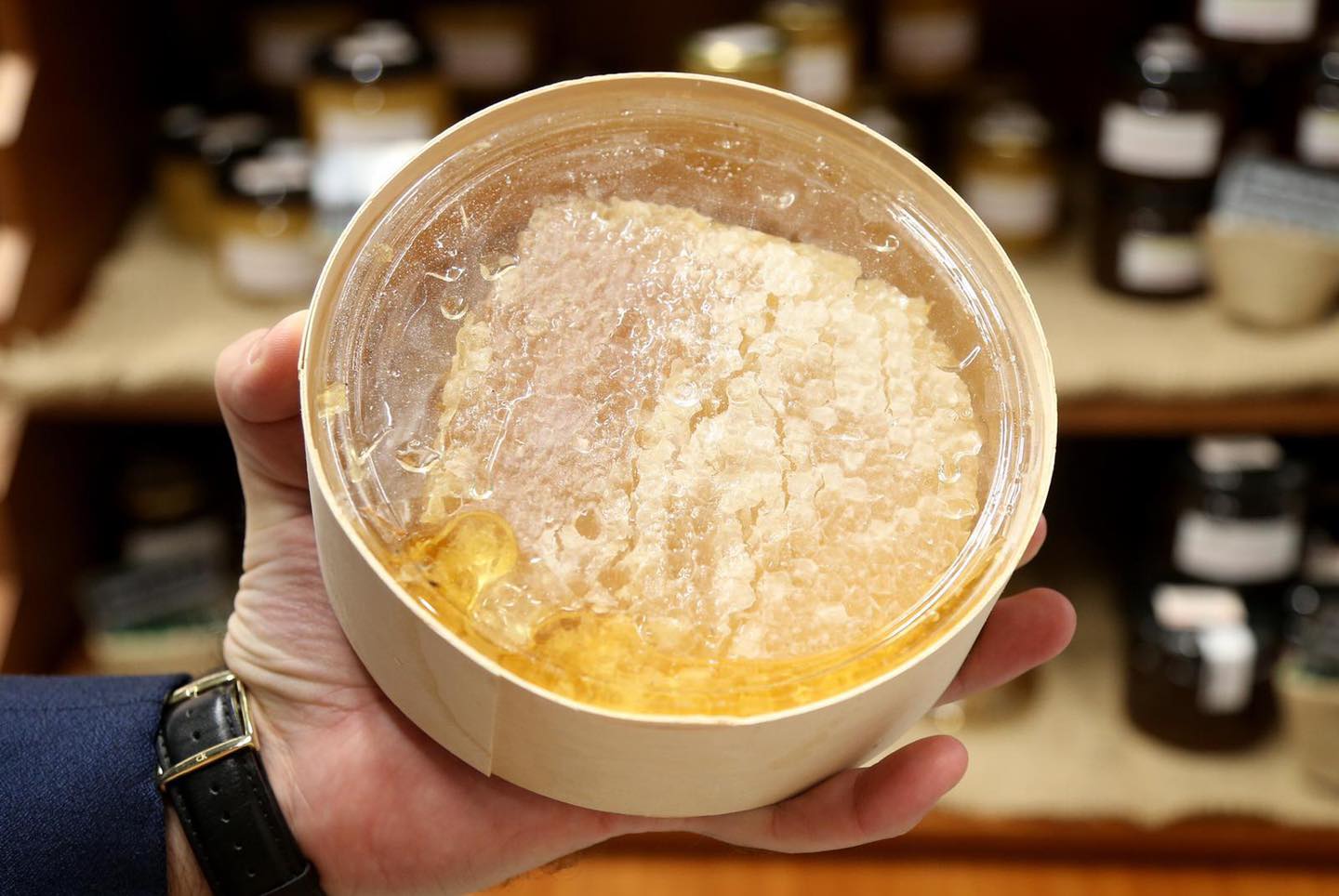
Nena Jara honey, along with other types of Georgian honey, found its place on the Georgian honey corner opened at the SPAR supermarket branch in Tawar Mall, the largest shopping mall in Doha, Qatar. Georgian honey corner will be opened in every branch of the SPAR chain. The process is backed by the Embassy of Georgia to the State of Qatar. The ALCP facilitated the export of Jara honey.
Local influential media AI Raya dedicated a comprehensive article to Georgian honey with a special highlight on Georgian beekeeping characteristics and traditional Jara.
The Qatar market seems promising. The Embassy’s previous facilitation for approval of a VET certificate, an essential requirement for honey export, has contributed to a 255% increase of Georgian honey export to Qatar in 2021 compared to 2020. The same figure saw a 350% boost in 2020.
Photo source: The Embassy of Georgia to the State of Qatar
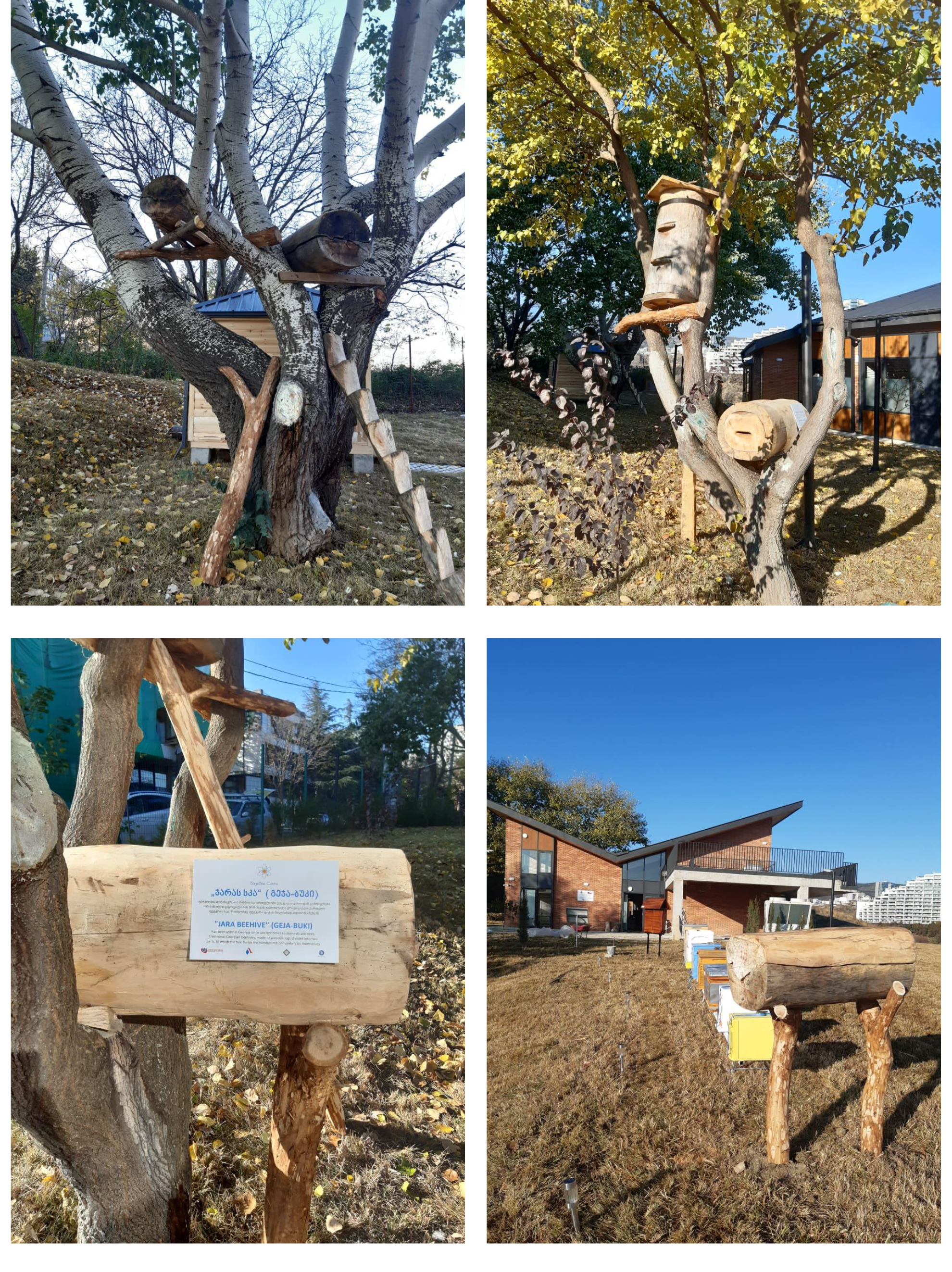
In November 2021 Jara hives took their place at the Beekeeping Regional Center, BageBee in Tbilisi for demonstration and educational purposes with the help of the Jara Beekeepers Association (JBA). The center is highly motivated to integrate Jara teaching in its beekeeping vocational programme now being developed under the project Modernization of Vocational Education and Training (VET) System Related to Agriculture - Work-based Learning. Last week, the JBA presented Jara honey to a wider audience at the Autumn Beekeeping Fair/Event, organized by the BageBee center, which was also attended by the Georgian Beekeepers Union (GBU) board members. Mutual cooperation between the GBU and the center is ongoing. The executive director of the GBU was invited to give a speech at the event and the director of the center was invited to the GBU Weekly Facebook Live meeting to present the center to the GBU member beekeepers.
Beekeeping Regional Center BageBee opened in Tbilisi in July 2021. The idea is to support the rural/urban connectivity, sustainable agriculture, and the vision of Tbilisi as a Green City.Key principles of the centre are environmental appreciation, sustainable resource use and inclusive growth. The BageBee center was built and equipped by the Czech Development Agency in the framework of the project Sustainable Development of Beekeeping in Georgia with a partnership of People in Need, Georgia, Association Agora and Tbilisi City Hall.
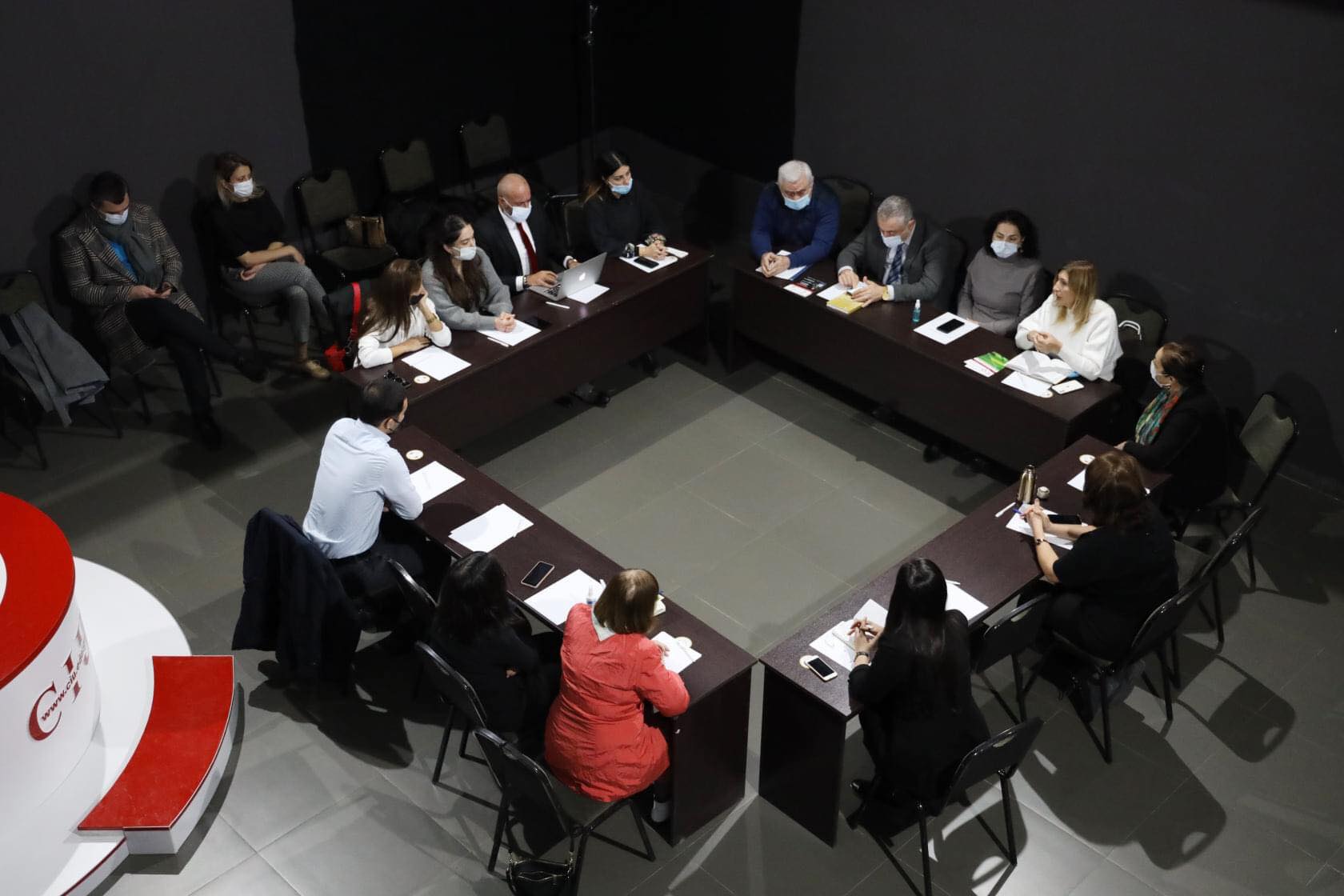
The Journalism Resource Centre (JRC), in partnership with the Society of Women for Rational Development in Azerbaijan (WARD), hosted a study visit of media and educational institution representatives of Azerbaijan.
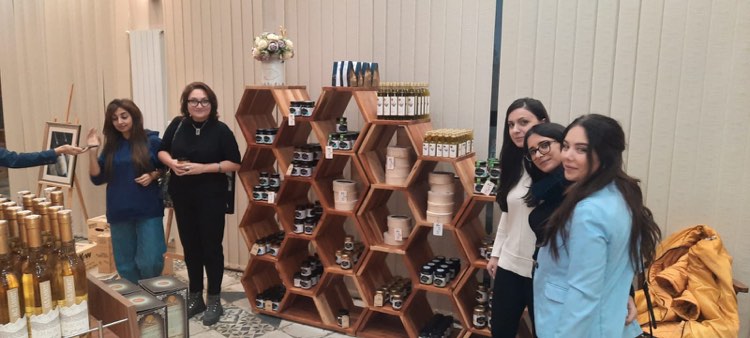
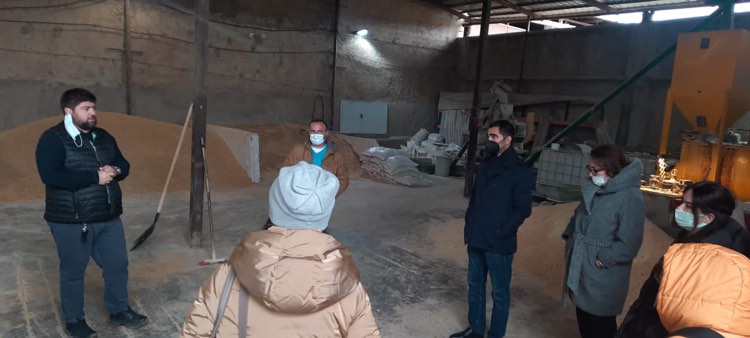
Agri-journalism students and lecturers at Caucasus International University shared agricultural journalism teaching practices. In Kakheti, they visited the farm of Beka Gonashvili, Head of the Georgian Shepherds Association, farmer, and entrepreneur. They also visited Kakhetian Traditional Winemaking to see their Jara honey and wine production and the dairy Leanka in Dedeplitskaro. The importance of education and information for farmers and producers and their cooperation with agricultural media was emphasized.
Beka Gonashvili emphasized the importance of providing quality information to farmers and producers. He is both a blogger and a farmer, so he is regularly publishing useful agriculture-related posts. The female owner of Leanka dairy talked about how the enterprise is ensuring the quality and how media is playing a significant role in this. At Kakhetian Traditional Winemaking Company particpants saw wine and Jara honey production and their export and how the Georgian Beekeepers Union is advocating the interests of honey sector representatives and supporting the awareness raising of beekeepers, such as through the national information campaign - Do’s and Don’ts of Antibiotic Use. Participants also watched a report about Jara Honey by Al Jazeera and Jara the Movie.
‘We will all together will work well for expansion the teaching of agricultural Journalism in Azerbaijan’ – Natia Kuprashvili, the Head of the JRC.
The Society Women for Rational Development (WARD) in partnership with the JRC is going to prepare a course of agricultural communication based on the study visit and share it with educational institutions in Azerbaijan.
Please see the related links: a textbook of Constructive Agricultural Journalism and video lessons added to this textbook.