By Helen Bradbury: Team Leader, Alliances Lesser Caucasus Programme


Information matters, it is our currency, the substance, the commodity which keeps our programmes running. We live in an age of information, are afloat on and sometimes drowning in a sea of it. We may check the oracle of google in answer to any question, live feeds, notifications and a torrent of minutiae in a mélange of events of great importance, continually assail us. Once there were spin doctors, now most of us spin daily be it personally or professionally. We are aware of the need to manage information, to have enough of it and of the right kind and most of us are aware too of the need to understand its quality and to know when and what we have is enough or too little.
M4P of course poses challenges in this as in many other aspects of its implementation, but for me the use of information is its heart. M4P is particularly finely calibrated to need high quality information and implementers able to gather, sort and feed it into the programme, implementers who aware of what they are doing, and why they are doing it. Name any stage of the programme process, let’s start with the team. We need practitioners with the right kind of understanding, flexibility and skills to interpret information, to plug it into the strategic framework and intervention planning. We often eschew experienced workers from the field of development with fixed frames of knowledge, for people with less direct experience and fluidity, choosing them for their qualities of perspicacity, ability to adopt, adapt, expand and respond. All stages involve the gathering, processing, articulation and feedback of information; market analysis, market system monitoring, ongoing capacity building, WEE implementation, calibrating interventions and of course M and E, results measurement, measuring systemic change; another entire galaxy of information management on its own. All stages require meticulousness, precision, rigour and common sense in the use of information to produce systemic market change which impacts the men and women of the target group.
The demands for the articulation of this information are multi-faceted and as dissemination channels proliferate so do the needs of those in direct relation to the programmes; donors, consultants, theorists and developers of practice, who must fulfil their own specific functions and feed information into their own burgeoning webs of outreach. Networks, e-groups, email notifications, photographs, film, presentations, numbers, interest stories. Hard numbers for professionals to crunch validity, interest stories and illustration for those we need to care.
Finally to the approach itself, literally. How you come to know something is often as important as what you finally know. M4P, market systems development; has been seen as a challenge to, a critique (I would argue an illumination through comparison) of other methods and methodologies in development. The process of reassessing even unlearning knowledge is not an easy one and is as emotional as it is intellectual. The juncture between those who in some measure know, understand and use the approach and those who do not, is therefore sometimes a tricky one. Perceptions and points of view are influential in the translation of the system. The heart of M4P is simplicity but as in all the best cases, simplicity provides the skeleton and blueprint for processes which as they build can seem like an overwhelming mass of complexity from an external point of view, particularly as no two programmes, externally at least the same. What, who and where are M4P, where does it come from, how do you do it, who does it, where can I find out more?????
Thus we come to two new websites, this one of the ALCP where we have a downloads page dedicated to compiling our own and other information that helps to answer these questions and the M4P Hub that was and the BEAM Exchange that now is. In our disparate, diversified, geographically spread world, an approach developed at the time of an explosion of information dissemination, needs sites like these. To now be able to direct someone to the right kind of information which presents, expounds and solidifies is essential in a growing field. To be able to refer to and interact with a cohesive entity which can provide a universally accepted centre point, platform, resource centre and indeed identity, is heartily welcomed.
Livestock transhumance will no longer disturb Tsintskaro Village population in Tetritskaro Municipality. The local Municipal DRR Working Group initiated a new infrastructure project which will solve the problems related to the seasonal transhumance in this particular village.
From the ISET Economist news (http://www.iset.ge/news/?p=3311)
By Eric Livny
(Summary of a debate hosted by ISET as part of SDC-supported Inclusive Growth Dialog series.)
There are many reasons to love the concept of farmer cooperation (and cooperation more generally). To begin with, there is a great aesthetic value in seeing people coming together, sharing resources and helping each other. After all, instinctive collectivism was the basic condition of human existence from time immemorial. But, there are also powerful economic reasons for farmer cooperation.
The Road – a beautifully shot documentary capturing the reality and dichotomies of the people who use the ancient transhumance route; the lifeline of livestock in Georgia
A Memorandum of Understanding has been signed between the Ministry of Regional Development and Infrastructure (MRDI) and the Swiss Development Cooperation project the Mercy Corps Georgia implemented, Alliances Lesser Caucasus Programme (ALCP) in Kvemo Kartli, The aim of the memorandum is to support the ongoing outreach at local government level of practical implementation of the 2010 Georgian Gender Equality Law which will greatly aid in the general development of rural Georgian municipalities.
From the ISET Economist news (http://www.iset.ge/news/?p=3056)
By Tim Stewart
As Georgia embarks on an ambitious program to develop farmer organizations, it is worth considering both the positive and negative lessons from the experience of similar initiatives, both in Georgia and elsewhere in the developing/transition context. The piece by Tim Stewart, originally published on www.springfieldcentre.com, identifies some of the main reasons for the failure of start-up farmer organizations. The challenge for Georgia is to learn from these mistakes in planning and implementation, and ensure improved coordination among the many cooks involved (the newly created Agency for the Development of Agricultural Cooperatives, the Ministry of Agriculture, international donors, NGOs, and farmer associations).

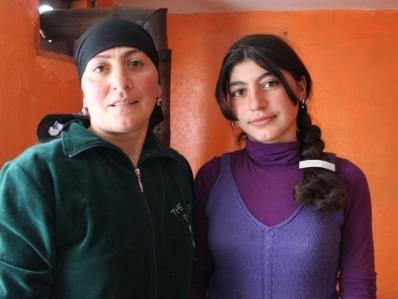
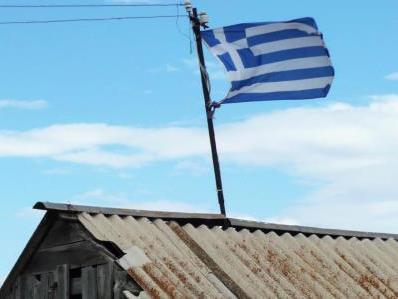
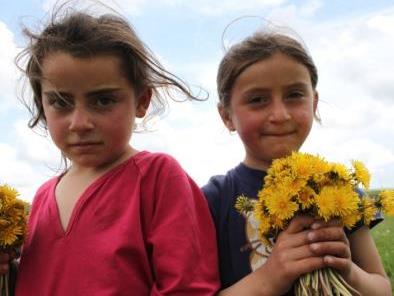
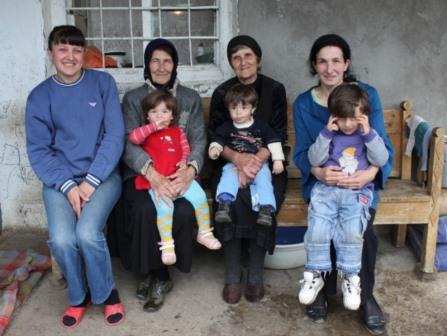
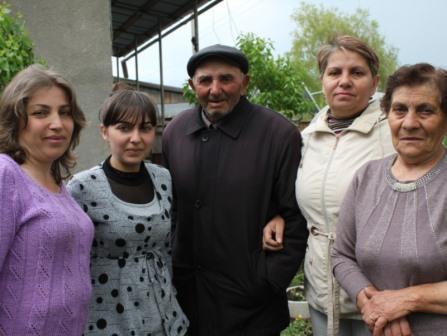
Publishing the following series of stories is an attempt to highlight the ethnic diversity of Kvemo Kartli. We are going to tell you the stories of five women living in various parts of Kvemo Kartli; these women have different lifestyles and represent different cultures, but they still have a lot in common. This is their history in stories. Stories of work, endurance, taboos, restriction, dignity, honesty and womanhood. You will not see figures and percentages here; this is not a quantitative survey. These are stories that allow us to build on those figures and percentages and enable us to develop profiles of Ajarian, Svan, Azeri, Armenian, Greek and local Georgian women’s lives, to understand their complexities and areas of commonality and to reflect this in our work as a programme.
Kvemo Kartli is one of the most ethnically diverse regions of Georgia. Ethnic diversity has developed over centuries and many contrasts and cultural differences have accumulated in this region; the study and management of these contrasts and differences and the development of models for peaceful cohabitation is not an easy task. Cultural, ethnic and language differences can be seen in every detail of life. Differences are present in rural and urban areas, in highlands and lowlands, in methods of doing business. Our objective in recording these stories was to attempt to create a profile of these women, to listen to them and build the picture of their lives, to understand the effects that culture and ethnic origin have on their lives, to see what opportunities they have and how they use or fail to use these opportunities, if they have them at all.
 |
|
|
|
|