By Helen Bradbury: Team Leader, Alliances Lesser Caucasus Programme


Information matters, it is our currency, the substance, the commodity which keeps our programmes running. We live in an age of information, are afloat on and sometimes drowning in a sea of it. We may check the oracle of google in answer to any question, live feeds, notifications and a torrent of minutiae in a mélange of events of great importance, continually assail us. Once there were spin doctors, now most of us spin daily be it personally or professionally. We are aware of the need to manage information, to have enough of it and of the right kind and most of us are aware too of the need to understand its quality and to know when and what we have is enough or too little.
M4P of course poses challenges in this as in many other aspects of its implementation, but for me the use of information is its heart. M4P is particularly finely calibrated to need high quality information and implementers able to gather, sort and feed it into the programme, implementers who aware of what they are doing, and why they are doing it. Name any stage of the programme process, let’s start with the team. We need practitioners with the right kind of understanding, flexibility and skills to interpret information, to plug it into the strategic framework and intervention planning. We often eschew experienced workers from the field of development with fixed frames of knowledge, for people with less direct experience and fluidity, choosing them for their qualities of perspicacity, ability to adopt, adapt, expand and respond. All stages involve the gathering, processing, articulation and feedback of information; market analysis, market system monitoring, ongoing capacity building, WEE implementation, calibrating interventions and of course M and E, results measurement, measuring systemic change; another entire galaxy of information management on its own. All stages require meticulousness, precision, rigour and common sense in the use of information to produce systemic market change which impacts the men and women of the target group.
The demands for the articulation of this information are multi-faceted and as dissemination channels proliferate so do the needs of those in direct relation to the programmes; donors, consultants, theorists and developers of practice, who must fulfil their own specific functions and feed information into their own burgeoning webs of outreach. Networks, e-groups, email notifications, photographs, film, presentations, numbers, interest stories. Hard numbers for professionals to crunch validity, interest stories and illustration for those we need to care.
Finally to the approach itself, literally. How you come to know something is often as important as what you finally know. M4P, market systems development; has been seen as a challenge to, a critique (I would argue an illumination through comparison) of other methods and methodologies in development. The process of reassessing even unlearning knowledge is not an easy one and is as emotional as it is intellectual. The juncture between those who in some measure know, understand and use the approach and those who do not, is therefore sometimes a tricky one. Perceptions and points of view are influential in the translation of the system. The heart of M4P is simplicity but as in all the best cases, simplicity provides the skeleton and blueprint for processes which as they build can seem like an overwhelming mass of complexity from an external point of view, particularly as no two programmes, externally at least the same. What, who and where are M4P, where does it come from, how do you do it, who does it, where can I find out more?????
Thus we come to two new websites, this one of the ALCP where we have a downloads page dedicated to compiling our own and other information that helps to answer these questions and the M4P Hub that was and the BEAM Exchange that now is. In our disparate, diversified, geographically spread world, an approach developed at the time of an explosion of information dissemination, needs sites like these. To now be able to direct someone to the right kind of information which presents, expounds and solidifies is essential in a growing field. To be able to refer to and interact with a cohesive entity which can provide a universally accepted centre point, platform, resource centre and indeed identity, is heartily welcomed.
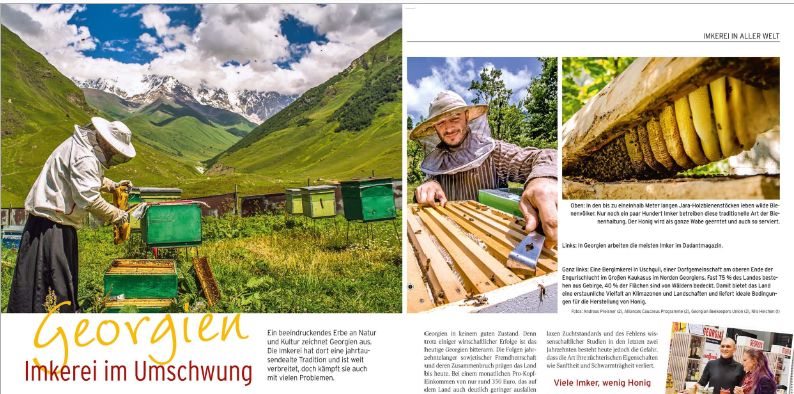
A German beekeeping magazine Deutsches Bienen-Journal with circulation of 52,000 copies a month published a comprehensive article on beekeeping in Georgia and its history, local bee breed Mountain Grey Caucasian Honey Bee (Apis mellifera caucasica) and Jara honey a special mention of the project’s work.
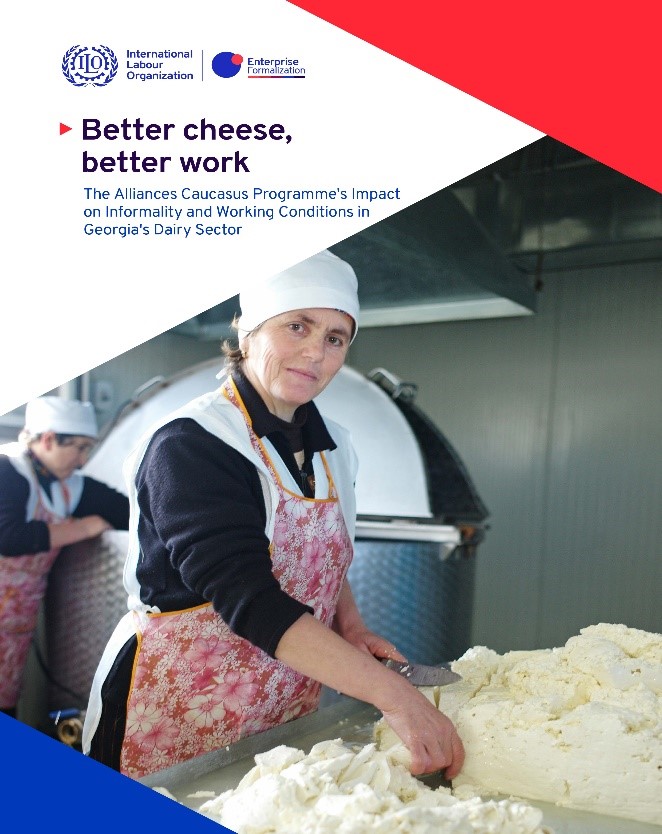
The International Labor Organization’s (ILO) Better Cheese, better work: The Alliances Caucasus Programme’s Impact on Informality and Working Conditions in Georgia’s Dairy Sector which explores formalization within the dairy value chain in Georgia stemming from ALCP market systems interventions, is now available on the ALCP website.
The ILO and ALCP worked together from summer 2019 to bring this research to completion. There are several reasons for the timeliness and importance of this report; chief amongst them is the ever present need for lessons learnt from MSD programmes, which can be applied in others, secondly the need to demonstrate the efficacy of the approach with a detailed account of systemic change and thirdly the growing importance in development programming of evaluating the efficacy of the MSD approach to develop quality employment at scale.
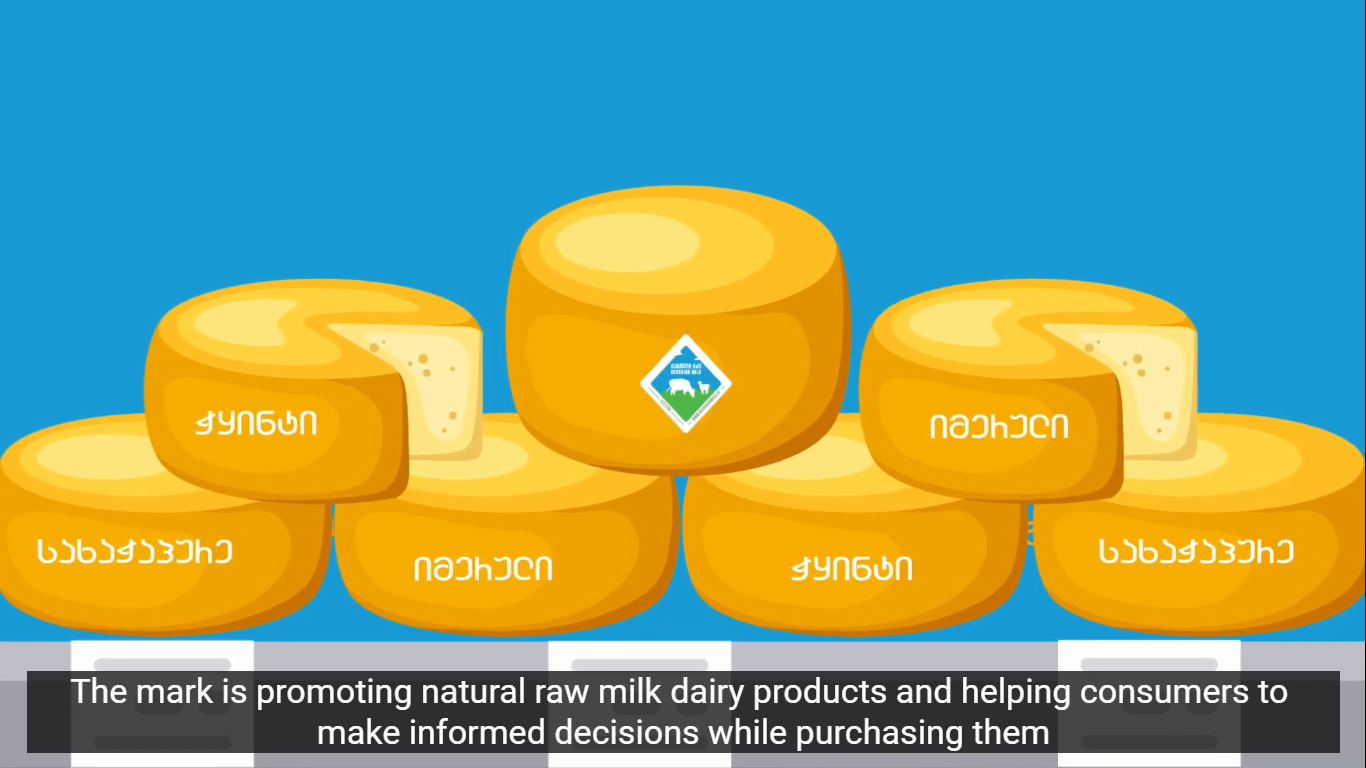
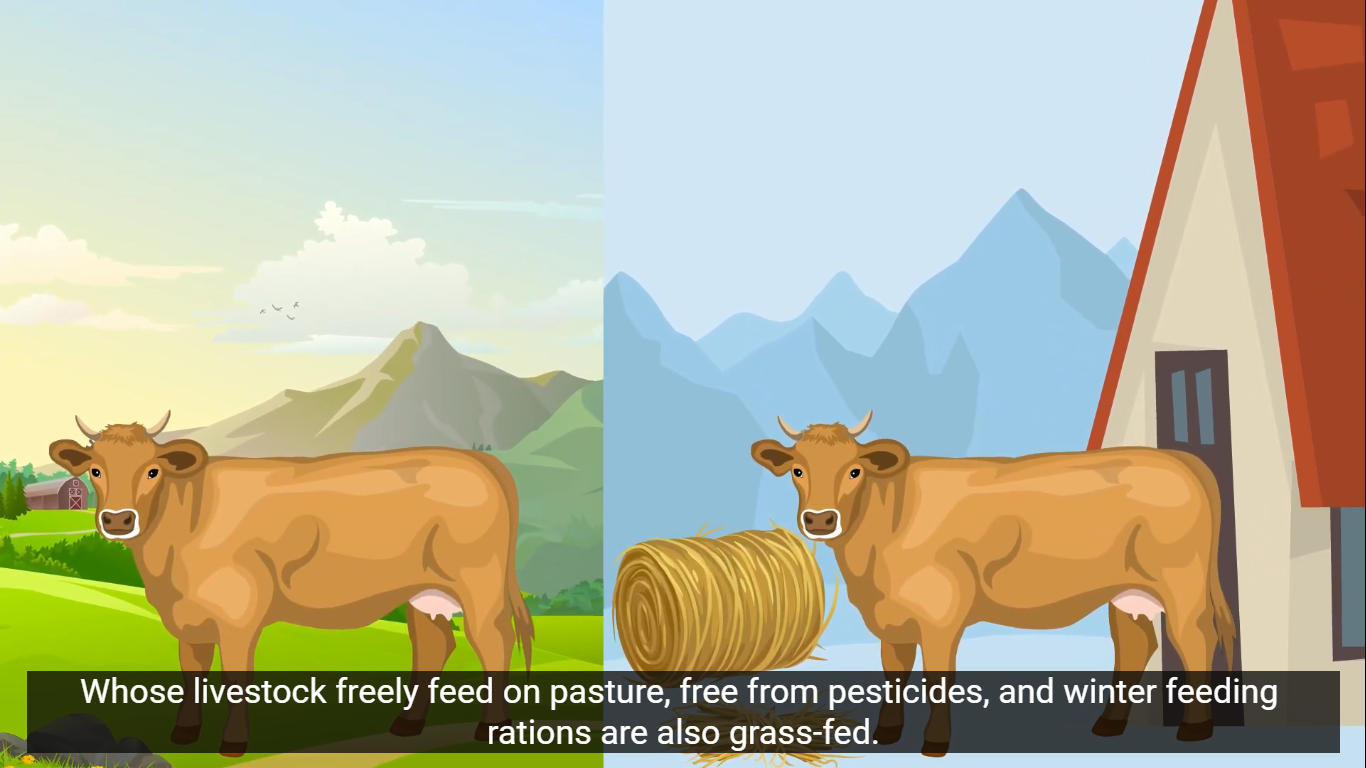
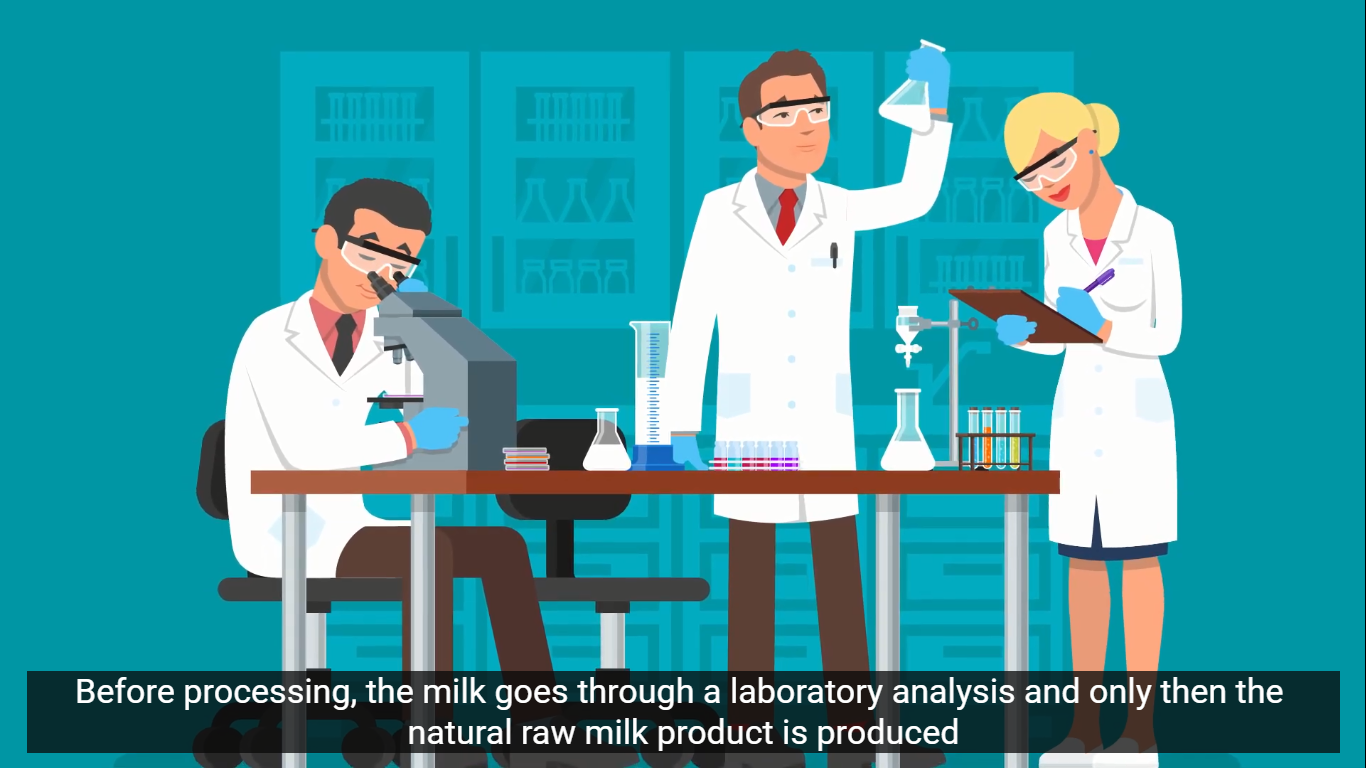
From the beginning of June, the two most popular national TV stations Imedi TV and TV Pirveli have been broadcasting the Georgian Milk Mark (GMM) animation video five times a day during prime time for free as a part of social advertising. Those televisions have national coverage reaching a high number of consumers.
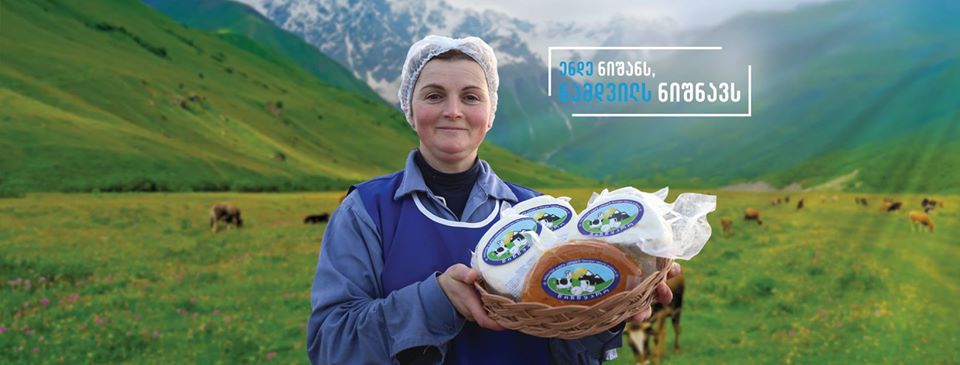
There are now ten GMM dairy enterprises’ products available in fifteen supermarket chains across Georgia. Detailed information to be found on www.georgianmilk.ge.

On the May 20th, 4,400 beekeepers registered in the new GBU database received an SMS notification from the Georgian Beekeepers Union (GBU) on how to treat Varroa, the most common bee disease in Georgia.
The GBU will continue informing its members through phone Facebook. And their new official webpage is now online: www.geobeekeepers.ge.
Created in 2018, the GBU is an umbrella association uniting ten beekeeping associations and three commercial beekeeping companies.
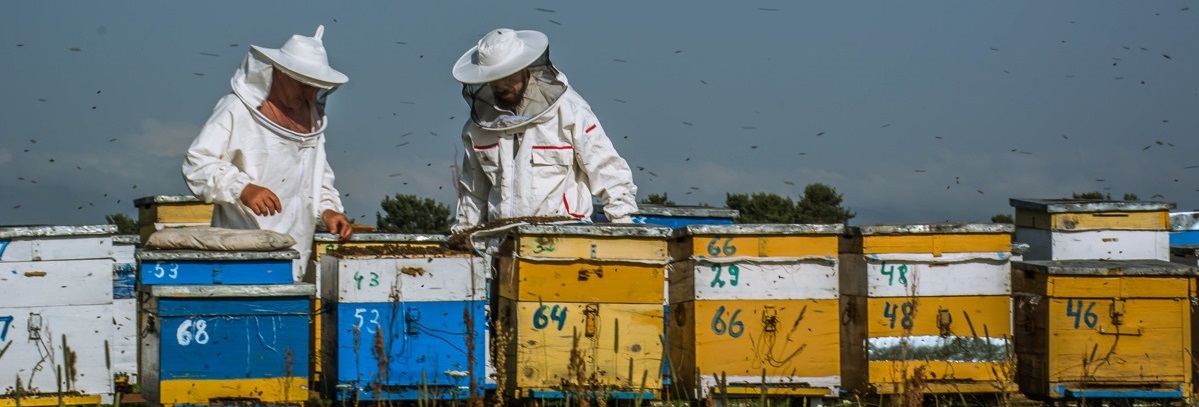
The Georgian Beekeepers Union (GBU) successfully advocated for permits to be issued for beekeepers allowing them to continue work during the curfew.
The Government of Georgia declared the nationwide curfew on March 30th, 2020 to restrict the spread of the COVID-19 virus, prohibiting any movement from 9:00 PM to 06:00 AM. This posed a serious problem for beekeepers who rely on transhumance predominantly at night.
In Georgia, bee transhumance allows for beekeepers to place hives at different altitudes to capture the flowering of different plants. Starting from late Spring, Georgian beekeepers start to move apiaries to get different types of honey including Acacia,Chestnut, Alpine, Linden. The transhumance of bees significantly increases their honey productivity.


On April 4th, the GBU sent an official letter to the Ministry of Environmental Protection and Agriculture of Georgia (MEPA) asking for the issuing of permission/passes for beekeepers including the guidance it developed for beekeepers during the Covid-19 outbreak.
‘We asked the Minister to mediate with the appropriate agencies to issue special permits, so that beekeepers may access their apiaries and work there, transport beekeeping apiaries for transhumance on pre-determined routes within the curfew conditions.’ – Avksenti Papava, the Director of the GBU.
Up to eight hundred beekeepers have already used permits, who are now able to visit apiaries and carry out vital seasonal treatment and maintenance. Bees are transported at night where possible, because they do not leave a hive during night, which the permit makes possible.
‘I have my apiaries located in the different regions for getting various types of honey. I was very happy to hear about special permit for beekeepers, as it is very active season in beekeeping. I am able to freely move to the locations and do not worry about time limitations’ – Kakhaber Zirakasvili, a beekeeper.
Guidance and contact information on getting permits and the Covid-19 recommendations have been shared by the GBU on its facebook page.
The Georgian Beekeepers Union (www.geobeekeepers.ge) is an umbrella association uniting ten beekeeping associations and three commercial beekeeping companies with more than four thousand Georgian beekeepers. It was established to represent their interests and to promote the health and development of the honey sector in Georgia with the facilitation of the Swiss Agency for Development and Cooperation (SDC) project the Mercy Corps Georgia implemented Alliances Caucasus Programme (ALCP).
In the midst of anxiety under the COVID-19, some people rise to the occasion when faced with adversity and it is uplifting to hear stories about them. As for many others it has been difficult times for the client businesses of the programme, but they have continued to help people most affected by the current crisis over the past two weeks.
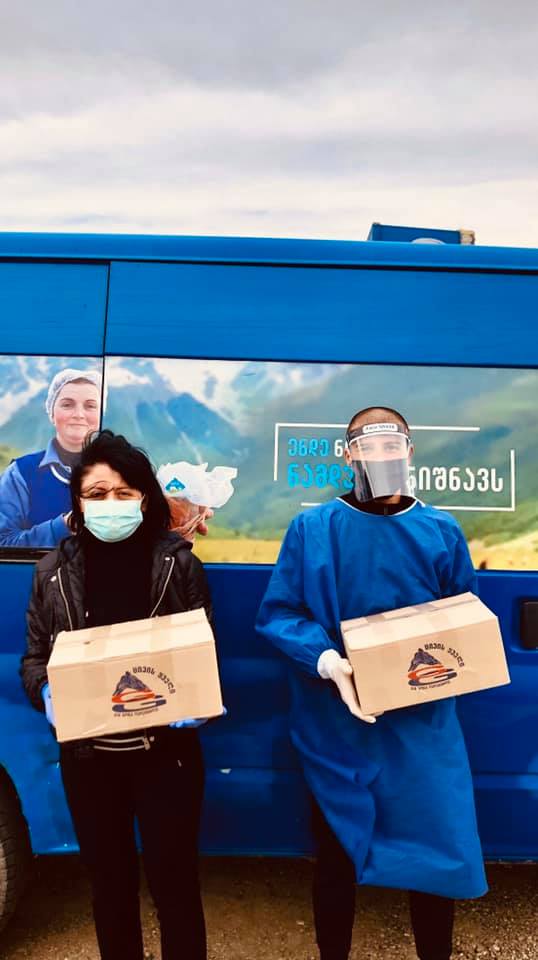
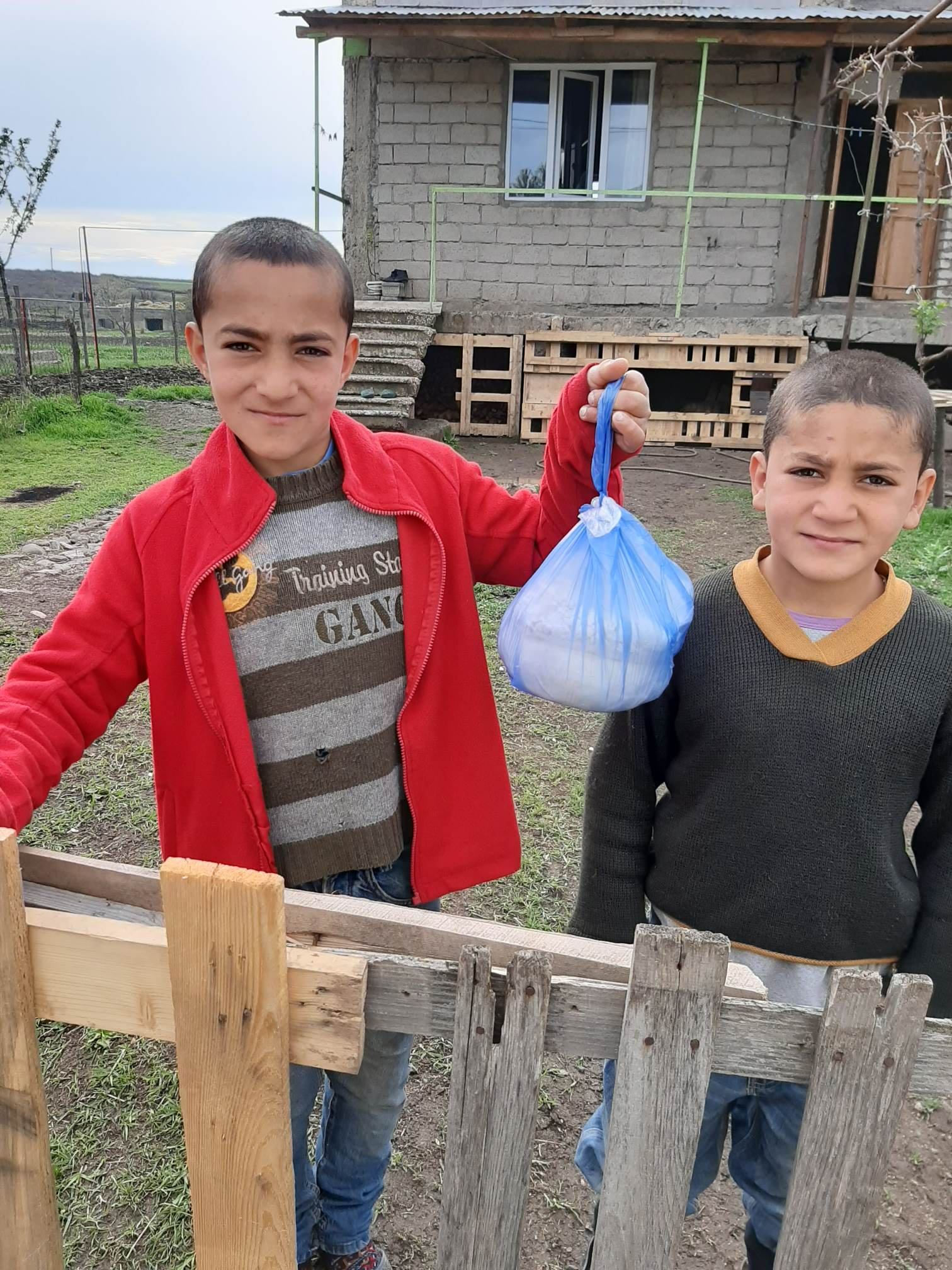
Ten dairy enterprises with the Georgian Milk Mark www.georgianmilk.ge provided cheese for the medical staff of hospitals in the frontline of battling the virus as well as people under quarantine and locals in the lockdown areas in the different regions of Georgia, who have limited access to the markets.
‘It is now important to show support to each other. I was very happy to see reactions from people, who were very surprised and thankful. I think those GMM enterprises set very good example for others.’ – A GMM cheese distributor.
The Georgian Beekeepers Union (www.geobeekeepers.ge), uniting ten beekeeping associations and three commercial beekeeping companies supplied 1.2 tonnes of honey for further distribution among medical staff and vulnerable groups.
The Kakhetian Traditional Winemaking group’s (programme facilitated honey aggregator and exporter company) forty-one rooms hotel-complex is being used as a quarantine zone, the company also supplied food to locals over seventy in two regions of Georgia within a social project ‘Care for Each Other’ initiated after the virus outbreak and is now offering online sales and a free home delivery of its products (wine, compotes, jams, including, honey); the company’s webpage Old Kakheti went online to improve online sales.
These are a few examples and continuation of the kindness acts that started a month ago.