From the ISET Economist news (http://www.iset.ge/news/?p=3871)
By Eric Livny
Democracy and Freedom Watch reported October 9, that “Georgia’s controversial new immigration law may be changed”. The law, writes DFW, “has caused a wave of confusion and irritation in the country’s expat community. Prime Minister Irakli Gharibashvili … told journalists that if any defects become apparent after the enactment of the new law, ‘we’ll surely correct it.’”

Just a month earlier, confusion, irritation and public outrage were caused by another piece of Georgian legislation – a law greatly limiting the sales of non-prescription drugs (see Florian Biermann’s post). The outrage was caused by the fact that many of the drugs affected by the new law, e.g. plain painkillers, were in extremely wide use. As a result, less than two weeks after coming into force on September 11, the law was amended by the health minister, Davit Sergeenko, allowing 772 medicines to be sold over the counter, without a prescription.
One could perhaps say, as the Germans do, ende gut, alles gut. But, alles is nicht gut. The fact that such REALLY BIG MISTAKES are allowed to occur in the first place suggests that something is deeply flawed in the Georgian policymaking machine. One obvious concern is the lack of due “public policy” process. Indeed, there was nothing particularly urgent about either piece of legislation; both could have benefited from a proper technical review, “stakeholder consultations” and a public debate.
Second, and very importantly, these grand failures suggest that Georgian lawmakers lack a proper understanding as to the role of regulation in an economy, and how much of it a country like Georgia needs (or can afford).
THE BENEFITS OF PROCRASTINATION AND DEBATE
Any discussion of regulations can easily get politicized, sparking seemingly futile and lengthy political exchanges. Left-wing intellectuals would argue that regulations are there to address market failures (such as drug addiction and overconsumption of antibiotics) or protect the weak and vulnerable (e.g. by securing their jobs and providing income support). The libertarians among us would argue that the market can correct itself, and that, in any case, state paternalism is not a solution to any problem. Rather, it creates unnecessary red tape and leads to unintended consequences such as laziness, corruption, illicit economic activities (“black market”) and smuggling. State failures, according to the enlightened libertarian view, are as much of a problem as market failures.
Such a clash of ideas is quite legitimate, and – if conducted in a civil and constructive manner – should be welcome in any community and polity. For one thing, it would provide legislators with a better understanding of the “problem” they are trying to solve (if there is a problem), such as:
the incidence of antibiotic resistance among Georgians;
immigrants competing with (or creating jobs for) low-skilled Georgian workers;
the extent of land grabbing (as well as investment and job creation) by Punjabi farmers.
Ultimately, whether liberal immigration regime (or free access to medications) is to be recognized as a “problem” is about politics rather than science. Still, having some evidence to consider before rushing with regulatory “solutions” would be a good step forward. It may well be the case that, while generating “killer” headlines, a “problem” is ridiculously small in magnitude or does not even exist.
Secondly, when faced with the need to publicly defend their proposals, proponents of regulations would be forced to analyze alternative solutions while taking into account the cost factor, effectiveness in terms of actually solving the problem at hand, related corruption risks, and other types of collateral damage.
DON’T BITE OFF MORE THAN YOU CAN CHEW!
But perhaps the most ideology-free criterion of evaluating the feasibility of regulations is whether a country has the requisite human capacities and skills. Even a relatively simple regulation, such as traffic lights, may be counterproductive if not properly planned and executed. First, there is the basic question of how to regulate a given intersection (traffic lights are effective only when traffic intensity exceeds a certain threshold level, which is almost never reached at night). Second, traffic lights have to be properly timed to maximize intersection capacity and minimize delays). Poorly planned traffic lights – hello, Tbilisi! – are not only a drag on traffic but also a safety hazard.
What is true about traffic, is equally true for extremely complex regulations such as anti-trust, labor, and food safety, which Georgia has subscribed to as part of the Association Agreement with the EU. For instance, it will take years – maybe even generations – to build the necessary professional capacities within the Georgian parliament and judiciary, the competition watchdog, the economics, legal and management professions in order to implement Swedish-style anti-trust law in the Georgian context. Thankfully, for now Georgia is paying lip service to some its EU-related commitments (e.g. by creating a competition agency and copy-pasting anti-trust legislation without caring to enforce it).
The botched attempts to rewrite immigration and pharmaceuticals laws suggest that professional skills are in extremely scarce supply throughout Georgia’s bureaucracy. After all, the Georgian state is one of the youngest in the world; Georgia’s educated urban elite is a tiny sliver of the population; and even this sliver has been impoverished by many years of brain drain and outmigration. In this situation, the Georgian state should not attempt to bite off more than it can chew. It should avoid complex regulations, even when these are theoretically desirable or required by its international partners. It should certainly avoid thoughtlessly copy-pasting regulations that have been designed for other times and other places.
* * *
A short story by Leo Tolstoy titled “How much land does a man need” describes the fate of a land-hungry Russian peasant, Pakhom, who is promised as much land as he can walk around from sunrise till sunset. One condition is attached: he has to make a full circle and return to the point origin by the end of the day. To maximize his future land holdings, Pakhom sets on a rather ambitious circular route, and is too late to realize that he cannot make it back on time. He runs as fast as he can and, exhausted from the effort, drops dead at the point of origin. His servant buries him in a grave only two meters long, thus ironically answering the question posed in the title.
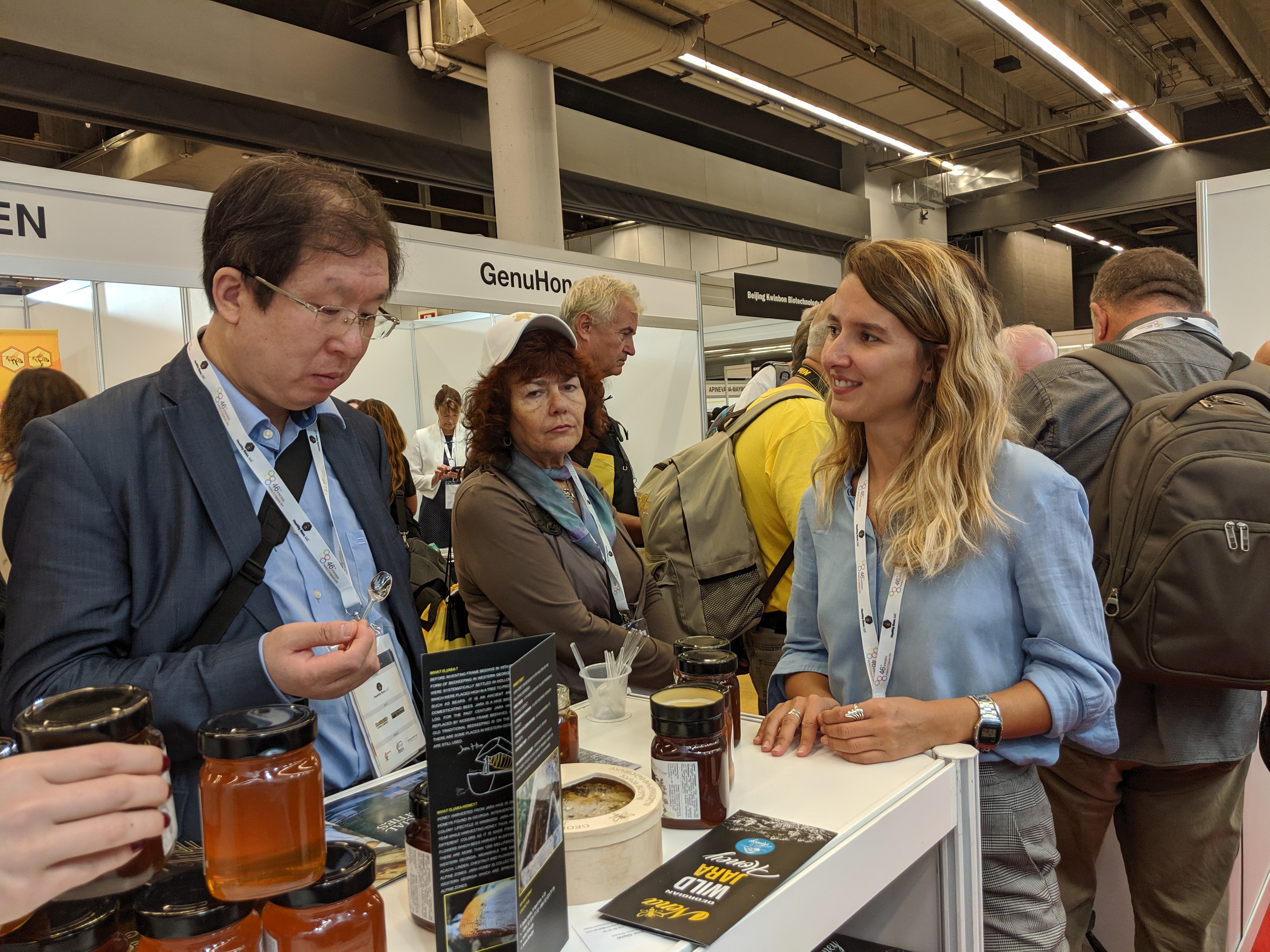
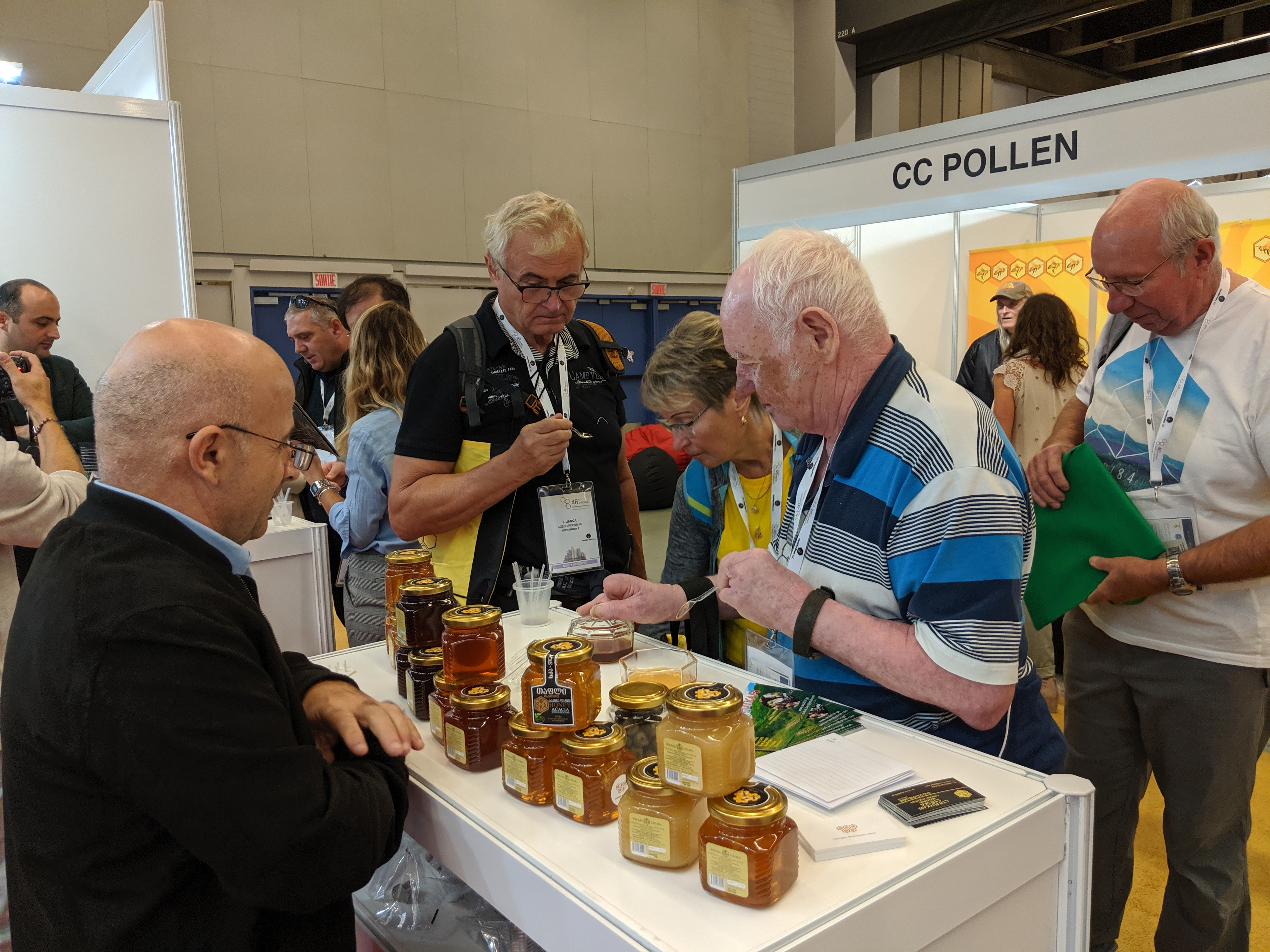
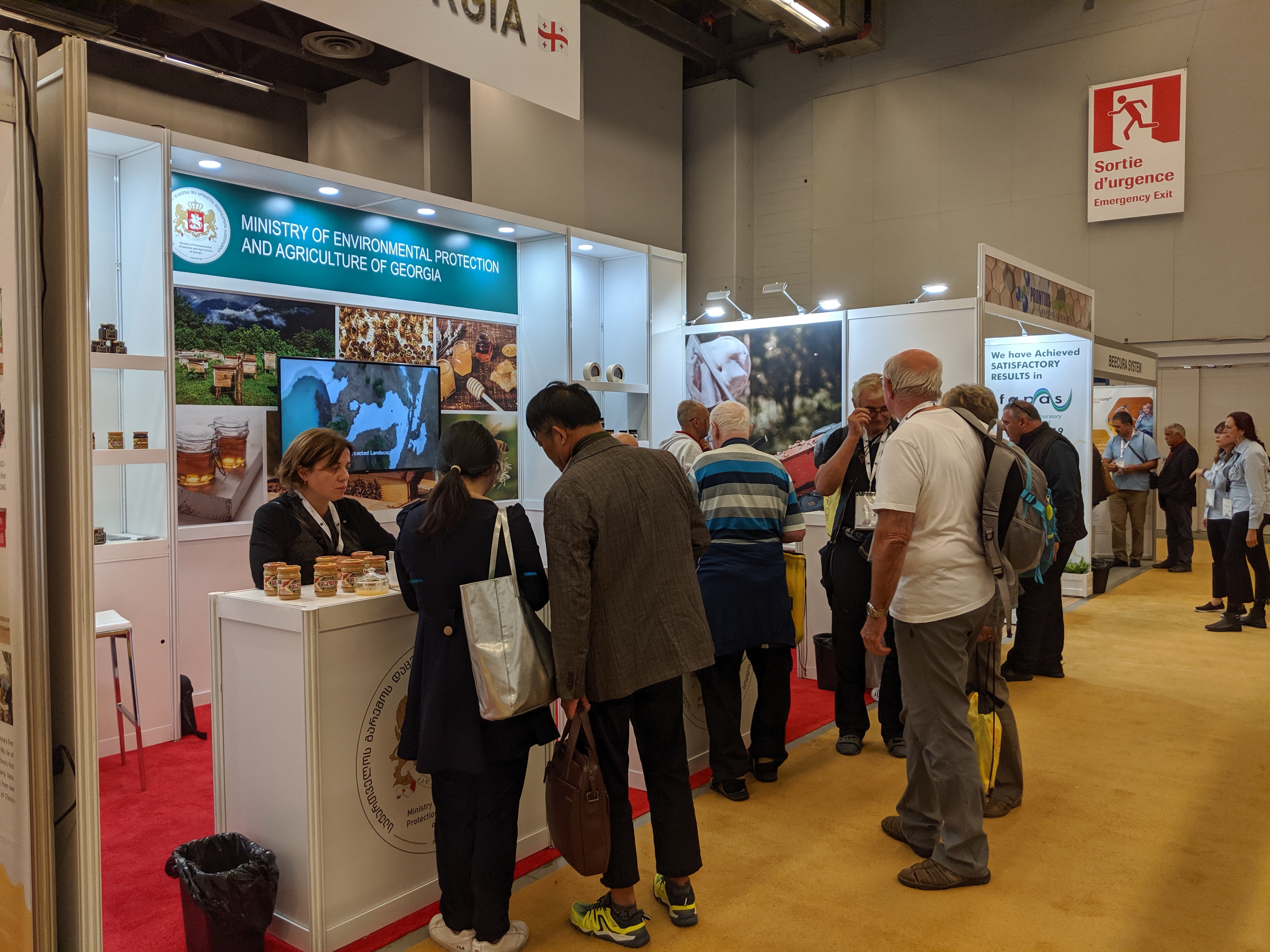
The 46thApimondia Congress 2019, the most significant event in beekeeping worldwide, took place from 9th of September to 12th of September, in Montreal, Canada. For the second time in Apimondia’s hundred years of history, Georgia was at this world forum, represented by the Ministry of Environment Protection and Agriculture (MEPA), the Georgian Beekeepers’ Union (GBU) and Kakhetian Traditional Winemaking company, exhibiting the different types of honey of its members and promoting Georgian honey and beekeeping.
Apimondia promotes scientific, ecological, social and economic apicultural development in all countries and the cooperation of beekeepers' associations, scientific bodies and individuals involved in apiculture all over the world. This event is a unique opportunity for Georgia to promote itself as a honey producer and claim a place next to world leading honey producers. The recent placing of Georgia on the list of third countries for honey only further cements the credibility of Georgia as a viable producer country.
Georgia has been extensively promoted internationally as the birthplace of winemaking. Apimondia provides the opportunity to put energy into a new promotion of Georgia as the homeland of the oldest honey ever discovered, preserver of ancient beekeeping traditions as shown in the Jara movie and producer of a wide variety of artisanal natural honey and bee products fueled by the un-paralleled flora of Georgia’s uniquely bio diverse and unspoiled landscape.
The Georgian Beekeepers Union (2018) as an umbrella association for advocating and representing beekeepers’ interests developed Honey promotion video, websites/catalogues of Jara Honey and Georgian Honey for further promotion of Georgian honey.
The first participation at the congress was facilitated by the Swiss Agency for Development and Cooperation (SDC) project the Mercy Corps Georgia implemented Alliances Caucasus Programme (ALCP) in cooperation with the Ajarian Beekeeping Business Association (ABBA) operating under the Ajara Chamber of Commerce and Industry (ACCI) in Istanbul, Turkey in 2017.
Follow the links on the Apimondia Congress 2019: Interpressnews, Palitranews.ge
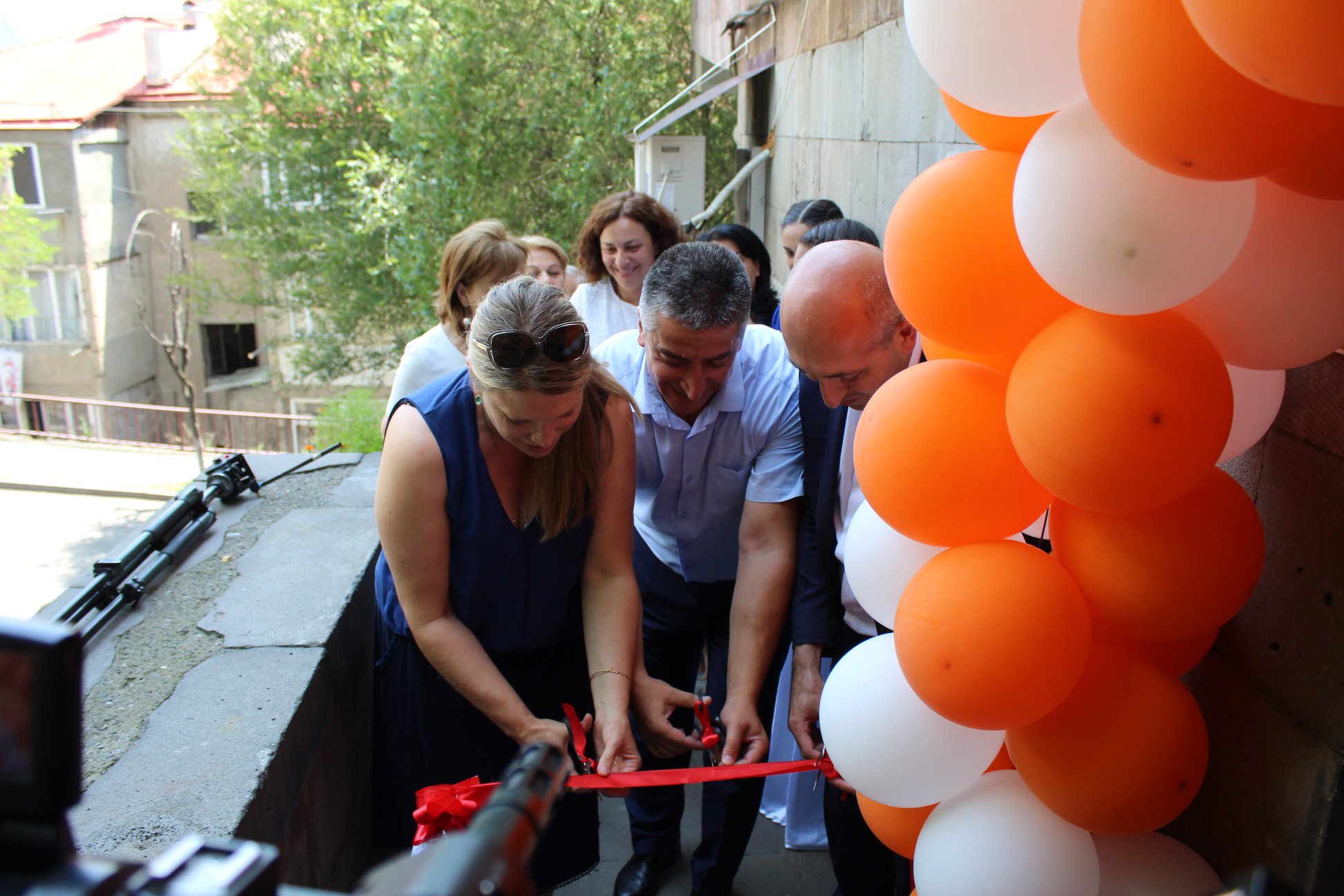
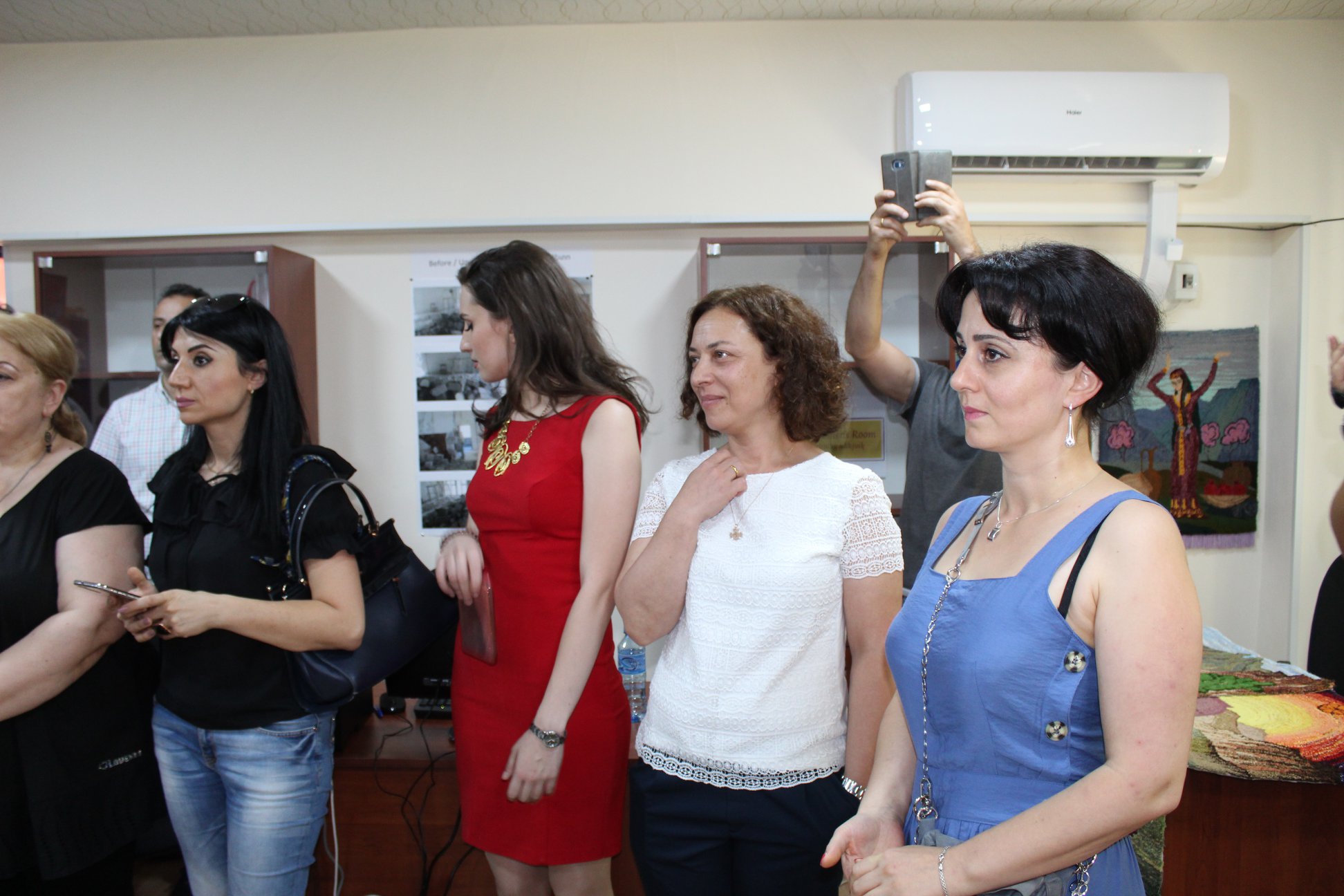
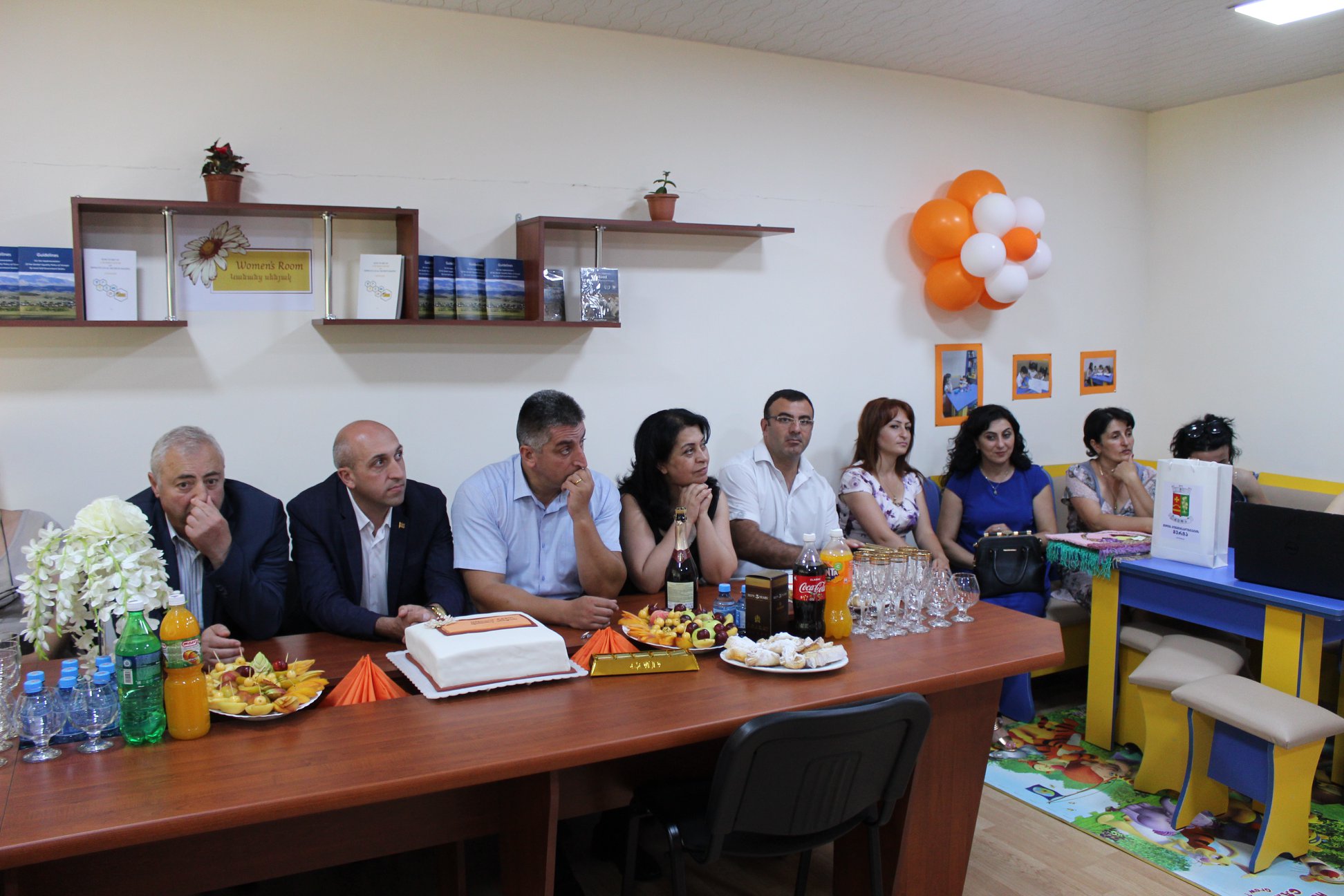
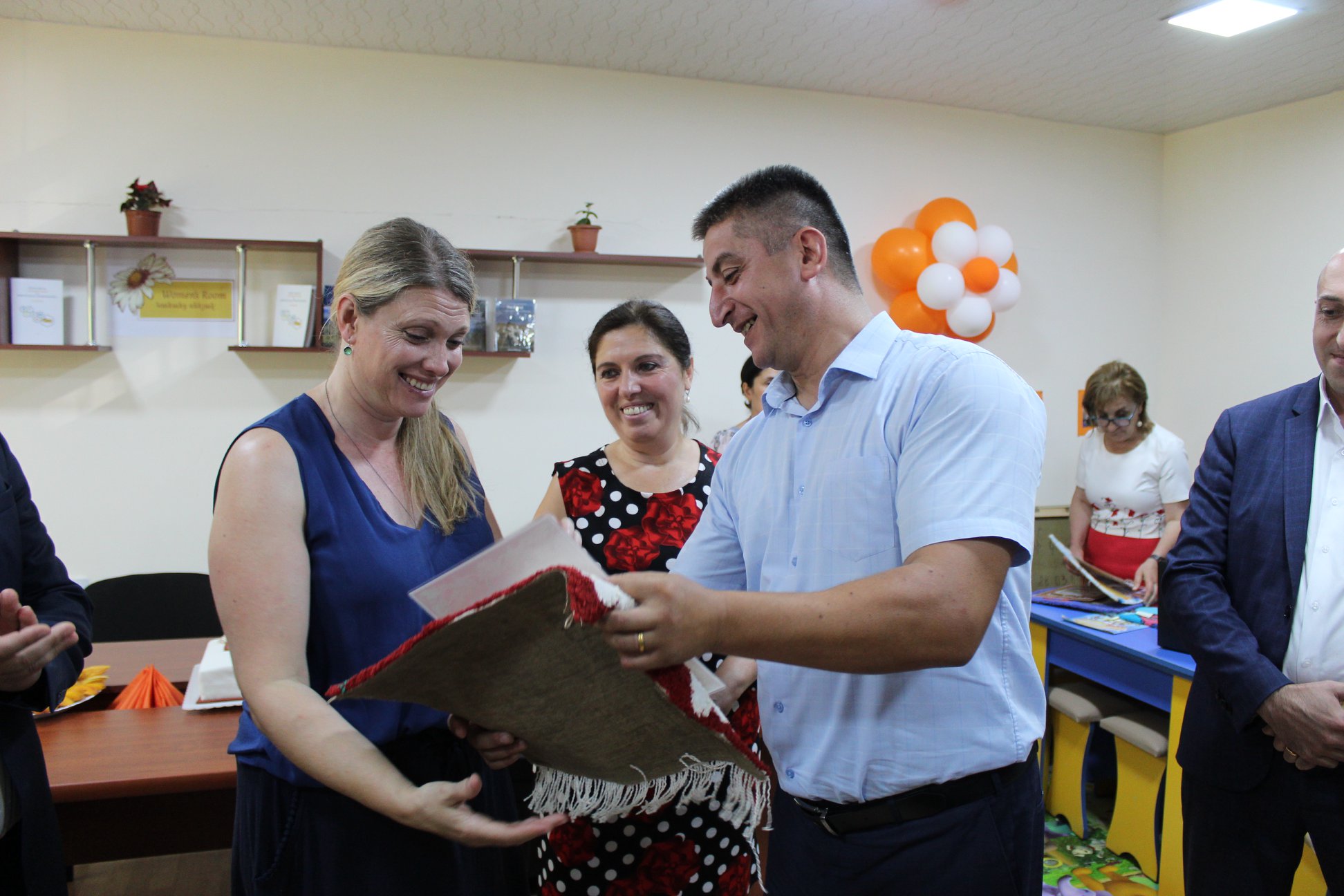
The Women’s Room in Alaverdi municipality, Armenia was officially opened on the 25th of July by the Governor of Lori Province, Andrey Ghukasyan, the Head of Alaverdi Municipality, Sasun Khemuchyan and the ALCP Team Leader, Helen Bradbury. The Head of the Department of Family, Women and Youth of the Ministry of Labour and Social Issues, the Head of the Municipality, the representative of Association of Lawyers, local businesswomen and other guests attended the opening ceremony. The Mayor of Keda Municipality of Ajara region and the Manager of Women’s Room in Keda were invited, representing one of the most successful Women’s Rooms in Georgia. Keda and Alaverdi Municipalities forged links when the representatives of Alaverdi Municipality were invited to the Women's Business Forum held in Batumi, Ajara in March, 2018.
“This service is very important for women and their families to improve their business skills. I would like to thank all of the initiators and supporters of the project and I am ready to discuss the opening of this service in other municipalities as well” - Andrey Ghukasyan, Governor of Lori Province.
“The Idea of the opening of the Women’s Room in Alaverdi came when we visited the Women’s Room in Keda, Ajara region three years ago. The Alliances Caucasus Programme expressed their readiness to share their experience with us how to establish and operate the WR. This service will help women with accessing resources and training to get finances for their businesses. When we help women, we strengthen their families’ Sasun Khemuchyan, the Head of Alaverdi Municipality.
Photo Source: Facebook page of Women's Room in Armenia
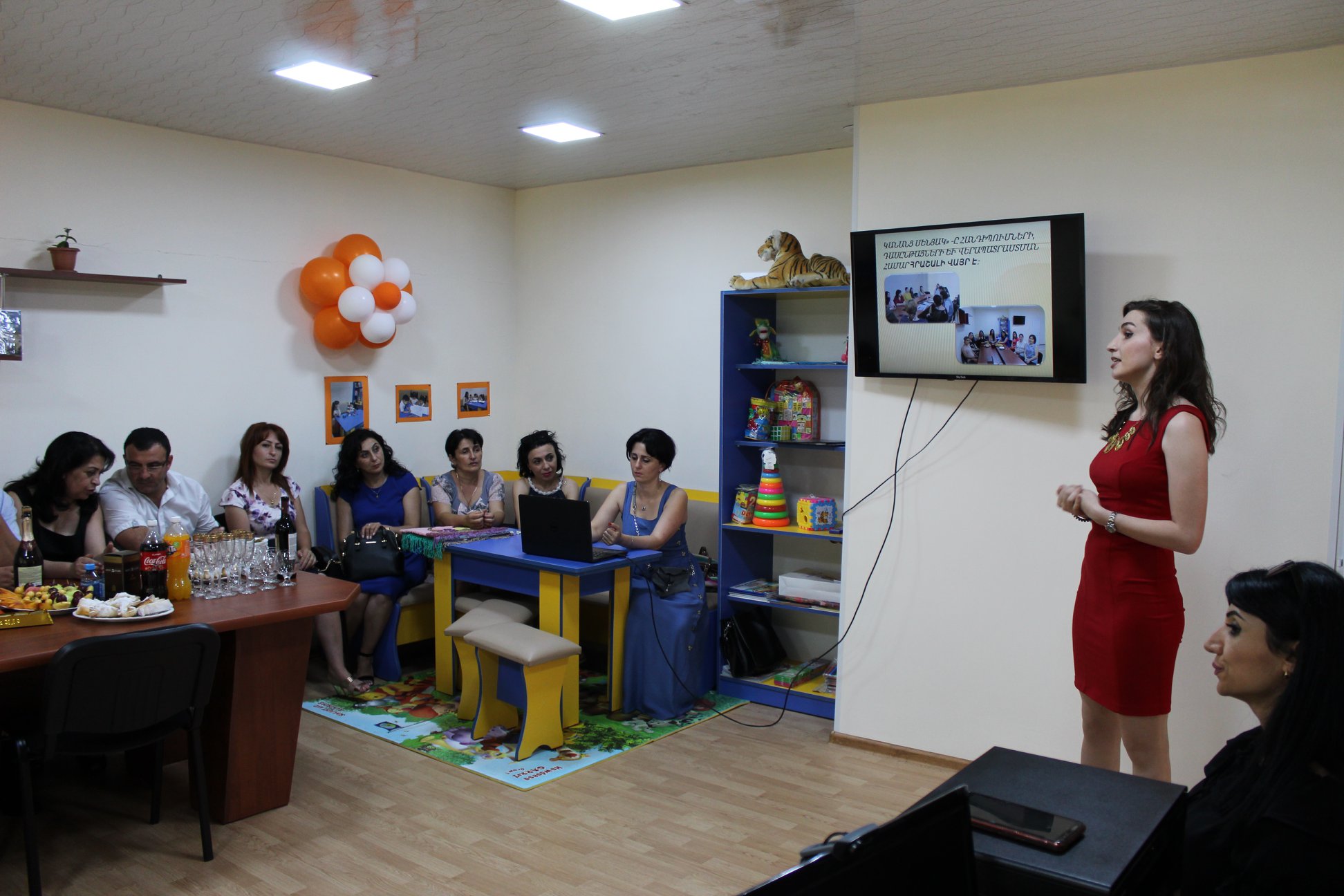
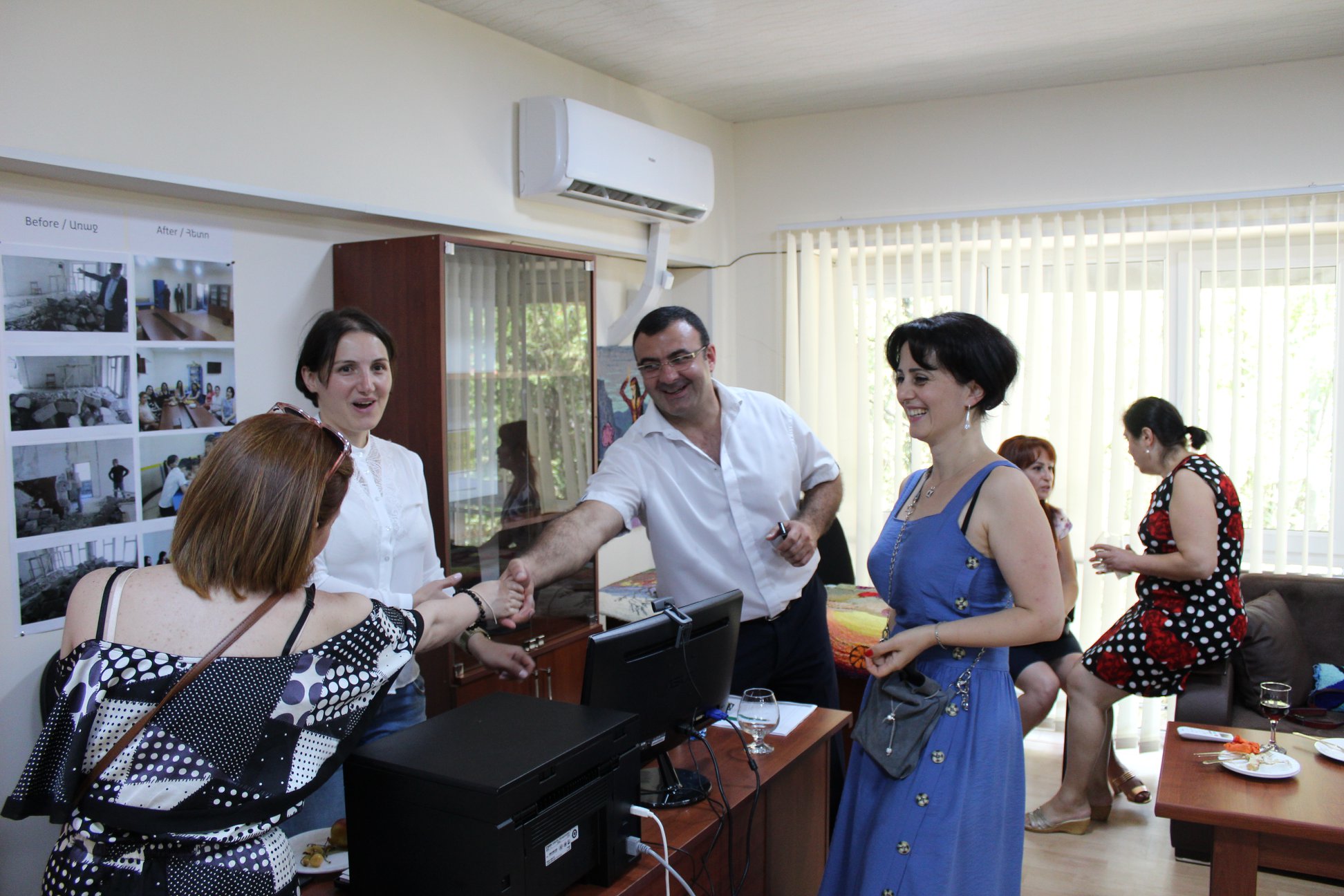
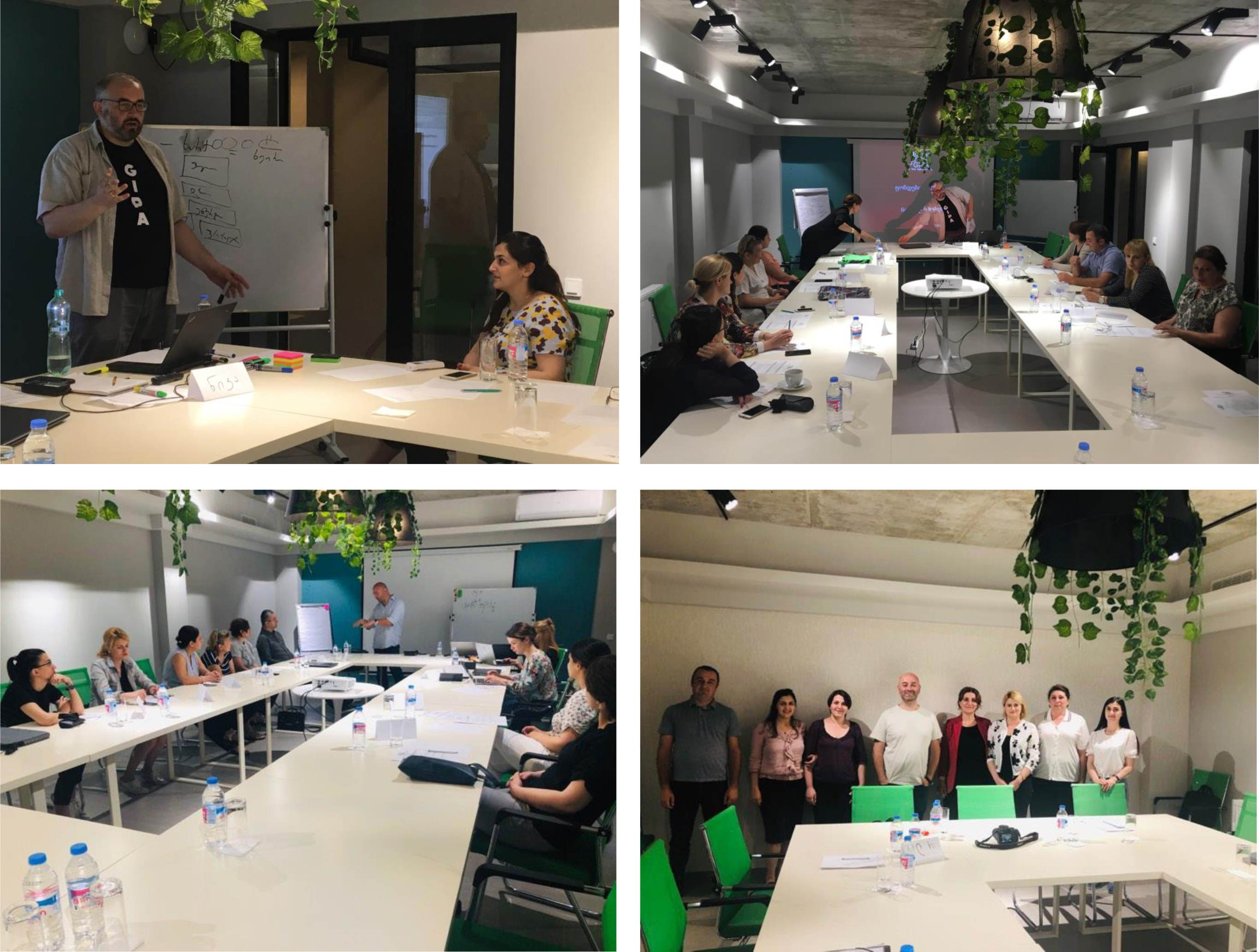
All the managers of the municipal Women’s Rooms and representatives of the Governor’s office in Kakheti region attended a training on Business Plan Writing and Fundraising held by the Georgian Institute of Public Affairs (GIPA) with ALCP facilitation. For three days George Turkia and Nikoloz Abuashvili, full professors of GIPA, explained how to transform ideas into real plans and where to find the money for them.
‘This was the most interesting training I have ever had. A lot of women are coming to my room with business ideas but I cannot provide help because of lack of knowledge. Now I am full of enthusiasm and ready to help them. It is also important for me that helping women with starting businesses in rural areas will be supported by the local government through the Women’s Room. We will make it happen’ – Bela Marukashvili, the Women’s Room Manager in Akhmeta municipality.
Background information: Twenty-eight municipalities of Ajara, Kvemo Kartli, Samtskhe-Javakheti and Kakheti have established free information-consultation spaces - Women’s Rooms to support women’s equal participation at local decision making fora and their economic empowerment. In 2016 the Women’s Rooms in Ajara pioneered to help rural women with applying to the government grant programmes and after a year the model was copied by Kvemo Kartli and Samtskhe-Javakheti as well. To date 88 women business start-ups have been funded through the Women’s Rooms in Georgia.
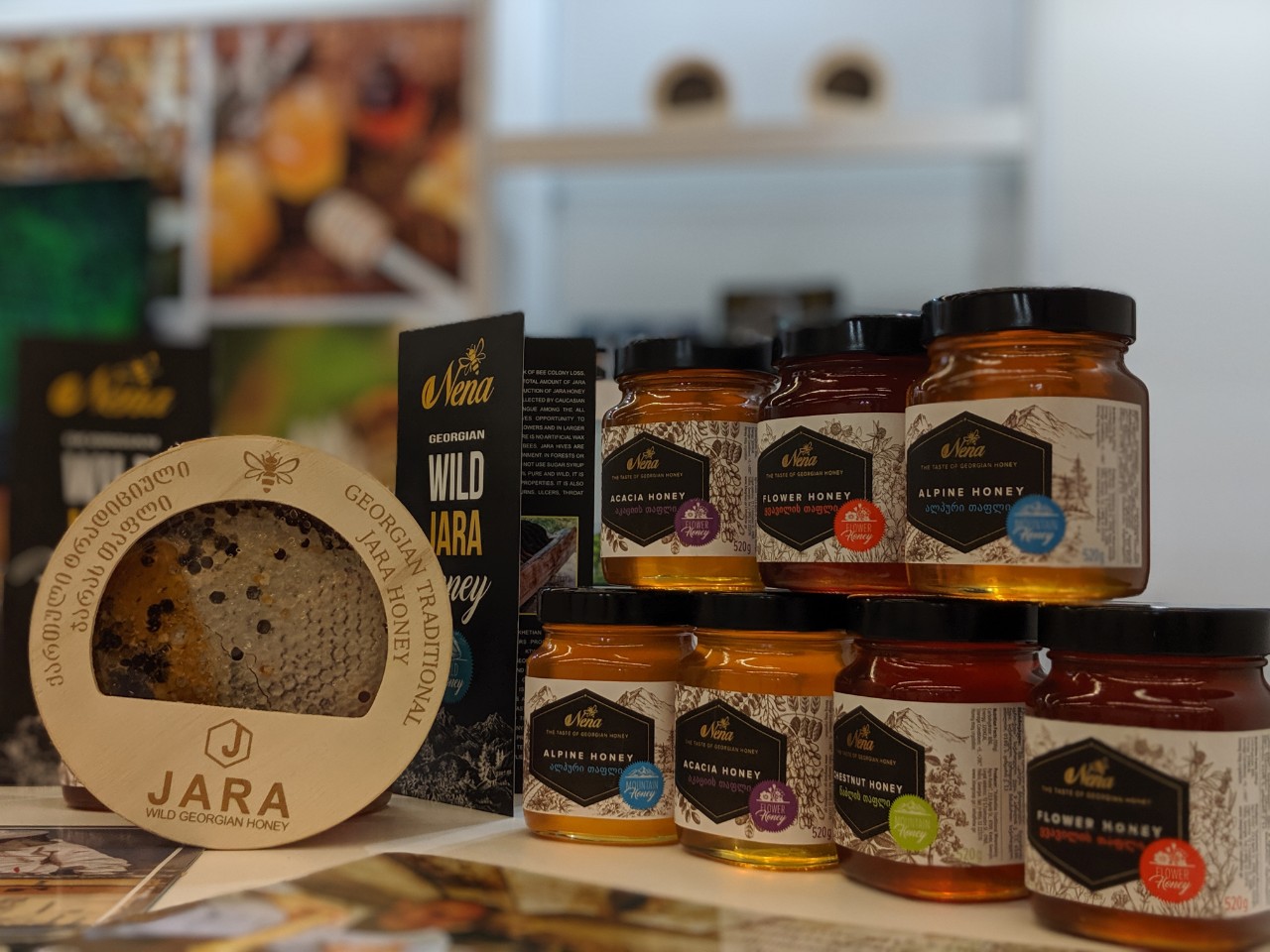
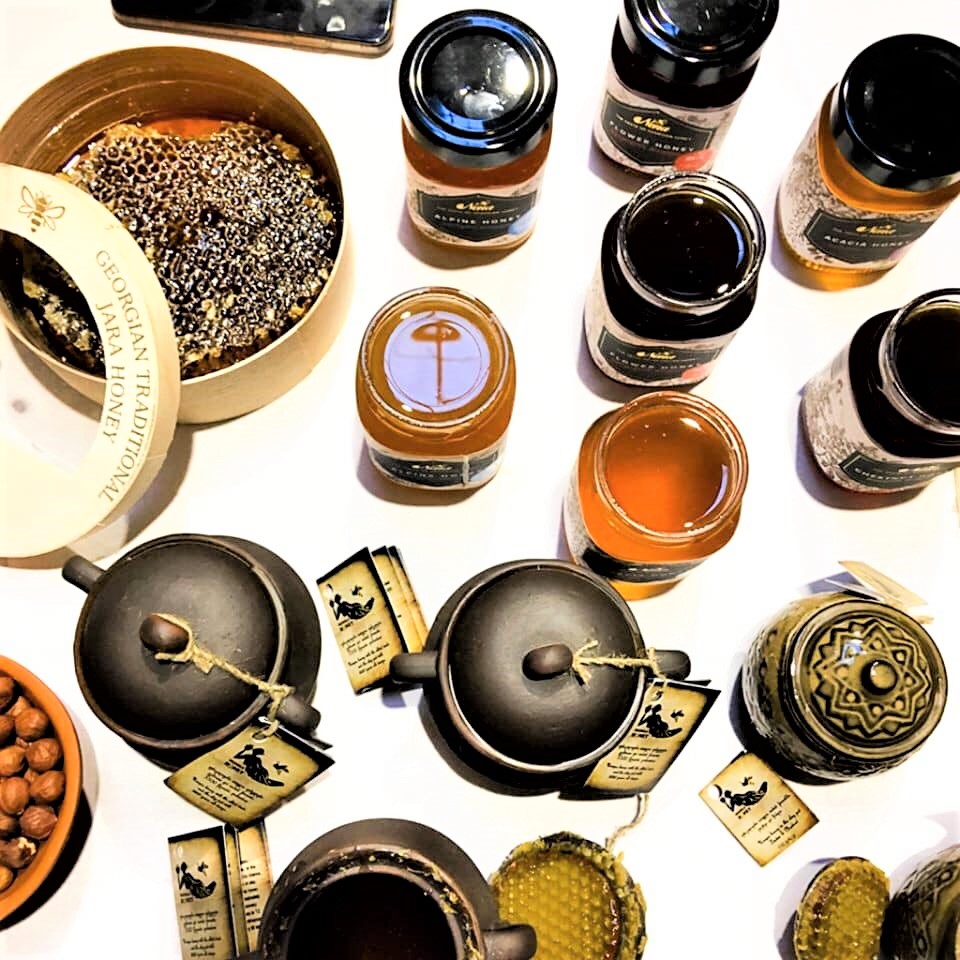
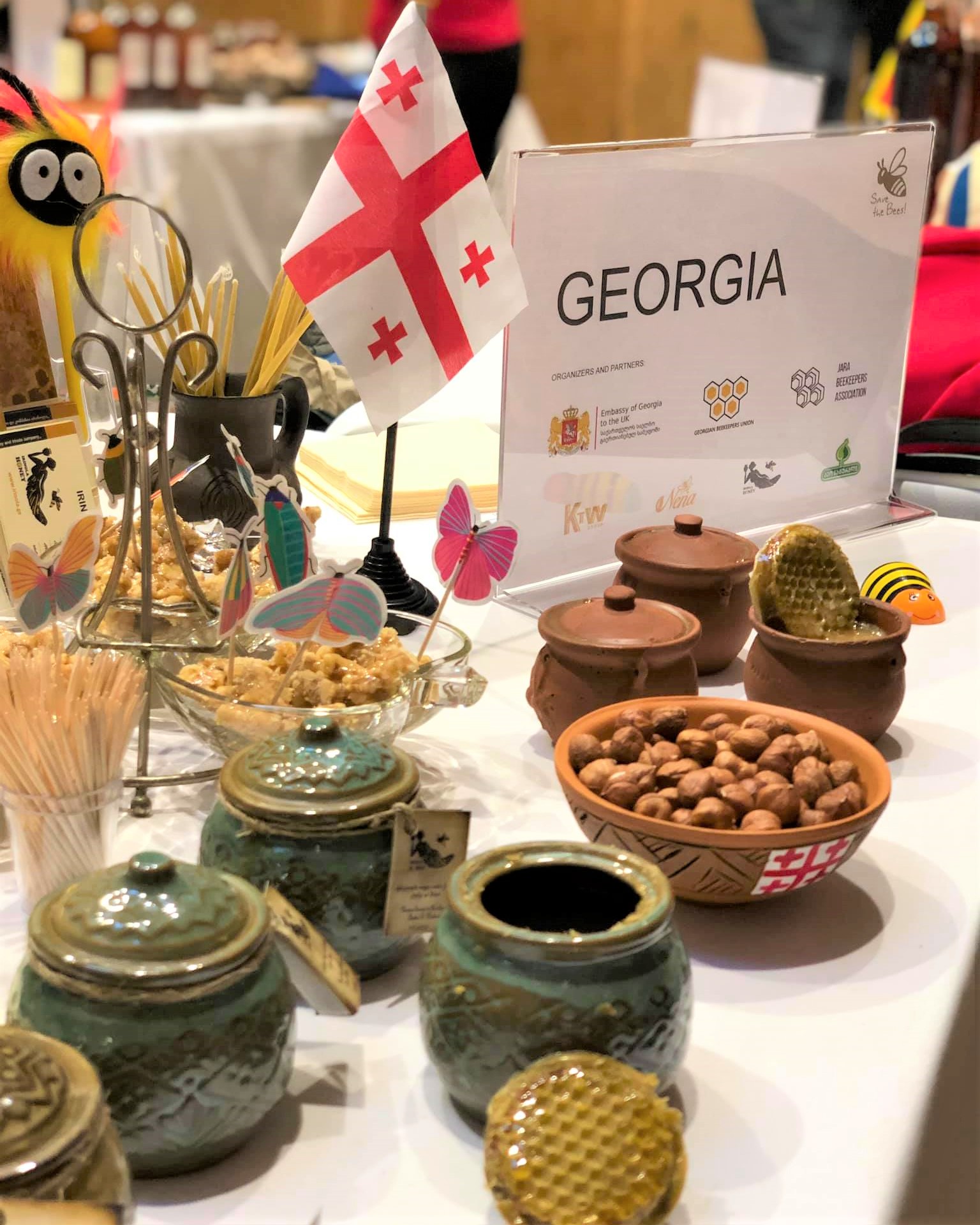
Honey and bee products of four Georgian companies were exhibited at the event WORLD BEE DAY COMES TO LONDON on 21st of May, in the Conway Hall by the initiative of the Embassy of Slovenia to the UK.
The Embassy of Georgia to the UK organized a stand for Georgian companies with the help of the Alliances Caucasus Programme, the Georgian Beekeepers Union, the Jara Beekeepers Association and the Georgia Chamber of Commerce and Industry. Georgian honey was well promoted by the Embassy.
Twenty-seven countries exhibited their bee products. More than 500 guests tasted Georgian honey; Chestnut and Jara honey were one of the favorites.
Photo source: The Embassy of Georgia to the UK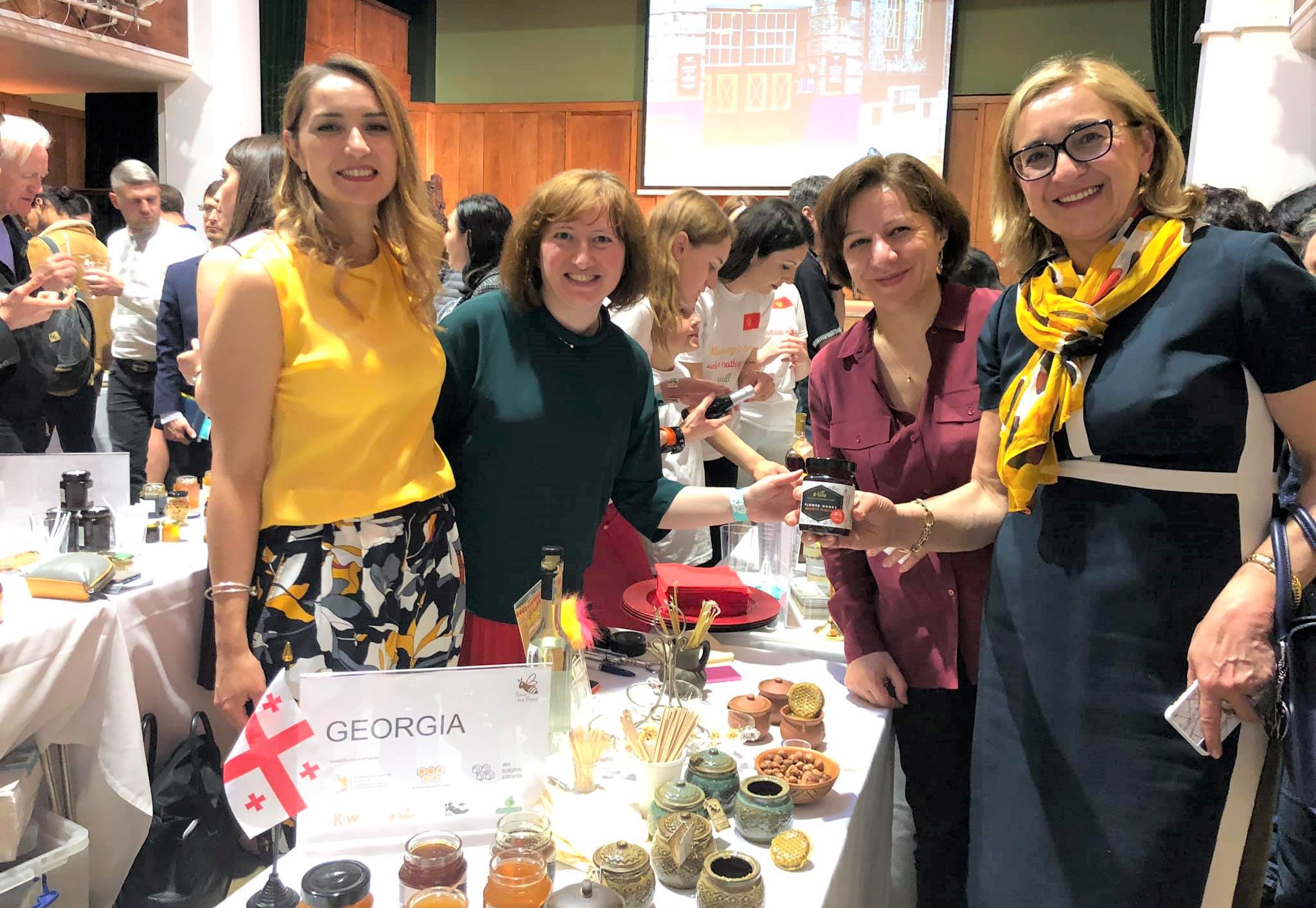
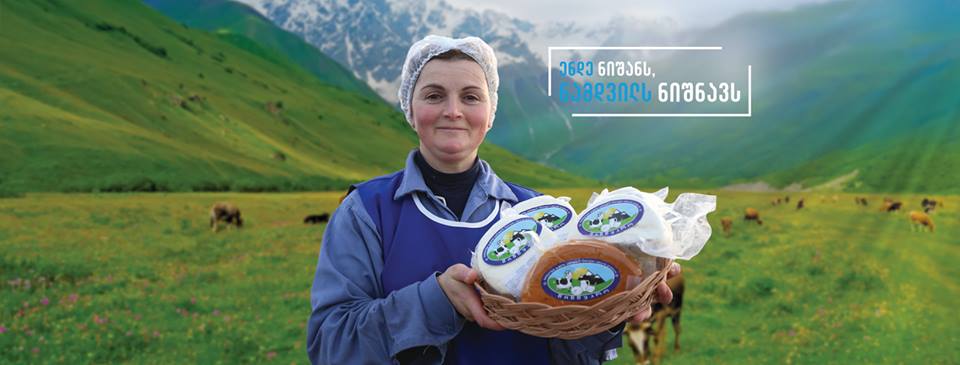
Seven dairy enterprises are using the Georgian Milk Mark: Milkeni Ltd Rustavi, KK; Tsintskaro + Ltd Tetritskaro, KK; Khiza Ltd Akhaltsikhe, SJ; Badri Gogoladze I.E Bolnisi, KK; Gocha Gagashvili I.E Telavi, Kakheti; Tsolak Grigorian I.E Ninotsminda, SJ; Karen Simonian I.E Akhalkalaki, SJ.
Six dairy enterprises are being audited: Imeruli Ltd Marneuli, KK; Zekari Ltd Terjola, Imereti; Tsezari Ltd Khulo, AJ& Tsalka KK; JTA Ltd Tsalka, KK; Ramaz Nazrashvili I.E Gori, Shida Kartli; Tanadgoma Gardabani, KK.
The products with the mark are available in Spar; Nikora; Zgapari; Fresco and Madagoni supermarkets’ chain.
Eleven additional dairy enterprises have already applied to use the mark.
Billboards of the mark are on Tsereteli Avenue, in Vake Tbilisi; Rustavi; Kutaisi and Akhaltsikhe.
Information per enterprise is uploaded on a www.georgianmilk.ge. This allows consumers to look up the products they are buying using a unique register number printed on the label.
GMA international marketing company has been conducting a national promotion campaign to introduce the mark to the public and retailers since the end of March. Facebook of the mark is active with more than 3,000 subscribers/consumers.
The Georgian Milk Mark is officially registered and serves to distinguish dairy products made from natural milk.
Follow the links on the Georgian Milk Mark: Ferma, Agrinews, Imedis Dila, Radio Marneuli, Marneuli TV, Georgiandairy.org, Agrokavkaz.ge, Interpressnews.ge, Ambebi.ge
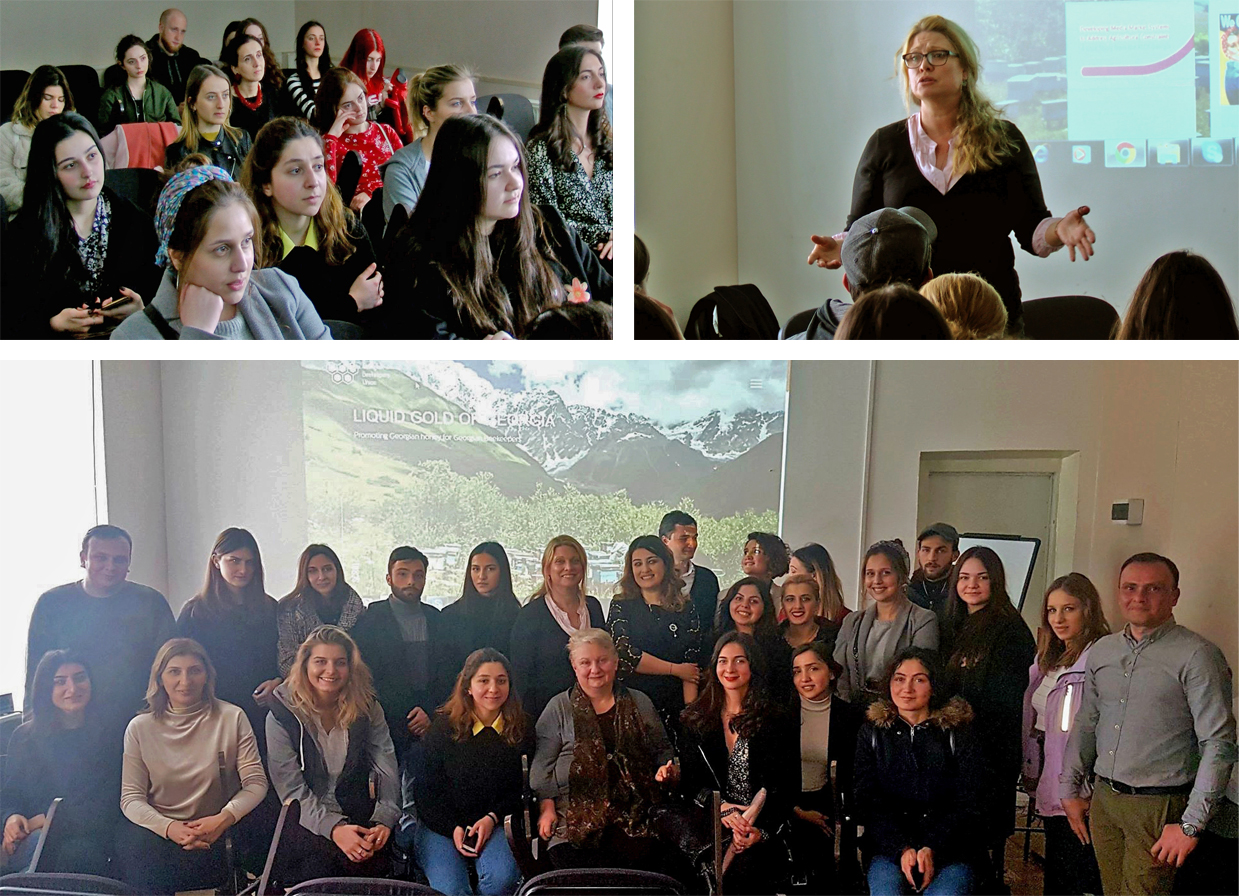
Up to thirty students of the agri journalism course at the journalism department attended a lecture given by the ALCP programme Team Leader Helen Bradbury in the state university. Agriculture and tourism; environmental protection, preservation and biodiversity; the honey, sheep and dairy sectors; Georgia’s rich cultural heritage and its main treasure - people/farmers with their strong traditions were the main themes of the lecture.
All the students highlighted that the lecture was inspirational, they did not know many things, found different perspectives of agriculture and environment and they will report about the themes in the future.
‘Agriculture is about people and you should do your work with your heart if you want people to be opened to you. Try to understand the process and choose your own path. Be different and always find something new that no one else can see.’ - Helen Bradbury, Team Leader of the ALCP programme.
Since spring fifty-three students have been learning agri journalism as a selective module for two hours/week, during the whole semester at the state university.
‘We see more and more reports about agriculture but it is not enough. Reporting about rural life, people and agriculture is very important and it is our and your responsibility to think about it and be more enthusiastic as you are future journalists or media managers.’ - Natia Kuprashvili, Head of the Journalism Resource Center.
Fourteen universities in Georgia, four in Armenia and one in Azerbaijan established or are establishing agri journalism module in their courses. 369 students have already studied the course.