By Helen Bradbury: Team Leader, Alliances Lesser Caucasus Programme
We are in an interesting conundrum. Gender in most places has been written-in to law. Bar a few notable exceptions, every country in the world, has varying degrees of success in applying universal suffrage. Fifty countries are signed up to the CEDAW convention (the UN’s Convention on the Elimination of all forms of Discrimination Against Women). On the CEDAW world map of Discrepant Government Behaviour Concerning Women, the countries shaded dark green which denotes ‘virtually no enforcement of laws consonant with CEDAW or such laws do not even exist’, are where you expect them to be and in fact they are relatively few. It is the next two categories which disturb, covering the vast majority of the globe, the mid and lighter green, where laws are partly or fully consonant with CEDAW but there is little effective enforcement or spotty enforcement of them and the issue is low priority or hit and miss. After the gains, the laws and ratifications of the last centuries it seems that we must tread very carefully indeed for we must counteract indifference, in which inertia and inactivity stop us moving forward.
In Britain in 1913 Emily Davison threw herself under the kings horse at the Epson Derby, women were in and out of prison under the cat and mouse act where they were let out to gain in strength after their relentless hunger striking and brutal force-feeding and then put back in again. They engaged in arson, attacked works of art. This was the fight for the vote for women in Britain, visible, violent and vehement. In 1928 they got franchaise equal to men. Whether you were fighting for or against, agreed or not, you cared, passionately.
Those of us who interest ourselves in activities concerning the development of equitable solutions to development problems, who are concerned with ensuring that both women and men benefit from strategies designed to impact the poor, have probably at some time in our dealings experienced a certain phenomenon. I was vastly reassured recently, if not slightly depressed, to see that even Hillary Clinton, one of the most powerful women in the world, had experienced it:
“I have been championing the rights of women and girls around the world and here at home for many years,” “and I got tired of seeing...foreign leaders, business executives, even senior officials in our own government...smile and nod when I raised these issues… ‘Oh right, I knew she was going to raise women and girls, I will just sit here and smile, it will pass, and then we’ll talk about really important things."
Hillary Clinton, Data2X Press Event, New York, January 12, 2015
Being Hillary Clinton probably guaranteed the smiles, in my dealings, in the course of programming and most notably with all levels of government, I have experienced some less sanguine reactions, but most often a shrug, an intake of breath, a glazing over, a good time to check the cell phone and a knowledge as she rightly points out that it will pass fairly soon, being as it is, as everyone has figured out, an add on. It is insidious in its passivity, there is no heat in the exchange as we are all of course in agreement, and the issue slips away, dissolves in inactivity.
How then do we keep it alive? How do we stop it being an add-on and counteract indifference? How do we make it real in a constructive way? How do we make sure it gets done?
Equitable solutions and women’s economic empowerment (WEE) which is what we work for on the ALCP, require hard work and they are difficult to do, but not because the means to achieve the solutions are complicated, they are in fact extremely simple, but they do require coordination, commitment, cooperation, and most of all persistence. Tools, procedures, operating mechanisms and strategy for ensuring women’s economic empowerment must be built in to the programme structure, adhered to and carried out every day as normal. They must be operationalized. The issue of indifference here noted in government could equally be applied to development. Not in ethos and intent, but in practice. In a recent literature review of measuring women’s economic empowerment, of the thirty projects reviewed only eleven had an indicator to measure the most basic of all WEE measurements; access to services. The primary recommendation in the review for projects to improve their WEE performance was to collect gender disaggregated data. This is just the bottom line.
We talk of complex issues, change pathways, negotiating ancient customs of how to measure agency over household income. Just doing the basics would be a great start and essential first step. Hillary Clinton is of course once more on the button with Data2X—a joint project, with the Clinton & Gates foundations, UN and others, to gather and start a gender data revolution, which will allow policymakers to recognize problems more clearly and create more informed policy. The first step is clear, we all know what to do, we just need to do it and keep doing it.
For more on operationalizing WEE in Alliances see: DCED Webinar Measuring Women's Economic Empowerment
Measuring Women's Economic Empowerment in Private Sector
Helen Bradbury is a development professional with a career spanning market system approaches to solving problems ranging from the welfare of working horses in Ethiopia to early economic recovery in post-tsunami Indonesia. She now manages Mercy Corps' flagship market systems development SDC funded Alliances programme in Georgia, and advises on M4P and women's economic empowerment. See www.aclp.ge for more details.
The Georgian documentary Jara was named as the Best Feature Film at the Wolves Independent International Film Festival 2018. Nature, heritage, environment, history, culture, ethnography, adventure, wildlife, indigenous cultures and social issues are the main themes of the festival which takes place in Lithuania.
It is the second award for Jara following Golden Green Award 2018 at the Deauville Green Awards International Film Festival, for the best production in the category of Sustainable Agriculture
Jara was premiered by EcoFilms in Tbilisi in 2017. The main backer of Jara was the Swiss Agency for Development and Cooperation (SDC) through the Mercy Corps Georgia implemented Alliances Caucasus Programme (ALCP) within a consortium of public bodies and conservation organizations including World Wildlife Fund and Caucasus Nature Fund.
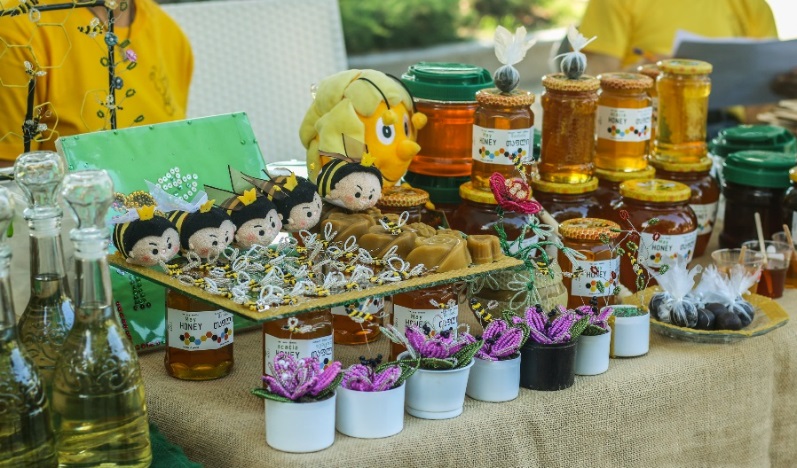
The annual Honey Festival was opened for the fourth time on August 11th on Batumi Boulevard and closed on August 12th in Batumi Botanical Garden. Up to 45 beekeepers from across Georgia once again presented their honey and by products for the festival visitors. Honey themed activities were held for children’s entertainment; visitors could see the ancient beehive at the special corner for jara beekeepers from Ajara and could taste different kind of honey from different parts of Georgia. Batumi Botanical Garden promoted Goderdzi Alpine Garden; live music kept the celebration spirit all day.
“Beekeeping is our family business. We started participating in the festival from the very beginning and it became a tradition. Each year we promote our products and each year we find new clients. This annual festival helps us to make our products more visible and popular” - Shorena Kezheradze, Khelvachauri municipality, Ajara.
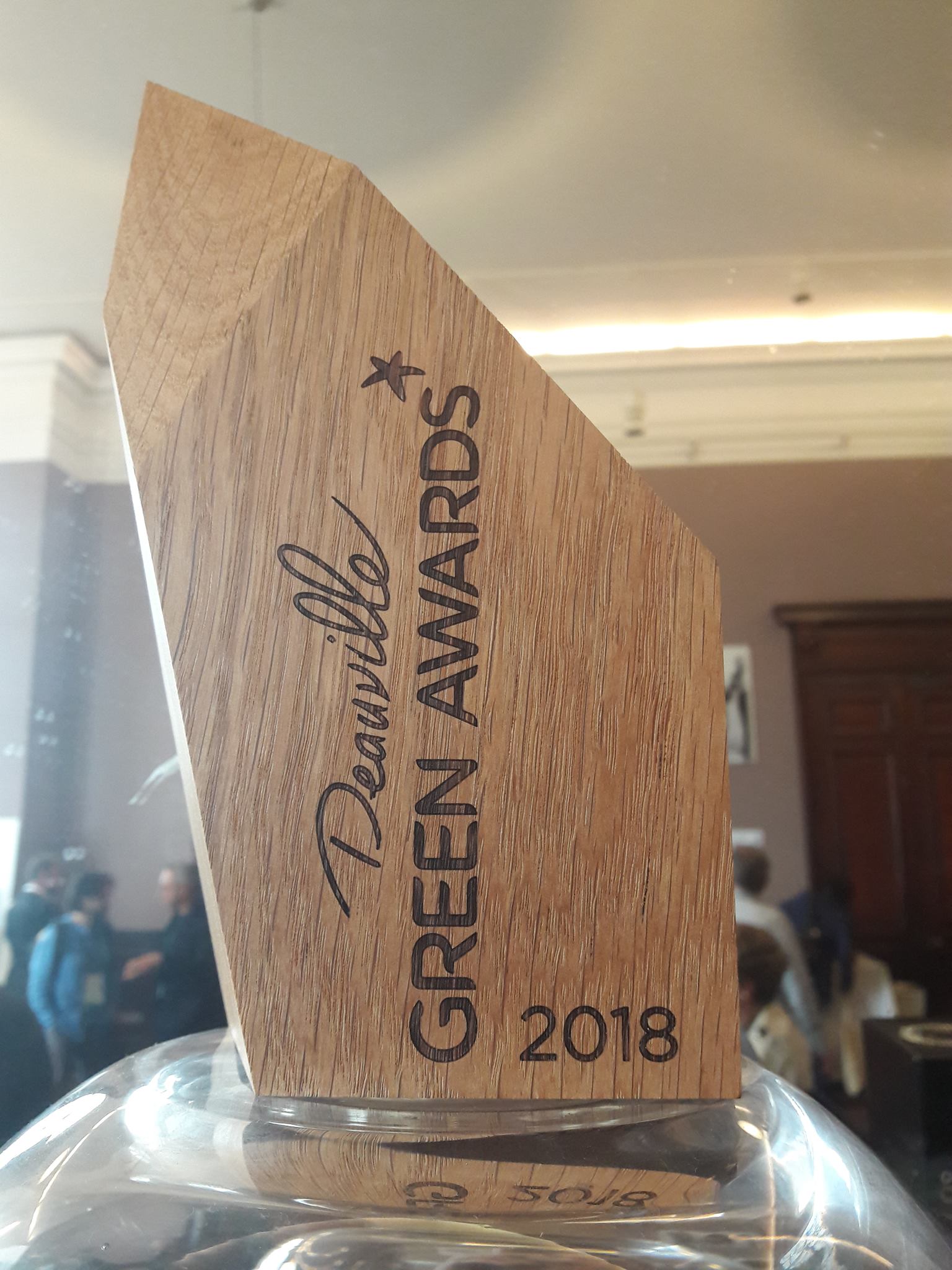
The Georgian documentary Jara has just won the Golden Green Award 2018 at the Deauville Green Awards International Film Festival, for the best production in the category of Sustainable Agriculture, the International jury selected the finalists in fourteen categories from four hundred and fifteen films produced worldwide. Jara was screened during the festival in Deauville in the presence of the professionals and the press.
The Deauville Green Awards is one of the most prestigious festivals in Green Film Production worldwide launched in 2012. For the last seven years, the festival’s mission has been to enhance information films, spots and documentaries on sustainability, eco-innovations and social responsibility. Furthering public understanding and education. Each year the festival draws five hundred films from five continents, with four hundred professionals of film in attendance.
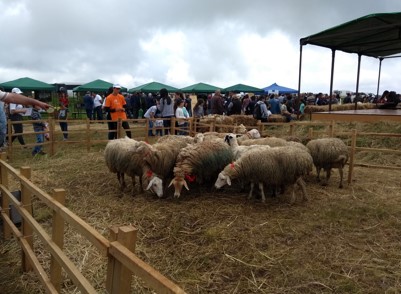
On Saturday, June 9 representatives of the ALCP team (www.alcp.ge) and a wool processor Tamar Tsikarishvili from Akhaltsikhe, Georgia attended the Sheep
Shearing Festival after being invited by SDC sister project SDA Armenia which took place in Syunik Animal Market, Syunik region. The festival aimed to promote sheep, local produce, traditions and culture of Syunik and Vayots Dzor regions (Please see the Link).
The festival included guest sheep shearer Danny Wilson from Great Britain who conducted master classes for festival participants and visitors.
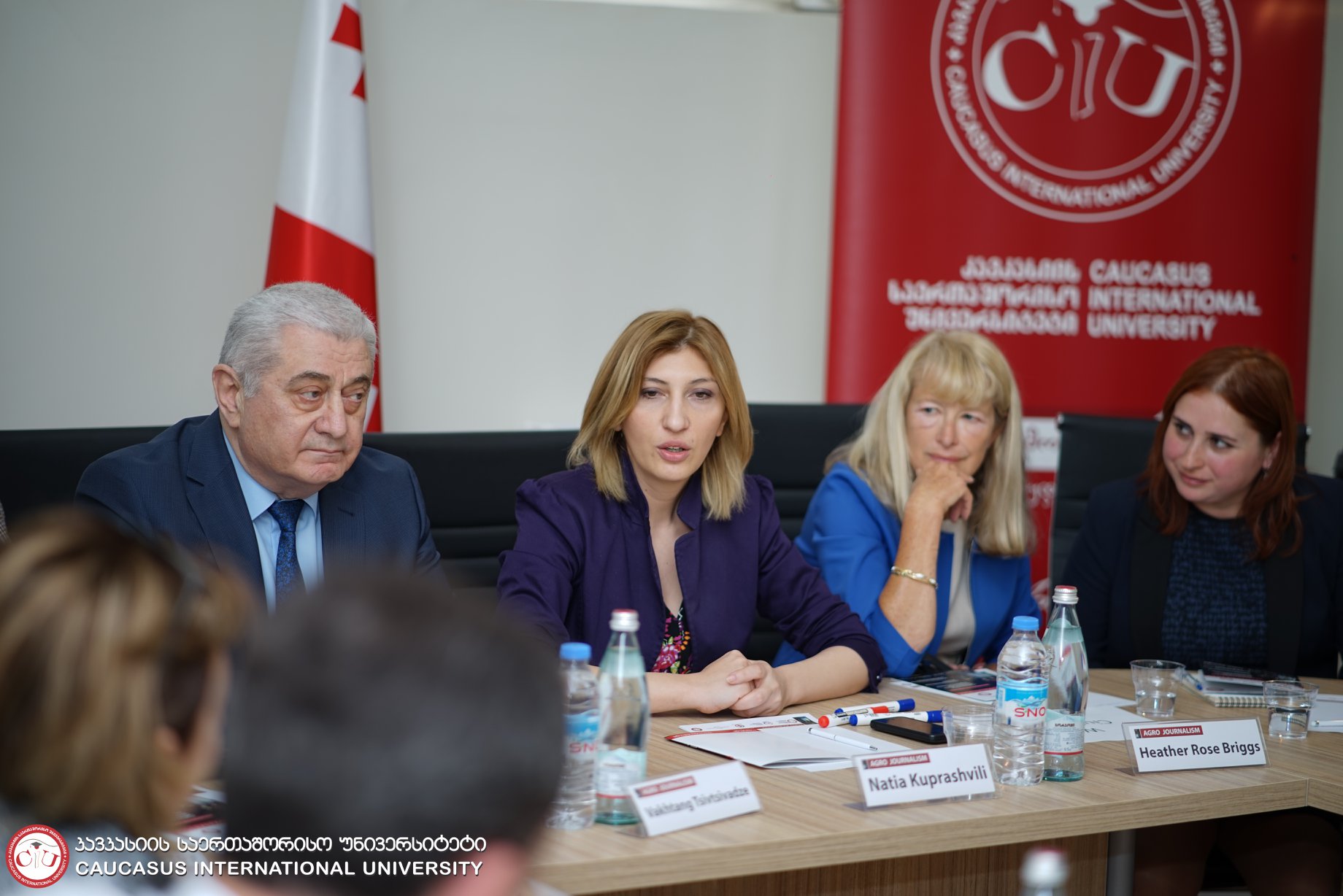
Knowledge is a power and the ALCP is committed to facilitating high quality agri information transfer to rural farmers strengthening the field of journalism in Georgia and Armenia.
On 25th-29th of April an international agricultural journalist was commissioned to deliver trainings to 11 Armenian TV and press journalists and 2 heads of the Department of Journalism of Armenian universities in the Caucasus International University in Tbilisi.
Follow the link of Imedi TV news on the event.
On April 16th-20th, 2018 the Alliances Caucasus Programme (www.alcp.ge) funded by the Swiss Agency for Development and Cooperation SDC and implemented by Mercy Corps in Georgia, hosted a study tour from the Arab Women’s Enterprise Fund (AWEF). The tour included Jordan Municipality Mayors, WEE coordinators and representatives from the Ministry of Agriculture of Jordan to share ALCP’s experience on Women Economic Empowerment integration through M4P approach and best practices used.