



By Helen Bradbury: Team Leader, Alliances Lesser Caucasus Programme
We are in an interesting conundrum. Gender in most places has been written-in to law. Bar a few notable exceptions, every country in the world, has varying degrees of success in applying universal suffrage. Fifty countries are signed up to the CEDAW convention (the UN’s Convention on the Elimination of all forms of Discrimination Against Women). On the CEDAW world map of Discrepant Government Behaviour Concerning Women, the countries shaded dark green which denotes ‘virtually no enforcement of laws consonant with CEDAW or such laws do not even exist’, are where you expect them to be and in fact they are relatively few. It is the next two categories which disturb, covering the vast majority of the globe, the mid and lighter green, where laws are partly or fully consonant with CEDAW but there is little effective enforcement or spotty enforcement of them and the issue is low priority or hit and miss. After the gains, the laws and ratifications of the last centuries it seems that we must tread very carefully indeed for we must counteract indifference, in which inertia and inactivity stop us moving forward.
In Britain in 1913 Emily Davison threw herself under the kings horse at the Epson Derby, women were in and out of prison under the cat and mouse act where they were let out to gain in strength after their relentless hunger striking and brutal force-feeding and then put back in again. They engaged in arson, attacked works of art. This was the fight for the vote for women in Britain, visible, violent and vehement. In 1928 they got franchaise equal to men. Whether you were fighting for or against, agreed or not, you cared, passionately.
Those of us who interest ourselves in activities concerning the development of equitable solutions to development problems, who are concerned with ensuring that both women and men benefit from strategies designed to impact the poor, have probably at some time in our dealings experienced a certain phenomenon. I was vastly reassured recently, if not slightly depressed, to see that even Hillary Clinton, one of the most powerful women in the world, had experienced it:
“I have been championing the rights of women and girls around the world and here at home for many years,” “and I got tired of seeing...foreign leaders, business executives, even senior officials in our own government...smile and nod when I raised these issues… ‘Oh right, I knew she was going to raise women and girls, I will just sit here and smile, it will pass, and then we’ll talk about really important things."
Hillary Clinton, Data2X Press Event, New York, January 12, 2015
Being Hillary Clinton probably guaranteed the smiles, in my dealings, in the course of programming and most notably with all levels of government, I have experienced some less sanguine reactions, but most often a shrug, an intake of breath, a glazing over, a good time to check the cell phone and a knowledge as she rightly points out that it will pass fairly soon, being as it is, as everyone has figured out, an add on. It is insidious in its passivity, there is no heat in the exchange as we are all of course in agreement, and the issue slips away, dissolves in inactivity.
How then do we keep it alive? How do we stop it being an add-on and counteract indifference? How do we make it real in a constructive way? How do we make sure it gets done?
Equitable solutions and women’s economic empowerment (WEE) which is what we work for on the ALCP, require hard work and they are difficult to do, but not because the means to achieve the solutions are complicated, they are in fact extremely simple, but they do require coordination, commitment, cooperation, and most of all persistence. Tools, procedures, operating mechanisms and strategy for ensuring women’s economic empowerment must be built in to the programme structure, adhered to and carried out every day as normal. They must be operationalized. The issue of indifference here noted in government could equally be applied to development. Not in ethos and intent, but in practice. In a recent literature review of measuring women’s economic empowerment, of the thirty projects reviewed only eleven had an indicator to measure the most basic of all WEE measurements; access to services. The primary recommendation in the review for projects to improve their WEE performance was to collect gender disaggregated data. This is just the bottom line.
We talk of complex issues, change pathways, negotiating ancient customs of how to measure agency over household income. Just doing the basics would be a great start and essential first step. Hillary Clinton is of course once more on the button with Data2X—a joint project, with the Clinton & Gates foundations, UN and others, to gather and start a gender data revolution, which will allow policymakers to recognize problems more clearly and create more informed policy. The first step is clear, we all know what to do, we just need to do it and keep doing it.
For more on operationalizing WEE in Alliances see: DCED Webinar Measuring Women's Economic Empowerment
Measuring Women's Economic Empowerment in Private Sector
Helen Bradbury is a development professional with a career spanning market system approaches to solving problems ranging from the welfare of working horses in Ethiopia to early economic recovery in post-tsunami Indonesia. She now manages Mercy Corps' flagship market systems development SDC funded Alliances programme in Georgia, and advises on M4P and women's economic empowerment. See www.aclp.ge for more details.
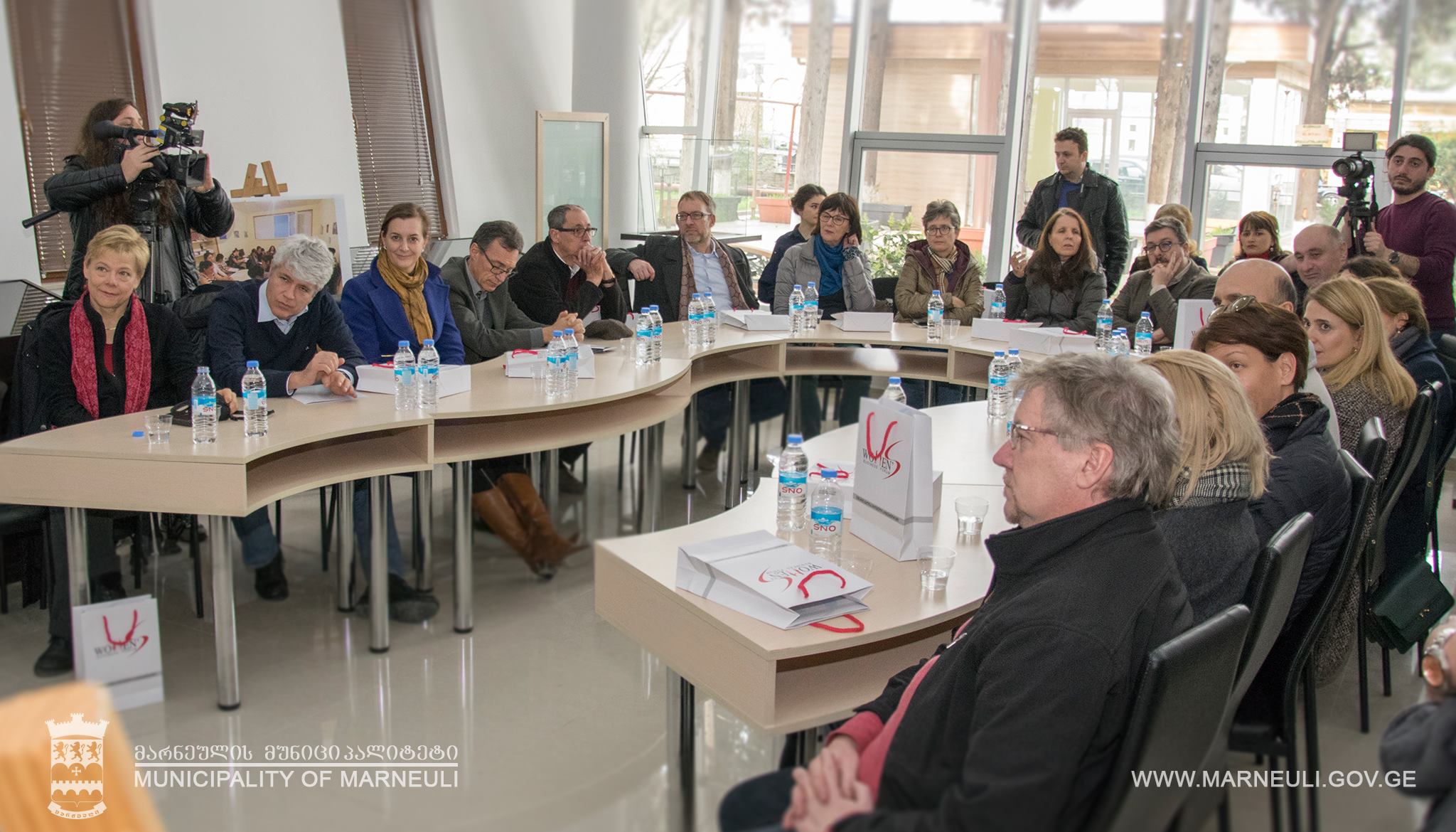
On March 16th, 2018 the Alliances Caucasus Programme (www.alcp.ge) funded by the Swiss Agency for Development and Cooperation SDC and implemented by Mercy Corps in Georgia, hosted eighteen Swiss Ambassadors and Mission Directors of Development Cooperation of Switzerland from Azerbaijan, Moldova, Ukraine, Tajikistan, Kyrgyzstan, Kazakhstan as well as representatives of the Federal Department of Foreign Affairs’ headquarters in Bern. The visit was part of a regional seminar hosted by the Swiss Ambassador to Georgia and Head of Mission Olivier Burki, Regional Director of the Swiss Cooperation Office in Georgia.
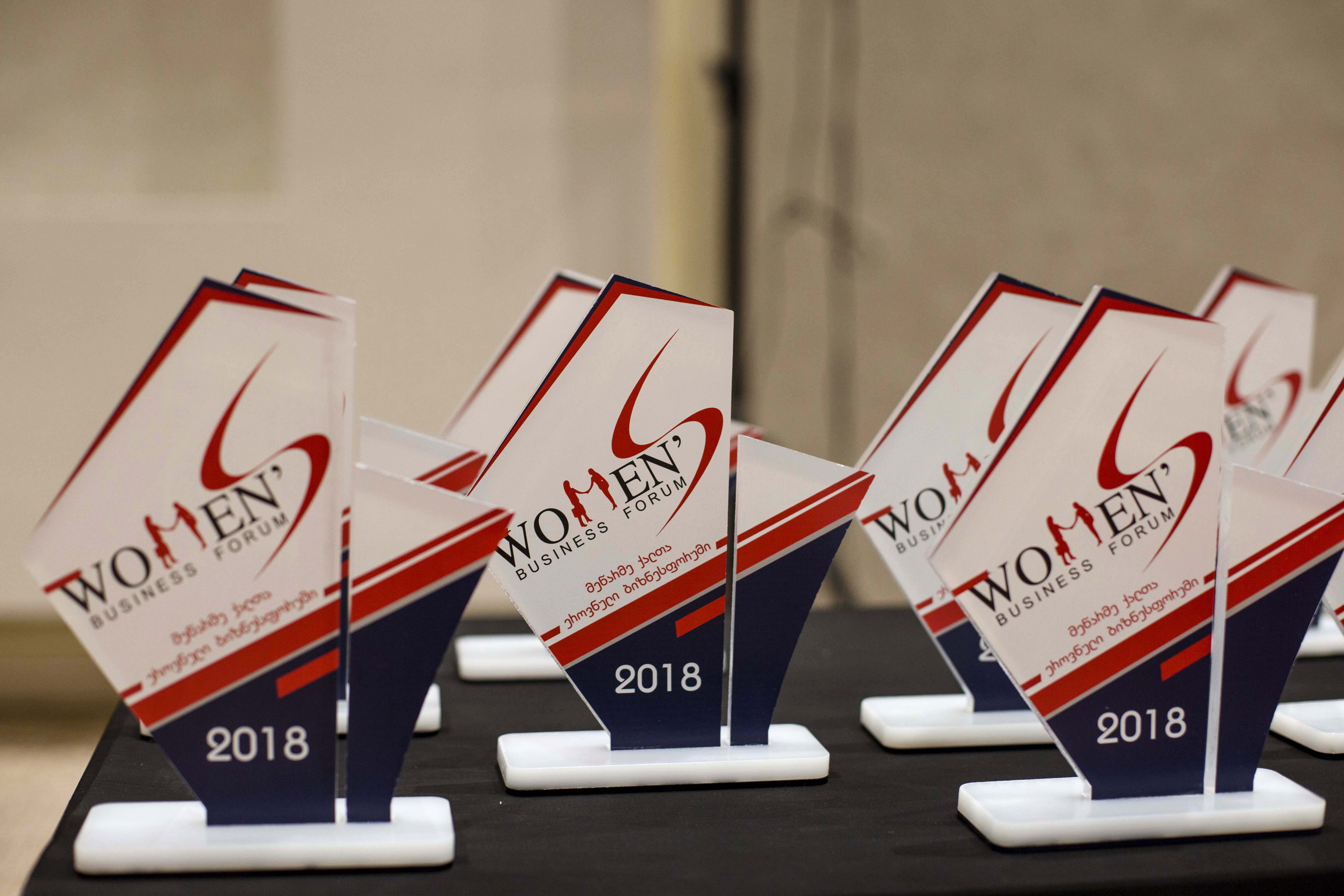
'This forum is the first steps where women economic empowerment starts from. The Ajara Chamber of Commerce and Industry (ACCI) is ready to support women entrepreneurs and startups. Through the Women’s Room of ACCI we will help them in preparing Business Plans, liaising new business contacts and follow up their way of achieving success in businesses’ - Tamaz Shavadze, Chairman of ACCI.
The National Women Business Forum for 300 participants including 180 women entrepreneurs from all regions of Georgia as well as public, private and civil sector organizations concerned with women’s entrepreneurship was held in Batumi on International Women’s Day, March 8, 2018.
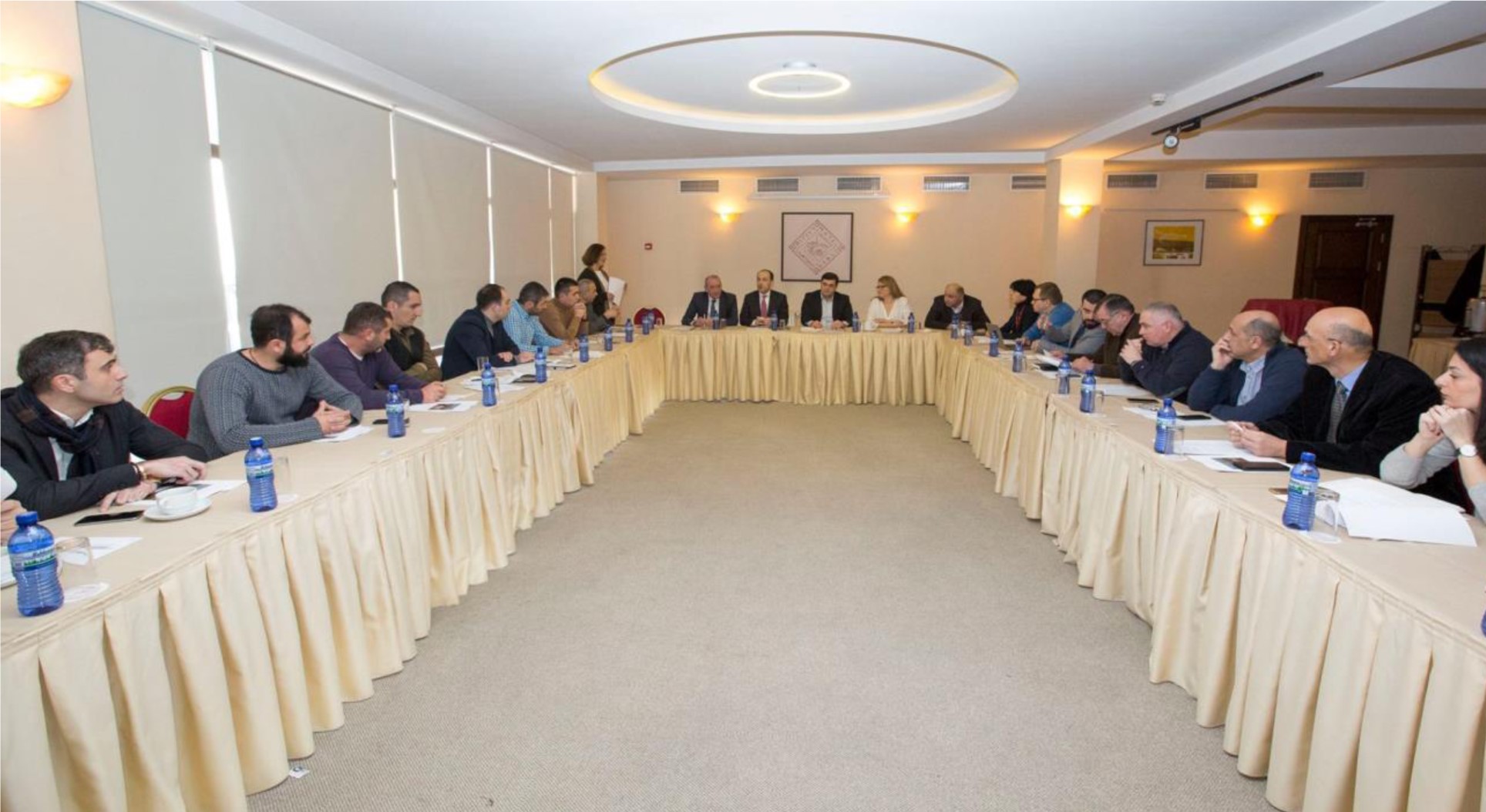
Management of Animal Movement Route (AMR) and Bio Security Points (BSPs) were the main topics discussed at the ALCP’s 9th Advisory Committee meeting on January 31st, 2018.
The Minister of Agriculture highlighted the importance of AMR and its Bio Security Points, their importance in underpinning animal healthcare and livestock export and the need for continued efforts to ensure progress in his opening speech.
‘Despite the positive dynamics there are still challenges and the governmental, non-governmental and private sectors should consolidate to overcome them’ - stated Mr. Davitashvili.
Existing gaps in management as well as the positive impact of BSPs were highlighted at the meeting. A short film: What shepherds think about the BSP’s available at ALCP/Videos allowed shepherds views to be presented in full.
All participants debated responsibility for managing the AMR and its infrastructure. Land overlaps, lack of resting areas, watering points at the Route, issues of concern for decades - were also discussed.
‘I think inclusion of self-governments in provision of BSPs’ operation is quite possible, local residents can be hired there and I’m ready to discuss this issue with the heads of local municipalities of Kvemo Kartli” - Grigol Nemsadze - The State Representative-Governor of KK Region.
As a result of this meeting the Regional Government of Kvemo Kartli and the Ministry of Economy have agreed to work together for final resolution of contested land on the route. Existing infrastructural gaps at BSP’s will be also solved in time for spring season, stated the Head of the NFA. With regards to BSP’s management and its future ownership the issue is clearly on the table for further facilitation and discussion with all interested parties to find the best solution and develop pertinent strategy going forward.
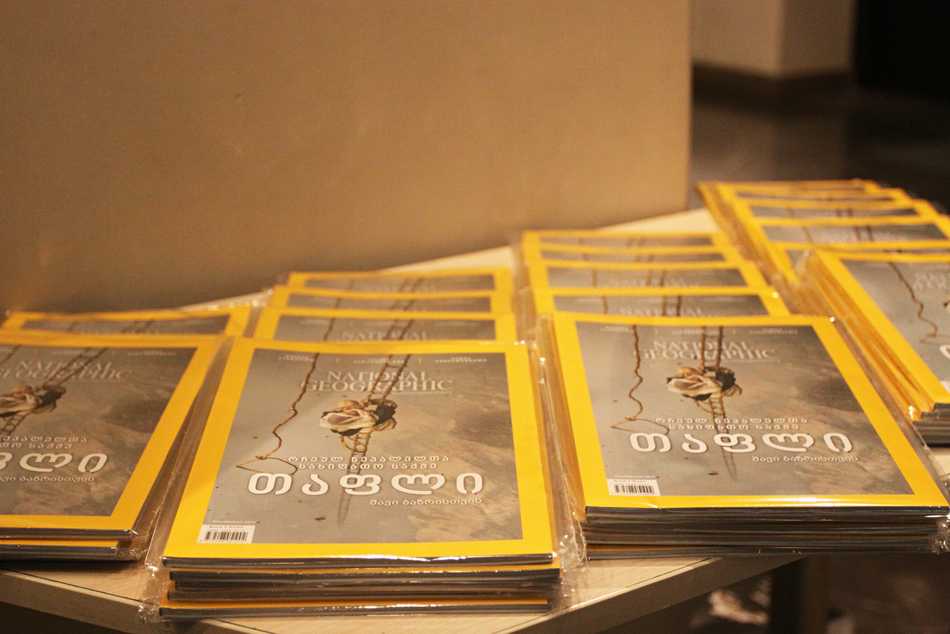
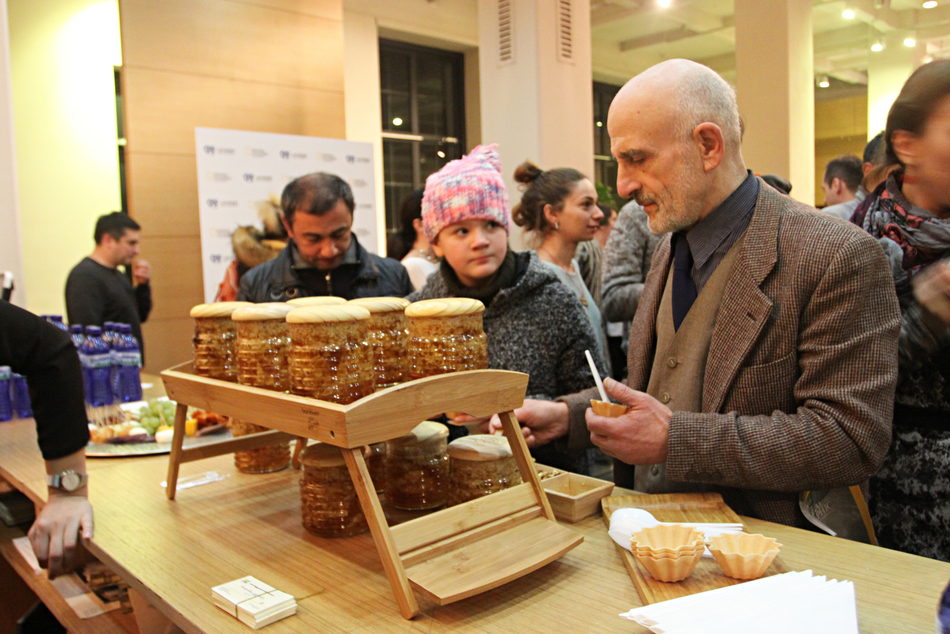
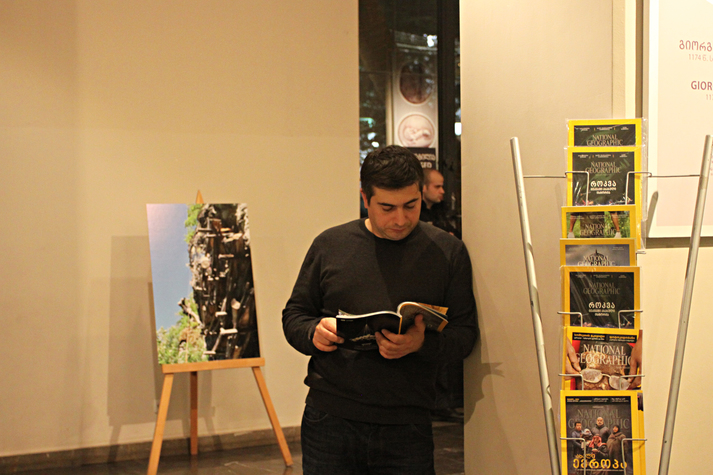
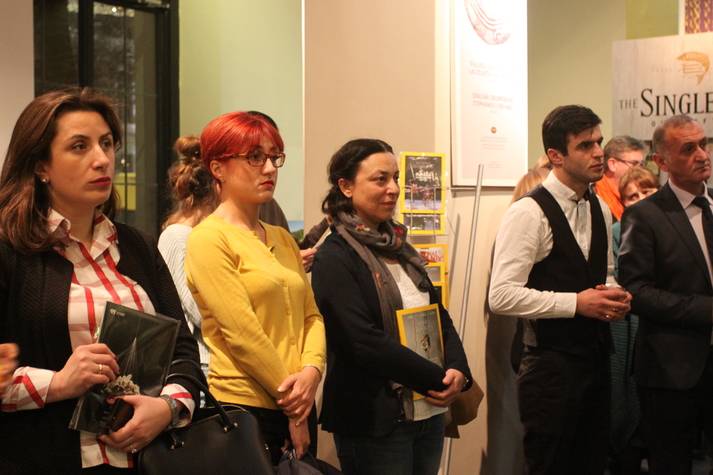
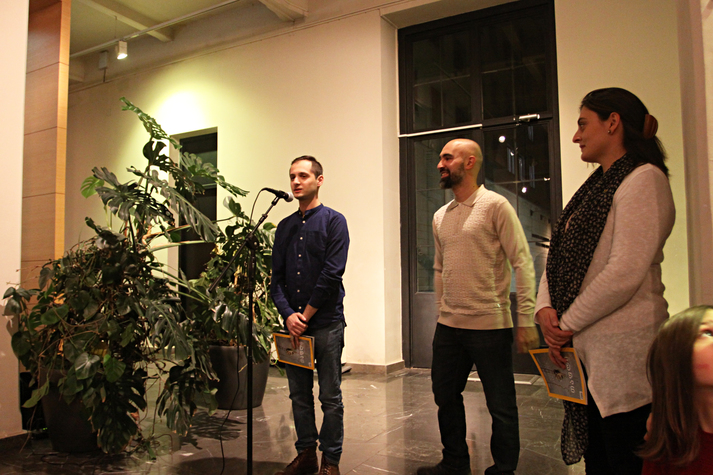
On December 5th the National Geographic Magazine Georgia presented its latest edition which features an article on Jara honey, at the National Museum of Georgia. About hundred guests tasted Jara honey and watched a special screening of the Jara movie, which had originally inspired the Georgian National Geographic to do the Georgian bee and honey story.
‘We were thinking about doing an article on Georgian Bees and honey, but we were not certain what direction to choose. One day, I got a call from Nika Tsiklauri, who invited me to the Jara premiere and while watching this truly fairytale, – I discovered the storyline we had been looking for’. – Natia Khuluzauri, Editor in Chief of the National Geographic Magazine Georgia.
The movie Director, Nika Tsiklauri, did a photo session of the Jara hives in Ajara. The magazine story writer, Irakli Pipia, enthusiastically worked on the topic and in addition came across documentation that showed that the Caucasian Gray Bees had been exported to the USA from Georgia atthe end of the 19th century.
‘This was a discovery none of us expected. Who knew that the Caucasian Bee had travelled so far? So, both authors, Nika and Irakli, did a great job and we have this beautiful elaborated story covering practically all aspects related to the Caucasian Gray Bee and honey they make’ – says Natia.
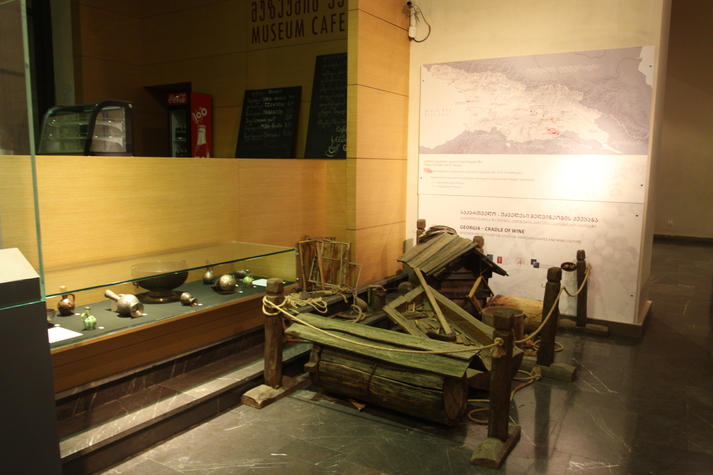
The event opened an exhibition of photos, Jara hives and beekeeping artifacts from Ajara. The Ajarian Beekeepers Business Association gave attendees a unique opportunity to taste recently harvested Jara wild honey from its members and personally explore traditional Jara hives and beekeeping handicrafts.
Photo Source: The National Geographic Georgia
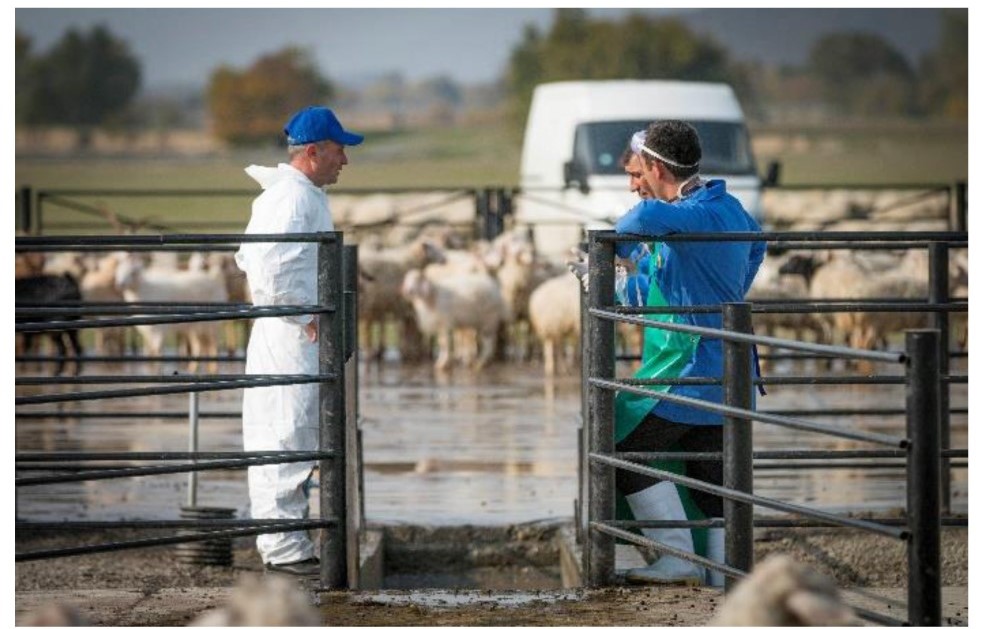
A new Bio Security Point (BSP) has been opened by the Minister of Agriculture of Georgia on in Kakheti, Telavi municipality. It is the fifth point now open on the
Animal Movement Route along with the BSP’s in Marneuli, Rustavi, Dedoplistskaro and Signagi municipalities and the third point built by the government in addition to the two points built under the ALCP as part of the activities agreed between the government and the project.
‘We are conducting complex works for supporting sheep and cattle sector development and one of the most important components of this work are identification ®istration of official Animal Movement Route and a proper management of it. We now have five BSP and this helps us to manage the movement of the livestock and their health control’ Mr. Davitashvili stated.
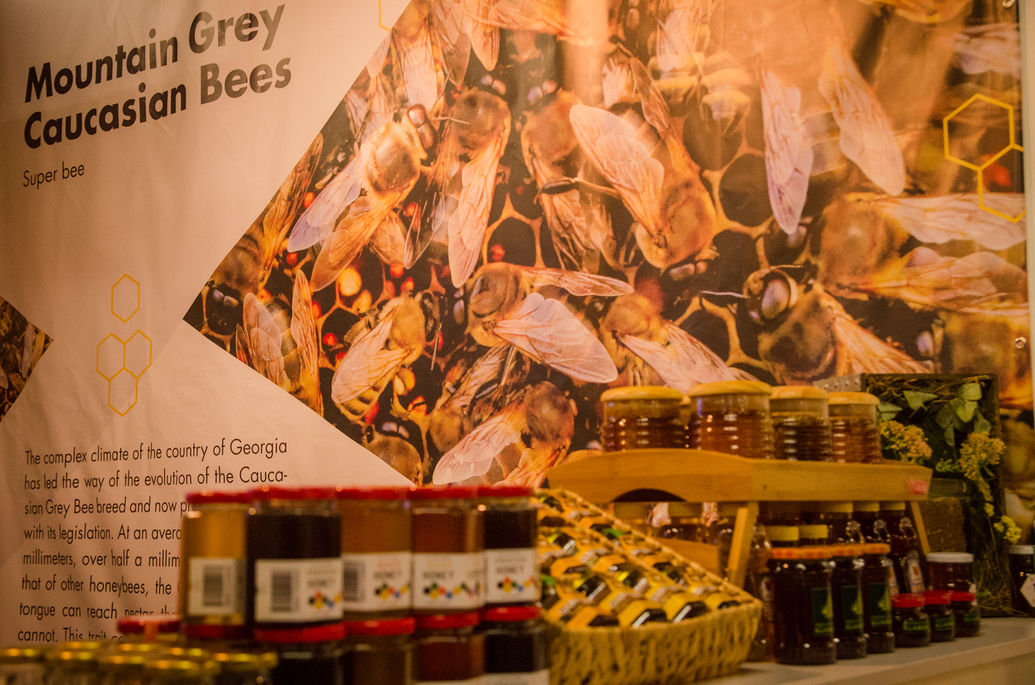
Georgia and the Georgian honey were successfully and widely promoted at the 45th Apimondia Congress in Istanbul, Turkey, by the Ajarian Beekeeping Business Association (ABBA). The Jara honey along with Chestnut and Acacia honey were the most popular among the honey importers from all over the world. Markets for Georgian honey seems diverse based on the high interest from countries such as France, Germany, Kuwait, Iran, Turkey and India among others. More to be found in the TV slot prepared by Ajara TV



