



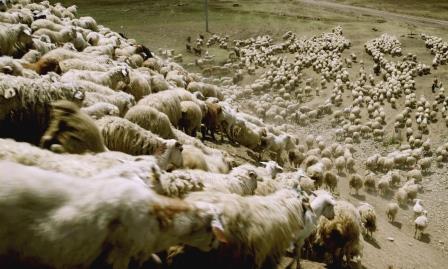
The villagers of Tsintskaro village have suffered for years from the twice yearly flow of more than 100,000 sheep, cattle, goats, donkeys, horses and shepherd dogs straight past their gates. The problem has been in impasse for years with no real ownership of the issue by the myriad actors involved. Now, the local government has spearheaded the movement to solve the problem calling together support from a group including the MOA, MOE, the Regional Government and Shepherds Association which has been working for three years to improve coordination and bring the matter of the Animal Movement Route to public attention.
Transhumance is a major part of the livestock system for sheep and to a lesser extent cattle in Georgia. Approximately 300,000 animals move twice yearly, up to summer pasture and back down to winter pasture on long established routes in spring and early autumn. For residents of Tsintskaro Village, Tetritskaro municipality this has meant living with a three week long flood of animals moving through the village. The route usually passes around settlements but a rocky ravine has meant that there was no access for the flocks other than the main road through the village. The obstruction, noise and dirt makes life intolerable for the villagers who can barely leave their homes and it is far from pleasant for the Shepherds and animals themselves as they are harassed by beeping cars as they move through flock after flock as quickly as they can.
The issue was recently publicized in the Eco Films Documentary ‘The Road’ (please follow the link) which has further publicized the plight of the village, the problems encountered by the Shepherds and the importance of the route and the movement of animals for the agricultural sector in Georgia. Luckily excellent coordination, the result of years of facilitation between local government, regional government, relevant Ministries, the private sector and the Shepherds Association through a regional Advisory Committee, has led to the commencement of work on a 4150 meters long, bypass route.
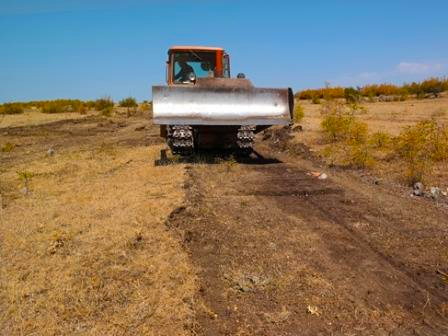
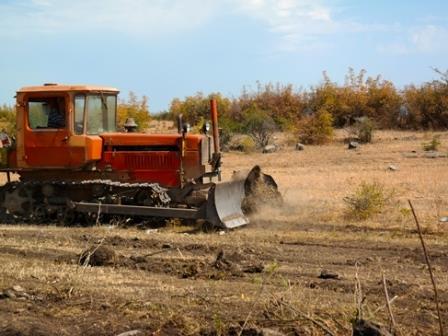
The work will include removing vegetation and establishing a road through the rocky ravine as well as signposting the route and fencing crop land to protect it from the herds. The work is expected to be completed by early October hopefully in time for the winter migration back down from the high pastures. An opening ceremony will be held to which media and all those involved in making the project happen will be invited. The solution to the Tsinskaro Problem which was considered for years one of the most intractable problems in the wider context of the AMR will give hope to many and marks the beginning of a regeneration of the AMR, a vital lifeline of the livestock system in Georgia.
A new project “Closer to Nature” was launched by Batumi Botanical Garden facilitated by ALCP AJ to promote 165 school student’s involvement in biodiversity and environmental protection activities.
The Memorandum of Understanding was signed between the Minister of Agriculture, the National Food Agency and SDC funded, Mercy Corps Georgia implemented ALCP on March 31st 2015. Within the framework of this memorandum ALCP will facilitate the building of two Bio-security yards with water points on the Animal Movement Route in Kvemo Kartli region, another three Bio-security yards will be financed from the State Budget.
The advisors from 5 municipalities of Ajara were trained on how to increase women participation in community meetings. Following the training facilitated by ALCP AJ, they worked with the Village Representatives and as a result of their activities, the attendance of women in these meetings has increased by 10-15%.
Very soon the Kvemo Kartli Region will have a new regional mechanism for Disaster Risk Reduction implemented by Local municipalities and the Kvemo Kartli Governor’s office. The Governor of Kvemo Kartli Paata Khizanishvili discussed this topic with the Gamgebelies of the region, deputy governors, the Mayor of Rustavi City and representatives of Alliances Lesser Caucasus Programme (ALCP) on March 11, 2015. The importance of regional coordination and the necessity of creating working groups in all municipalities were highlighted during the meeting.
The Advisory Committee was established in Ajara, which is supposed to be a forum for regional players representing national, local and regional government, civil society and the private sector to tackle key issues in agriculture sector. The participants discussed the role of the Self-governments in Disaster Risk Reduction, wildlife related issues in the region and also clarified the functions of the newly formed Municipal DRR Working Group in five municipalities of Ajara.
A kindergarten was opened on February 17th in Boslebi Village, Dmanisi municipality as a result of facilitation by the Dmanisi Women’s Room. The Kindergarten will serve 30 children not only Georgians from Boslebi Village but also from neighbor Kakliani Village which is mainly inhabited by Azeris. Four local women will be employed there.



