



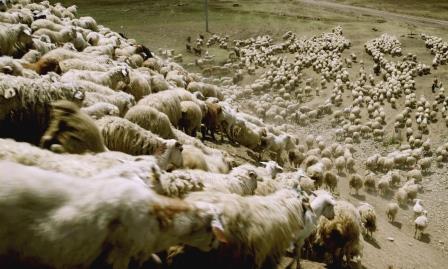
The villagers of Tsintskaro village have suffered for years from the twice yearly flow of more than 100,000 sheep, cattle, goats, donkeys, horses and shepherd dogs straight past their gates. The problem has been in impasse for years with no real ownership of the issue by the myriad actors involved. Now, the local government has spearheaded the movement to solve the problem calling together support from a group including the MOA, MOE, the Regional Government and Shepherds Association which has been working for three years to improve coordination and bring the matter of the Animal Movement Route to public attention.
Transhumance is a major part of the livestock system for sheep and to a lesser extent cattle in Georgia. Approximately 300,000 animals move twice yearly, up to summer pasture and back down to winter pasture on long established routes in spring and early autumn. For residents of Tsintskaro Village, Tetritskaro municipality this has meant living with a three week long flood of animals moving through the village. The route usually passes around settlements but a rocky ravine has meant that there was no access for the flocks other than the main road through the village. The obstruction, noise and dirt makes life intolerable for the villagers who can barely leave their homes and it is far from pleasant for the Shepherds and animals themselves as they are harassed by beeping cars as they move through flock after flock as quickly as they can.
The issue was recently publicized in the Eco Films Documentary ‘The Road’ (please follow the link) which has further publicized the plight of the village, the problems encountered by the Shepherds and the importance of the route and the movement of animals for the agricultural sector in Georgia. Luckily excellent coordination, the result of years of facilitation between local government, regional government, relevant Ministries, the private sector and the Shepherds Association through a regional Advisory Committee, has led to the commencement of work on a 4150 meters long, bypass route.
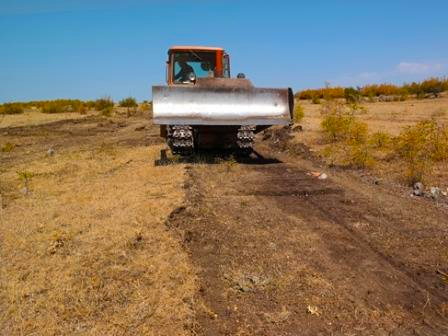
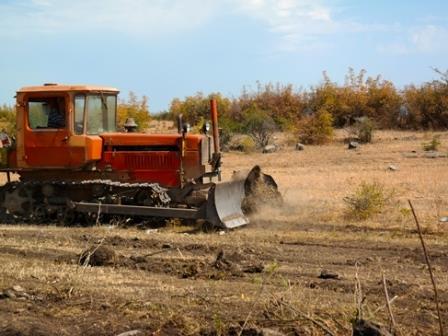
The work will include removing vegetation and establishing a road through the rocky ravine as well as signposting the route and fencing crop land to protect it from the herds. The work is expected to be completed by early October hopefully in time for the winter migration back down from the high pastures. An opening ceremony will be held to which media and all those involved in making the project happen will be invited. The solution to the Tsinskaro Problem which was considered for years one of the most intractable problems in the wider context of the AMR will give hope to many and marks the beginning of a regeneration of the AMR, a vital lifeline of the livestock system in Georgia.
A few days ago all Self-Governing cities and municipalities in the country received a recommendation from the Ministry of Regional Development and Infrastructure to appoint an advisor on Gender Equity in each one to support implementation of the Law on Gender Equality 2010 and the action plan.
Two cases of Anthrax were identified in Tsalka Municipality during August 2013. According to the NFA representative Jemal Dekanadze, one cow died due to contracting Anthrax in Beshtasheni Village, Tsalka on August 8th. A blood test sent to Tbilisi Veterinary laboratory was confirmed positive for Anthrax. However, as reported by the Local Independent Vet from Tsalka Municipality, about 5 heads of dead cattle with clinical signs of Anthrax that were not laboratory tested were also observed in the local farms of the village.
Two cows died and a man has been infected due to contracting Anthrax in Patara Toneti Village, Tetritskaro Municipality. According to the representative of the NFA – Shota Poilarashvili the first cow died on July 17th, although the blood samples for laboratory testing were taken only by July 26th. During ten days the infected carcass had been abandoned in the ravine of the village.
Following on from the meeting with Shorena Bziava on May 21st in Kutaisi, Alliances KK met with Davit Narmania, the Minister of Regional Development and Infrastructure of Georgia. The main purpose of the meeting was introducing the Minister with Women’s Room, a new municipal service in Dmanisi, Tetritskaro and Tsalka municipalities, facilitated by the Alliances KK programme. Mr. David was informed about the main idea of WR and the services offered there. The information about the activities, the events carried out and the number of visitors since the establishment of WRs – were also overviewed. GENDER GUIDELINS for VILLAGE REPS with flyers of Women’s Room and Newsletter were presented and discussed.
Two cows died due to contracting Anthrax in Useinkendi, Karabulakhi Community, Dmanisi municipality on 13th May 2013. As the deputy of Gamgebeli Dato Petviashvili stated, a blood sample was taken from only one dead cattle and Tbilisi Veterinary Laboratory has subsequently confirmed the animal death was caused by Anthrax. The local government put Karabulakhi under quarantine for two weeks. The NFA commenced mandatory vaccination in the village and approximately 250 heads of livestock were vaccinated.
On 21st of May a meeting was held with Shorena Bziava, Gender Equality Council secretary at Georgian Parliament in Kutaisi. Alliances KK representatives introduced the programme Gender activities - a new municipal service Women’s Room and Guidelines for the Village Reps.



