The first settlement of Svans into Kvemo Kartli took place in 1987. This is when the Svans from landslide-affected Chviberi (higher Svaneti) were resettled in Dmanisi, in the houses built under a government programme. Svans started to introduce their style of life in Kvemo Kartli and establish strong communities in Kvemo Kartli.
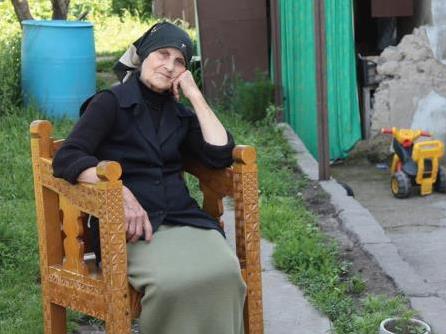
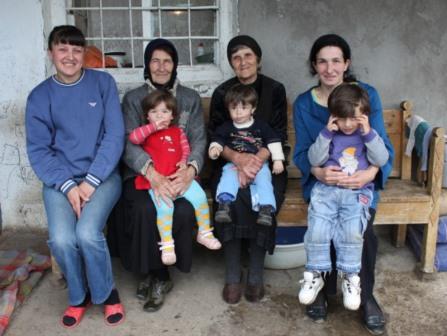
Natela Argvliani and her family are eco-migrants from the village of Etseri in Mestia district; the family moved to Tsalka in 2003 under a government programme. She is the head of the family based on her age. The programme provided some funding for houses and the family managed to purchase a modest two-storey house where Natela lives with her son Nino Kvitsiani her daughter-in-law and her grandchildren who are twins. Natela also has a daughter, Lela, who is married to a Tbilisi resident and lives there. She visits her mother with her husband and son and stays for long periods at Natela’s house as was the case during our visit.
Natela’s daughter-in-law, Nino Kvitsiani lives in Tsalka with Natela. This is not the first displacement for her. Her parents left Svaneti not long before the Abkhazia war. For 7 years the family lived in Gulripshi until they had to flee again — not avalanches but war.
Nino teaches English at a local school and also gives private classes. She married when she was over 30, had already graduated university in Tbilisi and had a job. In addition to Georgian, Nino speaks good Russian and English, has her own opinions about life and her own judgment. She is not very satisfied with life in Tsalka. In her opinion, the town is very scattered from in ethnic standpoint with every group living autonomously and having little interaction with the other groups. One can assume that the cultural life of Tsalka is somewhat narrow for Nino but she does not say this explicitly. Nino is the breadwinner of her large family. She has authority and deliberates upon household strategies. Her husband has not worked for a long time.
Other relatives often visit their family. Natela’s aunt, Margarita Kordzaia, was visiting the family during our visit. Margarita lives in Dmanisi but often comes to visit her children who live in Tsalka and stays at Natela’s place for long periods. Margarita also hails from Svaneti. Young people, as well as the elderly, are unanimous in thinking that it is easier to live in Kvemo Kartli than in Svaneti. That said, however, Margarita and Natela miss their native region very much. They have not been there for several years now but, out of modesty and self-sacrifice, do not voice their wishes giving priority to the children’s opinions and, possibly, accepting the likelihood that they may never be able to see Svaneti again. However, Natela, for example, is intensively involved in household affairs, helps with the raising of her grandchildren and makes, clearly, a not-insubstantial contribution to the household income with her monthly pension.
As Nino works mainly as a teacher, there is no one to take care of the cows and so for this reason, the family has just two with the milk used mainly for their own consumption. Nino told us that they could if they wanted to hire help for milking the cows which is currently handled by Natela, as the work is poorly paid and affordable, paid at ten Lari a month per cow milked morning and evening. 10 Lari in the village is good money and it’s important for them. There is enough milk to make cheese to sell. A blue plastic barrel in which the cheese is stored can be seen outside the house. Cheese is stored in the barrel through the summer and, when the container is full, they close it tight in order to store and sell the cheese in winter when prices are higher. Cheese is also used for barter exchange for other goods and services. Thus, cheese can be referred to as local currency.
In addition to dairy products, potatoes and hay are other sources of income for the family and for people locally. The production of potatoes for other than household consumption, however, requires larger tracts of land and not every resident owns such territory. Producing hay, too, is labour intensive both for home consumption and for sale and requires mowing, drying, gathering and storage or loading for delivering to buyers and selling. So the women look after the cows and make cheese and this daily work feeds the families and is the main source of income for this family and for almost everyone else here.
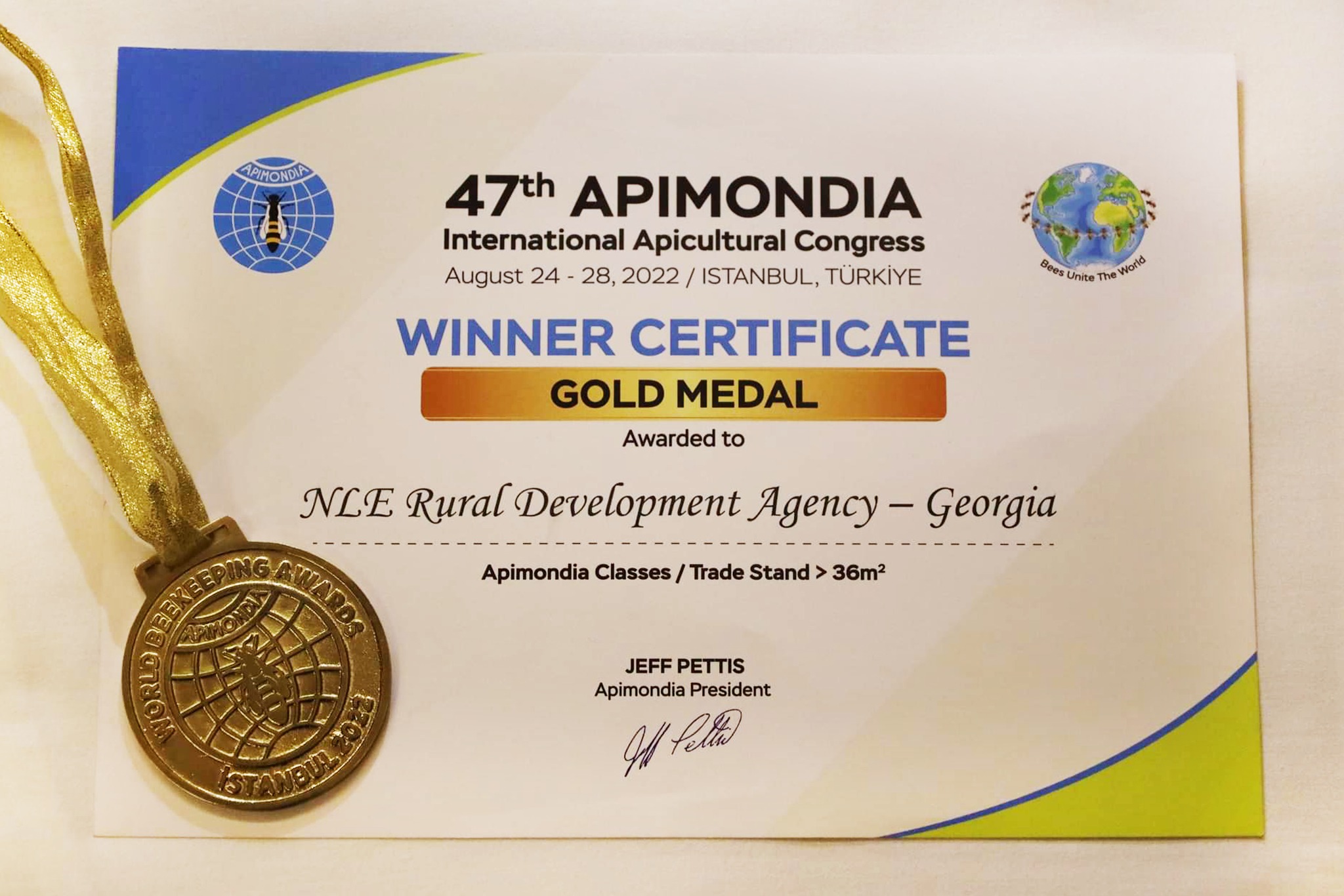
The Rural Development Agency (RDA), representing Georgia at the 47th Apimondia Congress 2022 in Istanbul, Turkey, was awarded a Gold Medal for outstanding design of a trade stand in the 36 square meters category. Georgia was selected from among twelve other nominees.
This year was distinguished by the strongest ever representation of Georgian beekeeping at the Apimondia Congress. Now it is the third time that Georgia has attended. Eight honey producing and exporting companies exhibited on the winning Georgia stand, showcasing honey, queen bees, and other beekeeping products including cosmetics.
The congress proved highly profitable for the Georgian representatives in establishing linkages, potential partnerships and experience sharing with beekeeping associations the Beekeeping Association of Slovenia, the Slovak Beekeepers Association and the Turkey Beekeepers’ Association. The potential for Jara honey to apply for Fairtrade certification was discussed with Fairtrade International representatives. Representatives and judges of the London Honey Awards also visited the Georgian stand. A few Georgian companies have won silver and bronze at the award in 2022. A strong representation to the third London Honey Awards in 2023 by the Georgian Beekeepers Union members will be facilitated by the programme.

The 47th Apimondia Congress 2022, the most significant event in beekeeping worldwide, will take place from 24th to 28th August in Istanbul, Turkey. For the third time and with the strongest representation to date, the Georgian Beekeepers Union (GBU) and eight member companies will showcase the Georgian honey sector with the full financial sponsorship of the Rural Development Agency (RDA) under the Ministry of Environmental Protection and Agriculture of Georgia (MEPA).
The eight honey producing and exporting companies who will exhibit different types of Georgian honey, including, bio Jara honey are: KTW Agro Keda, Rukhi Queen, Geo Natural, Cooperative Racha Natural Products, Api Geo, Tapli Sakhlshi, Cooperative Ska, Ska-Kodala.
A short movie on Georgian beekeeping produced for the event will be showing in the Georgian booth. An e-poster presentation in the Beekeeping Economy section in the academic conference side of the Expo entitled A Revival of Georgian Traditional Beekeeping – Jara Beekeeping will be showcased as well.
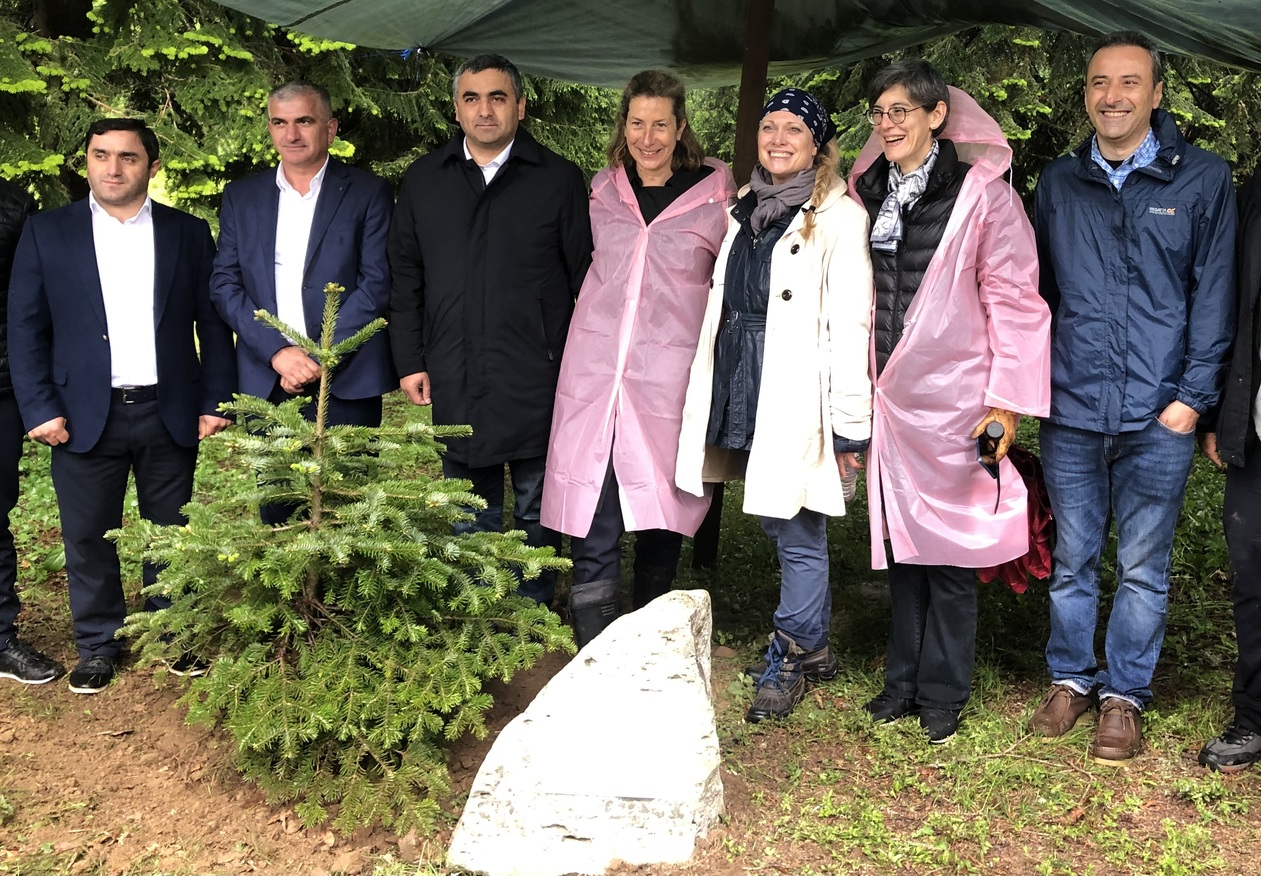
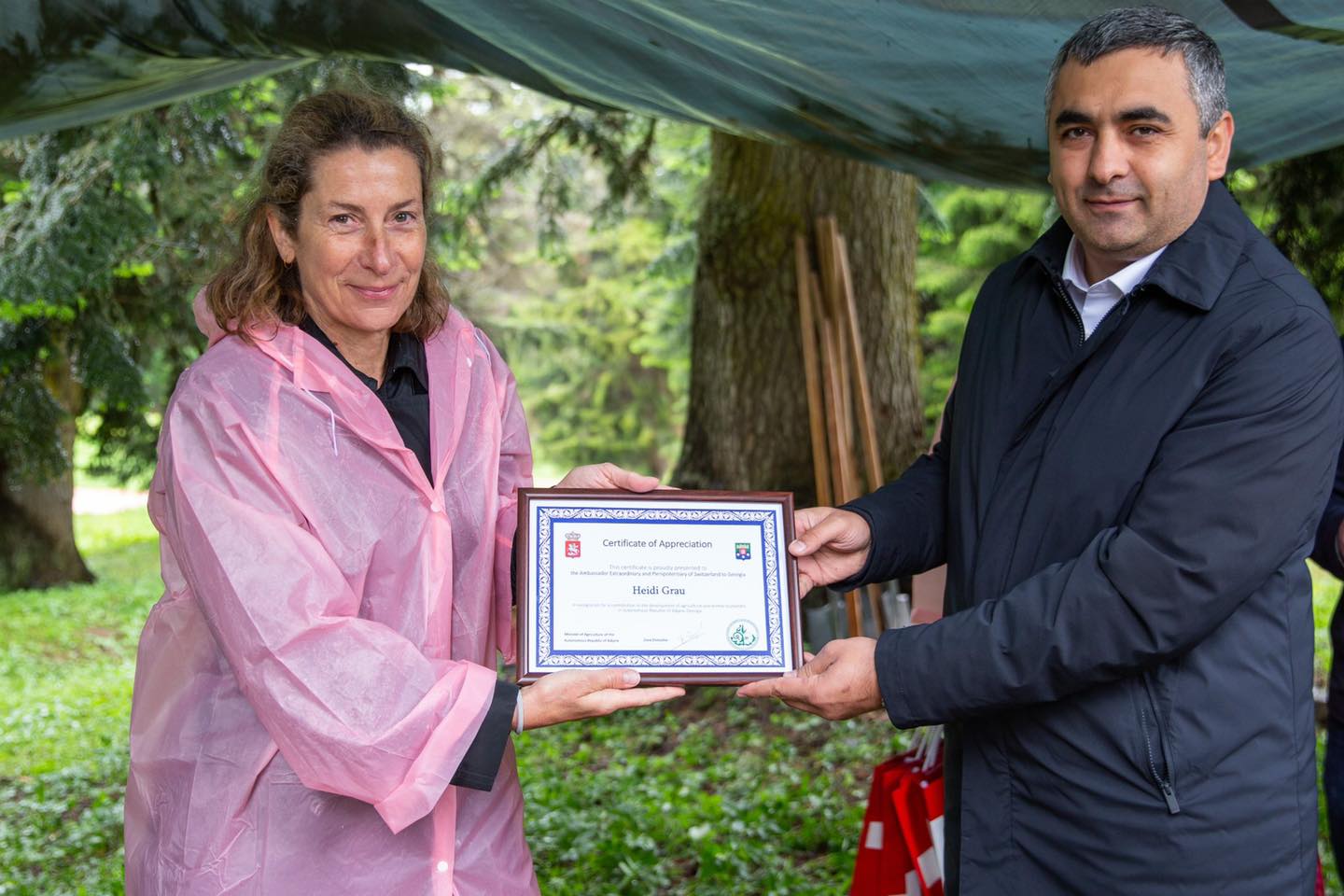
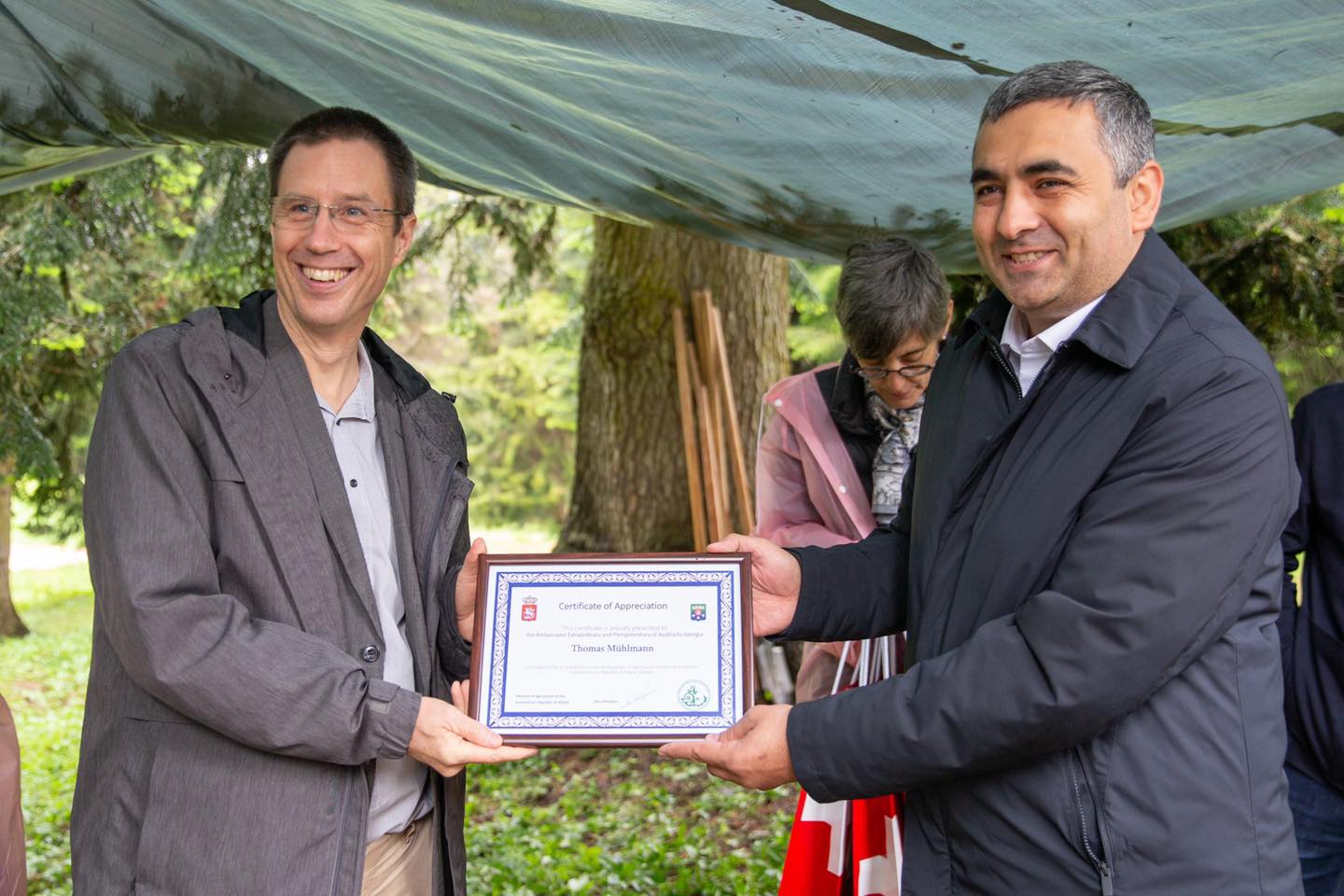
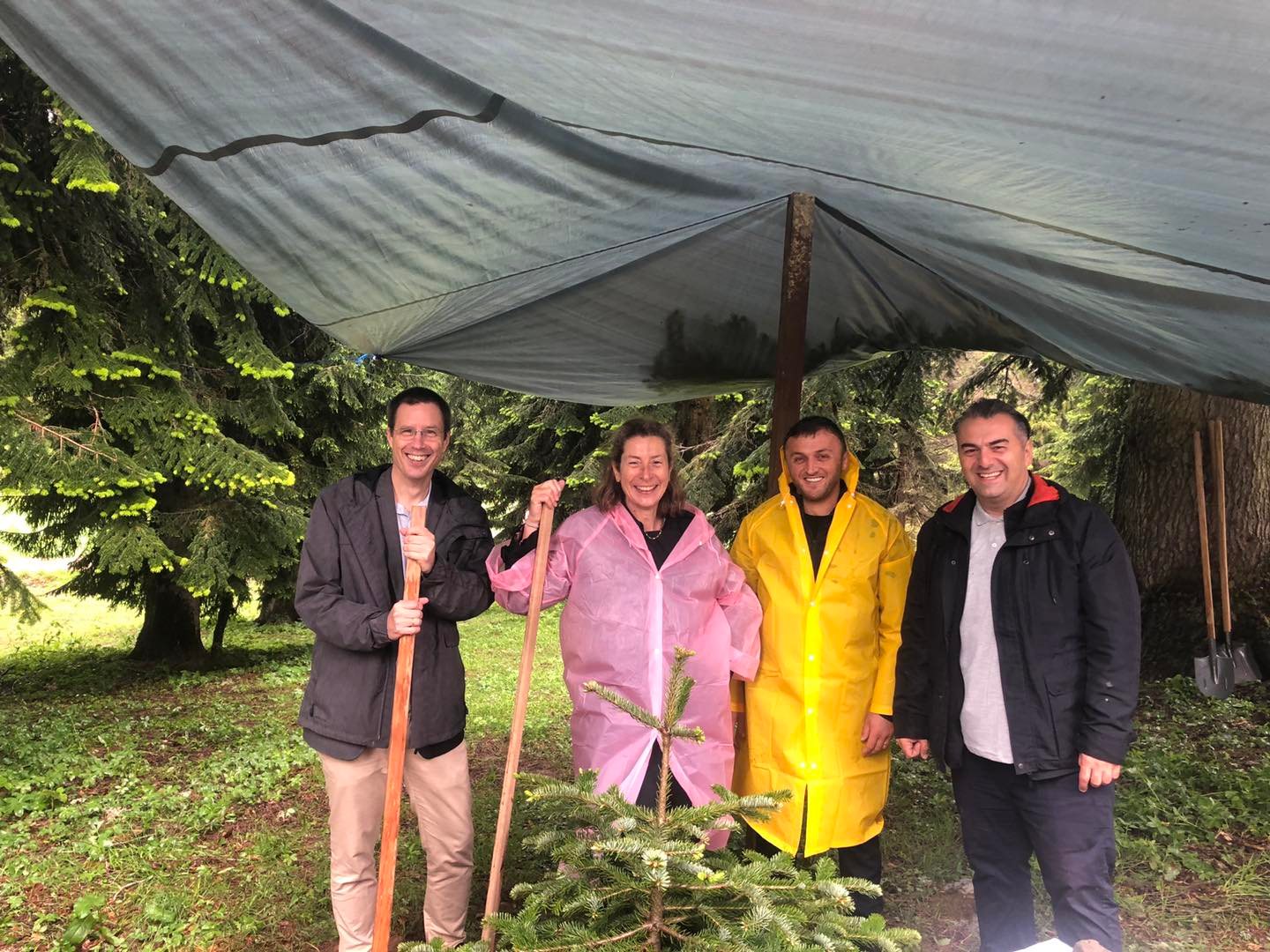
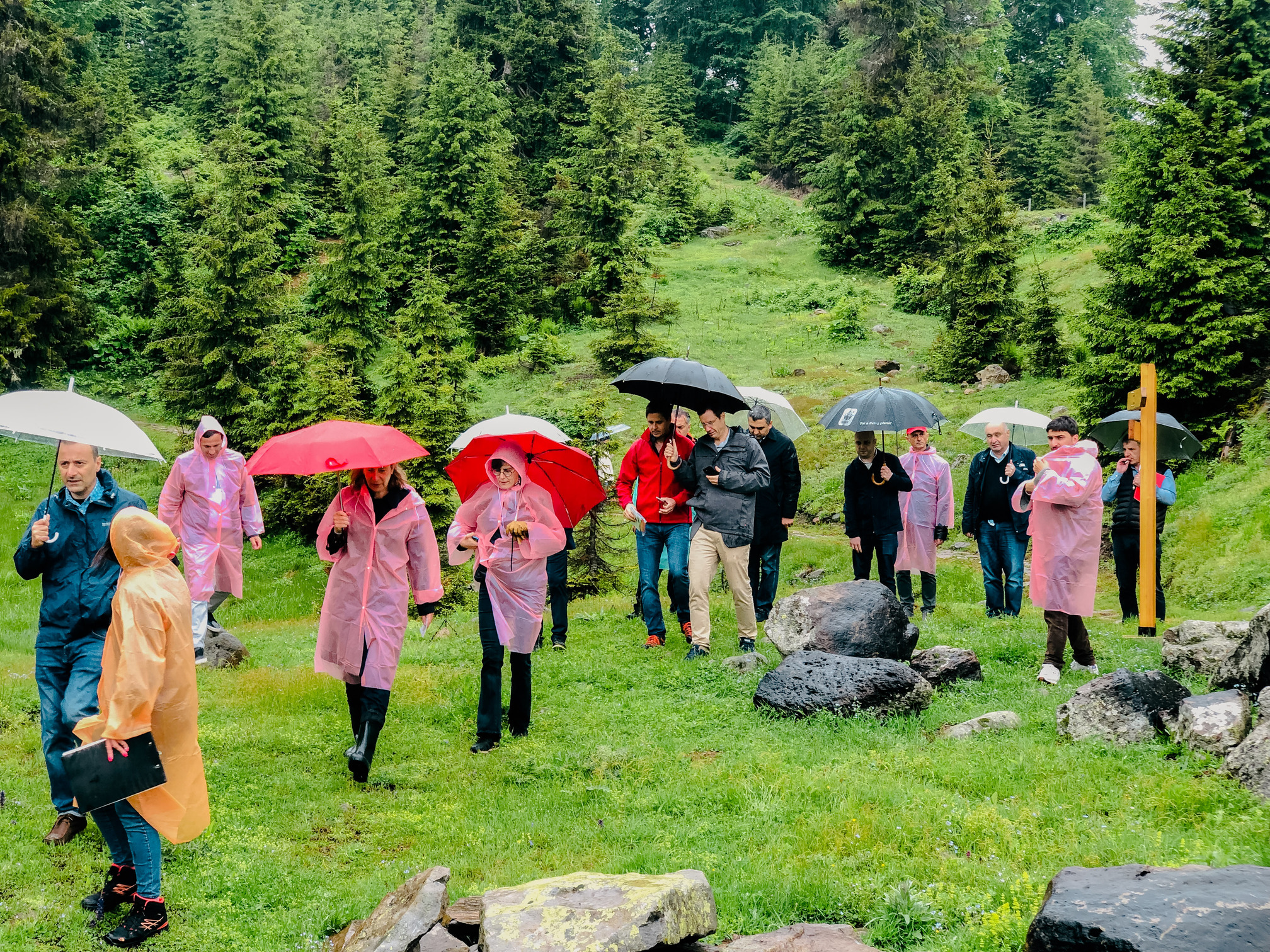
On June 22nd, On the occasion of the 30th Anniversary of Diplomatic Relations between Switzerland and Georgia, as well as Austria with Georgia, Ambassador of Switzerland to Georgia, H. E. Heidi Grau and Ambassador of Austria to Georgia, H. E. Thomas Muehlmann planted a tree in the Goderdzi Alpine Garden. The Minister of Agriculture of Ajara AR, Zaza Shavadze and the Deputy Mayor of Khulo, Nadim Vasadze joined the event. The Goderdzi Alpine Garden is an important tourist destination in mountainous Ajara and a testimony of biodiversity and cultural richness of the region.
Both ambassadors picked up on the theme of needing to balance development with sustainability and care for nature and that the garden is an excellent example of this. While the Director of Batumi Botanical Garden, Irakli Archaia emphasized the importance of the garden and initiated the idea of copying the model of the garden in other municipalities. The minister of Agriculture of Ajara, Zaza Shavadze stated thatcreating and supporting new opportunities for rural development is the key goal of the strategic framework of relations of Switzerland and Austria with Ajara region.
H.E. Heidi Grau noted the excellent results achieved by ALCP in creating job and income opportunities for the rural population, including by supporting the production of Jara honey, and was pleased to announce that
‘Switzerland is engaging in a new phase of the ALCP project, together with Austria and joined by Sweden, until 2026, with a total budget of USD 6.5 million. This will allow to further facilitate production in beekeeping, dairy and meat, wild botanicals and silk, as well as support the development of the Goderdzi Botanical Garden, for the benefit of women and men living in mountainous regions,’ Ambassador of Switzerland to Georgia, H. E. Heidi Grau said.
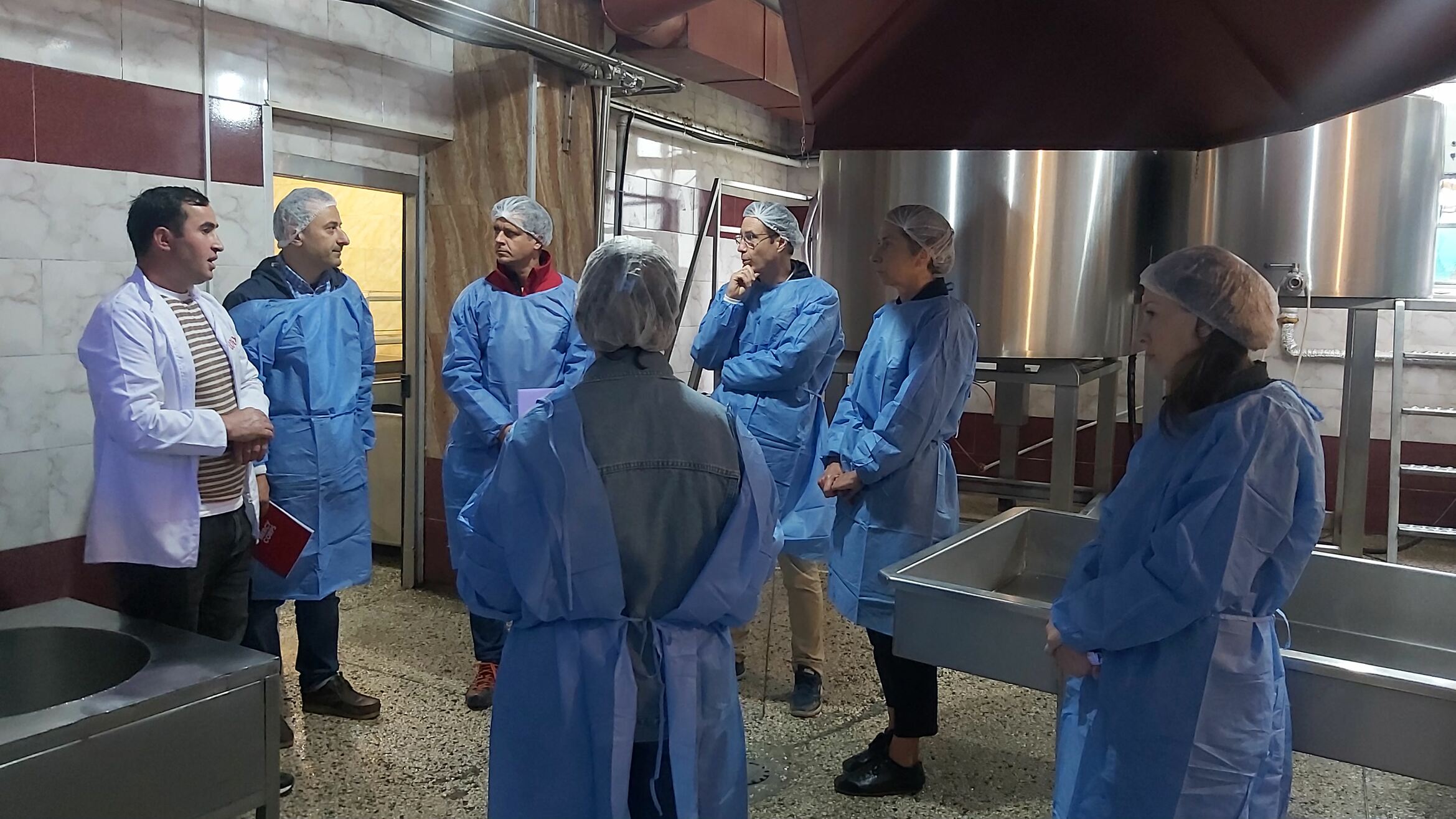
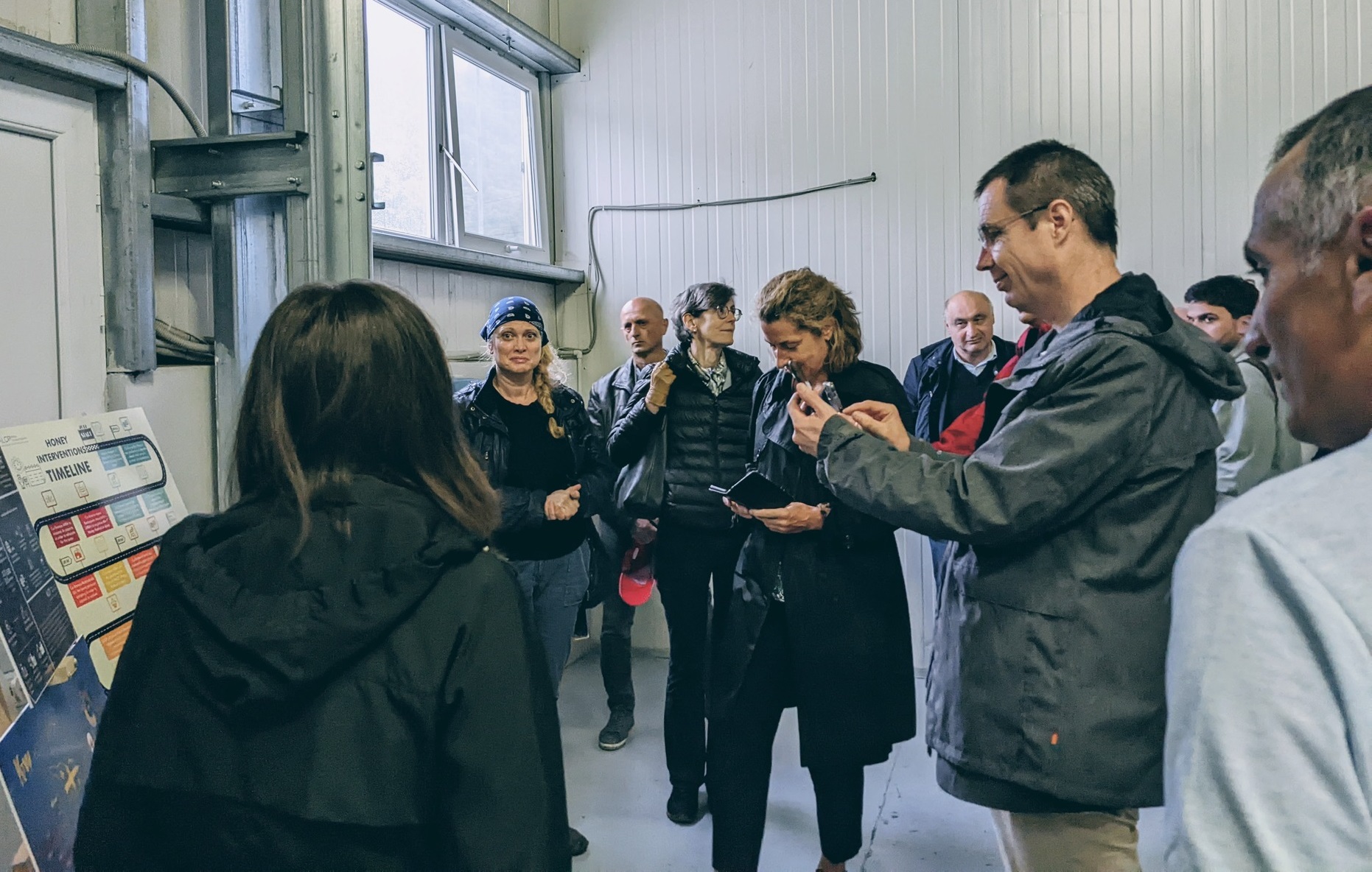
The delegation visited Wool House in Klde Village, Samtskhe-Javakheti, the Georgian Milk Mark dairy enterprise, Natural Produktsia Ltd in Dioknisi Village, Khulo and honey processing factory, Agro Keda Ltd.
The Austrian Ambassador H.E. Thomas Muehlmann underlined, that support in further development of the wool sector, as well as support in uniting the voices of beekeepers through support to their professional union created new opportunities for development for the rural population.
‘Support to rural and local development is a key aim of the new framework strategy of Austria with Georgia. We believe, that with joint efforts European countries will bring more experience and novelties to Georgia, which will trigger further development of the country,’ Austrian Ambassador H.E. Thomas Muehlmann said.
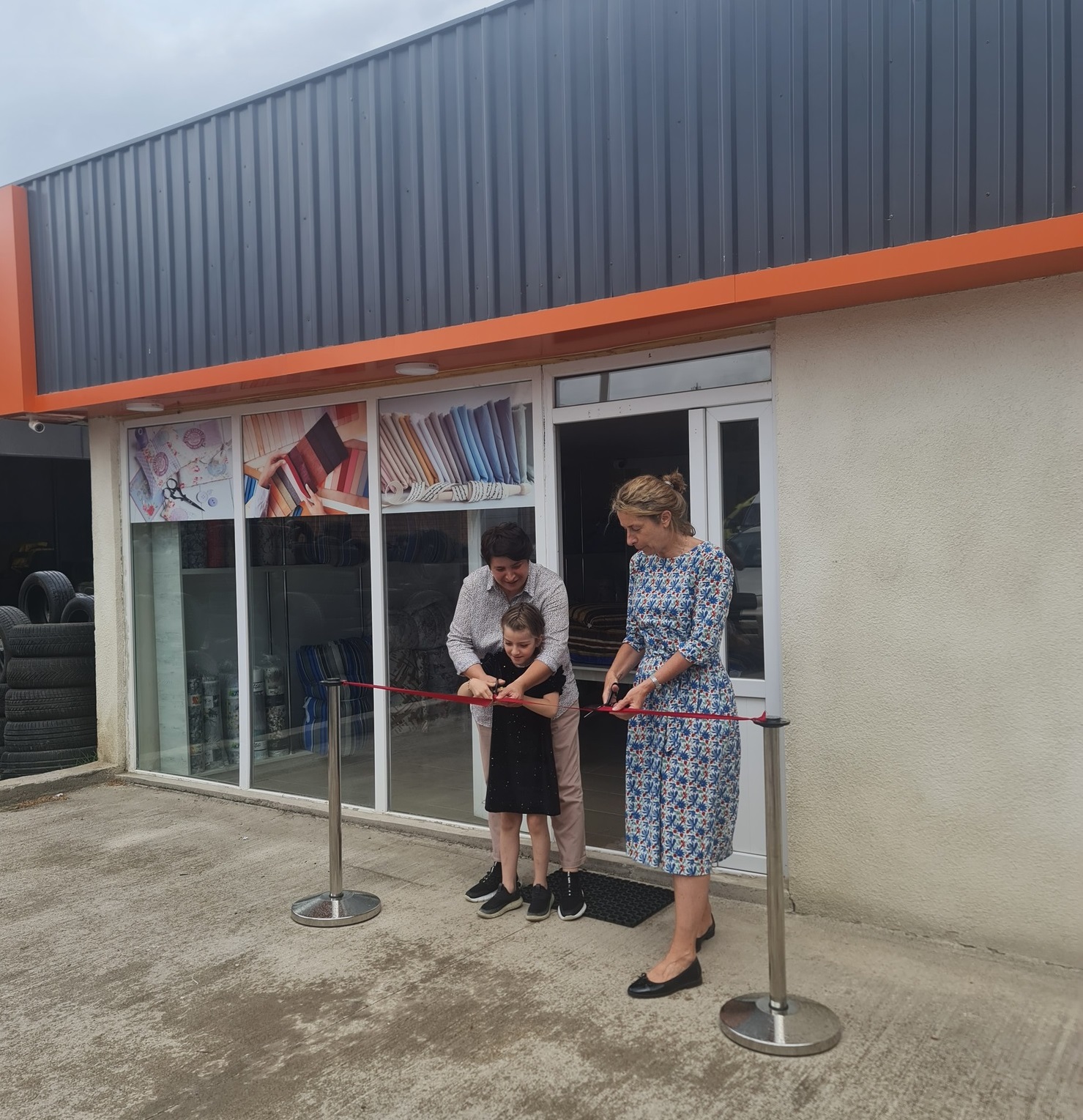
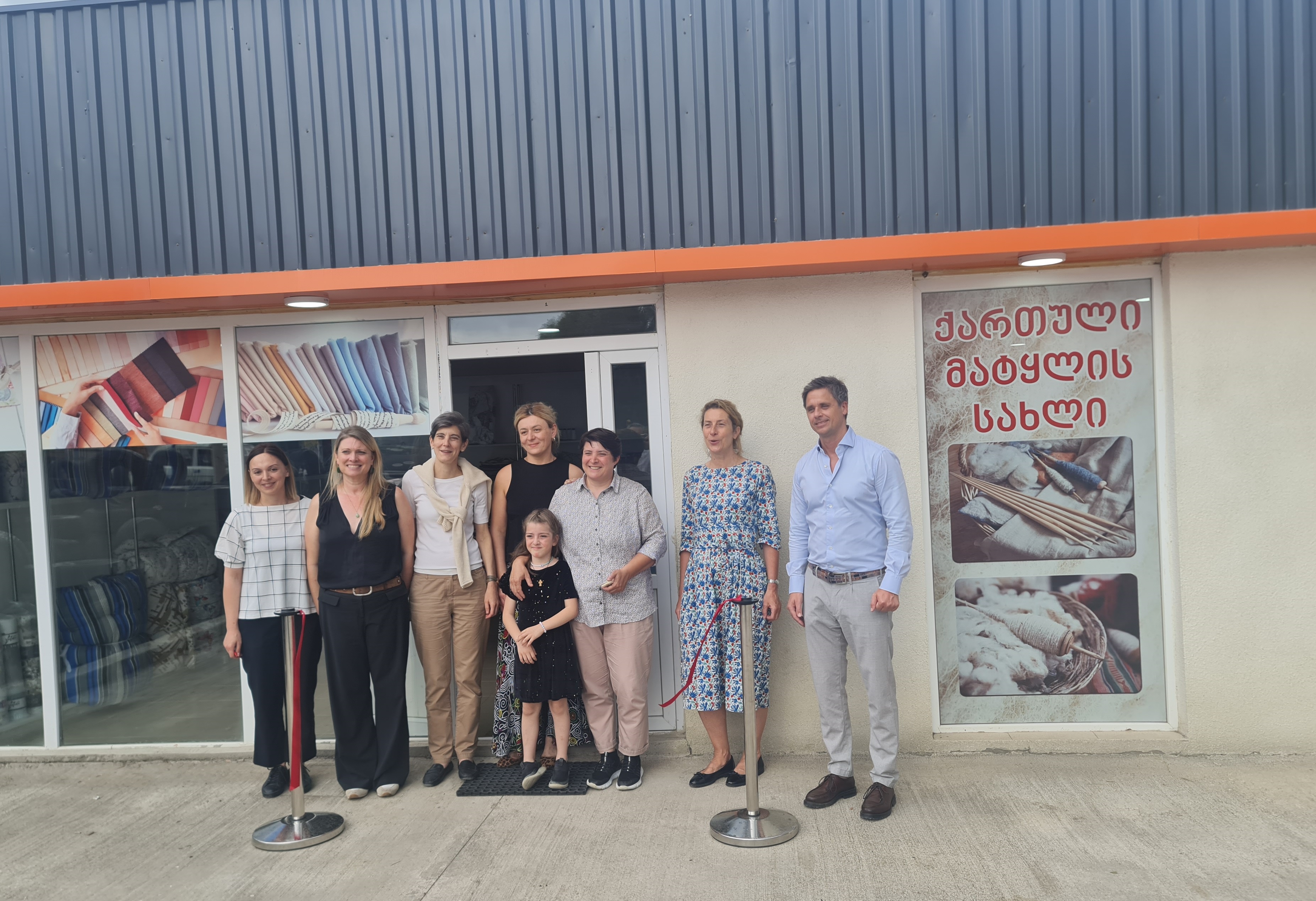
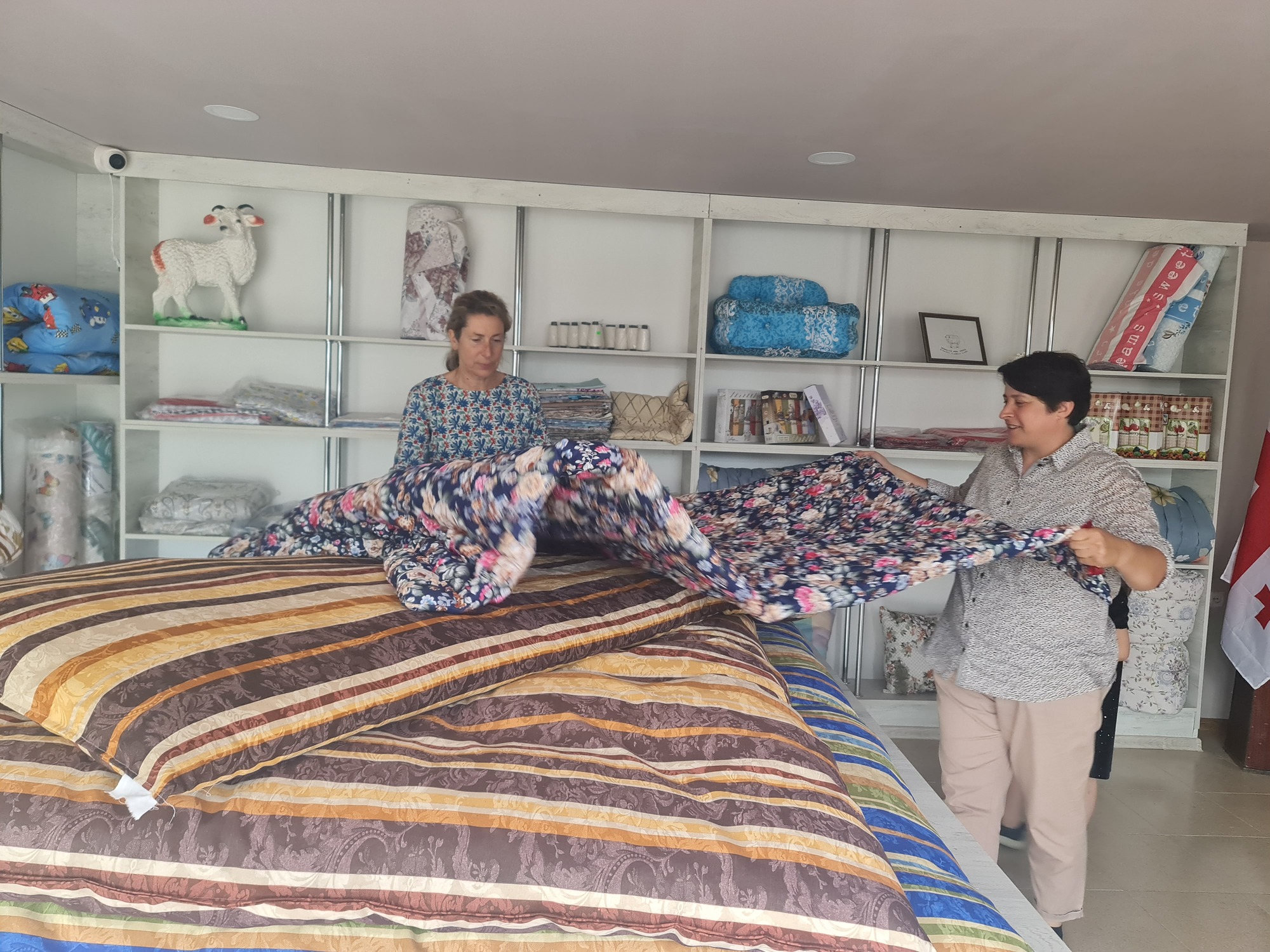
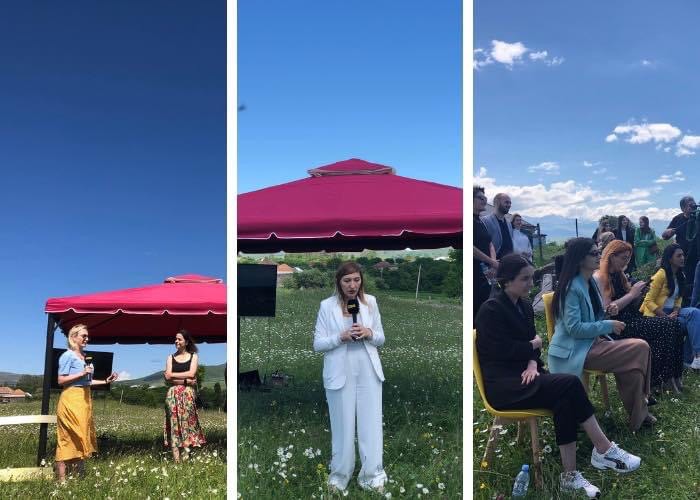
On June 16th the Journalism Resource Centre celebrated the opening of the first local TV media TOK TV in Tsalka municipality. Three local journalists attended journalism courses on reporting for one month. As Tsalka is a multiethnic municipality the journalists represent Georgian, Azerbaijani and Armenian communities.
‘We will report on the issues that are important in increasing transparency and accountability among the general population and local officials. Reports related to agricultural issues will be one of the main topics for our work. Local people will be engaged in the decision-making around ongoing local development. Especially, this is important after the newly opened tourist attraction in Dashbashi Canyon.’ - Local Journalist Nazi Meshveliani said.
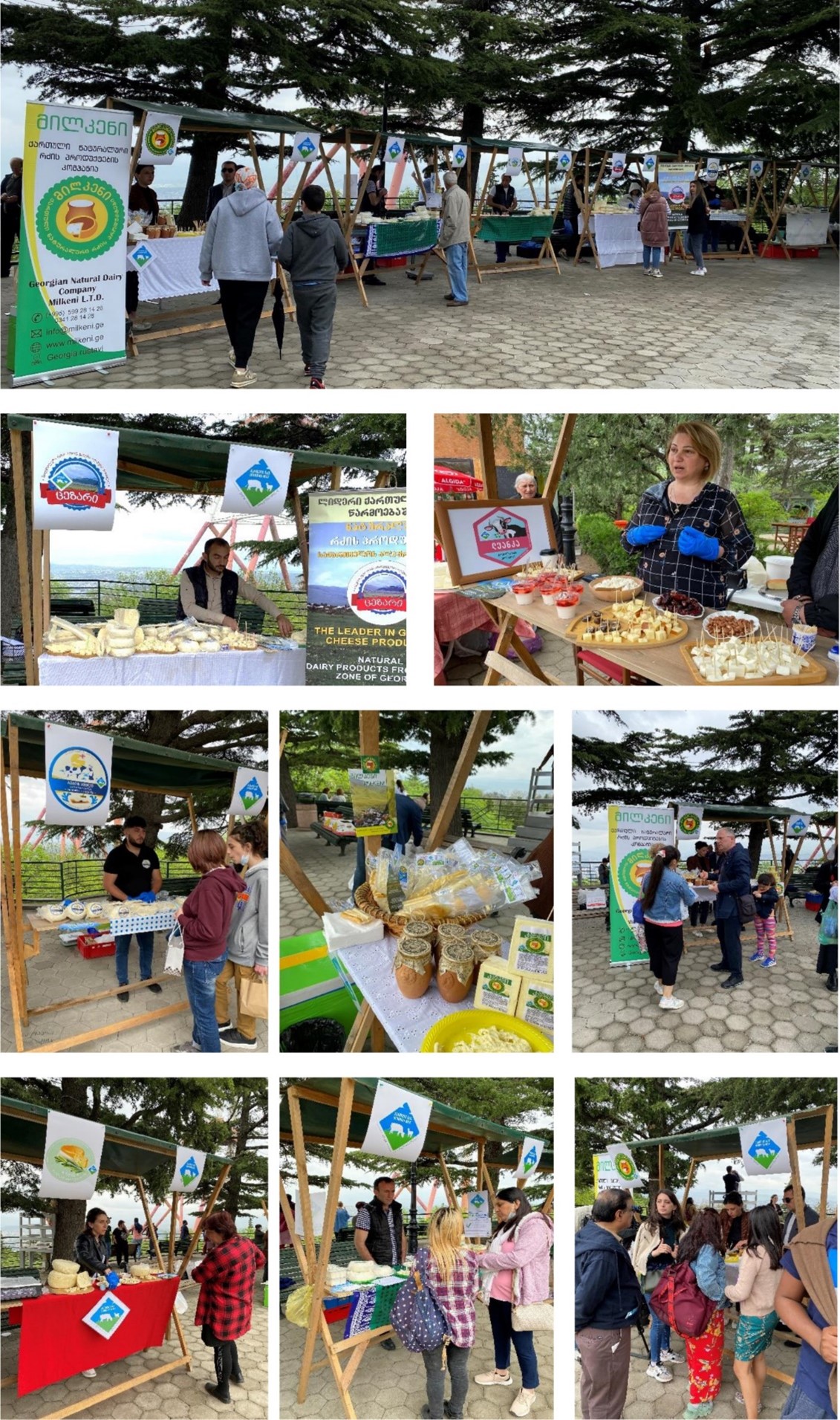
The Cheese and Tea Exhibition showcasing Georgian traditional, as well as foreign produce was held at Mtatsminda Park on May 1st, 2022. Ten dairies with the Georgian Milk Mark (GMM) - Milkeni, Tsintskaro +, Meskhuri Gemo, Bebo’s Kveli, Suamta, Leanka, Alpuri Javakheti, Dertseli’s Nobati, Naturaluri Rdzis Gemo, Tsezari presented their products at the event organized by Anna Mikadze-Chikvaidze, the Head of the Cheese Producers Guild. Visitors tasted cheese and got to know about the GMM. Butter with spices, a new product by Milkeni, was their favourite.
‘The GMM contributed a lot to make this event happen. I am thankful to them for giving me an opportunity to discover amazing products, like butter with spices. I am glad that the GMM promotes raw milk production’ - Event founder Anna Mikadze-Chikvaidze praised the development of the GMM in her Facebook posts.
Created in 2019, the GMM has twenty dairies currently using the mark. The GMM products are available in Madagoni, Spar, Tserti, Magniti, Smart, Ori Nabiji, Nikora, Zgapari, Fresco, Carrefour, Goodwill, Daily, Billion and Willmart supermarket chains.
A comprehensive online portal www.georgianmilk.ge provides a profile per enterprise allowing consumers to look up the products they are buying using a unique registration number printed on the label.
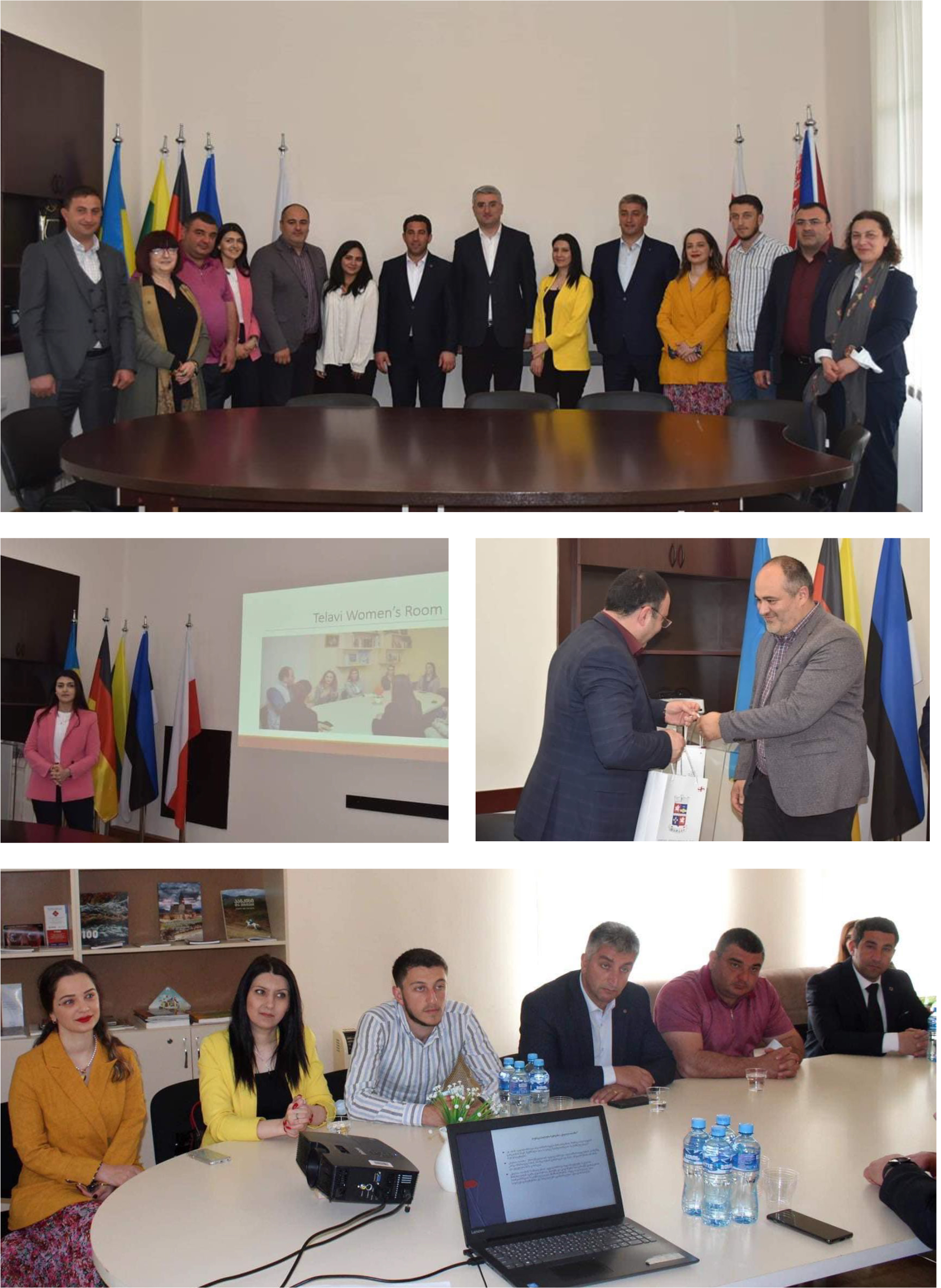
For three days from 11-14 April, the Women’s Rooms Union of Georgia NGO hosted an Armenian delegation of the Mayors of Alaverdi, Tumanyan and Tashir municipalities of Armenia, their three Women’s Rooms managers, representatives of Lori Region Governor’s office and the Association of Lawyers Community NGO. These three municipalities in Armenia have now all instituted Women’s Rooms and were in Georgia to learn more about their operation and potential and to strengthen links in the region.
They met the mayors and deputy mayors of Akhmeta and Telavi municipalities, and a representative of Kakheti Governor’s office and visited the rooms. The Women’s Room managers of both municipalities did presentations on their work.
‘It was a very interesting and useful visit. We have just established the Women’s Room service in our municipality and, as we’ve copied the Georgian model, it was necessary for us to see how this it works here,’ – Suren Tumanyan, the mayor of Tumanyan municipality said.
‘After this visit we clearly see how to use our Women’s Rooms and make sure that our women and girls are involved in local decision making through the Women’s Room as it was done in Georgia,’ – Edgar Arshakyan, the mayor of Tashir municipality said.
One of the main goals of the municipal Women’s Rooms in Georgia is to support women’s entrepreneurship by helping them write business proposals, connect with other women entrepreneurs and access the trainings and information. Participants visited social enterprise Skhivi, where women are making traditional enamel jewelry and accessories, the shop of entrepreneur Tamar Mikeladze, who is making handmade soaps and candles under the brand name Kumpa, and a local female beekeeper.
‘We are impressed with the results of Georgian Women’s Rooms regarding women’s economic empowerment. The managers here had business plan writing and fundraising trainings to help local women to start their own businesses. We are looking forward to doing the same in Armenia,’ – Sasun Khechumyan, the mayor of Alaverdi said.
‘In Lori region there are five municipalities in total, out of which three municipalities have already opened the Women’s Rooms. We are ready to support the opening of this service in the other two municipalities as well,’ – Alik Sahakyan, the representative of Lori Governor’s office said.
This study tour has laid the foundation for future cooperation between Georgian and Armenian municipalities. Alaverdi and Akhmeta municipalities have decided to become twin towns and the Women’s Rooms Union is going to continue cooperation with these Armenia municipalities.
Background information: From 2011 to date the SDC and ADA funded Mercy Corps implemented Alliances Caucasus Programme has been facilitating the establishment and scaling up the municipal Women’s Rooms in Georgia and Armenia. 32 Women’s Rooms in Georgia and three Women’s Rooms in Armenia have been opened so far. The Women’s Rooms are owned by local governments and are used to facilitate access to public decision making, goods and economic opportunities. The Women’s Rooms Union was formed in 2021 to represent the rooms and facilitate their interests.
The information about the visit was posted on a Facebook pages of Telavi and Akhmeta City Halls.
Local TV Tanamgzavri made two news items about the visit. Please, follow the links below:
Meeting at Telavi City Hall * Visiting Local Women Entrepreneurs
Follow the link to watch The Women’s Rooms Promo Video