



The first settlement of Svans into Kvemo Kartli took place in 1987. This is when the Svans from landslide-affected Chviberi (higher Svaneti) were resettled in Dmanisi, in the houses built under a government programme. Svans started to introduce their style of life in Kvemo Kartli and establish strong communities in Kvemo Kartli.
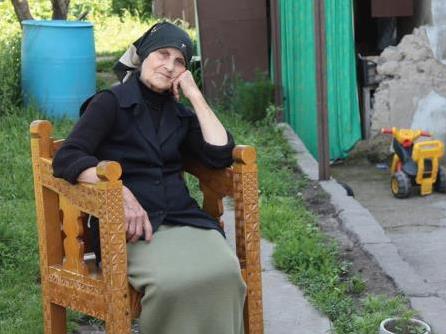
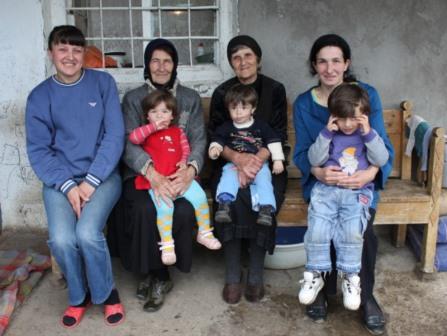
Natela Argvliani and her family are eco-migrants from the village of Etseri in Mestia district; the family moved to Tsalka in 2003 under a government programme. She is the head of the family based on her age. The programme provided some funding for houses and the family managed to purchase a modest two-storey house where Natela lives with her son Nino Kvitsiani her daughter-in-law and her grandchildren who are twins. Natela also has a daughter, Lela, who is married to a Tbilisi resident and lives there. She visits her mother with her husband and son and stays for long periods at Natela’s house as was the case during our visit.
Natela’s daughter-in-law, Nino Kvitsiani lives in Tsalka with Natela. This is not the first displacement for her. Her parents left Svaneti not long before the Abkhazia war. For 7 years the family lived in Gulripshi until they had to flee again — not avalanches but war.
Nino teaches English at a local school and also gives private classes. She married when she was over 30, had already graduated university in Tbilisi and had a job. In addition to Georgian, Nino speaks good Russian and English, has her own opinions about life and her own judgment. She is not very satisfied with life in Tsalka. In her opinion, the town is very scattered from in ethnic standpoint with every group living autonomously and having little interaction with the other groups. One can assume that the cultural life of Tsalka is somewhat narrow for Nino but she does not say this explicitly. Nino is the breadwinner of her large family. She has authority and deliberates upon household strategies. Her husband has not worked for a long time.
Other relatives often visit their family. Natela’s aunt, Margarita Kordzaia, was visiting the family during our visit. Margarita lives in Dmanisi but often comes to visit her children who live in Tsalka and stays at Natela’s place for long periods. Margarita also hails from Svaneti. Young people, as well as the elderly, are unanimous in thinking that it is easier to live in Kvemo Kartli than in Svaneti. That said, however, Margarita and Natela miss their native region very much. They have not been there for several years now but, out of modesty and self-sacrifice, do not voice their wishes giving priority to the children’s opinions and, possibly, accepting the likelihood that they may never be able to see Svaneti again. However, Natela, for example, is intensively involved in household affairs, helps with the raising of her grandchildren and makes, clearly, a not-insubstantial contribution to the household income with her monthly pension.
As Nino works mainly as a teacher, there is no one to take care of the cows and so for this reason, the family has just two with the milk used mainly for their own consumption. Nino told us that they could if they wanted to hire help for milking the cows which is currently handled by Natela, as the work is poorly paid and affordable, paid at ten Lari a month per cow milked morning and evening. 10 Lari in the village is good money and it’s important for them. There is enough milk to make cheese to sell. A blue plastic barrel in which the cheese is stored can be seen outside the house. Cheese is stored in the barrel through the summer and, when the container is full, they close it tight in order to store and sell the cheese in winter when prices are higher. Cheese is also used for barter exchange for other goods and services. Thus, cheese can be referred to as local currency.
In addition to dairy products, potatoes and hay are other sources of income for the family and for people locally. The production of potatoes for other than household consumption, however, requires larger tracts of land and not every resident owns such territory. Producing hay, too, is labour intensive both for home consumption and for sale and requires mowing, drying, gathering and storage or loading for delivering to buyers and selling. So the women look after the cows and make cheese and this daily work feeds the families and is the main source of income for this family and for almost everyone else here.
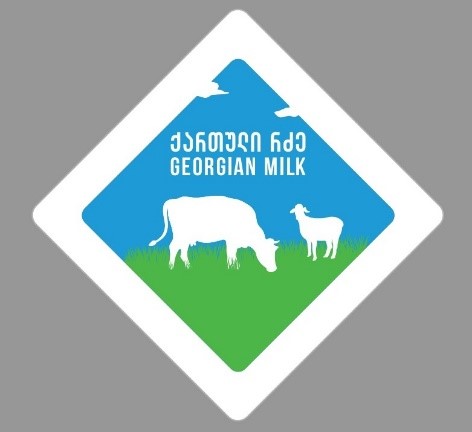
The ‘Georgian Milk’ mark has been registered in the National Intellectual Property Centre of Georgia - Saqpatenti. The mark is now protected to avoid falsification and strengthen the ownership of Business Institute of Georgia, an independent body which will regularly audit dairies granted license to use the mark.
Eighteen dairy enterprises have already applied to use the mark.
The new ‘Georgian Milk’ mark will distinguish dairy products made from natural raw milk.
Information per enterprise will be published online on a www.georgianmilk.ge website which will come online at beginning of March. This will allow consumers to look up the products they are buying using a unique register number printed on the label.
A national promotion campaign conducted by GMA international marketing company to introduce the mark to the public and retailers will be rolled out from the end of next month.
A presentation of a new ‘Georgian Milk’ mark was held on the 22nd of January at Hotels & Preference Hualing Tbilisi.
Up to 150 dairy enterprises and representatives of supermarkets, agri markets, sectoral associations and Government Agencies participated in the meeting.
The new ‘Georgian Milk’mark will distinguish dairy products made from natural raw milk. The ‘Georgian Milk’ mark will be found only on dairy products produced from Georgian natural raw milk and which do not contain milk powder and/or any vegetable oils. The purpose of the mark is to promote products made from Georgian natural raw milk, which will help consumers make informed decisions while buying milk and other dairy products. A recent large national consumer survey by the Caucasus Research Resource Centre of urban consumers across Georgia showed that consumers want to be able to buy ‘ecologically clean’ dairy products, meaning clean milk that comes from healthy grass fed cattle and dairy products produced in clean regulated enterprises. The research found that the majority of consumers had difficulty in identifying or being able to buy such products as these products are currently undifferentiated in shops. The ‘Georgian Milk’ mark will therefore solve this problem.
The ALCP facilitated the Georgian Beekeepers Union to develop infographic regards Do’s and Don’ts of Antibiotic Use, providing guidelines for the beekeepers on proper usage of antibiotics and preventing honey and beeswax from contamination with the antibiotics. The full version of the infographic is available here.

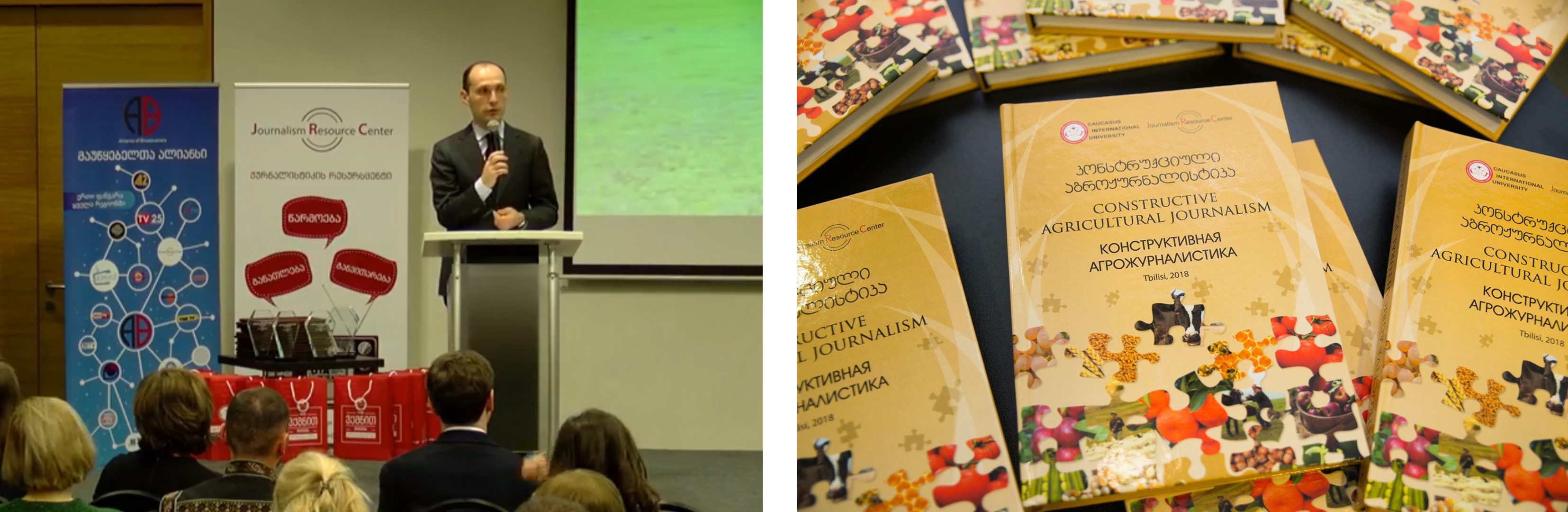
On December 26th, the Journalism Resource Centre presented its second edition of the agri journalism module. About hundred guests from the government, business and academic sphere attended the event.
The Minister of Environmental Protection and Agriculture of Georgia, Levan Davitashvili stated: ‘I am very glad to hear about all the initiatives related to agri journalism. Education is very important in agriculture for ensuring information dissemination for farmers. The door of the Minister of Agriculture is open for you at any time and our partnership with regional media is very important.’
The agri module was created for inclusion in BA in journalism degrees. Now, ten universities across Georgia have the agri journalism module established in their curriculum, lasting one semester with a total of 15 credit hours. Four more universities are about to do the same this year. 369 students have undergone the course in Georgia to date. Now those initiatives are ready for transfer to Armenia and Azerbaijan.
During the event, the Journalism Resource Centre awarded farmers and specialists within the agricultural sector. The Best Female Farmer of the Year award was given to beekeeper Mariam Kiladze; the Best Vet of the Year was Giorgi Tcikhelashvili from Dmanisi, he is 25 years-old who graduated from the Vet Department at Agrarian University and went back to Dmanisi and is working as a vet. The Best Male Farmer award was given to shepherd Giorgi Imerlishvili. Credo and the EBRD were recognized as financial institutions that supports agriculture, and SDC Project Mercy Corps Alliances Caucasus Programme for supporting agri media journalism.
At the end of the event, the Journalism Resource Centre announced the establishment of the Agro Guild, which unites journalists and media organizations, businesses, farmers, public officials, and universities and sets up annual or bi-annual advisory committees. The members of media associations and the JRC also announced that they are planning to establish an Agri TV program, the pilot of which will start in three months.
Follow this link for additional news regarding the event.
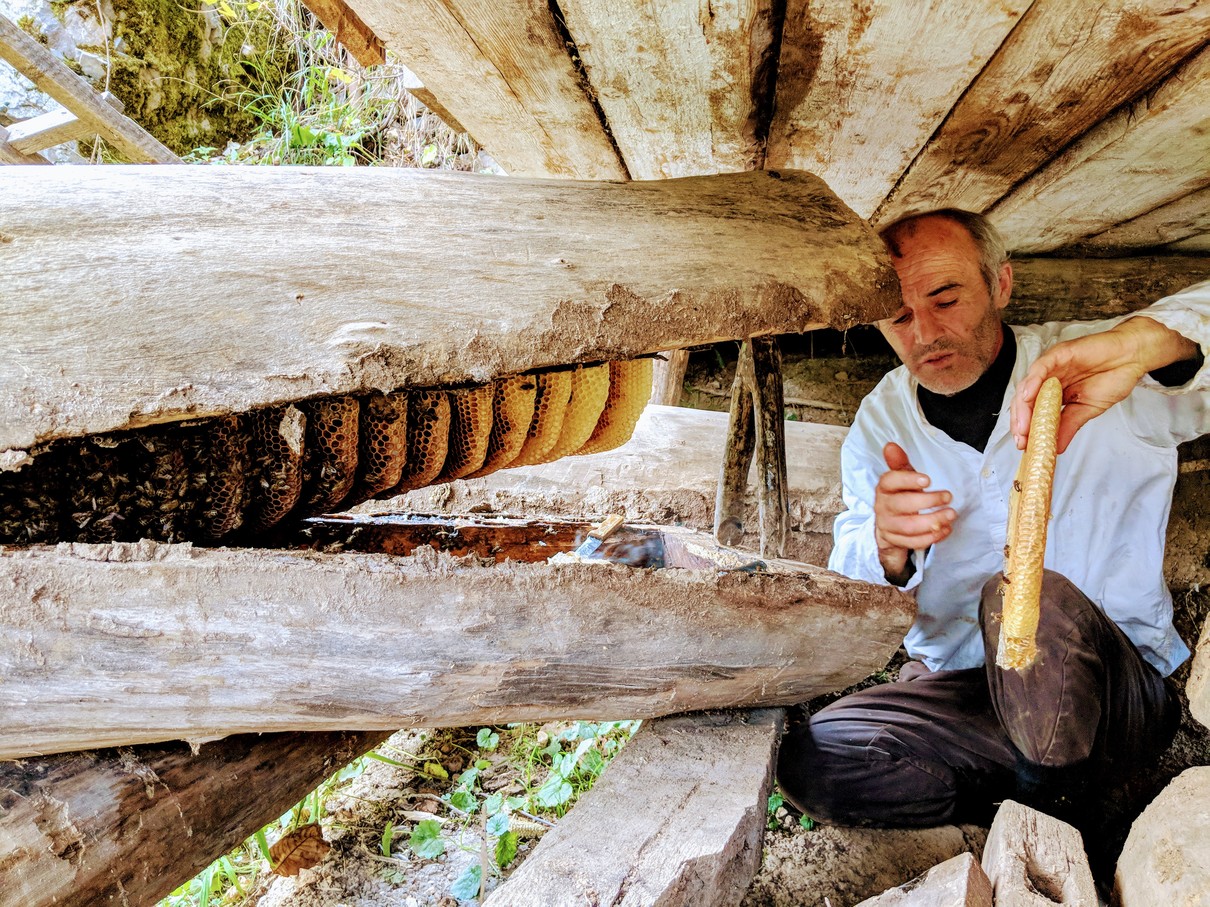
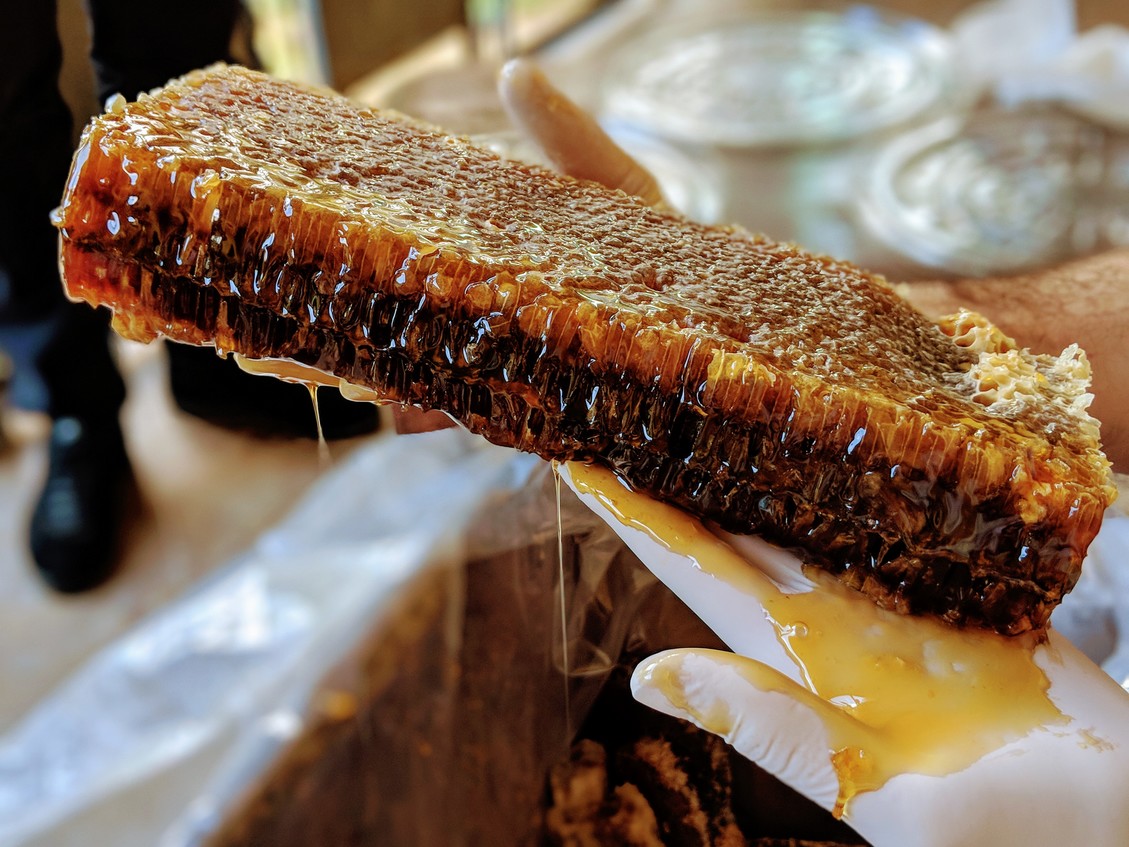
For the first time ever, twenty Jara producers have sold their entire crop of Jara to a commercial enterprise. Jara honey will soon be available in shops in Georgia.
See photos below.
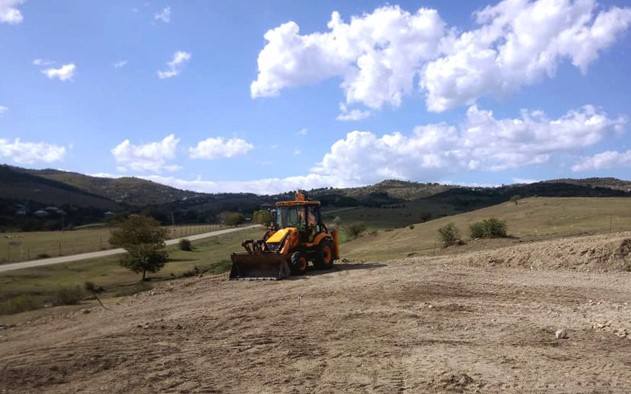
The construction of a new Veterinary Surveillance Point has recently started in Bolnisi municipality. The works will be finished in December 2018. The point will be the six and final point in the Veterinary Surveillance network throughout the Animal Movement Route.
During five transhumance seasons in 2016-2018 total 1.4 million heads of sheep and cattle were treated against ecto-parasites free of charge at all operational Veterinary Surveillance Points in Rustavi, Marneuli, Signagi, Dedoplistskaro and Kvareli municipalities.



