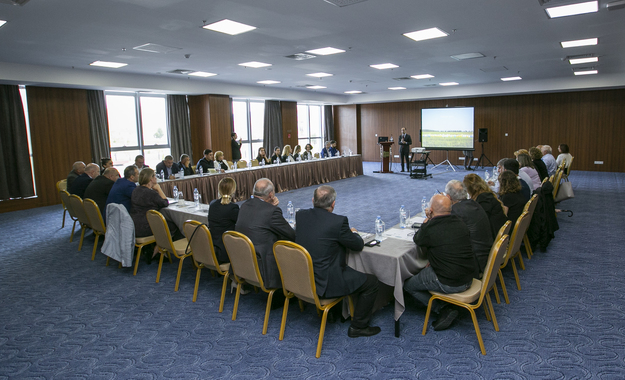
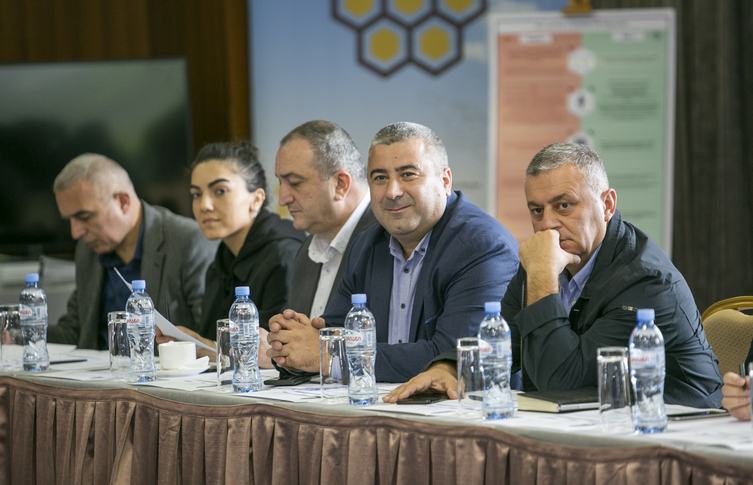
The first settlement of Svans into Kvemo Kartli took place in 1987. This is when the Svans from landslide-affected Chviberi (higher Svaneti) were resettled in Dmanisi, in the houses built under a government programme. Svans started to introduce their style of life in Kvemo Kartli and establish strong communities in Kvemo Kartli.
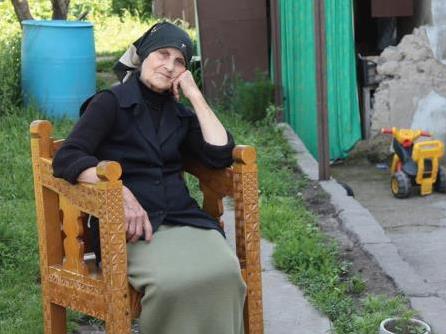
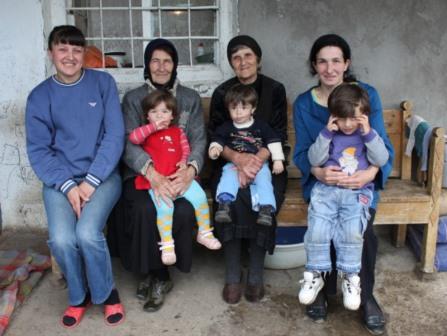
Natela Argvliani and her family are eco-migrants from the village of Etseri in Mestia district; the family moved to Tsalka in 2003 under a government programme. She is the head of the family based on her age. The programme provided some funding for houses and the family managed to purchase a modest two-storey house where Natela lives with her son Nino Kvitsiani her daughter-in-law and her grandchildren who are twins. Natela also has a daughter, Lela, who is married to a Tbilisi resident and lives there. She visits her mother with her husband and son and stays for long periods at Natela’s house as was the case during our visit.
Natela’s daughter-in-law, Nino Kvitsiani lives in Tsalka with Natela. This is not the first displacement for her. Her parents left Svaneti not long before the Abkhazia war. For 7 years the family lived in Gulripshi until they had to flee again — not avalanches but war.
Nino teaches English at a local school and also gives private classes. She married when she was over 30, had already graduated university in Tbilisi and had a job. In addition to Georgian, Nino speaks good Russian and English, has her own opinions about life and her own judgment. She is not very satisfied with life in Tsalka. In her opinion, the town is very scattered from in ethnic standpoint with every group living autonomously and having little interaction with the other groups. One can assume that the cultural life of Tsalka is somewhat narrow for Nino but she does not say this explicitly. Nino is the breadwinner of her large family. She has authority and deliberates upon household strategies. Her husband has not worked for a long time.
Other relatives often visit their family. Natela’s aunt, Margarita Kordzaia, was visiting the family during our visit. Margarita lives in Dmanisi but often comes to visit her children who live in Tsalka and stays at Natela’s place for long periods. Margarita also hails from Svaneti. Young people, as well as the elderly, are unanimous in thinking that it is easier to live in Kvemo Kartli than in Svaneti. That said, however, Margarita and Natela miss their native region very much. They have not been there for several years now but, out of modesty and self-sacrifice, do not voice their wishes giving priority to the children’s opinions and, possibly, accepting the likelihood that they may never be able to see Svaneti again. However, Natela, for example, is intensively involved in household affairs, helps with the raising of her grandchildren and makes, clearly, a not-insubstantial contribution to the household income with her monthly pension.
As Nino works mainly as a teacher, there is no one to take care of the cows and so for this reason, the family has just two with the milk used mainly for their own consumption. Nino told us that they could if they wanted to hire help for milking the cows which is currently handled by Natela, as the work is poorly paid and affordable, paid at ten Lari a month per cow milked morning and evening. 10 Lari in the village is good money and it’s important for them. There is enough milk to make cheese to sell. A blue plastic barrel in which the cheese is stored can be seen outside the house. Cheese is stored in the barrel through the summer and, when the container is full, they close it tight in order to store and sell the cheese in winter when prices are higher. Cheese is also used for barter exchange for other goods and services. Thus, cheese can be referred to as local currency.
In addition to dairy products, potatoes and hay are other sources of income for the family and for people locally. The production of potatoes for other than household consumption, however, requires larger tracts of land and not every resident owns such territory. Producing hay, too, is labour intensive both for home consumption and for sale and requires mowing, drying, gathering and storage or loading for delivering to buyers and selling. So the women look after the cows and make cheese and this daily work feeds the families and is the main source of income for this family and for almost everyone else here.
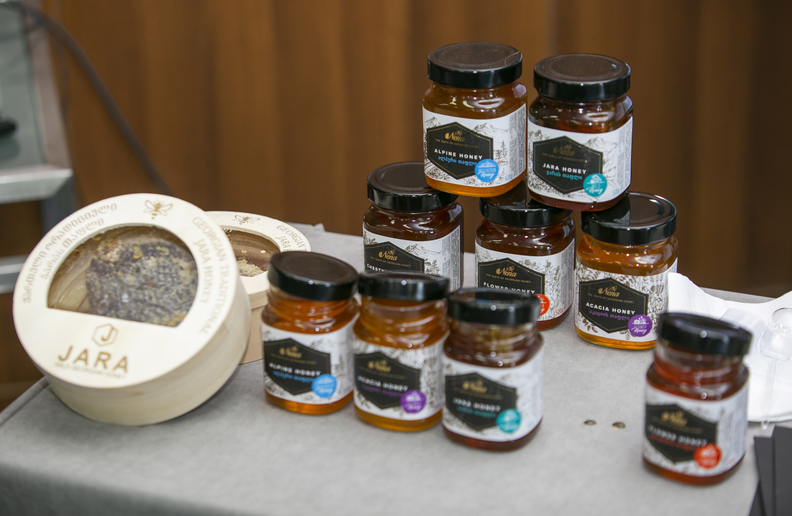
The Jara Beekeepers Association (JBA) has registered the Jara honey mark in the National Intellectual Property Centre of Georgia - Sakpatenti.
The mark ensures the protection of Jara honey from falsification and represents a quality compliance guarantee verified by the JBA who are dedicated to preserving traditional beekeeping practices based on Quality Assurance Standards developed by the JBA last year.
In 2018, Jara honey was commercially harvested and packaged according to the standards for the first time. This year it was exported to the United Arab Emirates and the export market is growing.
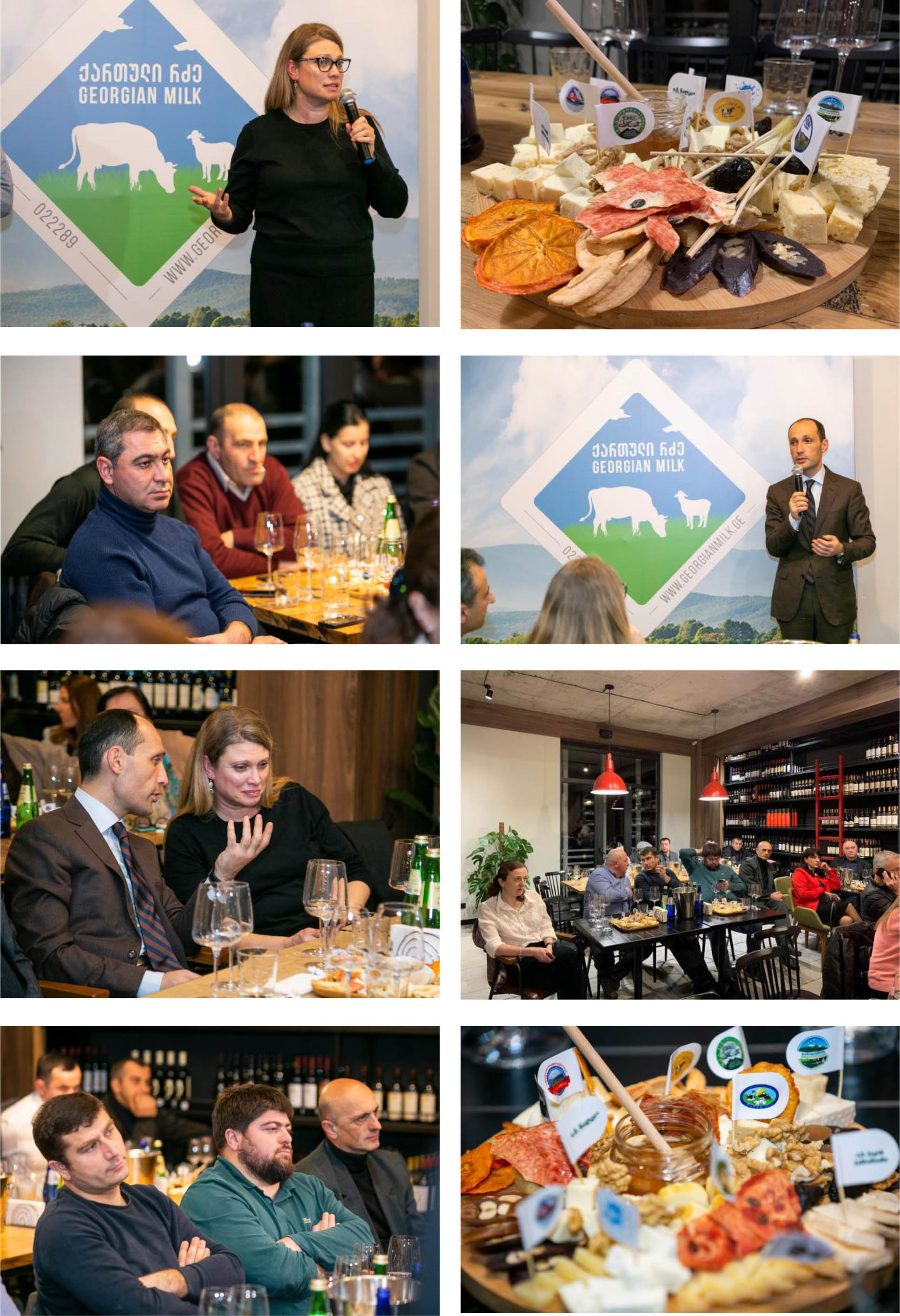
On 16th of December 2019, the Georgian Milk mark organized a Georgian Cheese and Wine evening at 8000 Vintages to introduce cheese with Georgian Milk mark (GMM) to the supermarkets and encouraged them to pass information on the advantages of GMM cheese to consumers. Cheese with Georgian Milk mark does not contain milk powder or any vegetable oils, it has laboratory analysis and is produced in the enterprises which are HACCP certified.
The Guests had the opportunity to taste different types of cheese made from natural raw milk produced by thirteen enterprises: Milken Ltd, Tsintskaro + Ltd, I.E Hakob Hambaryan, I.E Karen Simonyan, I.E Tsolak Grigoryan, Tsifora –Smatskhe Ltd, Tsalka +Ltd, Dairy Products Company Tsezari Ltd, Gocha Gagashvili – brand name Tsivis Kveli, Levan Bejanishvili-brand name Shuamta, Badri Gogoladze – brand name Cheese Hut, Coop. Tanadgoma, Coop. Disvelli. The Information per enterprise is available on www.georgianmilk.ge. The website allows consumers to look up the products they are buying using a unique register number printed on a label.
The evening of Georgian Cheese and Wine was attended by Mr. Levan Davitashvili, the Minister of Environment Protection and Agriculture of Georgia, by the Swiss Agency for Development and Cooperation Project Alliances Caucasus Program (ALCP) implemented by Mercy Corps, Georgian Milk Mark Project Administrator - Business Institute of Georgia and Marketing Company GMA Representative, the supermarkets and the dairies using the Georgian Milk mark.
The evening was headed by Zaza Grigalashvili, an '8000 Vintages' Sommelier, who spoke about Georgian cheese and wine pairing.
Helen Bradbury, ALCP Team Leader: ‘We have private sector cheese enterprises in the room from different regions, these are a real dairy businesses operating for years and years. It is very important that this is Georgian Milk from Georgian cows who eat Georgian grass. Consumers want to eat natural, healthy, good country food which comes from this beautiful land, from this beautiful clean water, from happy cows and are made in communities living in countryside. Today we are at 8000 Vintages and we all know the history of wine. If you want ‘Qvevri’ wine or European style wine we know from where it comes from its name and the consumer can choose according wine value and its good for the producer, they can add more value and then this value goes back to the jobs, factories in the communities. So in the dairy sector it is going to be the same: as cheese will have the name, taste, value, style and its started to develop, the money supporting these factories goes back to women who are supplying milk, their families, they are putting money to their children education and investing in their life'.
Levan Davitashvili, The Minister of MEPA: ‘I think the most difficult sector in Georgia is adairy sector and we have a lot to do together. A good presentation of a final product the market and how we bring cheese to the consumer is very important. We can say that competition between the enterprises is unfair, but we work on this via new the regulations to change the situation in the sector, we also empower our laboratories to have better quality and safe products. Today we have Georgian Milk mark presentation which is a very good idea for providing information to the consumers about dairy products, which also gives advantages to producer'.
The Products with the mark are available in Madagoni, Spar, Ori Nabiji, Nikora, Zgapari, Fresco, Carrefour, and Goodwill supermarket chains.
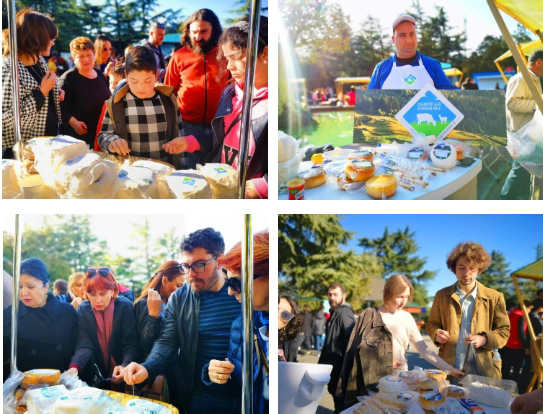
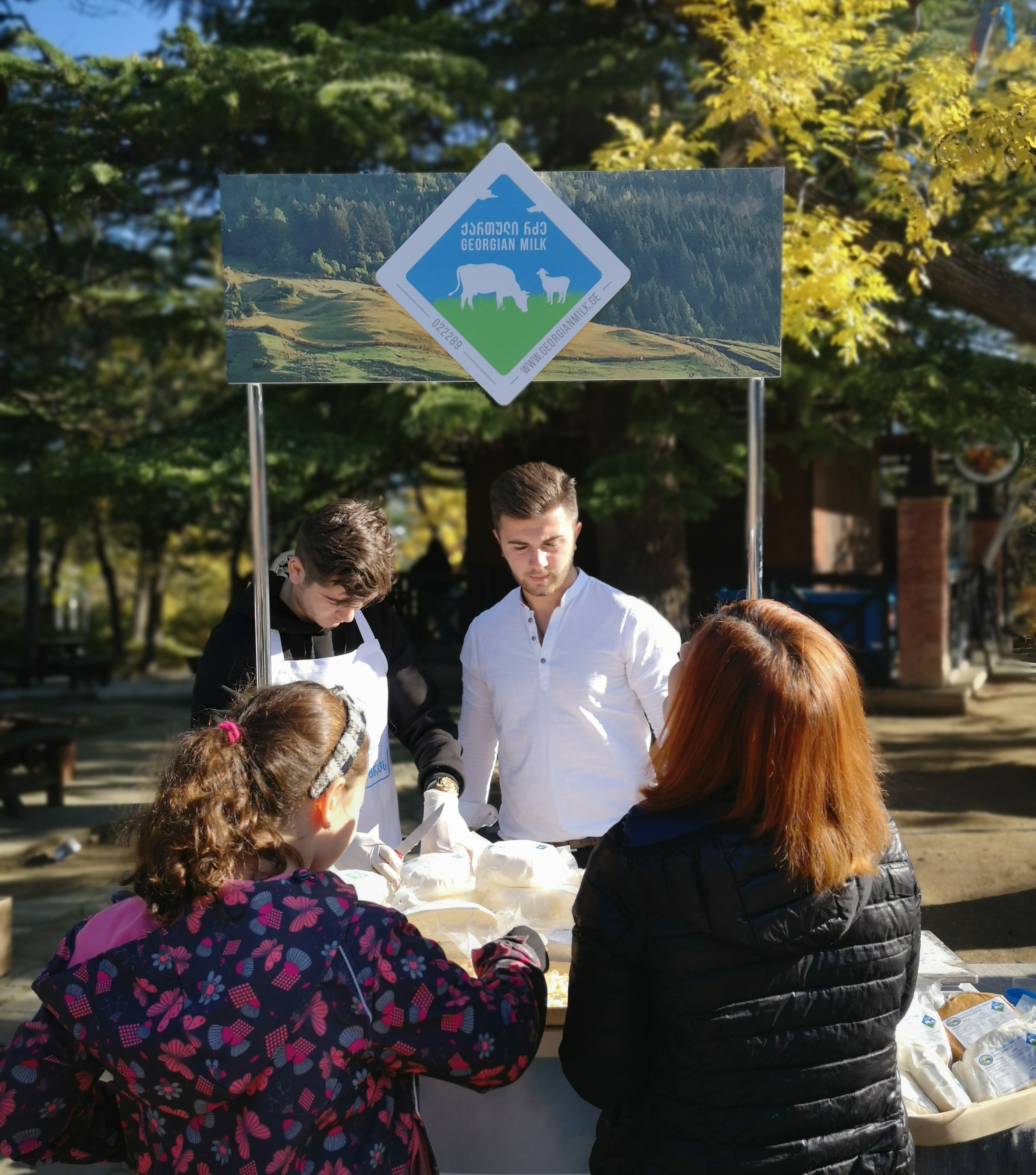
Tsintskaro + and Tsipora-Samtskhe dairy products with the Georgian Milk Mark were introduced at the Cheese and Hot Drinks Festival organized by Anna Mikadze – Chikvaidze, the Head of Cheese Producers Guild and held at the Mtatsminda Park on 10th of November, 2019. The visitors tasted cheese and received information about the Georgian Milk mark.
‘What makes this festival important is to introduce cheese with the Georgian Milk mark, which says to consumers that cheese is made from natural raw milk’ - stated Anna Mikadze - Chikvaidze.
Currently seven dairy enterprises are using the Georgian Milk mark: Milkeni; Tsintskaro +; Tsipora –Samtskhe; Cheese Hut; Tsezari; Tsivis Kveli; Shuamta.
Products with the mark are available in Madagoni, Spar, Ori Nabiji, Nikora, Zgapari, Fresco, Carrefour, and Goodwill supermarket chains.
Information per enterprise is uploaded on www.georgianmilk.ge. This allows consumers to look up the products they are buying using a unique register number printed on the label.
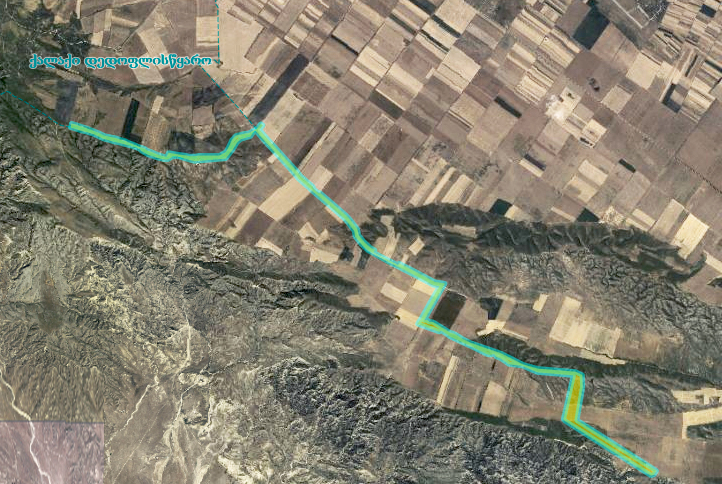
A 22 km route in Shiraki pastures, Dedoplistskaro municipality has received the status of becoming part of the official Animal Movement Route (AMR) last week. The unofficial route, which had been used for livestock seasonal migration for decades, had not been officially registered as the AMR before. As a result of a joint effort between the ALCP the Shepherds Association, The Ministry of Environmental Protection and Agriculture (MEPA), the National Agency of State Property and the Ministry of Economy & Sustainable Development, the route and297 ha land, is now officially registered as the AMR by National Agency of Public Registry of Georgia.
The section of the route is now protected from saleas according current regulations, AMR land is not allowed to be sold or rented. A water point located in this area will be restored soon as well, within the planned Water Point’s project of the ALCP and MEPA.
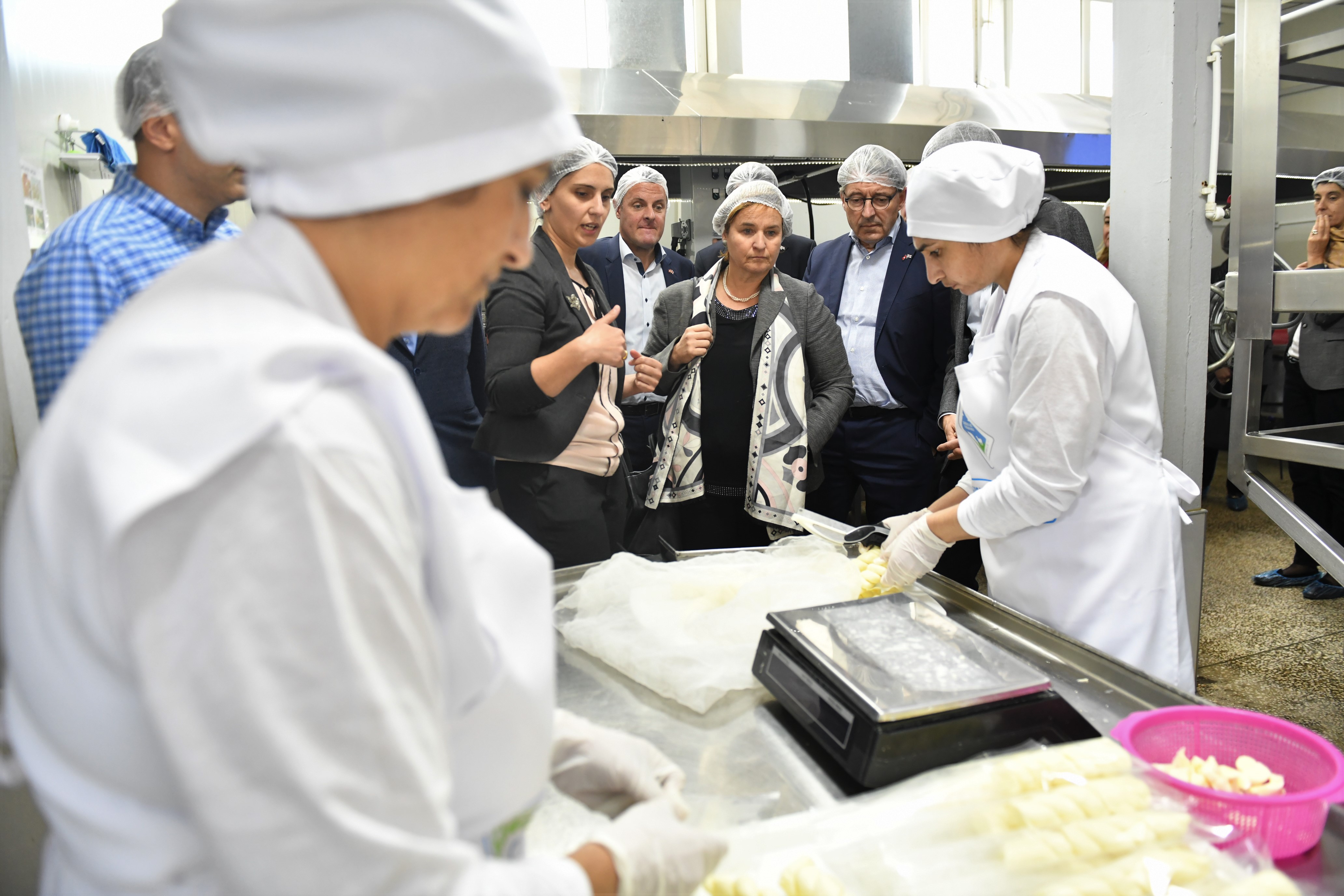
On October 29th, theSwiss Agency for Development and Cooperation (SDC) project the Mercy Corps Georgia implemented Alliances Caucasus Programme (ALCP) hosted the President of the Swiss National Council Marina Carobbio Guscetti, First Vice President of the National Council Isabelle Moret, Second Vice President of the National Council Heinz Brand, Secretary General of the Federal Assembly at Swiss Parliament Philippe Schwab, Ambassador of Switzerland to Georgia Patric Franzen, Deputy Head of Embassy of Switzerland in Georgia Alvaro Borghi, and the Regional Director of the Swiss Cooperation Office in Georgia, Danielle Mewly Monteleone. The Mayor of Marneuli, MP’s of Marneuli and Rustavi and the Deputy Governor of Kvemo Kartli region were also present. The visit was part of an official visit of Swiss officials to Georgia, to open the new Swiss Embassy in Tbilisi, celebrate sixty years of UNICEF Switzerland, highlight the importance of the Swiss role in mediation and representation between Georgia and Russia and visit some of the outcomes of the significant investment through SDC in economic development in Georgia.
The delegation was introduced to the ALCP’s work in Georgia and the programme’s regional outreach in Armenia and Azerbaijan, emphasizing equitable impact and women’s economic empowerment in the dairy and honey sector’s and the regional programme of vocational agri-journalism trainings in fourteen universities in Georgia, Armenia and Azerbaijan. The delegation visited the Women’s Room in Marneuli municipality highlighting gender sensitive budgeting training delivered through UN Women and the projects for and started by women through funding facilitated by the Women's Room. They then visited Milkeni Cheese Factory in Rustavi where the importance of sustainable community based enterprises supplied by local farmers was emphasized, as was the growing influence of the new dairy quality assurance mark, the Georgian Milk Mark www.Georgianmilk.ge/Milkeni.
To date, the ALCP has facilitated thirty-two cheese factories, creating a regular market for 23,000 farmers, seventy percent of whom are women; the Women’s Room Municipal Service is now operating in twenty-eight municipalities of Georgia with more than 17,000 regular rural women users, facilitating to date $2.4 million USD in government, civil and private funding for women’s initiatives and projects.
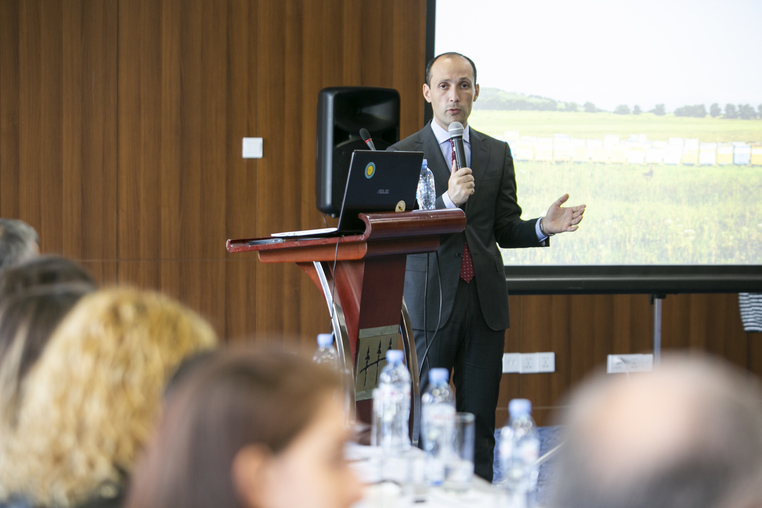
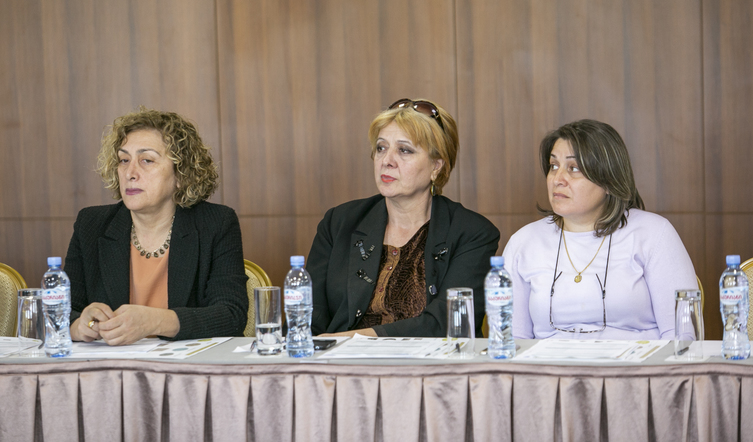
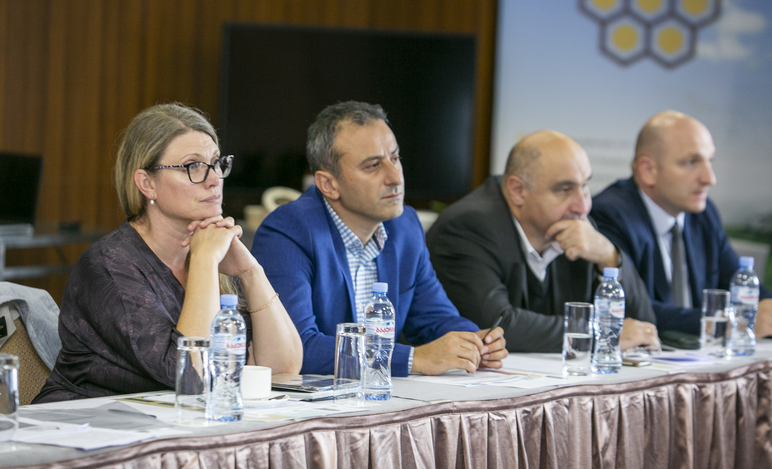
Honey testing requirements for export and laboratory testing capability and reality in Georgia were the main topics of the ALCP Second Honey Sector Advisory Committee meeting on 9th of October, 2019. The meeting gathered up to forty key stakeholders of the sector, including the Georgian Beekeepers Union (GBU), the Minister and Deputy Minister of Environment Protection and Agriculture of Georgia, Head of the National Food Agency, the Laboratory of Ministry of Agriculture (LMA), private laboratories, a honey exporter company Kakhetian Traditional Winemaking KTW.
A laboratory service subsidy scheme was presented at the meeting, that serves for supporting honey export development through creating accessible and affordable laboratory testing services for the Georgian beekeepers and honey exporters, which still remains as one of the key constrains for exporting Georgian honey abroad.
“For me, the honey sector is one of the most complex sectors in agriculture and I think the format of this meeting helps us with finding the best solutions to keep the sector going. I am pleased that today’s topic concerns honey laboratory testing, as we are determined to make honey as an export product. We have already made some important steps, like, participation in Apimondia 2019 and other important events for honey promotion. I think we can elaborate and agree on a future working model” – Levan Davitashvili, the Minister of Environment Protection and Agriculture of Georgia.
“Access to affordable laboratory services will not only decrease prime cost of honey, but will ensure quality honey to be sold at local and international markets” – stated Mikheil Tetruashvili, the GBU board member.
The Minster of Environment Protection and Agriculture of Georgia appointed a focal point in the Ministry to improve communication with beekeepers. The meeting participants agreed to continue work on the topic together with the MEPA and NFA.
The meeting was facilitated by the Swiss Agency for Development and Cooperation (SDC) project the Mercy Corps Georgia implemented the Alliances Caucasus Programme (ALCP).
Photo Source: The Ministry of Environment Protection and Agriculture of Georgia