



From the ISET Economist news (http://www.iset.ge/news/?s=survival&lang=en)
By Nino Mosiashvili
The conclusion of the Association Agreement (AA) with the European Union was euphorically acclaimed by Georgian media as well as political and economic decision makers. Part of the AA is the Deep and Comprehensive Free Trade Agreement (DCFTA). The DCFTA is intended to liberalize trade between Georgia and the EU by lowering tariffs and reducing non-tariff barriers. For agriculture, the most relevant changes relate to food safety (bacterial contaminants, pesticides, inspection, and labeling) as well as animal and plant health (phytosanitation). For the manufacturing sector, the removal of so-called “technical barriers to trade” is similarly important, with the goal being to prevent the usage of technical standards as a means to protect domestic markets from foreign competition. “If regulations are set arbitrarily, they could be used as an excuse for protectionism”, states the World Trade Organization on its homepage.

It is clear that all these agreements require unilateral adjustment of Georgian regulations to European standards. Georgia is economically too small to impose its preferences on Europe. This is stated quite frankly in the AA, when it says that it aims to “support the efforts of Georgia to develop its economic potential via international cooperation, also through the approximation of its legislation to that of the European Union”.
Whether these unilateral adjustments are beneficial for Georgia is not generally clear. European regulations do not necessarily reflect “best international practice”. In democracies, laws and regulations come about through the lobbying efforts of political interest groups much more than through rational planning. In the future, internal political decisions made in the European Union will be relevant for Georgia much more than they were previously, and it will be more difficult to pursue policies tailored to the specific situation of Georgia.
Yet Georgia hopes that the convergence to European standards will make it easier for Georgian firms to access the European market. Most critical in this respect is Georgian agriculture, as it is the sector employing the bulk of the Georgian labor force, while it is at the same time dramatically lagging behind European productivity levels. In 2013, Georgia’s agriculture accounted for only 9.3% of the Georgian gross domestic product but employed about half of the labor force. Thus, one of the benchmarks for evaluating the usefulness of the DCFTA will be its impact on Georgian agriculture.
THROWN INTO THE WATER – WILL IT SWIM?
The impacts of the DCFTA for Georgia were assessed in a report with the lengthy title Trade Sustainability Impact Assessment in support of negotiations of a DCFTA between the EU and Georgia and the Republic of Moldova. It was written by a consortium consisting of the Dutch consulting company Ecorys and the The Center for Social and Economic Research (CASE), a Warsaw-based think tank. On a broad level, the report estimates that due to trade liberalization with the EU the national income of Georgia will increase by 291.9 million euro in the long run, corresponding to a GDP growth of 4.3%. This goes along with an increase in Georgian exports and imports by 12% and 7.5%, respectively, leading to an improvement of the Georgian trade balance. But what about agriculture?
According to the study, the DCFTA will have different effects on different agricultural products, and the overall picture is very ambivalent. The output of some product categories will increase, namely vegetable oils and fats (+6.7%), vegetables, fruits, nuts, and oilseeds(+3.4%), and animal products (+3.1%), while for many other products, the output is expected to shrink, e.g. livestock and meat products (-14.8%), other processed foods (-8.8%),beverages and tobacco (-4.0%), sugar (-2.4%), and other crops (-2.0%). The report attributes the increases to reductions of EU tariffs on Georgian exports and the decreases to the reduction of Georgian tariffs on goods imported from the EU. These numbers, if they say something about the true developments, suggest that parts of Georgia’s agricultural sector will get under severe pressure due to increased competition with European producers.
ECONOMIC DARWINISM
What are the implications for Georgian agricultural policy? Some of the producers will benefit from the integration into the European market, as they can stand the pressure and even expand in this highly competitive environment. Other producers are likely to run into essentially insoluble problems. One particularly beneficial category in this respect is vegetables, fruits, nuts, and oilseeds, because some of the products in that category (e.g. hazelnuts) are labor intensive and serve niche markets. This implies that more people can be employed in the production of these goods, making the transformation to a modern, efficient agriculture less painful, and it means that competition is lower and margins are higher. If policy recognizes these advantages, producers in that category might become “national champions”.
Currently, vegetables, fruits and nuts are in Georgia primarily produced by small and medium sized farmers. Due to lack of greenhouses the production is seasonal. Yet farms can be consolidated and technical equipment can be upgraded. In the end, it will be relevant that Georgia has fundamental advantages in the production of goods in that category, namely clean soils, little usage of chemicals, a relatively large amount of available land for cultivation, and a long tradition in vegetable and fruit production.
Moreover, about half of Georgia’s current export of vegetables, fruits, and nuts already goes to the EU, which means that Georgian producers already have “a foot in the door”. Currently, the exports almost entirely consist of hazelnuts (there are no tariffs, as hazelnuts are already covered by the GSP+ regime, and hazelnuts easily satisfy sanitary and phyto-sanitary standards). Thus, while the DCFTA may not change Georgia’s hazelnuts export to the EU significantly, there may be other niche products in this category, like berries and other kinds of nuts, which may benefit from the DCFTA, for example through adjustments of Georgian regulations regarding product packaging.
It will be important that policy will subscribe to what one might call “Economic Darwinism” – do not try to keep those producers alive that are incapable of surviving, but instead create good circumstances for those that have a future in Georgia.
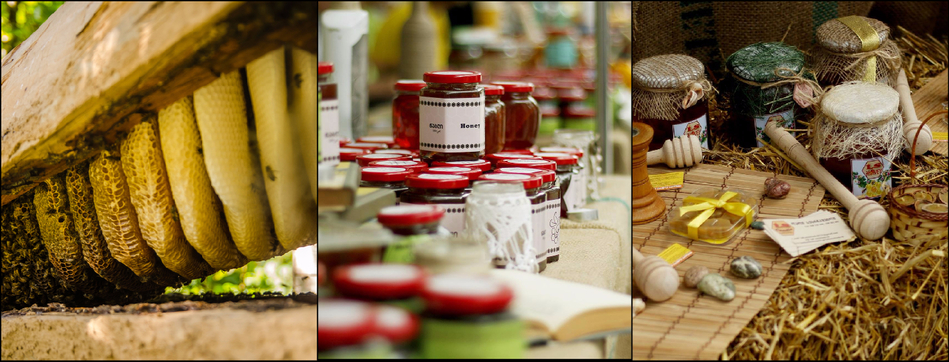
The 45th Apimondia Congress 2017, the most significant event in beekeeping worldwide, will take place from 29th of September to 4th of October, in Istanbul, Turkey. For the first time in Apimondia’s hundred years of history, Georgia will be at this world forum, represented by the Ajarian Beekeeping Business Association (ABBA), exhibiting the different types of honey of its members and promoting Georgian honey and beekeeping.
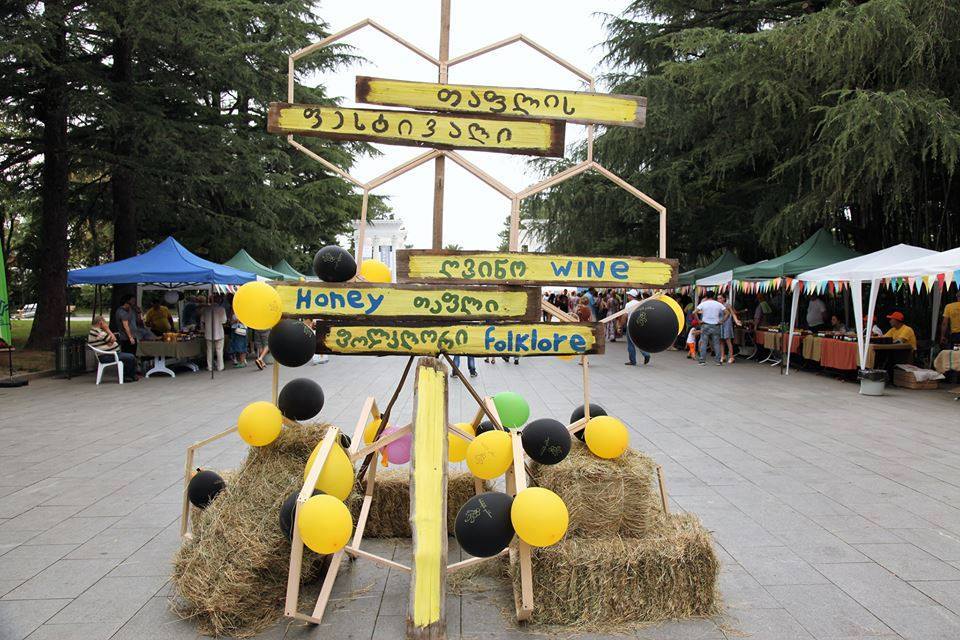
It now has become a tradition of Batumi’s Summer to hold the sweetest festival of the year. The annual Honey Festival was held for the third time on August 12th on Batumi Boulevard. Up to 40 beekeepers from across Georgia who once again presented their honey and by products for the festival visitors. Honey themed entertainment activities for children, including face-painting, games; live music from folk ensembles and rock band were laid on, keeping the celebration spirit all day.
“I’m participating in the festival for the third time, as it helped me to get income and find new clients for honey. I think it is very important event in promotion of the beekeeping sector in Ajara, which is one of the leading honey producer regions” – Revaz Katamadze, the beekeeper from Kobuleti Municipality.
On 18th of July, six Women’s Rooms (WRs) of Ajara region have expanded their linkages by signing a Memorandum of Understanding (MOU) with the Ministry of Health and Social Affairs of Ajara Autonomous Republic. The Ministry will use the Women’s Rooms to reach the rural population though disseminating information and organizing meeting on the health-care programs implemented by the Ministry via WRs.
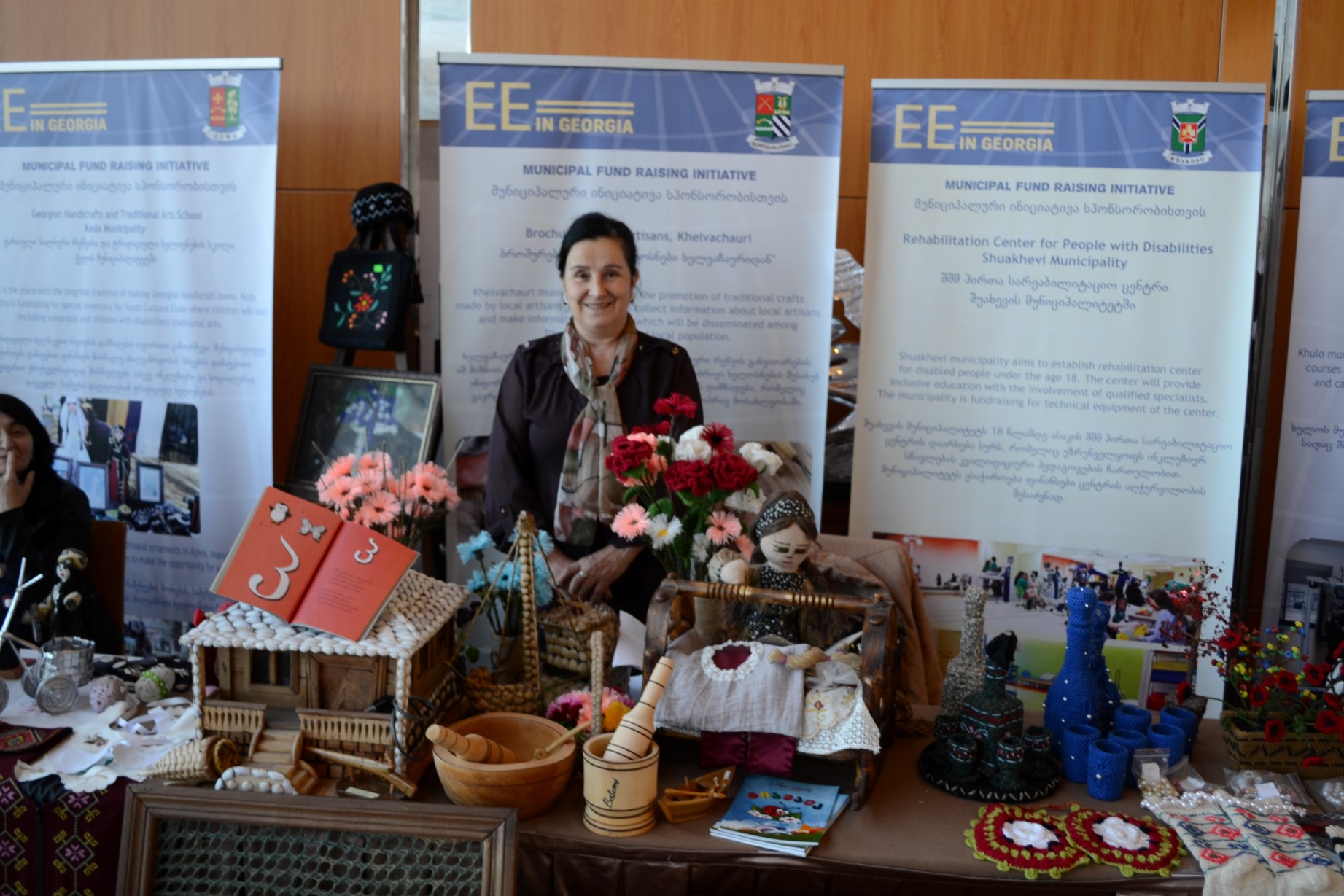
Shuakhevi municipality will have a Rehabilitation Center for the People with Disabilities soon to serve people with the special needs living in Shuakhevi, Khulo and Keda municipalities. The Government of Ajara Autonomous Republic has recently supported and financed the initiative with 196 000 Gel for its construction works.
4 months ago the municipality displayed the idea, which has been floating for years, on EEG Event for fundraising. The Deputy Gamgebeli of Shuakhevi municipality, Rusudan Shavadze, trained on the project writing, transferred the idea to the real project and the municipality was able to start attracting the funds for the implementation. After the EEG, the Association For Each Otherconducted the survey on the people with disabilities in the municipalities (Khulo, Shuakhevi, Keda) with the involvement of the local people; the Adjaristskali Georgia LLC expressed interest to make the contribution to the project; other organizations, like USAID and Embassy of France also are ready to contribute with providing training for inclusive education specialists, who will teach in the center. The contribution from each side is under discussion and will be known within month.
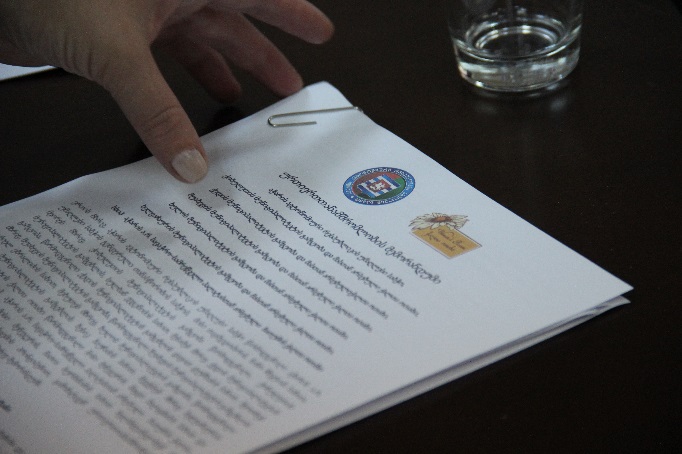
On 7th of July, a Memorandum of Understanding (MOU) was signed between the Women’s Rooms and the Gender Equality Council of Supreme Council of Ajara Autonomous Republic. According to the MOU, the Council will work with municipalities through the WRs to raise public awareness of gender and increase women’s participation in the decision-making processes. The Gamgebelis and other municipality representatives attended the ceremony and supported the idea.
“The Women’s Rooms have become one of the main powers in ensuring gender equality in the municipalities. The MOU aims to continue and strengthen our cooperation with the WRs and fulfill the mission of increasing women’s participation in the public sector”- Nino Chkhetia, the Chairwoman of the Gender Equality Council.
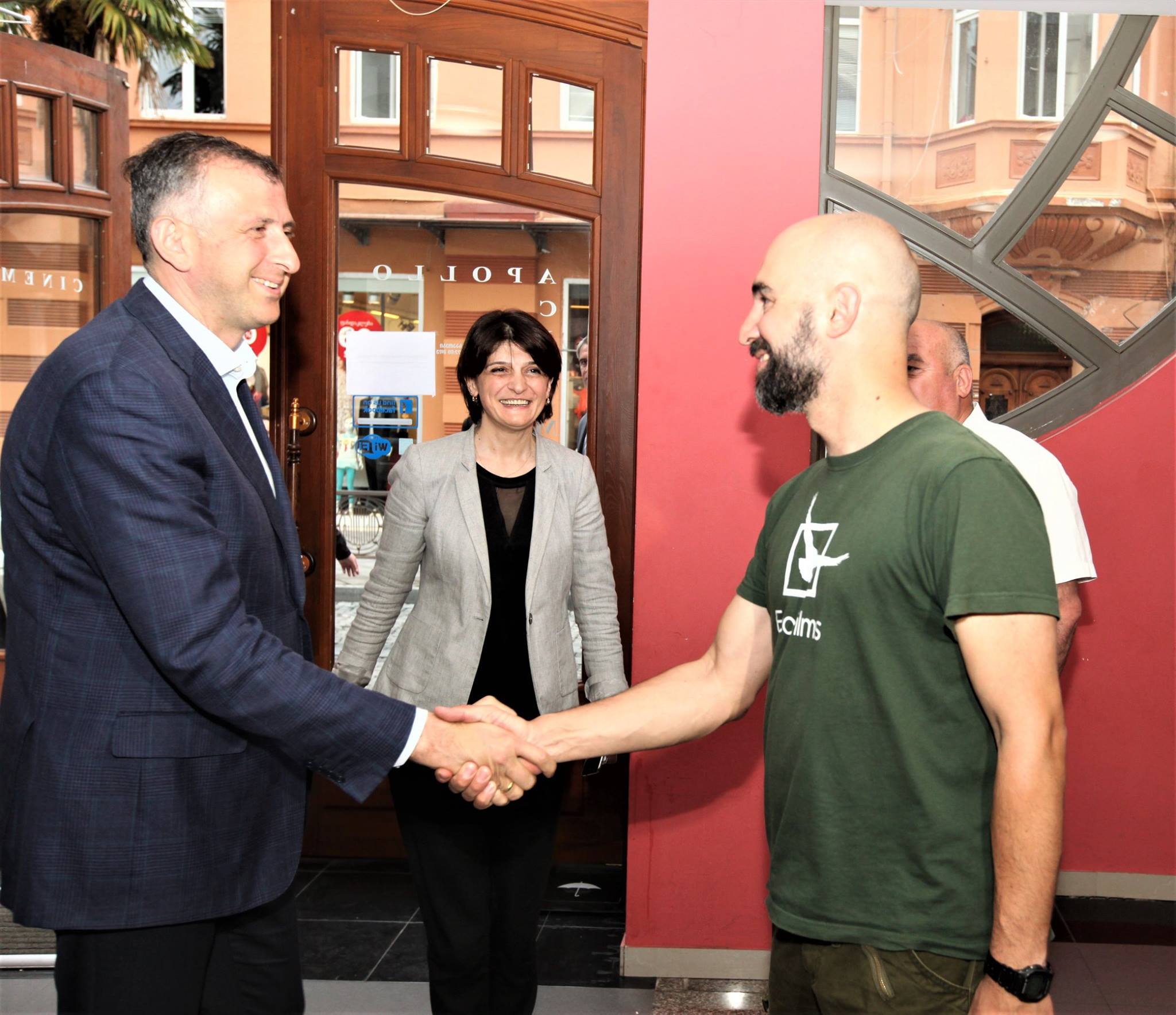
On 16th of June, the premiere of Jara was held in Batumi for the local governmental and non-governmental sector, funded and organized by the Ministry of Education, Culture and Sport of Ajara Autonomous Republic. The decision-makers of the region attended the screening: the Chairman of the Ajara Autonomous Republic, the local Ministers of Agriculture, Education and Health; the Mayor of Batumi, the representatives of Department of Tourism and Resorts of Ajara, municipalities and international organizations.
The film was received with great interest and applauses. Two main actors of the movie, who are also local residents and beekeepers themselves, were gifted with the modern honey extractor by the Minister of Agriculture.



