



From the ISET Economist news (http://www.iset.ge/news/?s=survival&lang=en)
By Nino Mosiashvili
The conclusion of the Association Agreement (AA) with the European Union was euphorically acclaimed by Georgian media as well as political and economic decision makers. Part of the AA is the Deep and Comprehensive Free Trade Agreement (DCFTA). The DCFTA is intended to liberalize trade between Georgia and the EU by lowering tariffs and reducing non-tariff barriers. For agriculture, the most relevant changes relate to food safety (bacterial contaminants, pesticides, inspection, and labeling) as well as animal and plant health (phytosanitation). For the manufacturing sector, the removal of so-called “technical barriers to trade” is similarly important, with the goal being to prevent the usage of technical standards as a means to protect domestic markets from foreign competition. “If regulations are set arbitrarily, they could be used as an excuse for protectionism”, states the World Trade Organization on its homepage.

It is clear that all these agreements require unilateral adjustment of Georgian regulations to European standards. Georgia is economically too small to impose its preferences on Europe. This is stated quite frankly in the AA, when it says that it aims to “support the efforts of Georgia to develop its economic potential via international cooperation, also through the approximation of its legislation to that of the European Union”.
Whether these unilateral adjustments are beneficial for Georgia is not generally clear. European regulations do not necessarily reflect “best international practice”. In democracies, laws and regulations come about through the lobbying efforts of political interest groups much more than through rational planning. In the future, internal political decisions made in the European Union will be relevant for Georgia much more than they were previously, and it will be more difficult to pursue policies tailored to the specific situation of Georgia.
Yet Georgia hopes that the convergence to European standards will make it easier for Georgian firms to access the European market. Most critical in this respect is Georgian agriculture, as it is the sector employing the bulk of the Georgian labor force, while it is at the same time dramatically lagging behind European productivity levels. In 2013, Georgia’s agriculture accounted for only 9.3% of the Georgian gross domestic product but employed about half of the labor force. Thus, one of the benchmarks for evaluating the usefulness of the DCFTA will be its impact on Georgian agriculture.
THROWN INTO THE WATER – WILL IT SWIM?
The impacts of the DCFTA for Georgia were assessed in a report with the lengthy title Trade Sustainability Impact Assessment in support of negotiations of a DCFTA between the EU and Georgia and the Republic of Moldova. It was written by a consortium consisting of the Dutch consulting company Ecorys and the The Center for Social and Economic Research (CASE), a Warsaw-based think tank. On a broad level, the report estimates that due to trade liberalization with the EU the national income of Georgia will increase by 291.9 million euro in the long run, corresponding to a GDP growth of 4.3%. This goes along with an increase in Georgian exports and imports by 12% and 7.5%, respectively, leading to an improvement of the Georgian trade balance. But what about agriculture?
According to the study, the DCFTA will have different effects on different agricultural products, and the overall picture is very ambivalent. The output of some product categories will increase, namely vegetable oils and fats (+6.7%), vegetables, fruits, nuts, and oilseeds(+3.4%), and animal products (+3.1%), while for many other products, the output is expected to shrink, e.g. livestock and meat products (-14.8%), other processed foods (-8.8%),beverages and tobacco (-4.0%), sugar (-2.4%), and other crops (-2.0%). The report attributes the increases to reductions of EU tariffs on Georgian exports and the decreases to the reduction of Georgian tariffs on goods imported from the EU. These numbers, if they say something about the true developments, suggest that parts of Georgia’s agricultural sector will get under severe pressure due to increased competition with European producers.
ECONOMIC DARWINISM
What are the implications for Georgian agricultural policy? Some of the producers will benefit from the integration into the European market, as they can stand the pressure and even expand in this highly competitive environment. Other producers are likely to run into essentially insoluble problems. One particularly beneficial category in this respect is vegetables, fruits, nuts, and oilseeds, because some of the products in that category (e.g. hazelnuts) are labor intensive and serve niche markets. This implies that more people can be employed in the production of these goods, making the transformation to a modern, efficient agriculture less painful, and it means that competition is lower and margins are higher. If policy recognizes these advantages, producers in that category might become “national champions”.
Currently, vegetables, fruits and nuts are in Georgia primarily produced by small and medium sized farmers. Due to lack of greenhouses the production is seasonal. Yet farms can be consolidated and technical equipment can be upgraded. In the end, it will be relevant that Georgia has fundamental advantages in the production of goods in that category, namely clean soils, little usage of chemicals, a relatively large amount of available land for cultivation, and a long tradition in vegetable and fruit production.
Moreover, about half of Georgia’s current export of vegetables, fruits, and nuts already goes to the EU, which means that Georgian producers already have “a foot in the door”. Currently, the exports almost entirely consist of hazelnuts (there are no tariffs, as hazelnuts are already covered by the GSP+ regime, and hazelnuts easily satisfy sanitary and phyto-sanitary standards). Thus, while the DCFTA may not change Georgia’s hazelnuts export to the EU significantly, there may be other niche products in this category, like berries and other kinds of nuts, which may benefit from the DCFTA, for example through adjustments of Georgian regulations regarding product packaging.
It will be important that policy will subscribe to what one might call “Economic Darwinism” – do not try to keep those producers alive that are incapable of surviving, but instead create good circumstances for those that have a future in Georgia.
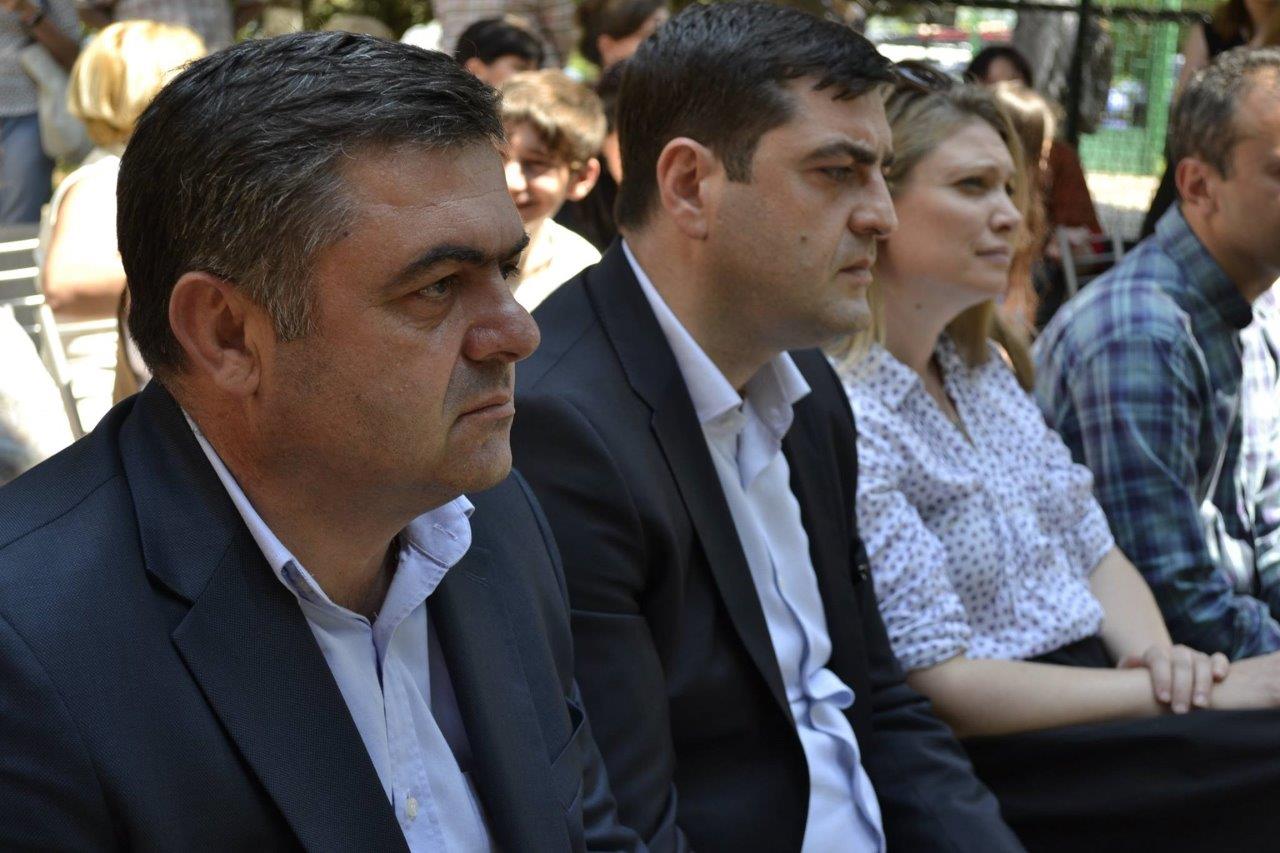
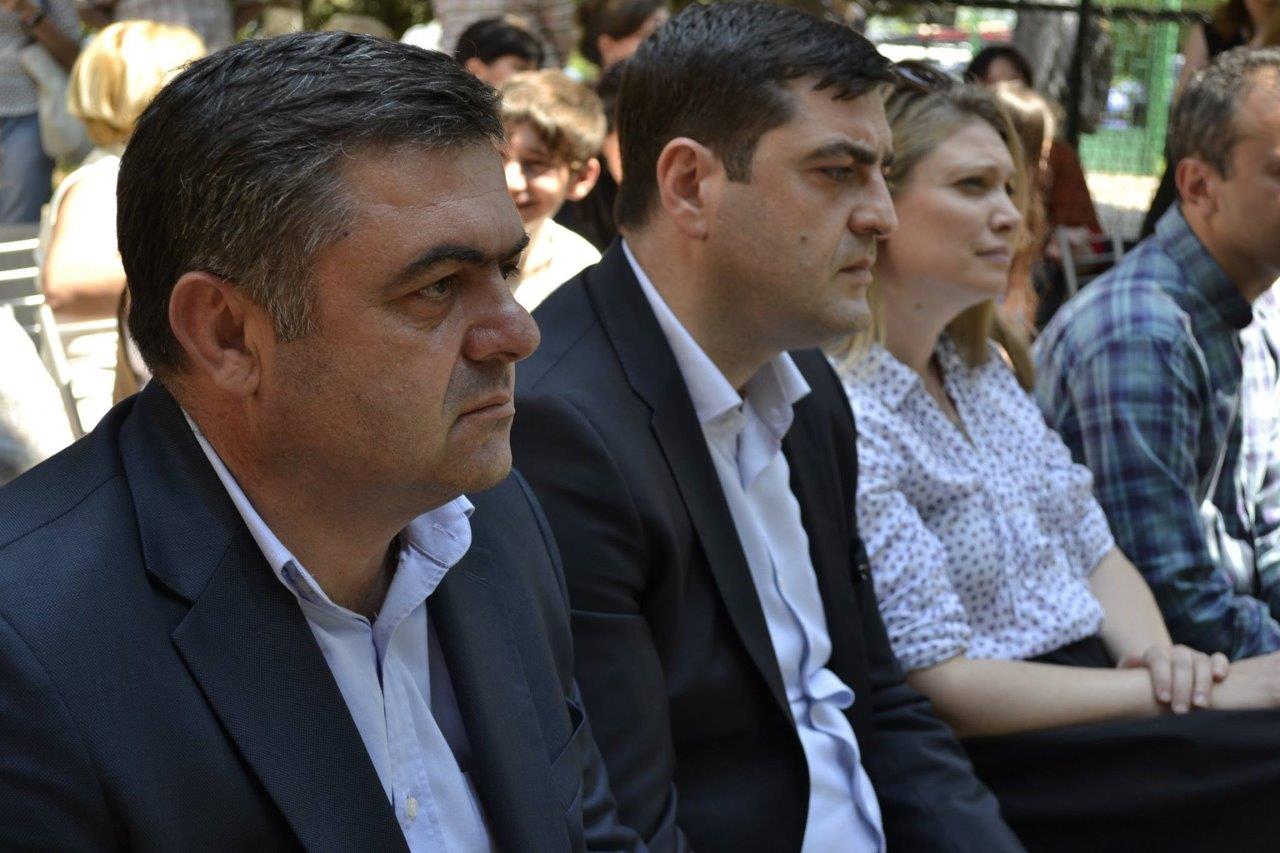
The First Lady of Georgia Maka Chichua visited Bolnisi municipality’s educational- rehabilitation center for children with disabilities. While there she also received information about Bolnisi’s Municipally run Women’s Room, a service providing consultation and linkages to resources for local rural inhabitants. The First Lady was hosted by the Governor of Kvemo Kartli Grigol Nemsadze and the Gamgebeli of Bolnisi Municipality Davit Sherazadishvili. The Alliances Caucasus Programme who facilitated the inception of the rooms now present in 17 rural municipalities and two cities in Georgia was invited and highlighted the pertinence of the service to the supporting the initiative of the First Lady.
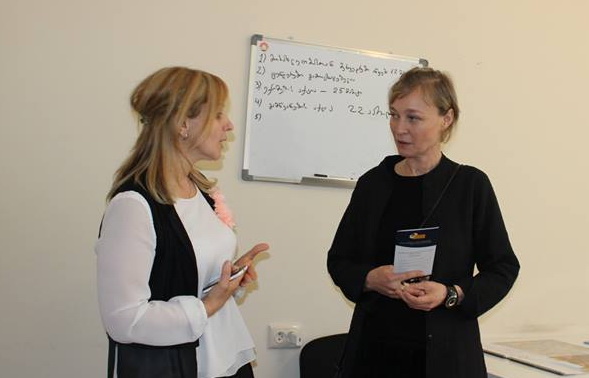
Three local women have been employed by the Association for Each Other through Keda municipality Women’s Room. The women will conduct a survey about the people with disabilities in every administrative unit and village of the municipality.
“The Women’s Room has given me an opportunity to get my own income. It’s temporary, but I think it will be the beginning of my active social life. This experience will give me new skills and become more involved in the local activities, I want to use this chance and make new linkages“. – says Mari Baramidze, one of the employed wom
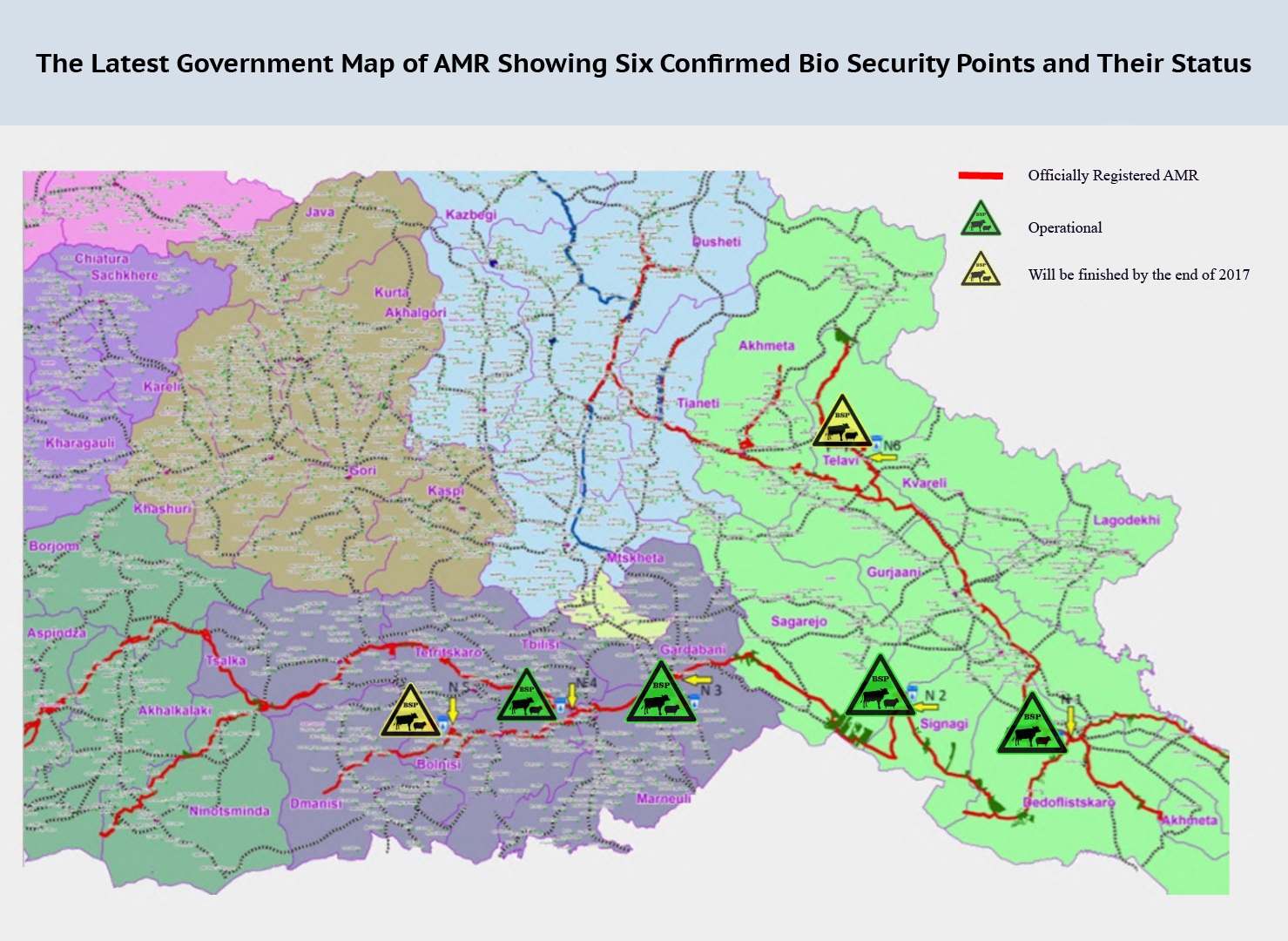
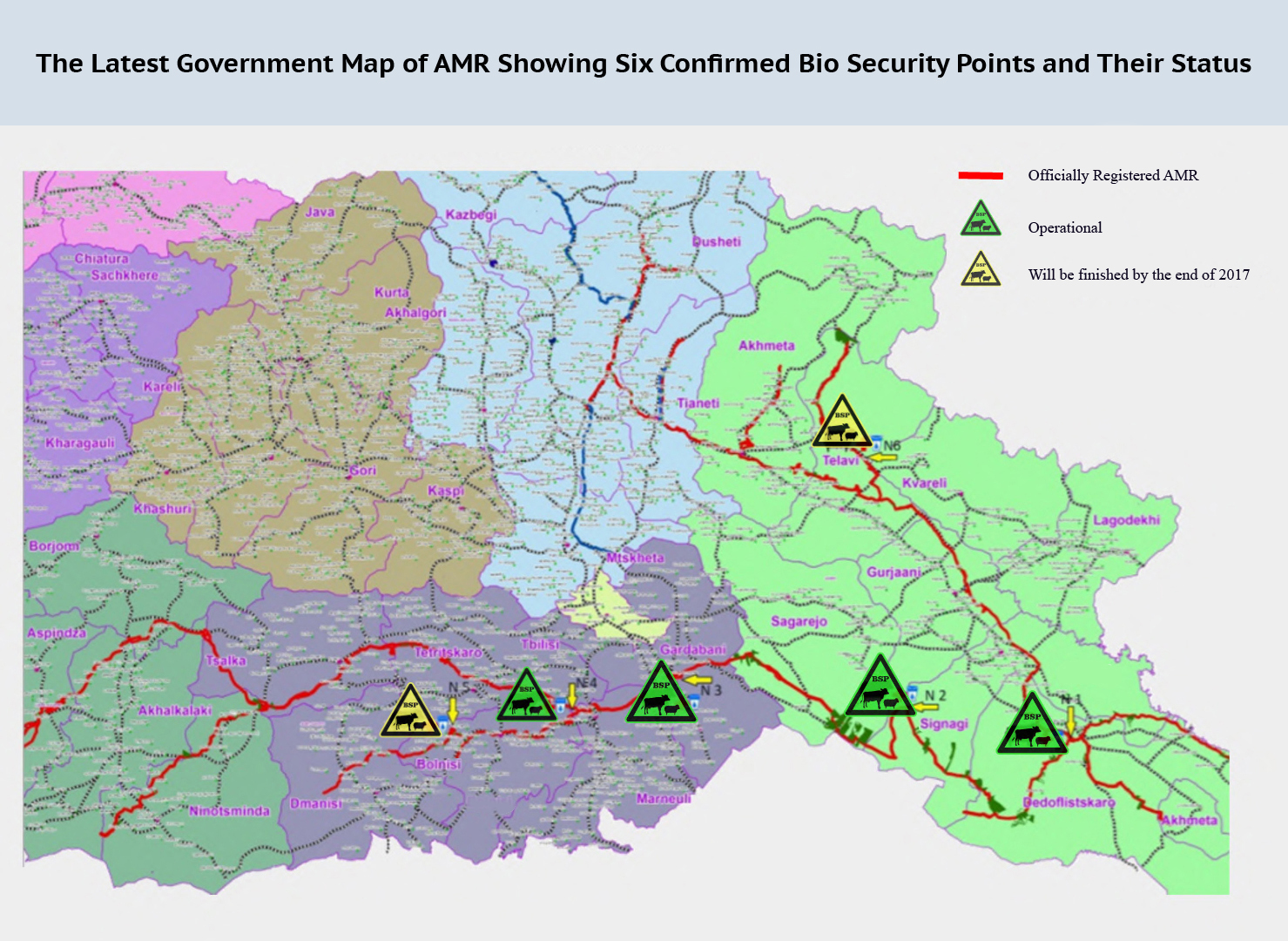
The Spring transhumance of the annual movement million heads of livestock has recently started. Georgian Shepherds will benefit from two new Bio Security Points in Dedoplistskaro and Signagi in addition to existing points in Marneuli and Rustavi municipalities. All four BSPs are in full operational mode ready to serve nomadic farmers. EU standard infrastructure, duly equipped specialists hired by the NFA and the special chemicals for treating animals against parasites - are in place to ensure health control of migrated livestock. A special certificate is also issued for farmers proving the livestock was treated against external parasites.
Two more BSPs in Telavi and Bolnisi municipalities funded by the government of Georgia are now underway and will be finished by the end of 2017.


'Jara' has been premiered on 30th of March with great success. More than 400 representatives from the regional and central government, the non-governmental sector, the donor organizations gave standing ovations and applauses to the film makers and artists.
‘The film is shot in a professional manner. It is astonishing and wild to see. I have no idea how the crew has managed to shoot the bears and wolves. The special tribute should be paid to the composer of the film’s original soundtracks. It should be seen by as many people as possible: melancholy of the season changings, music and just amazing views of the wild nature, never seen in the daily lives’ – Dima Pursanov.
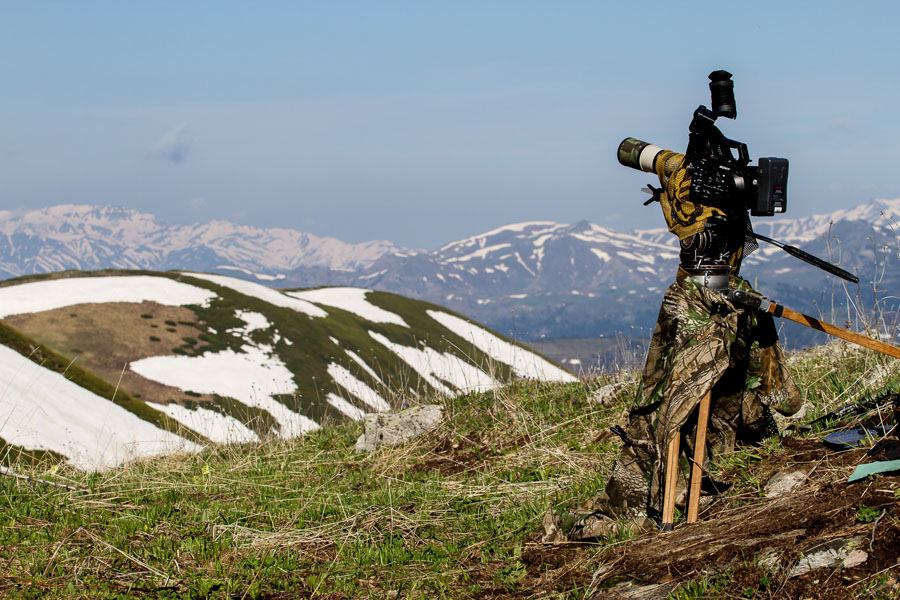
The promotion of Ajara as a world class ecological hotspot and eco-tourism destination is soon set for a massive boost. Filming on the ALCP facilitated Eco Films production ‘Jara’, a 52 minutes, a half-wildlife, half-human story observational documentary about mountains of one specific region of Republic of Georgia – Ajara, has been completed and the premiere will be held at Amirani Cinema on the 30th of March. The film has brought together various conservation stakeholders World Wildlife Fund Georgia, Caucasus Nature Fund, Eco Tours Georgia, Environmental Association Psovi, to produce what will be a stunning showcase of the beauty, nature and unique livelihoods of the rural inhabitants of Ajara.
The programme has already worked with EcoTours Ltd on developing Ajara as a destination for rural tourism based on nature and people. View their promotional video here and visit their website where they offer tailor-made tours to help you unlock the beauty of the region.

Equitable Empowerment in Georgia, an event celebrating community responses to equitable local government initiatives empowering women and men in communities of three regions of Georgia, will be held at Hualing Hotel in Tbilisi on the 17th of March, under the patronage of the Gender Equality Council of the Parliament of Georgia.
Please see the event website www.eeg.ge.
Up to 500 delegates - National, Regional and Local Government decision-makers, Women's Rooms managers and villages representatives, civil society and private sector and the women and men of the communities themselves - will present their motivations, methods and achievements. Likeminded people from the worlds of sport, culture, business and entertainment who seek to enrich the lives of women and men and boys and girls in Georgia in their work will speak and share their view about why this matters. Showcase stands from communities, enterprises, private sector, media and civil society will add colour and interest framed by the photographs of the municipal photo competition.
The event has been facilitated through the Alliances Lesser Caucasus Programme funded by the Swiss Agency for Development and Cooperation and implemented by Mercy Corps Georgia.



