



By Helen Bradbury: Team Leader, Alliances Lesser Caucasus Programme
We are in an interesting conundrum. Gender in most places has been written-in to law. Bar a few notable exceptions, every country in the world, has varying degrees of success in applying universal suffrage. Fifty countries are signed up to the CEDAW convention (the UN’s Convention on the Elimination of all forms of Discrimination Against Women). On the CEDAW world map of Discrepant Government Behaviour Concerning Women, the countries shaded dark green which denotes ‘virtually no enforcement of laws consonant with CEDAW or such laws do not even exist’, are where you expect them to be and in fact they are relatively few. It is the next two categories which disturb, covering the vast majority of the globe, the mid and lighter green, where laws are partly or fully consonant with CEDAW but there is little effective enforcement or spotty enforcement of them and the issue is low priority or hit and miss. After the gains, the laws and ratifications of the last centuries it seems that we must tread very carefully indeed for we must counteract indifference, in which inertia and inactivity stop us moving forward.
In Britain in 1913 Emily Davison threw herself under the kings horse at the Epson Derby, women were in and out of prison under the cat and mouse act where they were let out to gain in strength after their relentless hunger striking and brutal force-feeding and then put back in again. They engaged in arson, attacked works of art. This was the fight for the vote for women in Britain, visible, violent and vehement. In 1928 they got franchaise equal to men. Whether you were fighting for or against, agreed or not, you cared, passionately.
Those of us who interest ourselves in activities concerning the development of equitable solutions to development problems, who are concerned with ensuring that both women and men benefit from strategies designed to impact the poor, have probably at some time in our dealings experienced a certain phenomenon. I was vastly reassured recently, if not slightly depressed, to see that even Hillary Clinton, one of the most powerful women in the world, had experienced it:
“I have been championing the rights of women and girls around the world and here at home for many years,” “and I got tired of seeing...foreign leaders, business executives, even senior officials in our own government...smile and nod when I raised these issues… ‘Oh right, I knew she was going to raise women and girls, I will just sit here and smile, it will pass, and then we’ll talk about really important things."
Hillary Clinton, Data2X Press Event, New York, January 12, 2015
Being Hillary Clinton probably guaranteed the smiles, in my dealings, in the course of programming and most notably with all levels of government, I have experienced some less sanguine reactions, but most often a shrug, an intake of breath, a glazing over, a good time to check the cell phone and a knowledge as she rightly points out that it will pass fairly soon, being as it is, as everyone has figured out, an add on. It is insidious in its passivity, there is no heat in the exchange as we are all of course in agreement, and the issue slips away, dissolves in inactivity.
How then do we keep it alive? How do we stop it being an add-on and counteract indifference? How do we make it real in a constructive way? How do we make sure it gets done?
Equitable solutions and women’s economic empowerment (WEE) which is what we work for on the ALCP, require hard work and they are difficult to do, but not because the means to achieve the solutions are complicated, they are in fact extremely simple, but they do require coordination, commitment, cooperation, and most of all persistence. Tools, procedures, operating mechanisms and strategy for ensuring women’s economic empowerment must be built in to the programme structure, adhered to and carried out every day as normal. They must be operationalized. The issue of indifference here noted in government could equally be applied to development. Not in ethos and intent, but in practice. In a recent literature review of measuring women’s economic empowerment, of the thirty projects reviewed only eleven had an indicator to measure the most basic of all WEE measurements; access to services. The primary recommendation in the review for projects to improve their WEE performance was to collect gender disaggregated data. This is just the bottom line.
We talk of complex issues, change pathways, negotiating ancient customs of how to measure agency over household income. Just doing the basics would be a great start and essential first step. Hillary Clinton is of course once more on the button with Data2X—a joint project, with the Clinton & Gates foundations, UN and others, to gather and start a gender data revolution, which will allow policymakers to recognize problems more clearly and create more informed policy. The first step is clear, we all know what to do, we just need to do it and keep doing it.
For more on operationalizing WEE in Alliances see: DCED Webinar Measuring Women's Economic Empowerment
Measuring Women's Economic Empowerment in Private Sector
Helen Bradbury is a development professional with a career spanning market system approaches to solving problems ranging from the welfare of working horses in Ethiopia to early economic recovery in post-tsunami Indonesia. She now manages Mercy Corps' flagship market systems development SDC funded Alliances programme in Georgia, and advises on M4P and women's economic empowerment. See www.aclp.ge for more details.
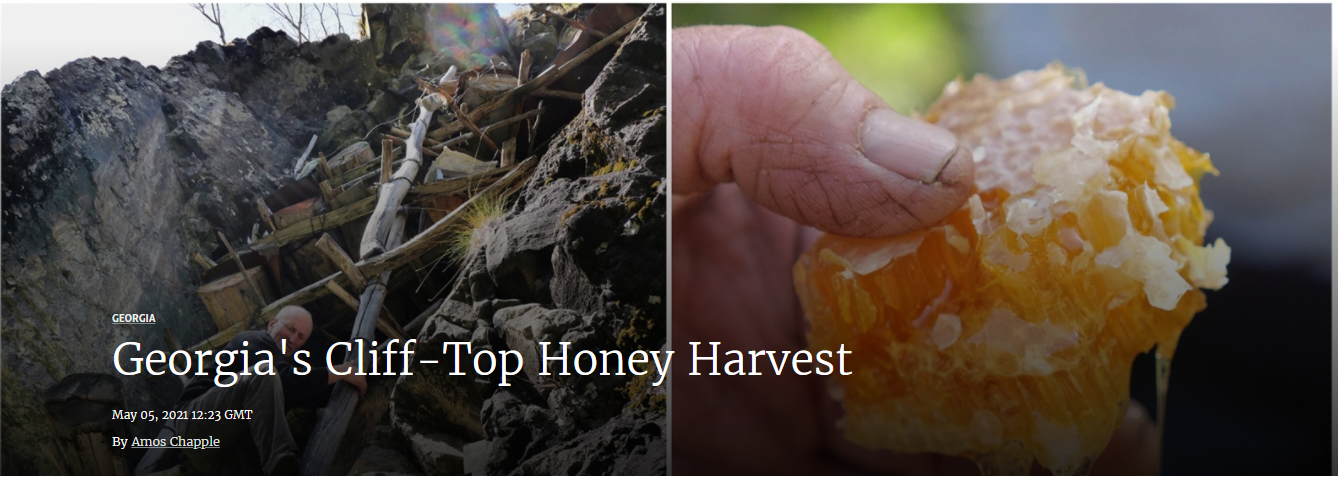
Radio Free Europe/Radio Liberty, an international media organization broadcasting in twenty-seven languages in twenty-three countries, published an article about Jara: Georgia’s Cliff-Top Honey Harvest by an international photographer/journalist Amos Chapple. He reached out to the Jara Beekeepers Association (JBA) and travelled to Ajara to see Jara beekeepers climbing heights for Jara honey harvest. Radio Tavisupleba (Radio Liberty Georgia) also put a Georgian version of the article on its website.
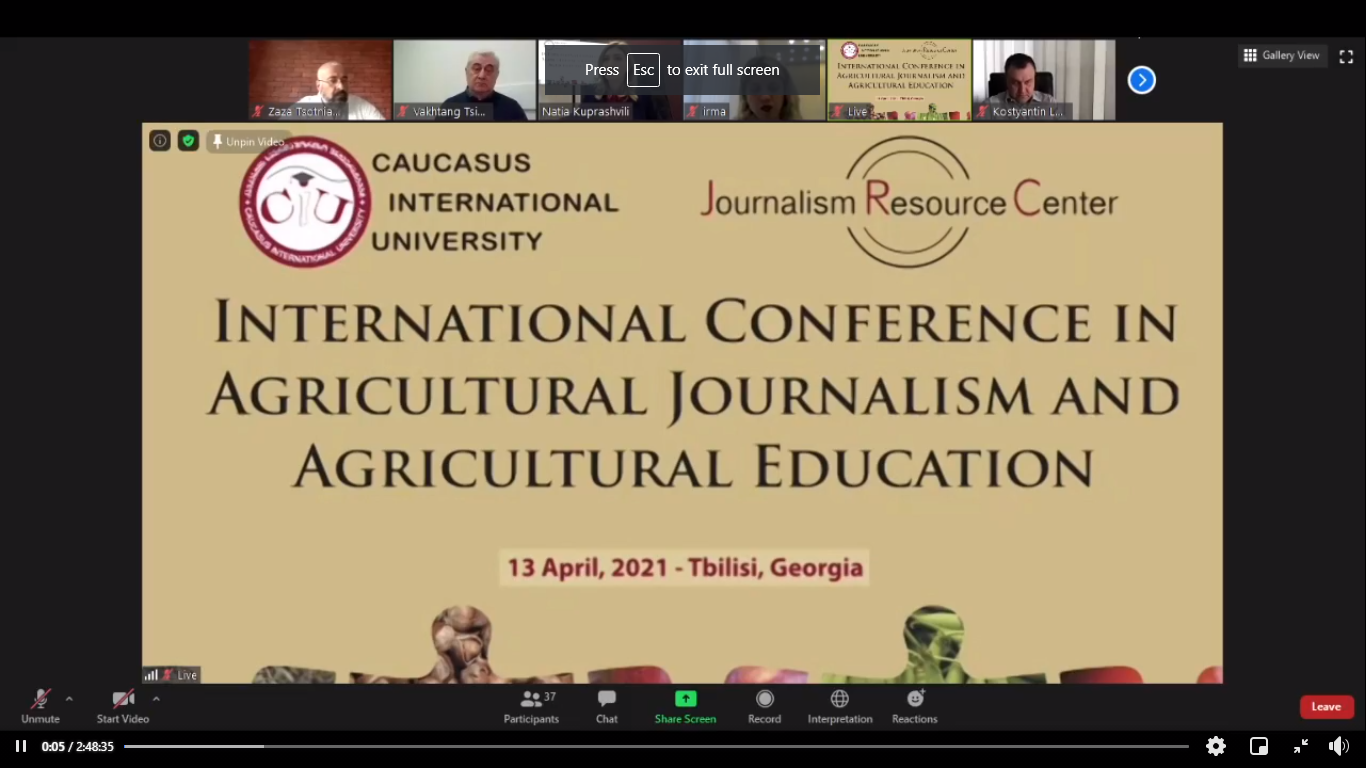
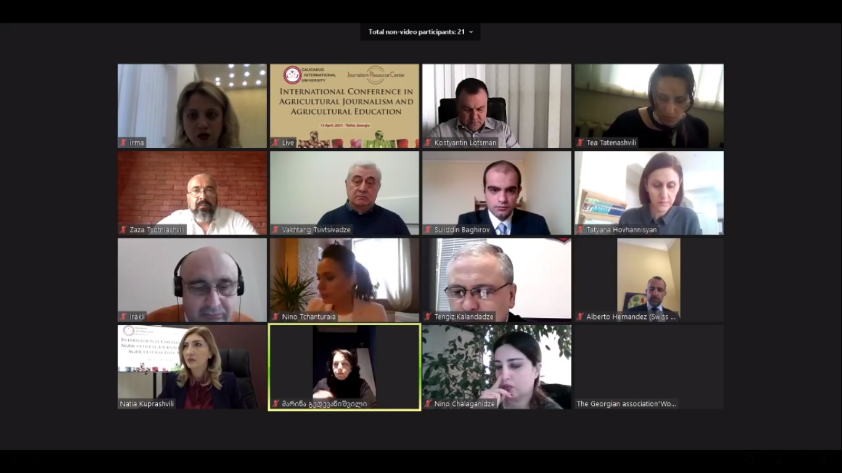
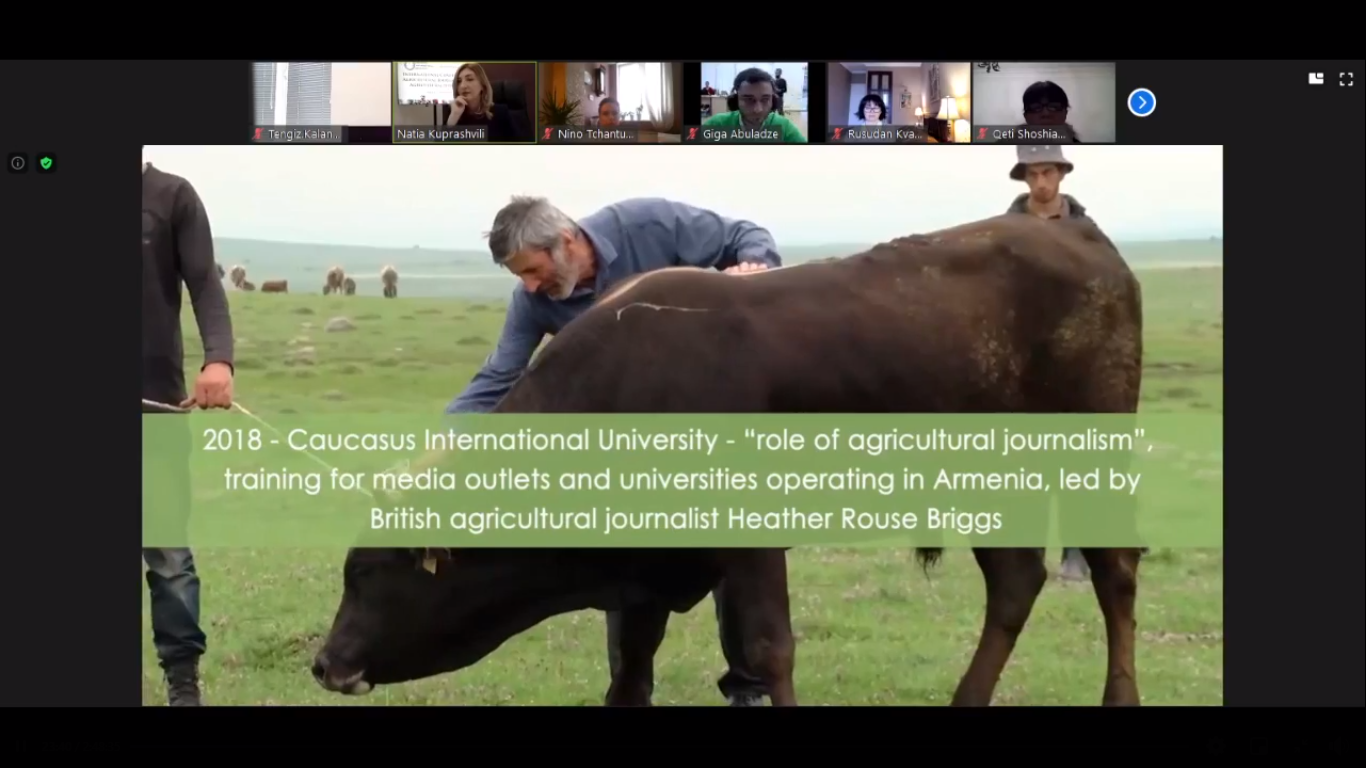
On April 13th, an online event of the Journalism Resource Center (JRC) International Conference in Agricultural Journalism and Agricultural Education brought together regional academic and media representatives from Georgia, Armenia, Azerbaijan, Moldova and Ukraine. The enthusiasm for, dedication towards and interest in agri journalism and its importance for people and youth were striking.
The Deputy Regional Director of the Swiss Cooperation Office (SCO) did the opening speech. The representatives from Georgia showed that they understand the demand for and are fully engaged in the media market for agri journalism.
‘Agri journalism is an integrated course for bachelor’s students. After Training of Trainers for lecturers we will develop a separate course. We also see the demand from students. Cooperation with media and government agencies is crucial in this regard.’ - A representative from Brusov State University in Armenia.
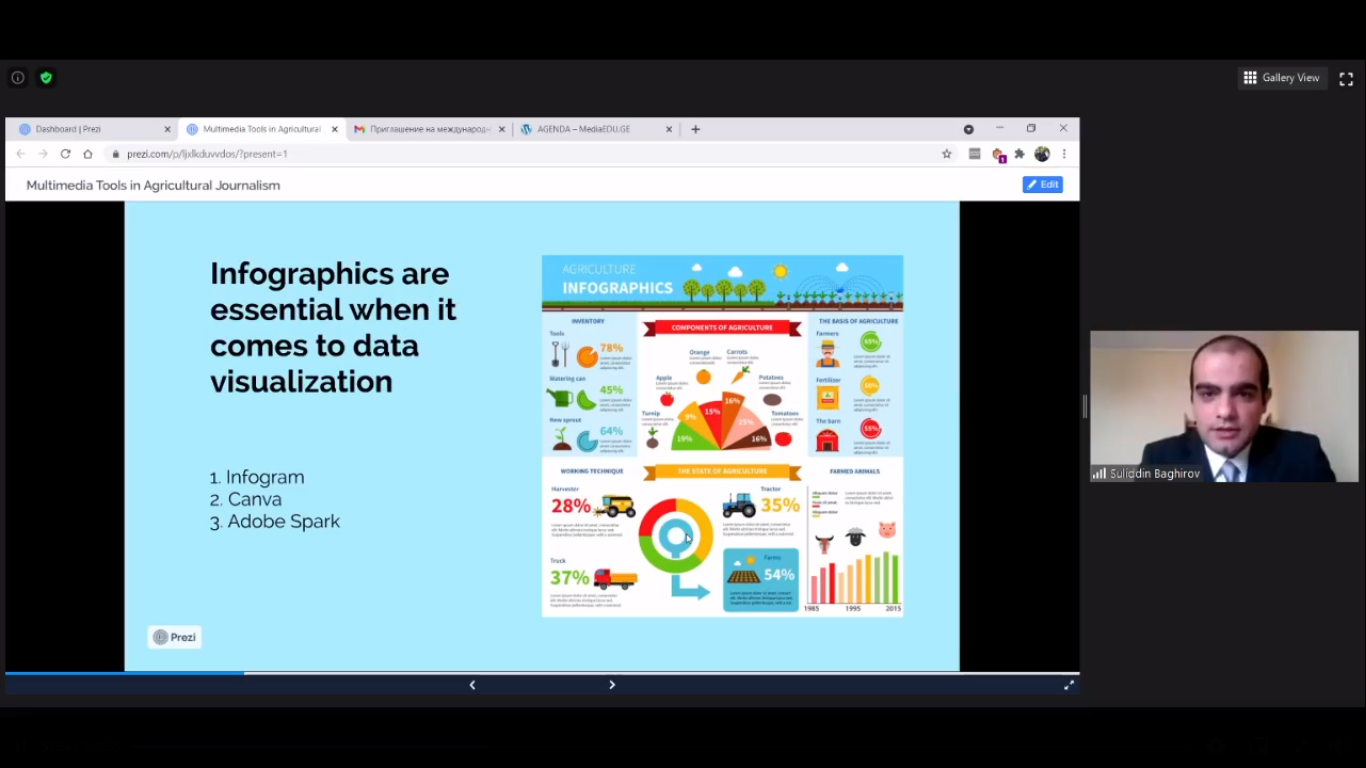
A freelance journalist from Baku talked about the usage of multimedia tools in agri journalism. The field of agri journalism is attractive but seems difficult to attain to media representatives from Moldova and Ukraine. A Producer of Volinsk Branch of National Public TV and Radio Company of Ukraine expressed his willingness to co-operate with the JRC to copy some activities related to agri journalism.
‘I am surprised by hearing about Georgia and Armenia, where agricultural education works so well’. - The LikTV Founder in Moldova, who empathized with the difficulties expressed by the representative of Ukraine and stated that universities in Moldova need to work on establishing agricultural journalism.
The ALCP Team Leader spoke about the programme support for agri journalism development in an interview on Agrogaremo TV. An agri journalism course alumni shared his experience and motivation with the JRC. A short documentary video by the JRC tells us a story about agri journalism development.
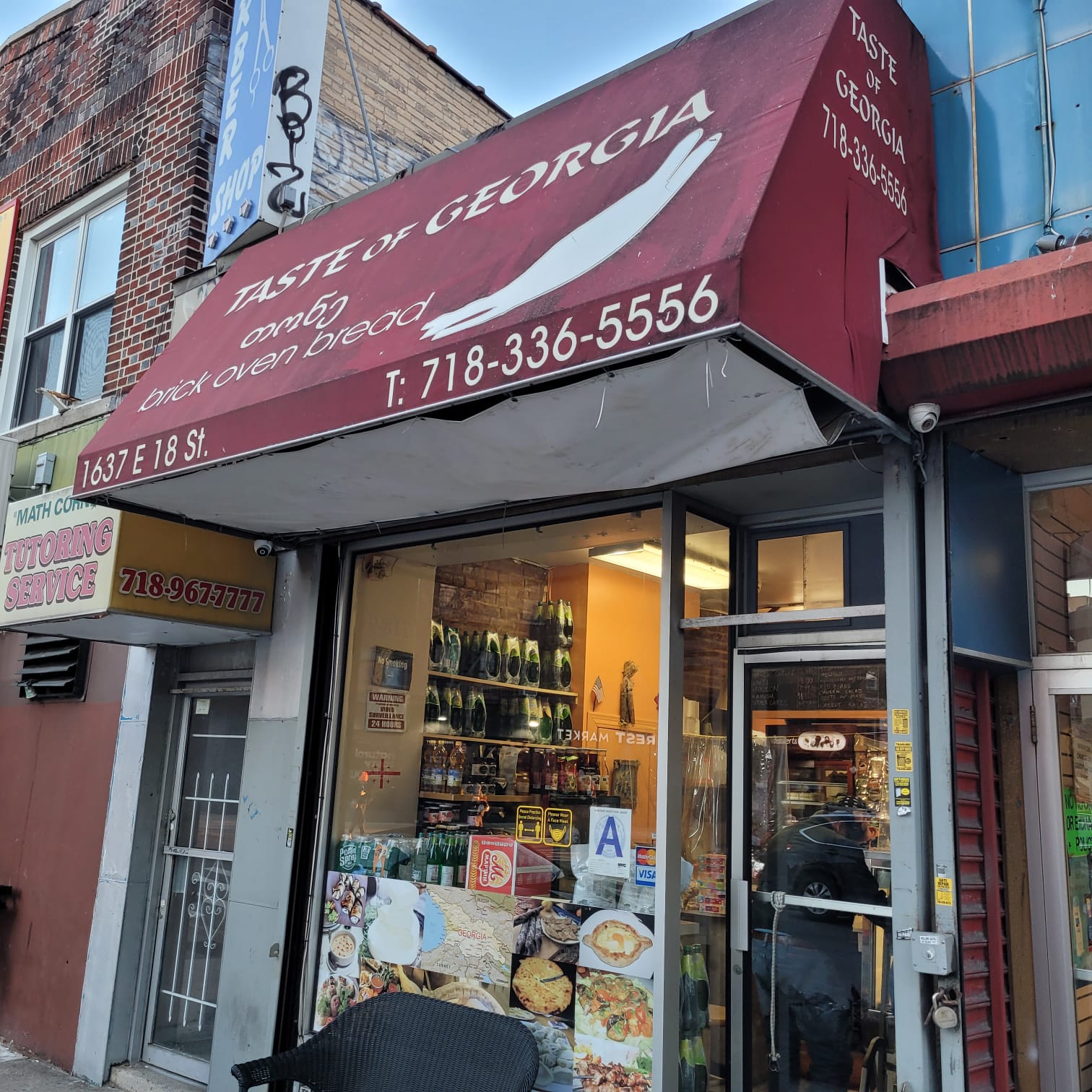
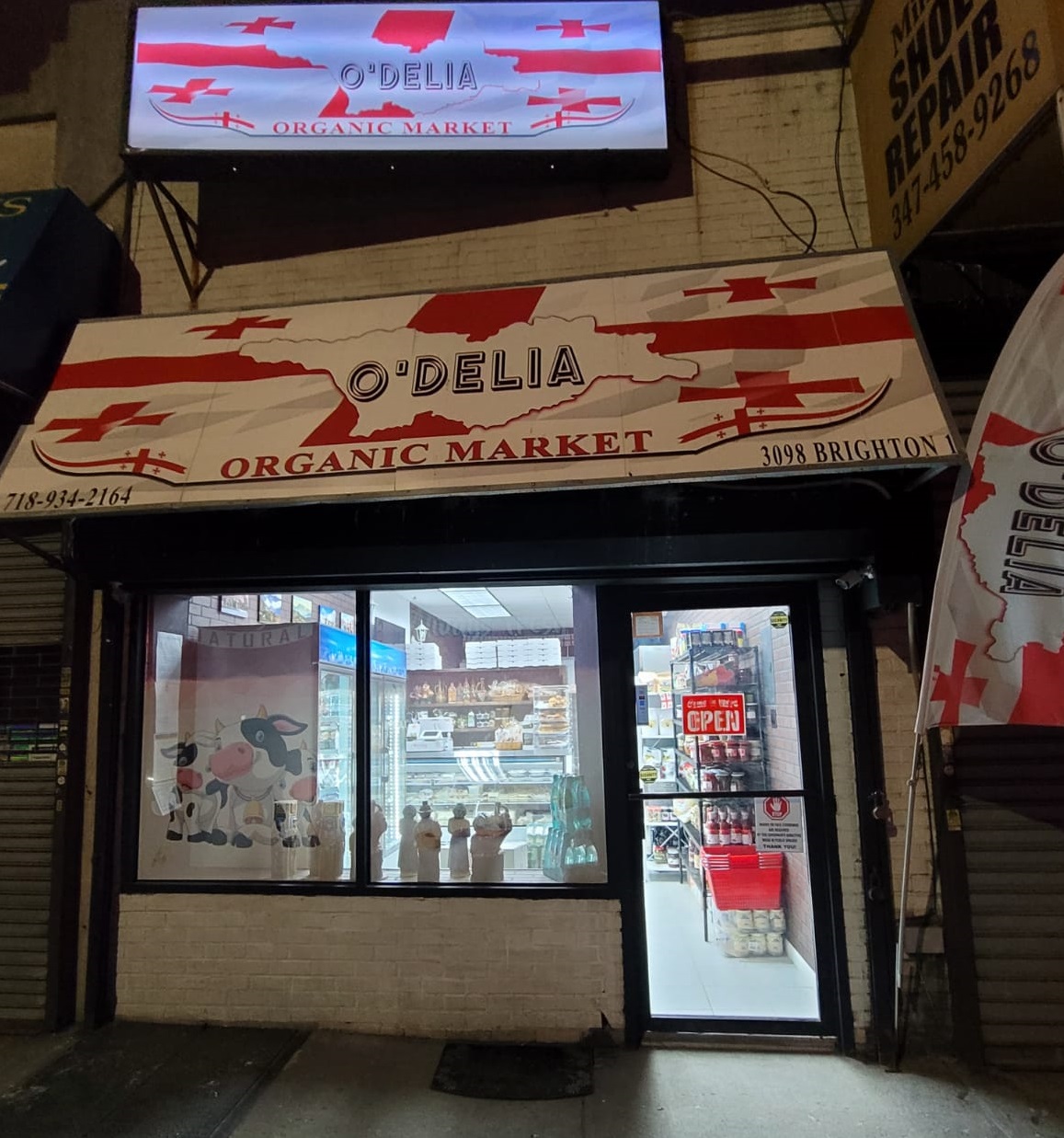
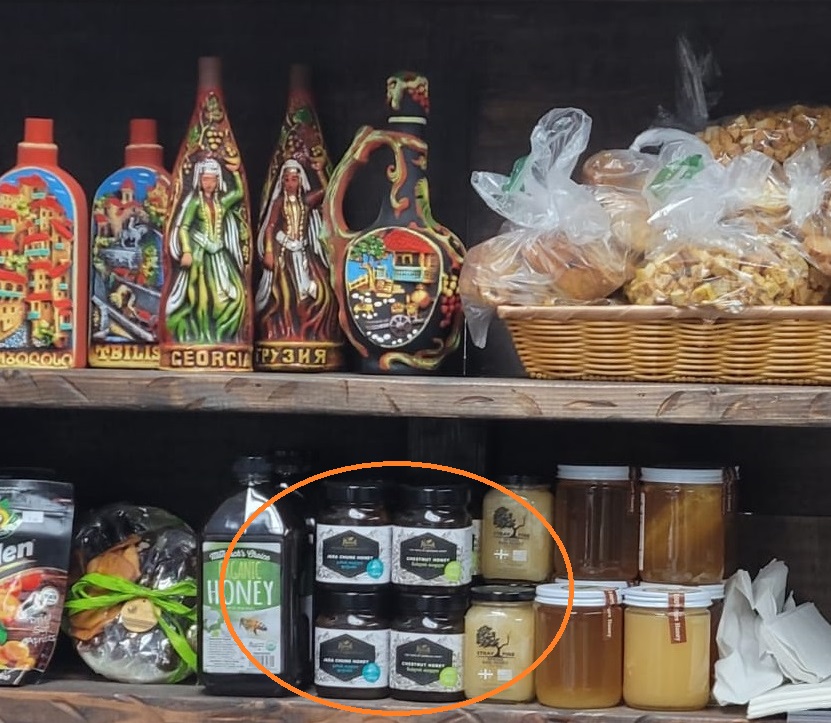
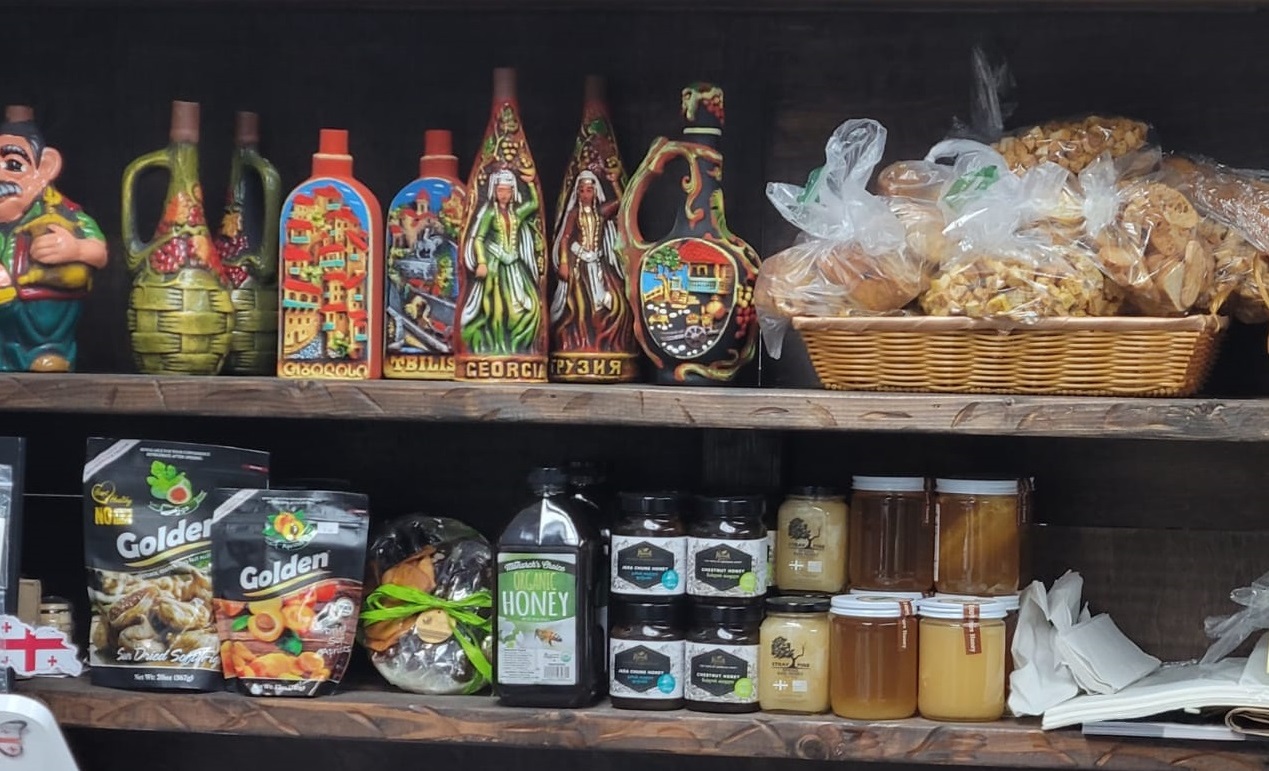
Nena a honey export company has been exporting since 2019. Chestnut and Jara honey have been sold in twenty shops in New York, Pennsylvania and New Jersey from January, 2021. Nena also exported Jara honey to Japan. And by the end of February, Bio Jara honey, a new product will be exported to the USA. Canada is a promising market and has repeated its order for the fourth time.
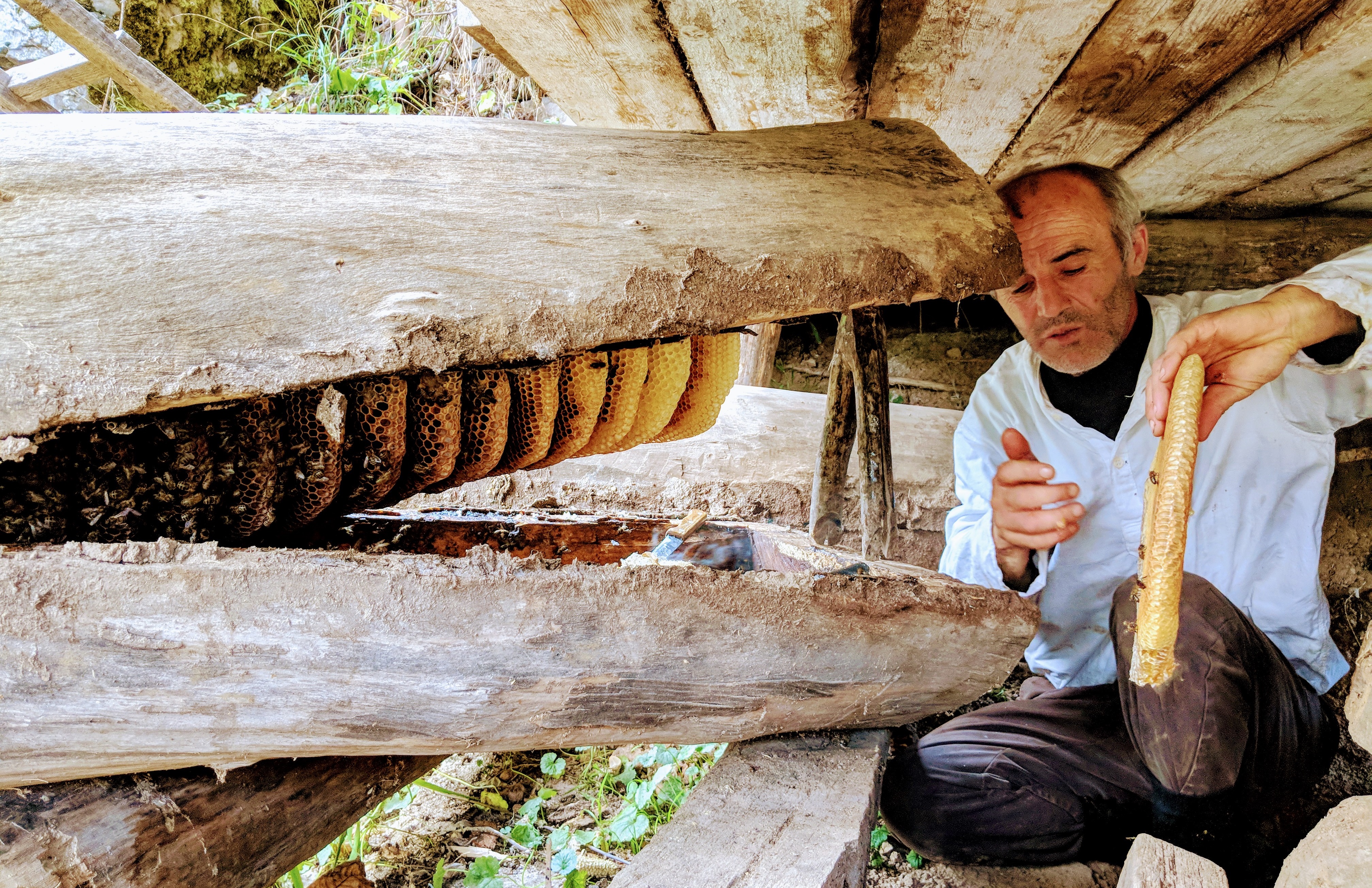
Producing honey in Jara hives has officially been granted Intangible Cultural Heritage status by the National Agency for Cultural Heritage Preservation of Georgia. The Jara Beekeepers Association (JBA) applied to the Agency back in 2020.
Jara is traditional wild beekeeping, a practice which almost died out but which has since 2014 begun a slow revival with the facilitation of the ALCP. The ancient tradition with strong roots in traditional agriculture, culture represents a unique way of life. The status recognizes Jara’s need to be preserved for future generations earning a place amongst other honourable Georgian traditions, including, Qvevri wine-making and Georgian song and dances. This status and will contribute to its further preservation and promotion.
It also brings hope and feeling of pride to those beekeepers who are continuing or are now taking Jara beekeeping up.
Jara has been on a fascinating journey since 2014. This journey includes The first commercial harvesting, registering the Jara honey mark, being promoted at the international exhibitions, first Bio certification, being taught at the VET college and reaching export markets in the US and Canada. And we can be sure, more things are on their way.
Christmas is a magical time awakening the holiday spirit in us. They say, Christmas is the spirit of giving without a thought of getting.
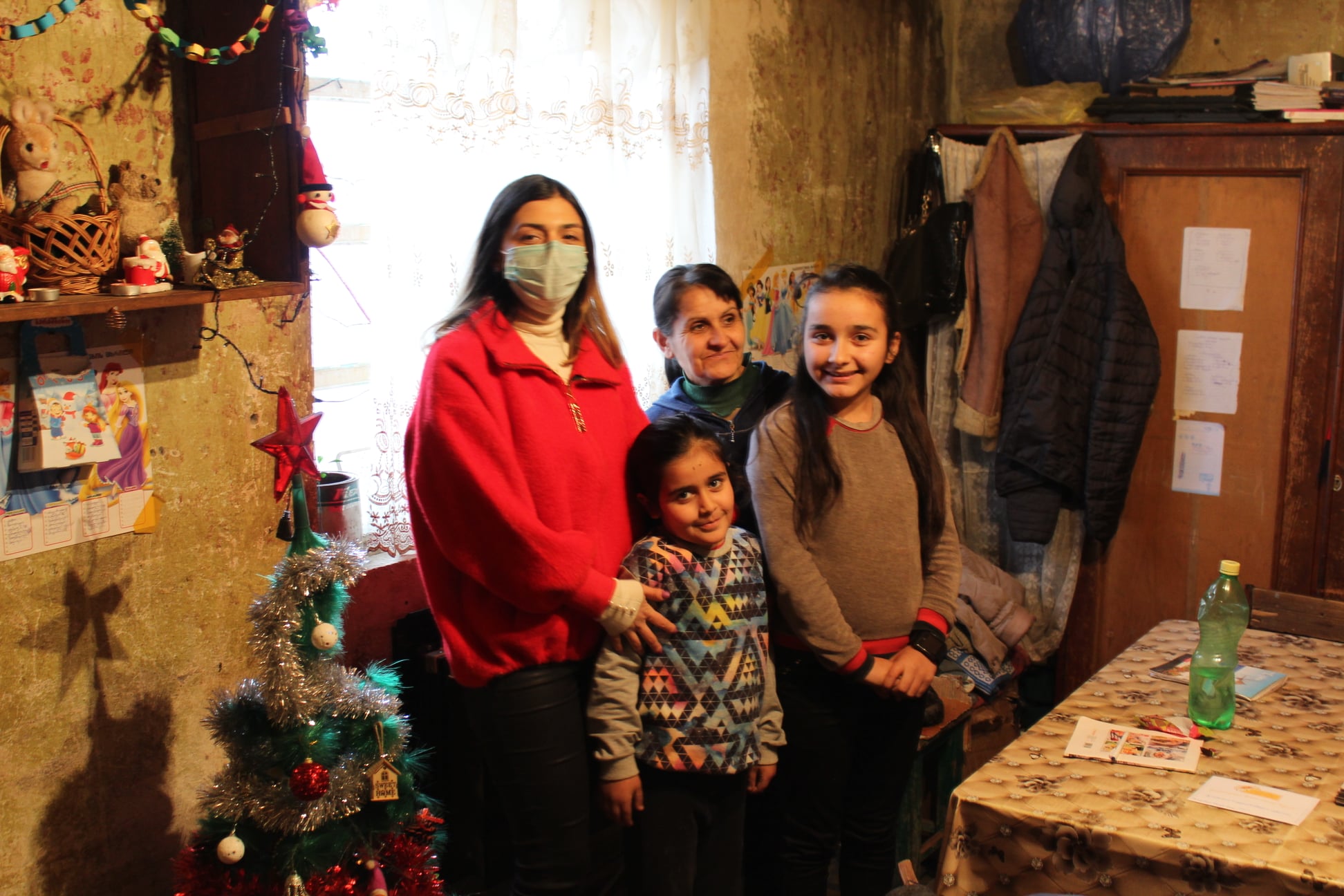
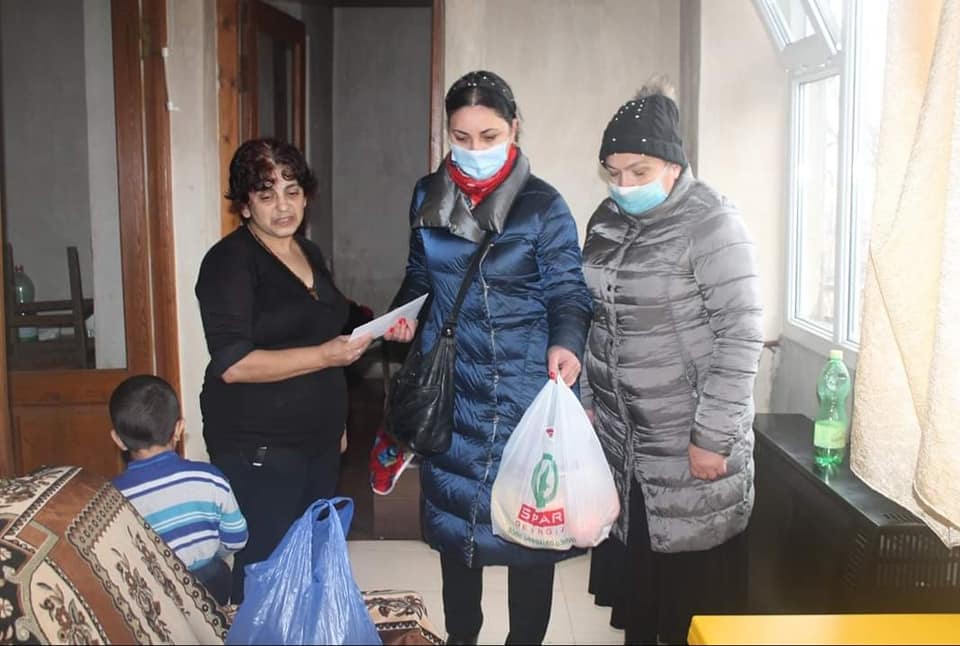
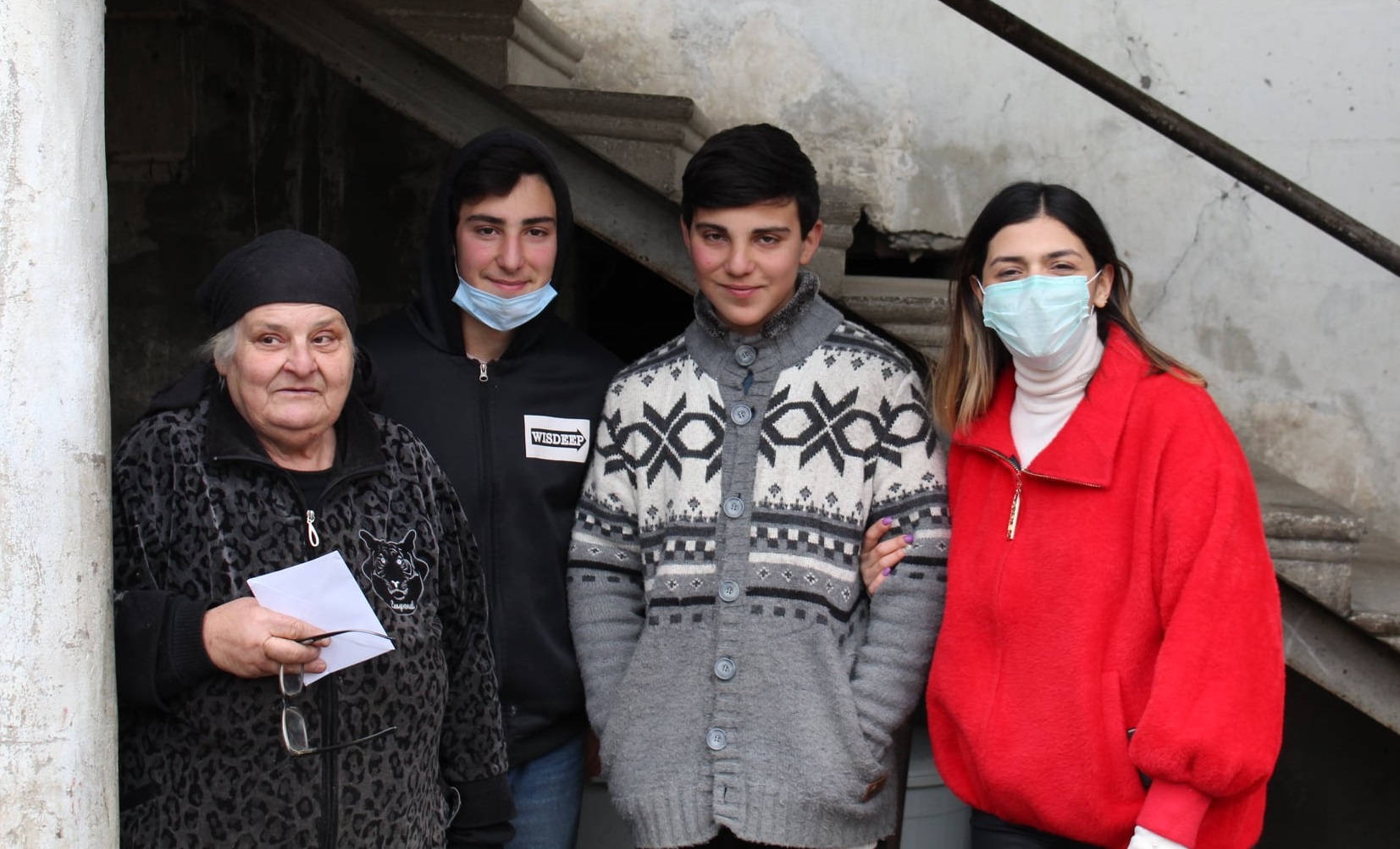
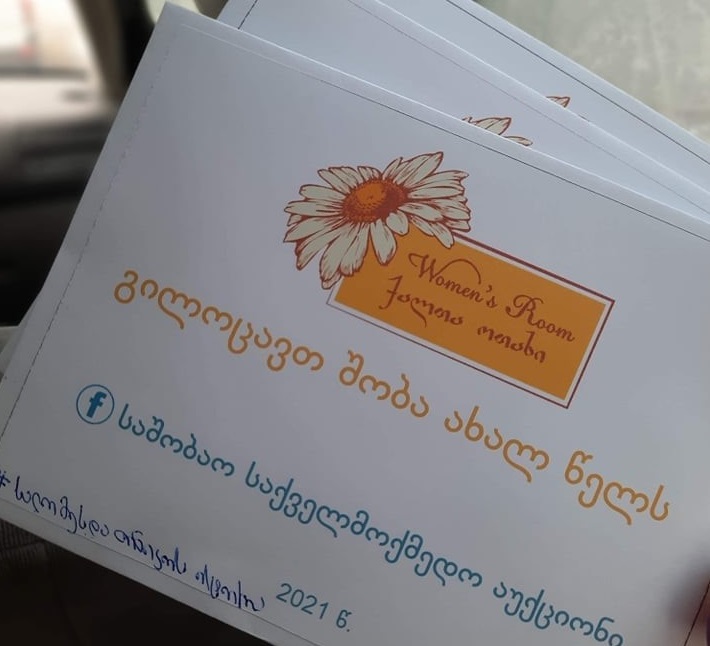
Before Christmas this year, the managers of the municipal Women’s Rooms in Kakheti, who like everyone else have adapted themselves to remote working due to the COVID-19 pandemic, established an online Christmas Charity Auction on Facebook to help families in need affected by the pandemic. The managers selected seven families in need for help. Their stories are heartbreaking; of a single mother, a victim of domestic violence, raising her children by herself, grandparents raising orphans, a child with disabilities and families with many children living in extreme poverty. Up to five hundred people joined in the auction donating or buying things in the auction with the money raised going for donation. The auction raised more than two thousand Gel over two weeks and besides money, the families received sweets, books, gifts; and special food for a girl with Celiac Disease.
The Christmas of the seven families was changed for the better. The Christmas Charity Auction finished on the 7th of January, though the online group on Facebook remains active, as the Women’s Rooms are planning to continue sharing the act of kindness with families in need and are open to anyone willing to contribute to any future auctions.
There are twenty-eight Women's Rooms in twenty-seven municipalities of four regions of Georgia. Find more about Women’s Rooms here.
An article Challenges Emerge for Women Entrepreneurs as a Result of the Covid-19 Pandemic has been published on Civil Society Portal in Georgia as part of an essay competition. The woman entrepreneur-Zeinab in the article is the Director of the dairy enterprise Tsintskaro+Ltd in Tetritskaro, Georgia. The Alliances Programme, an SDC and ADA project implemented by Mercy Corps Georgia, has been facilitating this dairy since 2016. Zeinab wrote this article by herself and won the Civil Society Portal essay competition. The article comes at the right time. We all need this kind of encouraging information during the pandemic period.
You might be interested in information on how businesses in Georgia are dealing with challenges caused by COVID-19 and can check our report COVID-19 Effects on the ALCP Clients Businesses.



