



Azerbaijanis living in Kvemo Kartli are Turkic-speaking people representing the legacy of the conquerors that came to this area at different times. in the 1926 Census they were referred to as Azerbaijanis. The Azeri population that settled in Kartli is comprised of two streams of migrants: 1. The Turkish-speaking population that was resettled between 15th-18th centuries; they went through the heaviest psychological and physical stress before they adapted to the new place. 2. Migrants who moved from one place to another to improve living conditions having adapted to the new environment. Currently the Azeri population in Georgia numbers 224,606. They mainly reside in Bolnisi, Dmanisi, Gardabani and Marneuli districts, mostly in district centers apart from in Dmanisi muniiciaplity where there are many Azeri villages. Some live in Tetritskaro and Tsalka districts.
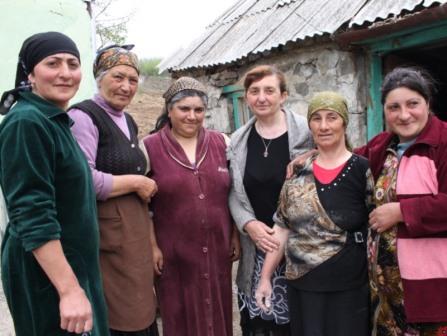
The village of Kamarlo is located next to the picturesque Lake Yaguflo. A worn-down road leads to the village located eight kilometres from the town of Dmanisi. According to the last census in Georgia performed in 2002, the population of the village was 713 people; all of them ethnic Azeris. Pikria Abdulaeva is amongst the village’s residents. She belongs to both cultures. She is an Azeri from her father’s side and Georgian from her mother’s. Azeri is the language of the village. Pikria speaks Georgian and served as the interpreter for our visit. Our arrival in the village caused a stir and the women invited by Pikria started arriving at the home of Phanura Kurbanova. In the garden the women explained how they make kizyak or fuel for winter. First, cow manure is leveled to the same thickness and is left to dry. Later, it is cut into pieces with a shovel. The pieces are then stacked in a sunny and ventilated place where they will be left to dry through summer and autumn, until the cold weather begins. This process turns the material into fuel. Kizyak is often made by women and children. The women then listed every activity they had performed that day from making bread to tending cattle to putting up wallpaper. Shoes were removed to enter the house.
The women recounted their memory of state farms. “Now it is easier, because there are no state farms. We used to work from morning until night and then come home and continue working in the house. In autumn, sometimes they would give ten tons of potatoes to each family and we had to manage this ourselves, carrying them, drying them, loading them, selling them or storing them for winter”. But for others, the state farms are associated with better times. Guliaz Gajieva is over 100 years old. she herself asserts she is 112. “We worked a lot but it was good work. I was even invited into the Central Committee of the Party as a leading worker, once”. Guliaz used to milk cows.
The women were enjoying the conversation. First, they maintained the attitude that “everything is good” and did not talk about problems. Gradually, however, they opened up. Out of the ten women who articipated in the conversation, four were divorced, half of them had lost husbands or sons, two women were married at the age of 14 and one of them had been bride-kidnapped. Often, women are complicit in these kidnappings. Gulazar was kidnapped as a bride for Pikria’s (her now mother in law’s) cousin. She was 14 and the groom was 26. Now Gulazar and Pikria share the same last name and are on good terms with each other, despite Pikria’s involvement in the kidnapping 17 years ago. Gulazar gave birth when she was 17. She had the baby in Baku and told the doctor about the circumstances surrounding her marriage. The Doctor sent a message to the village, saying “one of your young girls was forced into marriage at the age of 14! Take some measures!” The young husband could easily have been brought to justice for the forced marriage but they managed to avoid this through the help of some acquaintances in the right places. “Why didn’t you spare the girl?”, we asked Pikria. “Why?”, she answers. “Now, she has such a handsome husband who is the representative of the rural council”. Gulazar, who was listening, laughed along with the story as well.
The other women related stories of their marriages. Kheyala had not been bride-kidnapped but, rather, was matched with her husband when she was 14. She lived in the neighbouring village of Salamalik where there only was an elementary school which did not take her beyond the fourth grade. Before marrying, she lived with her parents where she looked after the household. She says, “If we had had a better school, then maybe they would not have married me off at such early age”. Kheyala has three children and added that three children are enough and that she will not let her daughter marry before she turns 19 or 20.
The issue with daughters is a critical one. On the one hand, the mothers do not want their daughters to have the same lives they did. On the other, they see that it is not easy to change the situation.
Alida Nasibova is 42 years old. She related the hard story of her divorce ten years ago. Alida is now raising her only child, a daughter. Her ex-husband has since died. Alida works as a teacher of the lower grades in the village school and provides every incentive she can to her daughter to study. She has big hopes that she will be able to change her life by getting an education. Pikria works at the village school as a teacher of Georgian. She says that the attendance of younger students is much better than the attendance of the older ones. Pikria says that her son is the only graduate who is continuing his education in Tbilisi. The majority of school graduates do not continue their studies.
 |
 |
Villagers travel to Baku fairly often, not for education but to visit relatives or for short-term work. Migration within Georgia is hampered by the language barrier which means that they do not travel much to other districts in Georgia. Phanura is a widow of over a year and wears a mourning kerchief and almost never smiles but she is quick, responsive and open and does everything quickly and silently. For her guests she made khinkali which consisted of thinly rolled boiled dough with butter and a sauce made from sour milk with herbs and spices. Sakna Gajieva is Phanura’s neighbour who came to speak with us briefly before getting back to baking bread at her house. She gave us hot bread for the way back and Phanura gave us some cheese as well. We were very touched by their hospitality, help and openness.
The ‘Georgian Milk’ mark has been registered in the National Intellectual Property Centre of Georgia - Saqpatenti. The mark is now protected to avoid falsification and strengthen the ownership of Business Institute of Georgia, an independent body which will regularly audit dairies granted license to use the mark.
Eighteen dairy enterprises have already applied to use the mark.
The new ‘Georgian Milk’ mark will distinguish dairy products made from natural raw milk.
Information per enterprise will be published online on a www.georgianmilk.ge website which will come online at beginning of March. This will allow consumers to look up the products they are buying using a unique register number printed on the label.
A national promotion campaign conducted by GMA international marketing company to introduce the mark to the public and retailers will be rolled out from the end of next month.
A presentation of a new ‘Georgian Milk’ mark was held on the 22nd of January at Hotels & Preference Hualing Tbilisi.
Up to 150 dairy enterprises and representatives of supermarkets, agri markets, sectoral associations and Government Agencies participated in the meeting.
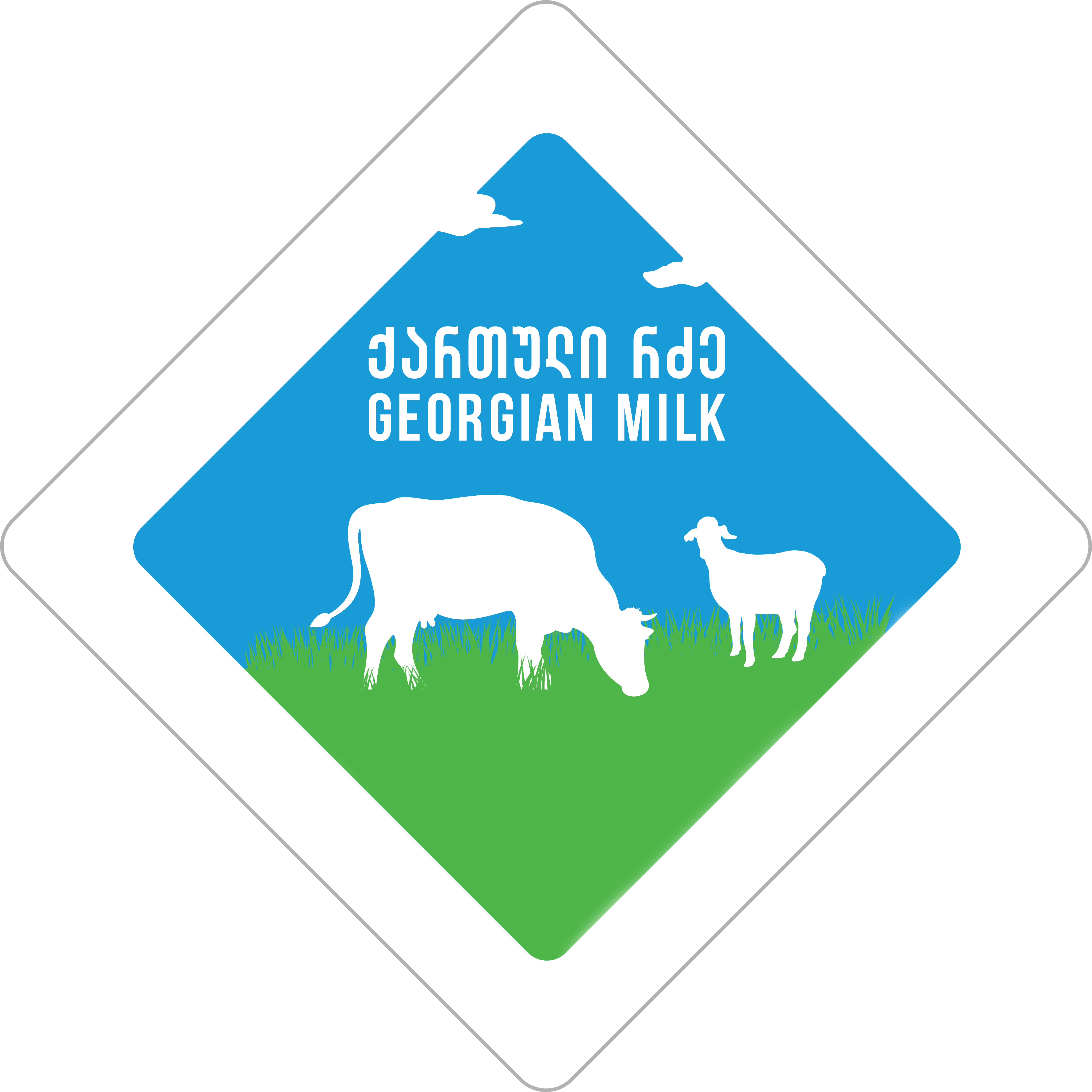
The new ‘Georgian Milk’mark will distinguish dairy products made from natural raw milk. The ‘Georgian Milk’ mark will be found only on dairy products produced from Georgian natural raw milk and which do not contain milk powder and/or any vegetable oils. The purpose of the mark is to promote products made from Georgian natural raw milk, which will help consumers make informed decisions while buying milk and other dairy products. A recent large national consumer survey by the Caucasus Research Resource Centre of urban consumers across Georgia showed that consumers want to be able to buy ‘ecologically clean’ dairy products, meaning clean milk that comes from healthy grass fed cattle and dairy products produced in clean regulated enterprises. The research found that the majority of consumers had difficulty in identifying or being able to buy such products as these products are currently undifferentiated in shops. The ‘Georgian Milk’ mark will therefore solve this problem.
The ALCP facilitated the Georgian Beekeepers Union to develop infographic regards Do’s and Don’ts of Antibiotic Use, providing guidelines for the beekeepers on proper usage of antibiotics and preventing honey and beeswax from contamination with the antibiotics. The full version of the infographic is available here.

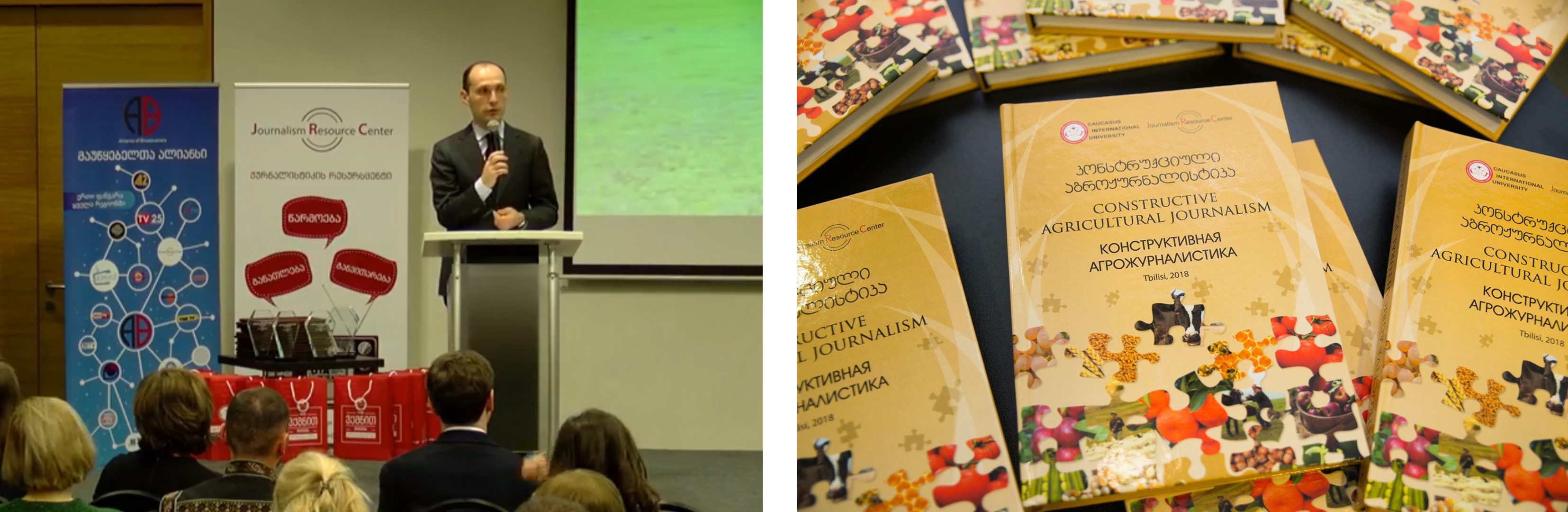
On December 26th, the Journalism Resource Centre presented its second edition of the agri journalism module. About hundred guests from the government, business and academic sphere attended the event.
The Minister of Environmental Protection and Agriculture of Georgia, Levan Davitashvili stated: ‘I am very glad to hear about all the initiatives related to agri journalism. Education is very important in agriculture for ensuring information dissemination for farmers. The door of the Minister of Agriculture is open for you at any time and our partnership with regional media is very important.’
The agri module was created for inclusion in BA in journalism degrees. Now, ten universities across Georgia have the agri journalism module established in their curriculum, lasting one semester with a total of 15 credit hours. Four more universities are about to do the same this year. 369 students have undergone the course in Georgia to date. Now those initiatives are ready for transfer to Armenia and Azerbaijan.
During the event, the Journalism Resource Centre awarded farmers and specialists within the agricultural sector. The Best Female Farmer of the Year award was given to beekeeper Mariam Kiladze; the Best Vet of the Year was Giorgi Tcikhelashvili from Dmanisi, he is 25 years-old who graduated from the Vet Department at Agrarian University and went back to Dmanisi and is working as a vet. The Best Male Farmer award was given to shepherd Giorgi Imerlishvili. Credo and the EBRD were recognized as financial institutions that supports agriculture, and SDC Project Mercy Corps Alliances Caucasus Programme for supporting agri media journalism.
At the end of the event, the Journalism Resource Centre announced the establishment of the Agro Guild, which unites journalists and media organizations, businesses, farmers, public officials, and universities and sets up annual or bi-annual advisory committees. The members of media associations and the JRC also announced that they are planning to establish an Agri TV program, the pilot of which will start in three months.
Follow this link for additional news regarding the event.
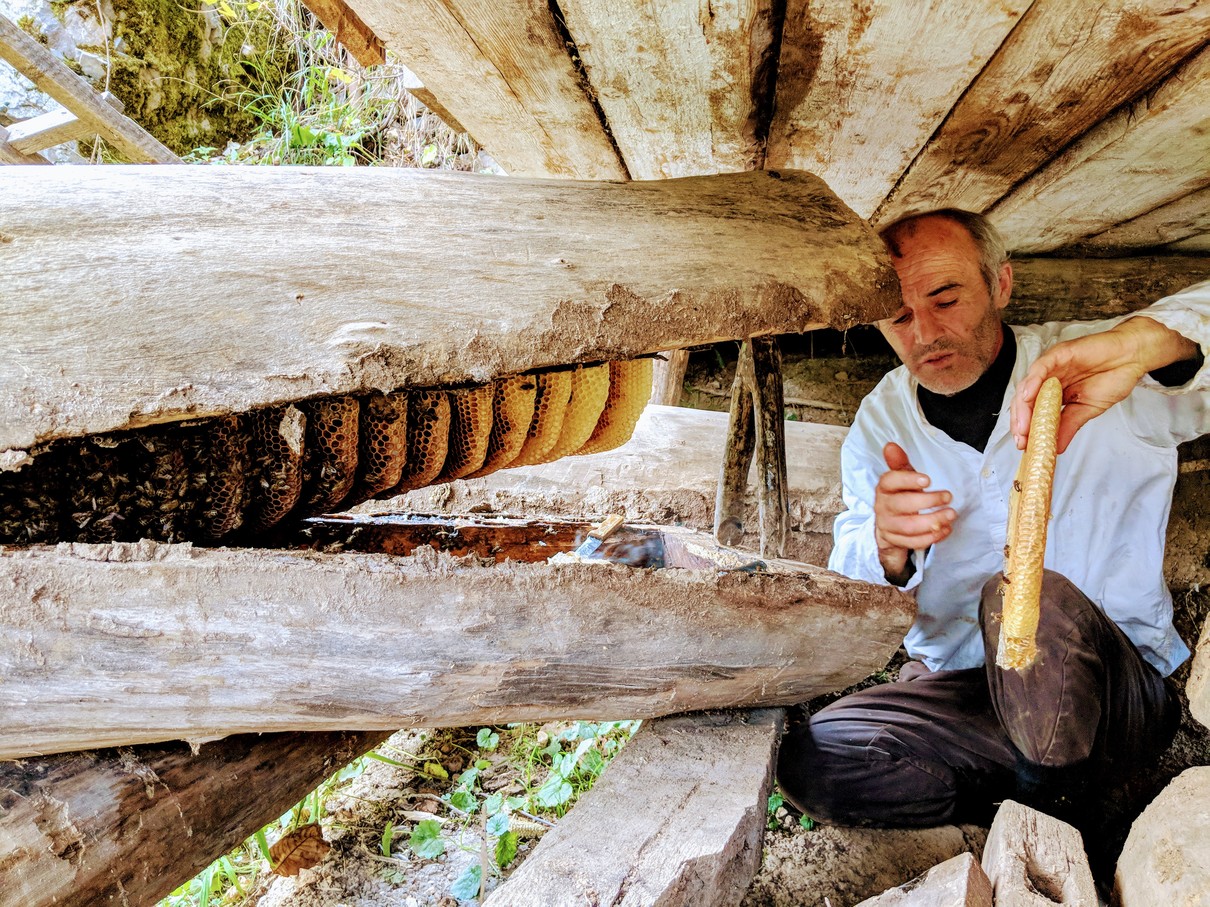
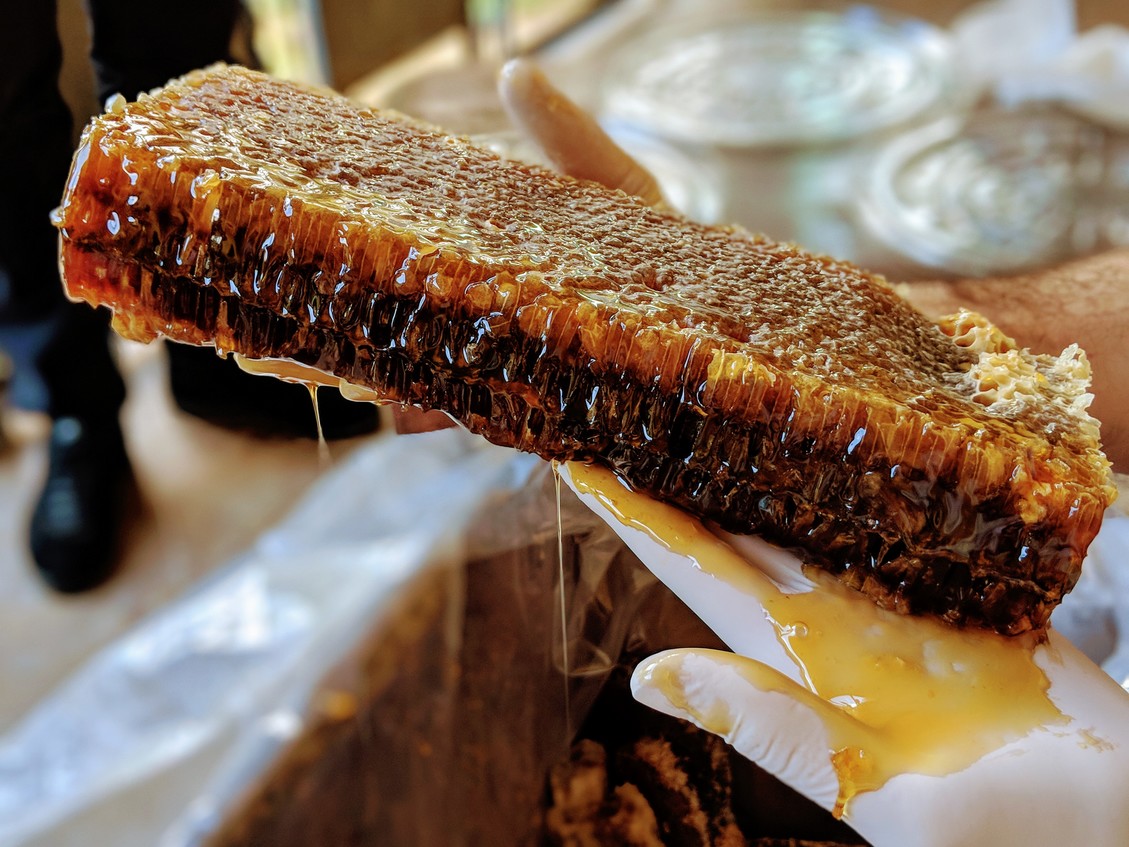
For the first time ever, twenty Jara producers have sold their entire crop of Jara to a commercial enterprise. Jara honey will soon be available in shops in Georgia.
See photos below.
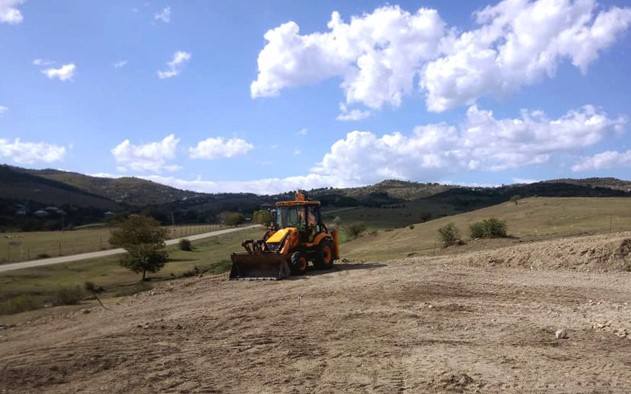
The construction of a new Veterinary Surveillance Point has recently started in Bolnisi municipality. The works will be finished in December 2018. The point will be the six and final point in the Veterinary Surveillance network throughout the Animal Movement Route.
During five transhumance seasons in 2016-2018 total 1.4 million heads of sheep and cattle were treated against ecto-parasites free of charge at all operational Veterinary Surveillance Points in Rustavi, Marneuli, Signagi, Dedoplistskaro and Kvareli municipalities.



