Azerbaijanis living in Kvemo Kartli are Turkic-speaking people representing the legacy of the conquerors that came to this area at different times. in the 1926 Census they were referred to as Azerbaijanis. The Azeri population that settled in Kartli is comprised of two streams of migrants: 1. The Turkish-speaking population that was resettled between 15th-18th centuries; they went through the heaviest psychological and physical stress before they adapted to the new place. 2. Migrants who moved from one place to another to improve living conditions having adapted to the new environment. Currently the Azeri population in Georgia numbers 224,606. They mainly reside in Bolnisi, Dmanisi, Gardabani and Marneuli districts, mostly in district centers apart from in Dmanisi muniiciaplity where there are many Azeri villages. Some live in Tetritskaro and Tsalka districts.
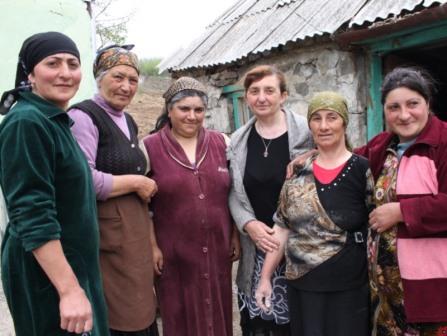
The village of Kamarlo is located next to the picturesque Lake Yaguflo. A worn-down road leads to the village located eight kilometres from the town of Dmanisi. According to the last census in Georgia performed in 2002, the population of the village was 713 people; all of them ethnic Azeris. Pikria Abdulaeva is amongst the village’s residents. She belongs to both cultures. She is an Azeri from her father’s side and Georgian from her mother’s. Azeri is the language of the village. Pikria speaks Georgian and served as the interpreter for our visit. Our arrival in the village caused a stir and the women invited by Pikria started arriving at the home of Phanura Kurbanova. In the garden the women explained how they make kizyak or fuel for winter. First, cow manure is leveled to the same thickness and is left to dry. Later, it is cut into pieces with a shovel. The pieces are then stacked in a sunny and ventilated place where they will be left to dry through summer and autumn, until the cold weather begins. This process turns the material into fuel. Kizyak is often made by women and children. The women then listed every activity they had performed that day from making bread to tending cattle to putting up wallpaper. Shoes were removed to enter the house.
The women recounted their memory of state farms. “Now it is easier, because there are no state farms. We used to work from morning until night and then come home and continue working in the house. In autumn, sometimes they would give ten tons of potatoes to each family and we had to manage this ourselves, carrying them, drying them, loading them, selling them or storing them for winter”. But for others, the state farms are associated with better times. Guliaz Gajieva is over 100 years old. she herself asserts she is 112. “We worked a lot but it was good work. I was even invited into the Central Committee of the Party as a leading worker, once”. Guliaz used to milk cows.
The women were enjoying the conversation. First, they maintained the attitude that “everything is good” and did not talk about problems. Gradually, however, they opened up. Out of the ten women who articipated in the conversation, four were divorced, half of them had lost husbands or sons, two women were married at the age of 14 and one of them had been bride-kidnapped. Often, women are complicit in these kidnappings. Gulazar was kidnapped as a bride for Pikria’s (her now mother in law’s) cousin. She was 14 and the groom was 26. Now Gulazar and Pikria share the same last name and are on good terms with each other, despite Pikria’s involvement in the kidnapping 17 years ago. Gulazar gave birth when she was 17. She had the baby in Baku and told the doctor about the circumstances surrounding her marriage. The Doctor sent a message to the village, saying “one of your young girls was forced into marriage at the age of 14! Take some measures!” The young husband could easily have been brought to justice for the forced marriage but they managed to avoid this through the help of some acquaintances in the right places. “Why didn’t you spare the girl?”, we asked Pikria. “Why?”, she answers. “Now, she has such a handsome husband who is the representative of the rural council”. Gulazar, who was listening, laughed along with the story as well.
The other women related stories of their marriages. Kheyala had not been bride-kidnapped but, rather, was matched with her husband when she was 14. She lived in the neighbouring village of Salamalik where there only was an elementary school which did not take her beyond the fourth grade. Before marrying, she lived with her parents where she looked after the household. She says, “If we had had a better school, then maybe they would not have married me off at such early age”. Kheyala has three children and added that three children are enough and that she will not let her daughter marry before she turns 19 or 20.
The issue with daughters is a critical one. On the one hand, the mothers do not want their daughters to have the same lives they did. On the other, they see that it is not easy to change the situation.
Alida Nasibova is 42 years old. She related the hard story of her divorce ten years ago. Alida is now raising her only child, a daughter. Her ex-husband has since died. Alida works as a teacher of the lower grades in the village school and provides every incentive she can to her daughter to study. She has big hopes that she will be able to change her life by getting an education. Pikria works at the village school as a teacher of Georgian. She says that the attendance of younger students is much better than the attendance of the older ones. Pikria says that her son is the only graduate who is continuing his education in Tbilisi. The majority of school graduates do not continue their studies.
 |
 |
Villagers travel to Baku fairly often, not for education but to visit relatives or for short-term work. Migration within Georgia is hampered by the language barrier which means that they do not travel much to other districts in Georgia. Phanura is a widow of over a year and wears a mourning kerchief and almost never smiles but she is quick, responsive and open and does everything quickly and silently. For her guests she made khinkali which consisted of thinly rolled boiled dough with butter and a sauce made from sour milk with herbs and spices. Sakna Gajieva is Phanura’s neighbour who came to speak with us briefly before getting back to baking bread at her house. She gave us hot bread for the way back and Phanura gave us some cheese as well. We were very touched by their hospitality, help and openness.

The Georgian documentary Jara was named as the Best Feature Film at the Wolves Independent International Film Festival 2018. Nature, heritage, environment, history, culture, ethnography, adventure, wildlife, indigenous cultures and social issues are the main themes of the festival which takes place in Lithuania.
It is the second award for Jara following Golden Green Award 2018 at the Deauville Green Awards International Film Festival, for the best production in the category of Sustainable Agriculture
Jara was premiered by EcoFilms in Tbilisi in 2017. The main backer of Jara was the Swiss Agency for Development and Cooperation (SDC) through the Mercy Corps Georgia implemented Alliances Caucasus Programme (ALCP) within a consortium of public bodies and conservation organizations including World Wildlife Fund and Caucasus Nature Fund.
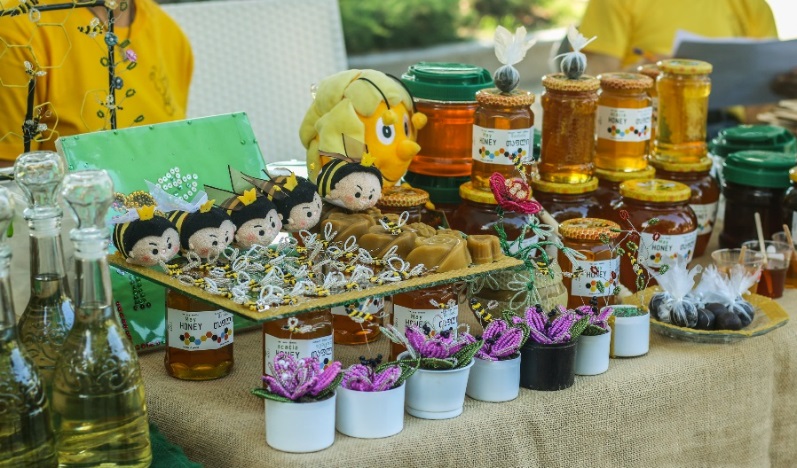
The annual Honey Festival was opened for the fourth time on August 11th on Batumi Boulevard and closed on August 12th in Batumi Botanical Garden. Up to 45 beekeepers from across Georgia once again presented their honey and by products for the festival visitors. Honey themed activities were held for children’s entertainment; visitors could see the ancient beehive at the special corner for jara beekeepers from Ajara and could taste different kind of honey from different parts of Georgia. Batumi Botanical Garden promoted Goderdzi Alpine Garden; live music kept the celebration spirit all day.
“Beekeeping is our family business. We started participating in the festival from the very beginning and it became a tradition. Each year we promote our products and each year we find new clients. This annual festival helps us to make our products more visible and popular” - Shorena Kezheradze, Khelvachauri municipality, Ajara.
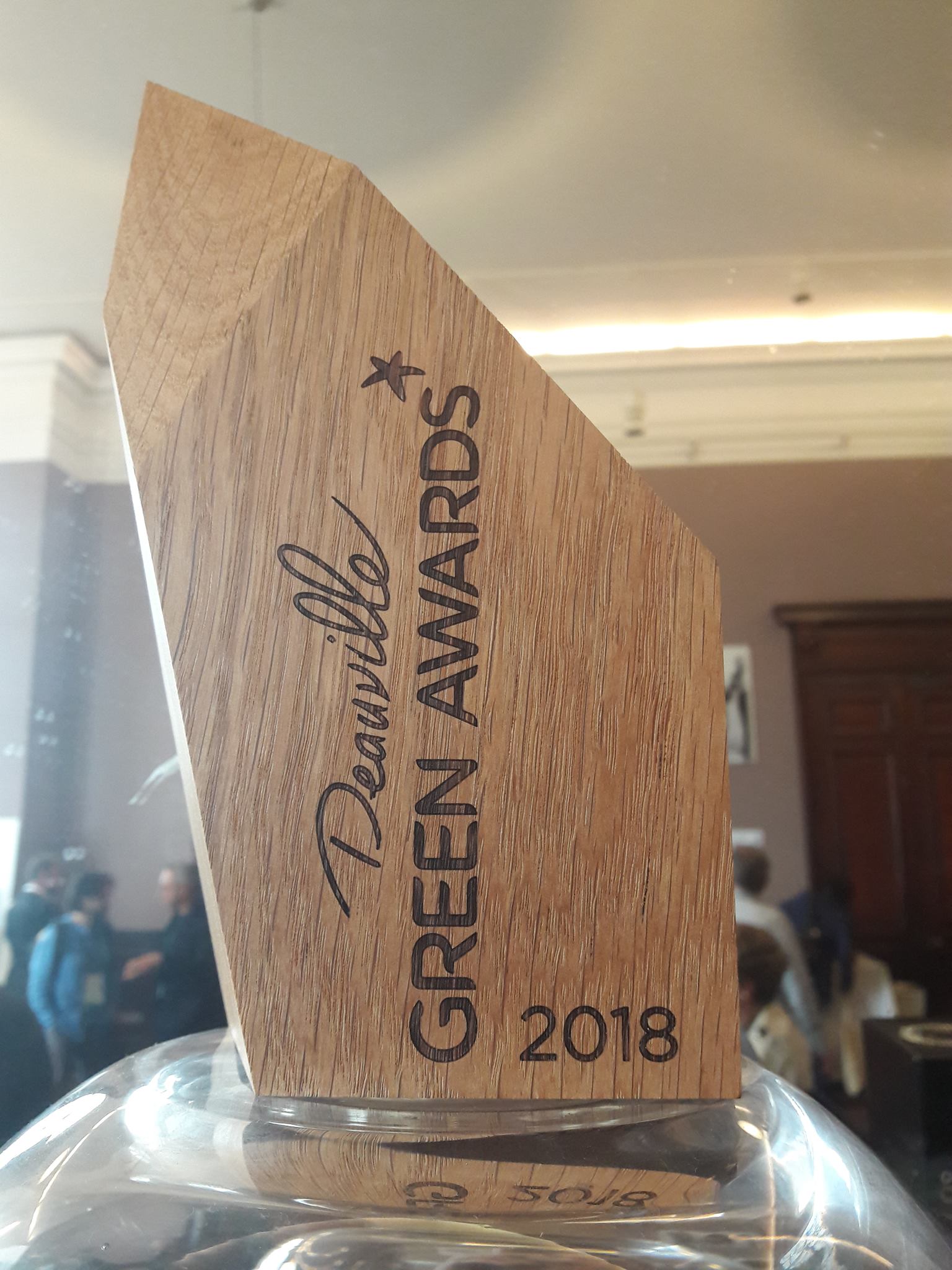
The Georgian documentary Jara has just won the Golden Green Award 2018 at the Deauville Green Awards International Film Festival, for the best production in the category of Sustainable Agriculture, the International jury selected the finalists in fourteen categories from four hundred and fifteen films produced worldwide. Jara was screened during the festival in Deauville in the presence of the professionals and the press.
The Deauville Green Awards is one of the most prestigious festivals in Green Film Production worldwide launched in 2012. For the last seven years, the festival’s mission has been to enhance information films, spots and documentaries on sustainability, eco-innovations and social responsibility. Furthering public understanding and education. Each year the festival draws five hundred films from five continents, with four hundred professionals of film in attendance.
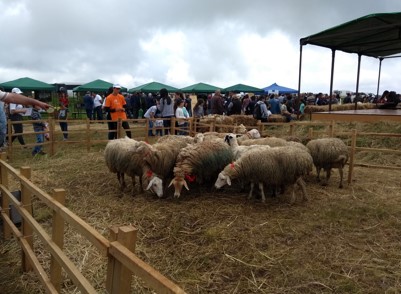
On Saturday, June 9 representatives of the ALCP team (www.alcp.ge) and a wool processor Tamar Tsikarishvili from Akhaltsikhe, Georgia attended the Sheep
Shearing Festival after being invited by SDC sister project SDA Armenia which took place in Syunik Animal Market, Syunik region. The festival aimed to promote sheep, local produce, traditions and culture of Syunik and Vayots Dzor regions (Please see the Link).
The festival included guest sheep shearer Danny Wilson from Great Britain who conducted master classes for festival participants and visitors.
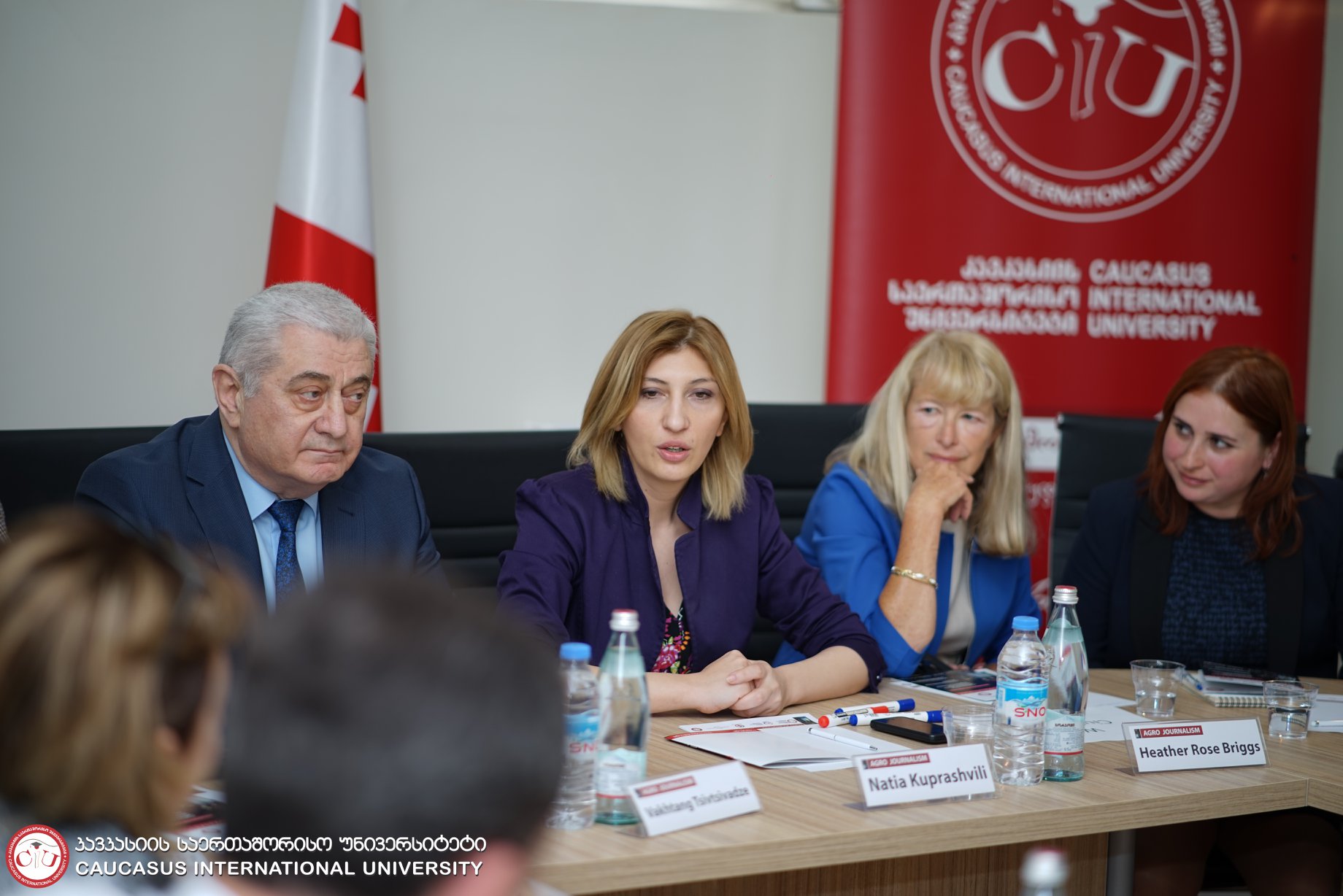
Knowledge is a power and the ALCP is committed to facilitating high quality agri information transfer to rural farmers strengthening the field of journalism in Georgia and Armenia.
On 25th-29th of April an international agricultural journalist was commissioned to deliver trainings to 11 Armenian TV and press journalists and 2 heads of the Department of Journalism of Armenian universities in the Caucasus International University in Tbilisi.
Follow the link of Imedi TV news on the event.
On April 16th-20th, 2018 the Alliances Caucasus Programme (www.alcp.ge) funded by the Swiss Agency for Development and Cooperation SDC and implemented by Mercy Corps in Georgia, hosted a study tour from the Arab Women’s Enterprise Fund (AWEF). The tour included Jordan Municipality Mayors, WEE coordinators and representatives from the Ministry of Agriculture of Jordan to share ALCP’s experience on Women Economic Empowerment integration through M4P approach and best practices used.