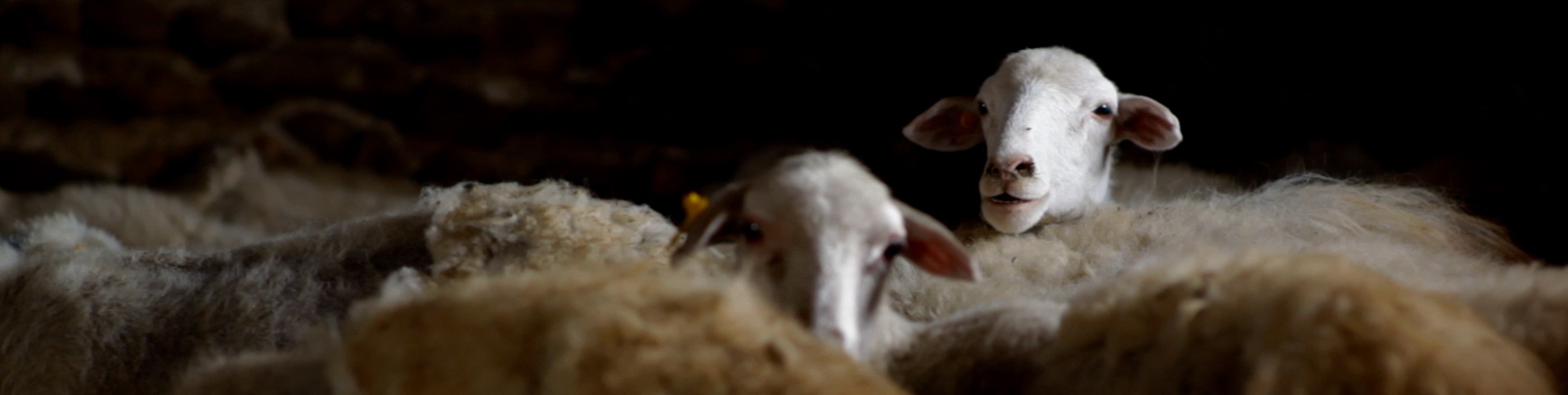
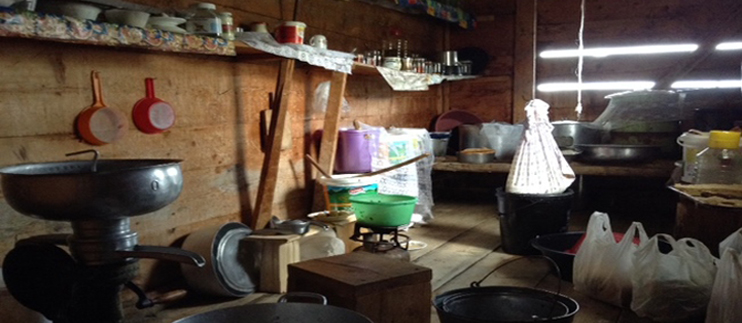
Name: Natural Produktsia Ltd
Place: Dioknisi Village, Khulo Municipality
Type of business: Cheese Factory
Product: Imeruli Cheese
Suppliers: about 450 women from 13 villages of Khulo
Current production per day: 5 tons of milk (700 kg of cheese)
The Problem
The 450 women now selling milk directly to the milk collectors of the Natural Produktsia Ltd Factory in Dioknisi, Khulo used to make cheese from their milk. Women are responsible for milking the household cattle and making the cheese, butter, sour cream and cottage cheese which is then sold as an important part of the family’s livelihood.
Selling these products however is hard and uncertain. The journey by marshutka to Batumi Agrarian Market can take up to 4 hours on bad roads. It is taken to the market by husbands or other male family members or sent with the driver and met by a relative who then tries to sell it. There is no guarantee of a sale and often the family is forced to accept a low price from the market vendors rather than take it home again.
The Idea
The idea for the factory came from a member of an old Khulo farming family, Arcadi. His brother, Tsezari was already in the dairy business in Tsalka with his mother, where, hoping to escape the lack of opportunity in Khulo they moved to Kvemo Kartli and started a small cheese factory in a cowshed. This cowshed is now a purpose built factory with its Sulguni cheese supplying Carrefour and the 5 star hotels of Batumi. Alliances KK had helped them do it. Arcadi was already selling his brother’s Sulguni cheese from the familiy’s distribution outlet in Batumi Market, but Sulguni only makes up 20% of the market the other 80% is for Imeruli. When Alliances opened in Ajara in 2014, Arcadi saw his chance. He proposed a small factory collecting milk from the upper mountain villages making Imeruli cheese. The gamble was that Imeruli sells for 2 lari less per kilo than Sulguni and you have to make and sell a lot more of it to make a profit.
The Solution
450 women are now selling milk directly to the milk collectors of the Natural Produktsia Ltd Factory in Dioknisi, Khulo. The building which opened in September 2015 is compliant with the new food safety and hygiene requirements and equipped with, with new modern dairy equipment.
Milk collectors from the factory collect the milk daily from the women in their houses. The women were specially trained by a food safety consultant in producing clean milk. The women save two hours a day from not having to make cheese, they save the costs of wood or gas for heating the milk to make it and other materials such as pepsin. The family is saved the costs and time and worry of having to get to Batumi and sell the cheese.
The End and the Beginning
The programme and Arcadi were unsure of how much milk there would be. People had said how poor the little red Ajaran cow was, how despairing the rural population. Ajara however has a magic, special even to Georgia, when the news went out that the factory was open the villagers decided en masse to sell. Overnight more milk than anyone imagined was available. The factory is processing 5 tonnes of milk about 700kg of cheese a day at a time of year when many dairy factories are thinking of shutting down for the winter as milk supply dwindles until the following spring. They have turned milk away as they have yet the capacity to process more. Expansion is already on the cards. Of the cheese itself the fat content is high and the milk itself from the high mountain pastures of pristine Ajara. The cheese moreover is delicious. The queues out the door of Aracadi’s distribution outlet in Batumi Market and the fact it’s sold out by midday testify to that.
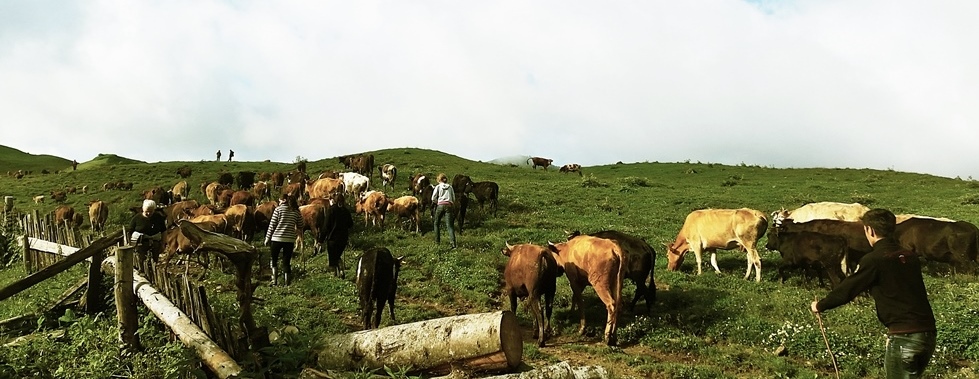
Livestock transhumance will no longer disturb Tsintskaro Village population in Tetritskaro Municipality. The local Municipal DRR Working Group initiated a new infrastructure project which will solve the problems related to the seasonal transhumance in this particular village.
From the ISET Economist news (http://www.iset.ge/news/?p=3311)
By Eric Livny
(Summary of a debate hosted by ISET as part of SDC-supported Inclusive Growth Dialog series.)
There are many reasons to love the concept of farmer cooperation (and cooperation more generally). To begin with, there is a great aesthetic value in seeing people coming together, sharing resources and helping each other. After all, instinctive collectivism was the basic condition of human existence from time immemorial. But, there are also powerful economic reasons for farmer cooperation.
The Road – a beautifully shot documentary capturing the reality and dichotomies of the people who use the ancient transhumance route; the lifeline of livestock in Georgia
A Memorandum of Understanding has been signed between the Ministry of Regional Development and Infrastructure (MRDI) and the Swiss Development Cooperation project the Mercy Corps Georgia implemented, Alliances Lesser Caucasus Programme (ALCP) in Kvemo Kartli, The aim of the memorandum is to support the ongoing outreach at local government level of practical implementation of the 2010 Georgian Gender Equality Law which will greatly aid in the general development of rural Georgian municipalities.
From the ISET Economist news (http://www.iset.ge/news/?p=3056)
By Tim Stewart
As Georgia embarks on an ambitious program to develop farmer organizations, it is worth considering both the positive and negative lessons from the experience of similar initiatives, both in Georgia and elsewhere in the developing/transition context. The piece by Tim Stewart, originally published on www.springfieldcentre.com, identifies some of the main reasons for the failure of start-up farmer organizations. The challenge for Georgia is to learn from these mistakes in planning and implementation, and ensure improved coordination among the many cooks involved (the newly created Agency for the Development of Agricultural Cooperatives, the Ministry of Agriculture, international donors, NGOs, and farmer associations).

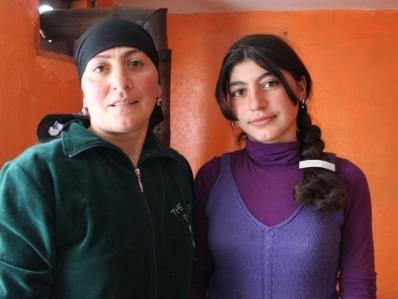
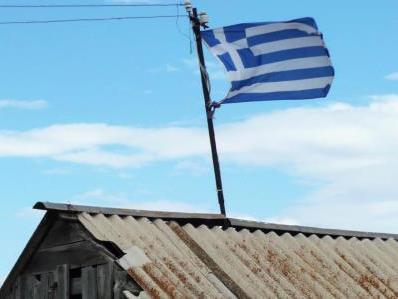
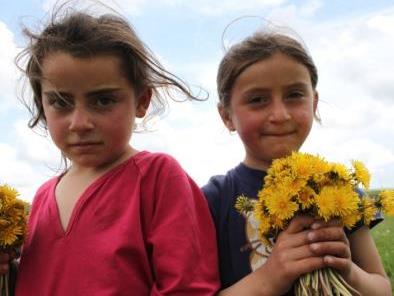
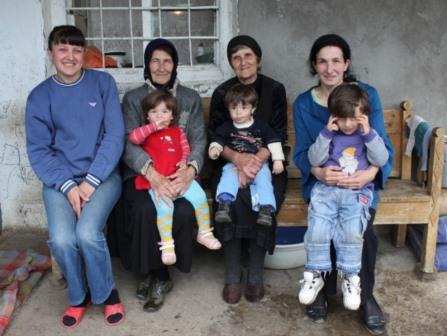
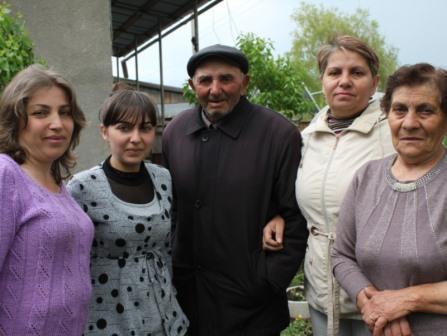
Publishing the following series of stories is an attempt to highlight the ethnic diversity of Kvemo Kartli. We are going to tell you the stories of five women living in various parts of Kvemo Kartli; these women have different lifestyles and represent different cultures, but they still have a lot in common. This is their history in stories. Stories of work, endurance, taboos, restriction, dignity, honesty and womanhood. You will not see figures and percentages here; this is not a quantitative survey. These are stories that allow us to build on those figures and percentages and enable us to develop profiles of Ajarian, Svan, Azeri, Armenian, Greek and local Georgian women’s lives, to understand their complexities and areas of commonality and to reflect this in our work as a programme.
Kvemo Kartli is one of the most ethnically diverse regions of Georgia. Ethnic diversity has developed over centuries and many contrasts and cultural differences have accumulated in this region; the study and management of these contrasts and differences and the development of models for peaceful cohabitation is not an easy task. Cultural, ethnic and language differences can be seen in every detail of life. Differences are present in rural and urban areas, in highlands and lowlands, in methods of doing business. Our objective in recording these stories was to attempt to create a profile of these women, to listen to them and build the picture of their lives, to understand the effects that culture and ethnic origin have on their lives, to see what opportunities they have and how they use or fail to use these opportunities, if they have them at all.
 |
|
|
|
|