A small group of Greeks was settled by Erekle II (King of Kartli and Kakheti in the 18th century) back in 1763 in Kvemo Kartli. They worked in Akhtala copper, lead, silver and gold mines and were highly skilled in this business. The next resettlement took place in 1806-1807, and the following in 1829-1830. Turkish-speaking Greeks as well as Greeks speaking the Pontus dialect were resettled to Georgia. The study of archive materials tells us that the biggest stream of Greek migrants entered Georgia during the aforementioned period and their majority settled in Tsalka and Tetritskaro areas.
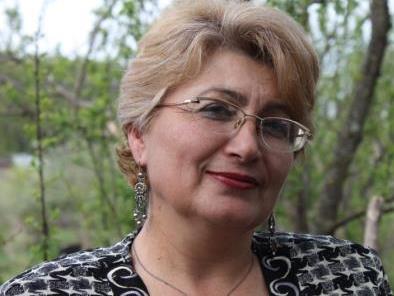
Ivetta grew up and studied in Tbilisi, graduated from a cooperative institute and worked in the Central Union of Consumer Cooperatives of Georgia that was part of a large association across the entire USSR. She recalls those times with warm feelings. She says that she was the only Greek amongst a large staff and that her coworkers were gracious with her. Ivetta had Russian education and could speak conversational Georgian.
During the first years following the breakup of the USSR, however, Ivetta’s family suffered all of the difficulties related to the subsequent wars, the instability and the lack of money which this all brought. At first, Ivetta, like the majority of the women of her time, relied on her husband to bring in income and tended to the family and her young children. Her husband then started a job in Tsalka and, after several years, the family moved there with him. The children, who had started schooling at a Georgian school in Tbilisi, faced difficulties in Tsalka where there was no Georgian school and so they had to learn Russian. As soon as the Georgian school opened, however, they moved there. Her son is now 27 and her daughter is 25. They have higher education and belong to both cultures; Georgian from their father’s side and Greek from their mother’s side.
Ivetta started working again as soon as her children grew up. Another contributing factor was the change in governmental language policy that envisaged the keeping of official documents in the State language that caused big shortage of Georgian-speaking staff in Tsalka. Although Ivetta’s Georgian was not perfect, she studied it intensively and she found herself in demand with the need for translation from Russian into Georgian and vice versa . She was not just a good interpreter but also had her own ideas about how to improve things in the work and as a result, she was offered administrative positions such as at the district hospital and the social security department where she took the position of deputy and from where she then moved to her position as Head of Administration in the Executive Office in Tsalka.
Ivetta is originally from the village of Beshtasheni. The village is not far from Tsalka, and she knows and understands the life and conditions in the region. When remembering the past when the Greek community was quite large, Ivetta talks about the old ways of life. There used to be several factories in Tsalka that employed local residents. Men also went to other regions of Georgia and in Russia for seasonal work and women would do the family’s household farming, selling excess crops and upplementing household budgets. They lived well and could provide educations for their children not only in Tbilisi but in Moscow as well. “The Greeks had money!” — Ivetta says and that is why they went back to their historical homeland as soon as opportunity emerged. Migration was spurred by opened borders and the destabilization in Georgia during the 1990’s In addition, the Greek community which did not speak Georgian did not feel comfortable about the change of language policy which made Georgia the official language rather than Russian.
According to some estimates, 90-92 percent of the original Greek residents have left Georgia. There were over twenty-two thousand at one time and, now, there are only one thousand two hundred Greeks left (the current population of Tsalka is about twenty three thousand). The elite, those people with qualifications and money, have left. Many of them, however, did not want to cut ties with Georgia completely and left their houses behind. People wanted to be able to go back to the graves of their ancestors and to pray in Orthodox churches. It was also not advantageous to them to sell their houses because prices in the region, due to the out-migration, were too low.
At the same time internal migration to Tsalka from Ajara and Svaneti was gaining momentum with ecomigration due landslides and avalanches and the search of more suitable conditions for farming. Governmental programmes were also aimed at regulating internal migration, one of them providing assistance to eco-migrants. The government gave subsidies to the dwellers of mountainous areas who had suffered from avalanches, who could then use these resources to buy houses, sometimes supplementing the funding with some of their own money. Several hundred houses in Tsalka were purchased under this scheme. In the majority of the cases, however, the new settlement was performed in an ad hoc manner. Greek leaving Tsalka left the keys their houses with neighbours and gave them permission to let people who were honest and trustworthy live in their homes. This was mutually beneficial as empty houses would only deteriorate without anyone living in them and land attached to them become unworkable if left uncultivated.
Agreements were mainly informal and conflict is fairly infrequent as the system has benefited all parties. However there is no long term stability for the new dwellers who cannot invest in long term strategies based on property and land they do not own. Most temporary owners, aspire to having their own houses by buying the houses in which they are living or purchasing another. However, the original owners, perhaps influenced by European prices are asking high prices of about 15,000 Euro for the houses which the local temporary residents simply cannot afford.
Ivetta herself has been here for 17 years and over this period she has moved between five different houses. She currently lives in a spacious two-storey house that is owned by a Greek family. Although she works hard and holds a leading position, her family still does not have enough money to buy their own house.
We asked about the rest of the Greek families living here and Ivetta explained that the majority of them fare quite well thanks exclusively to cattle farming with many, since the global financial crisis, providing support to relatives who have gone to Greece. It is clear that the remaining families are facing serious questions related to the future. If they have children, their future will depend upon language which means that they either have to master Georgian or emigrate. Fewer and fewer students now enrol in the Russian school.
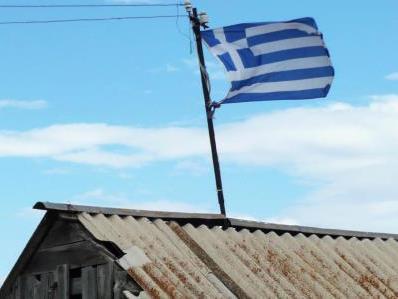
We tried to understand how the life of a Greek woman in the region differs from that of other women. Apparently, the main difference is the presence of a ‘window to Europe’. Effectively, every family has relatives there which gives them pride and the opportunity for exposure to life in Europe.
Another difference is the issue of their own houses, Ivetta does not own her own home. A Greek family owns her house. Otherwise, Greek women keep the same way of life other women do and make their living through hard work. There is not even a single independent businesswoman in Tsalka outside the field of farming.
Greek women tend to remain isolated from women of other ethnicities and are not inclined to cooperate with them this might be due to the perception that migrants have lower levels of culture than them and occasional conflicts related to houses. Ivetta, as a public sector worker sees these problems clearly. The isolation of sections of the population due to ethnicity is one of the main problems. Overcoming this problem requires time and it is necessary to have a dynamic, intelligent and people-friendly programme which reaches remote villagers and that would employ real enthusiasts of whom Ivetta is obviously one.
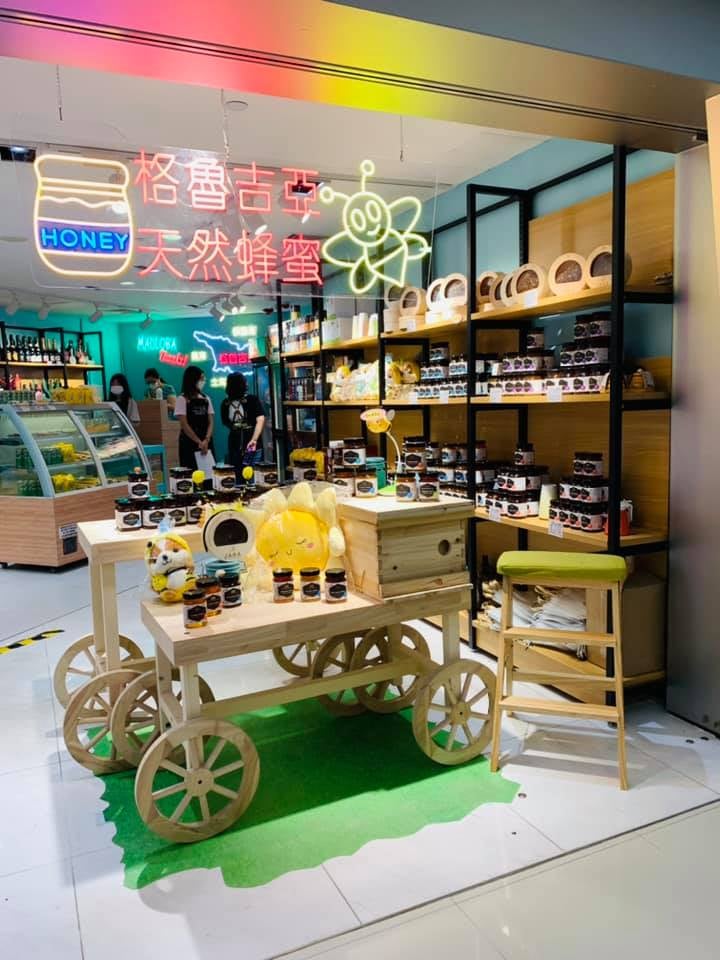
Georgian Honey under Nena brand has successfully entered the Hong Kong market with a repeat order received soon after the first one. Hong Kong is the new market for Nena honey following USA, Canada, Japan and UAE.
Three Georgian honey producers received Silver Quality Award in the quality category at the London International Honey Awards. These companies were supported by the Embassy of Georgia to the UK and the Georgian Beekeepers Union (GBU) to participate in this prestigious competition in London for the first time among 290 honeys from 20 countries.
The purpose of the LONDON HONEY AWARDScompetitions is to inform honey-growers, honey producers, beekeepers, processors, and retailers, who distribute their standardized products legally, to preserve and to ameliorate the quality of their branded product by promoting high-quality honey products in every aspect of the spectrum of its use and consumption.
The awarded Georgian honey producers are Nena Chestnut Honey / KTW, Nena Jara Bio Honey / KTW, Ninotsminda Honey (Alpine) / Cooperative KODY and Chestnut Honey / Rukhi Queen
You can see here the post of the embassy on Facebook.

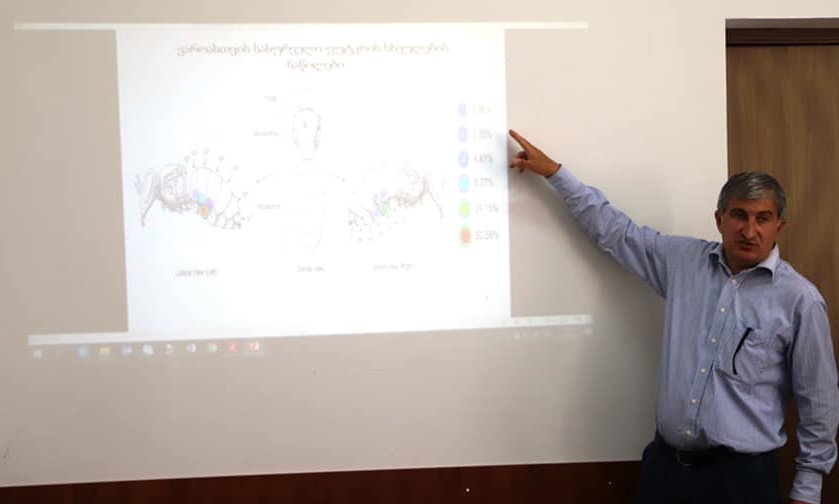
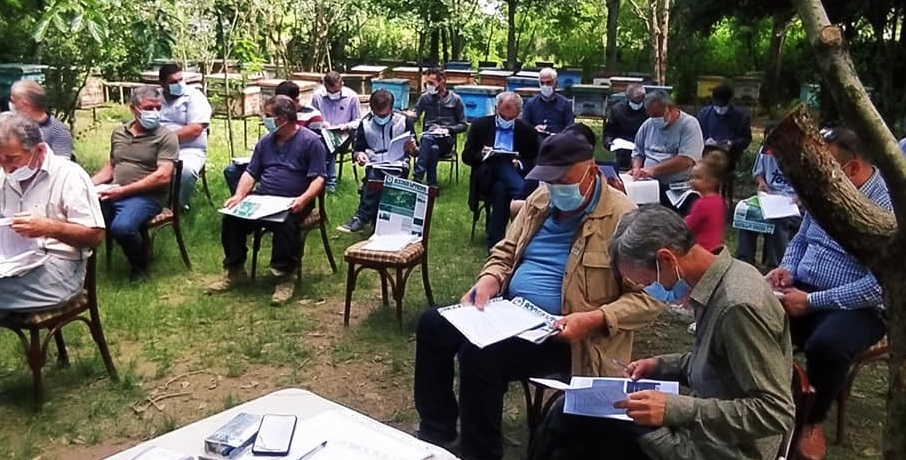
On May 27th-28th, more than two thousand beekeepers in all regions of Georgia attended a training on bee treatment practices as a response to the massive bee colonies collapse this year. The Georgian Beekeepers Union (GBU) initiated and advocated the first nationwide trainings with the Rural Development Agency (RDA) based on the online research data gathered. The GBU developed a trainer’s handbook and Varroa Treatment guideline, which was translated and available for Azerbaijani and Armenian beekeepers; and delivered a Training of Trainers for eighty-five beekeepers.
‘Beekeepers received important information about new methodology how to treat Varroa. This was the first training organized in coordination with the GBU, which is the main actor in the beekeeping sector and our collaboration will continue.’ – Lasha Shalamberidze, the Head of the Regional Relations Department at the RDA.
‘I think, a key outcome of these trainings is that our Union expanded its team across Georgia. We now have the representatives in each municipality and we will continue teaching and delivering important information to the beekeepers.’ – Aleko Papava, the Head of the GBU.
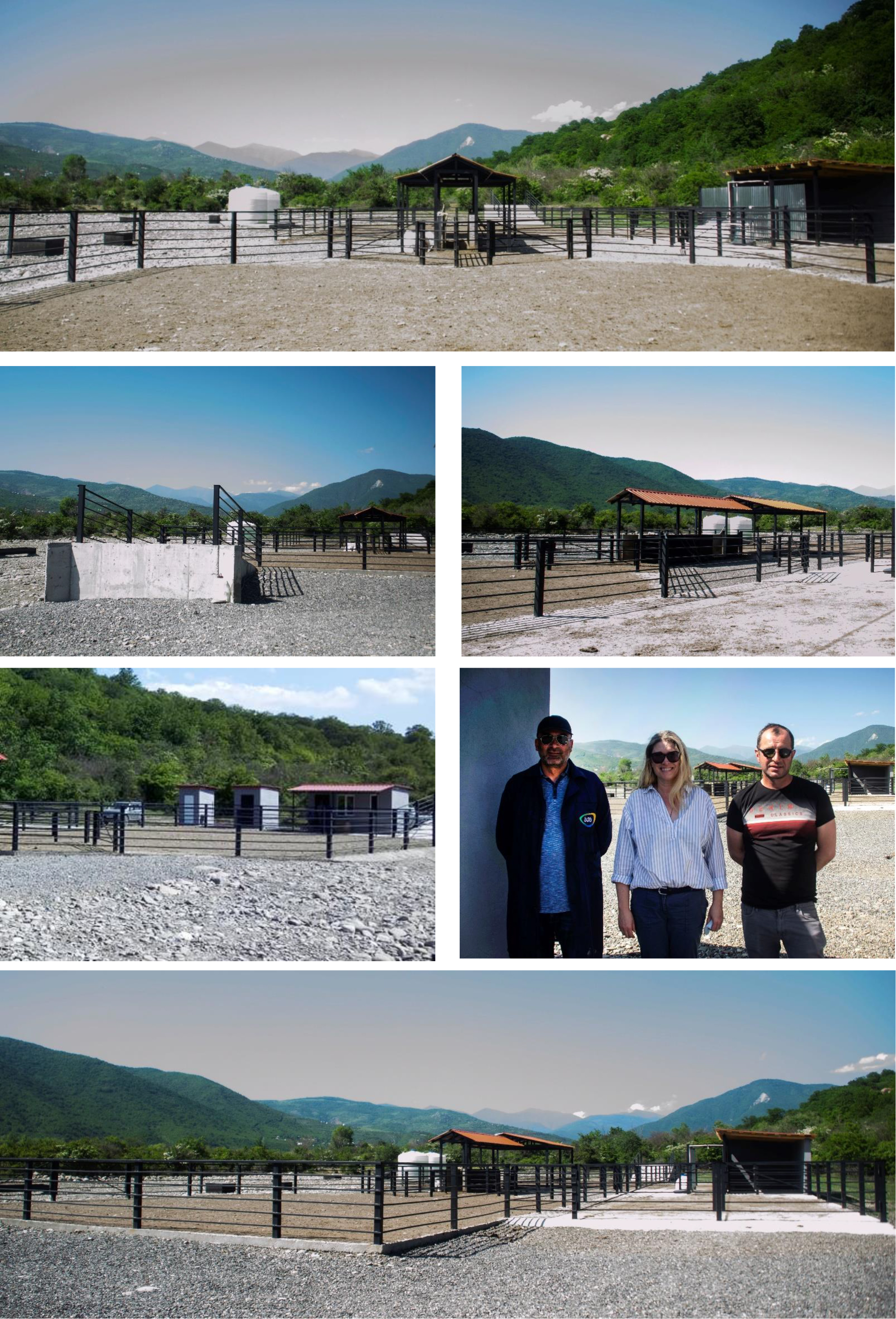
A seventh Veterinary Surveillance Point (VSP) of the National Food Agency (NFA) opened recently in Dusheti municipality to serve nomadic farmers migrating on the north part of the Animal Movement Route of Georgia. This is the first and the only VSP in Mtskheta-Mtianeti region, where disinfection of sheep and cattle against ecto-parasites is provided by the State. Up to 100,000 head of sheep will be dipped there during every transhumance season, free of charge.
The point was constructed by the NFA following the petition of shepherds from the region at the ALCP’s 11th Advisory Committee meeting and was approved by the Minister of Environmental Protection & Agriculture – Levan Davitashvili in March 2019, based on the positive benefits of the existing points.
In 2015 the VSP model was created by the ALCP commissioned British livestock expert Edward Hamer and an MOU was signed between the Ministry of Agriculture, the NFA and the ALCP to construct six VSPs, two of them were financed by the programme and four by the State. In 2016-2018 all six points were finalized and opened. This year additional water points were also opened on the route. The VSP’s record and monitor the nomadic sheep and cattle population and underpin Georgia’s credibility in livestock export markets.
As Dick Whittington found out the London streets are not literally paved with gold. However four Georgian honey companies are participating in a celebration of the liquid kind. The London International Honey Awards held from May 30-31st, have two main award categories: quality and design, and feature honeys from all over the world, from Canada to the Mediterranean to New Zealand and everything in between. Competition is fierce. The four Georgian honey companies, Nena, Rukhi Queen, Honey and Irinola Company and Cooperative Kodi, were supported to participate by the Embassy of Georgia to the UK and the Georgian Beekeepers Union (GBU).

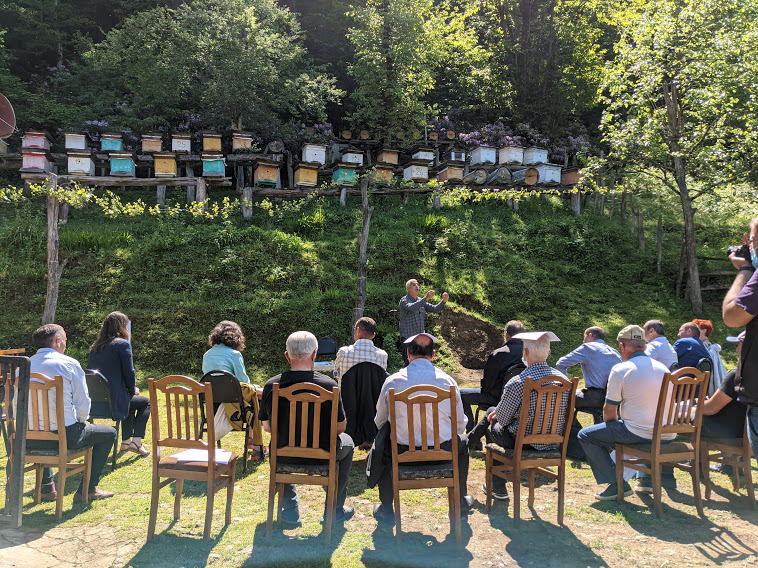
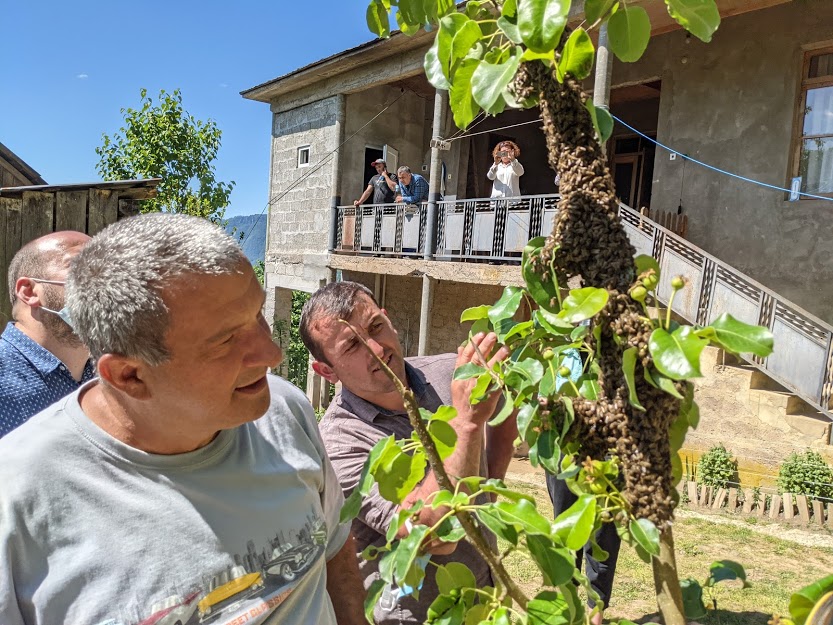
On May 18th-19th, twelve VET college representatives from seven regions of Georgia attended a Training of Trainers in Jara Honey Production hosted by the Georgian Beekeepers Union (GBU) and the Jara Beekeepers Association (JBA) in Keda, Medzibna Village.
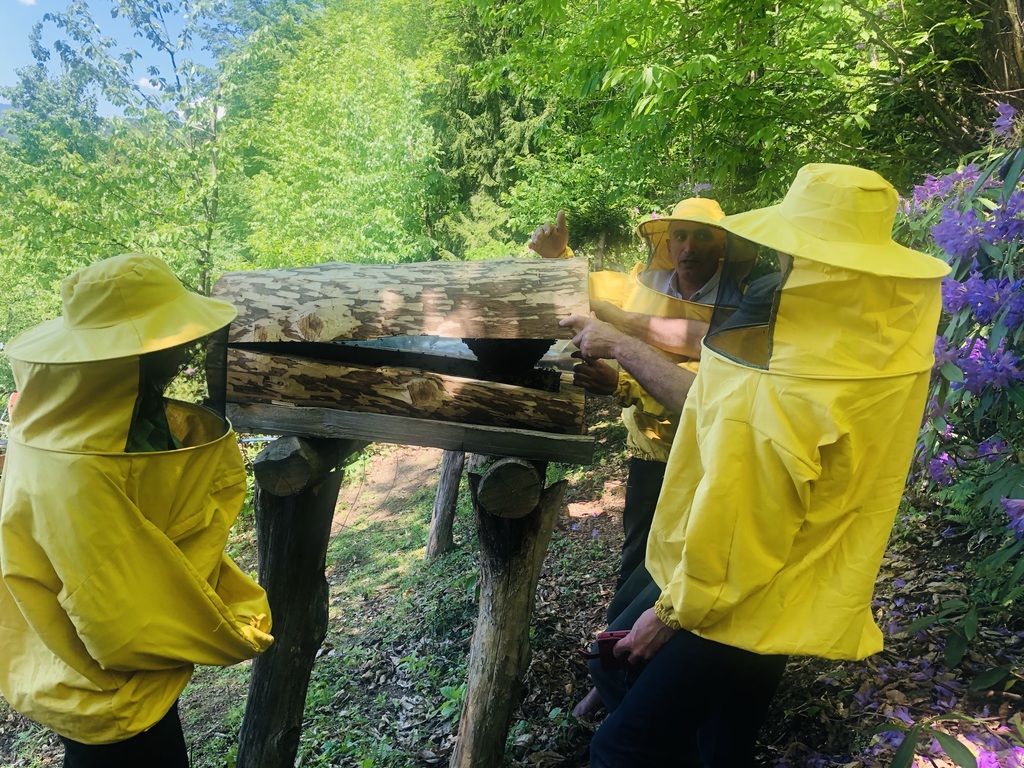
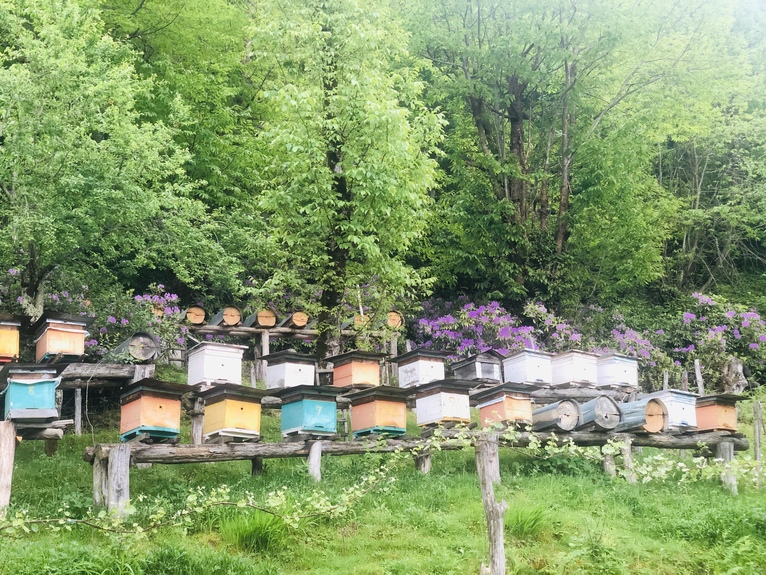
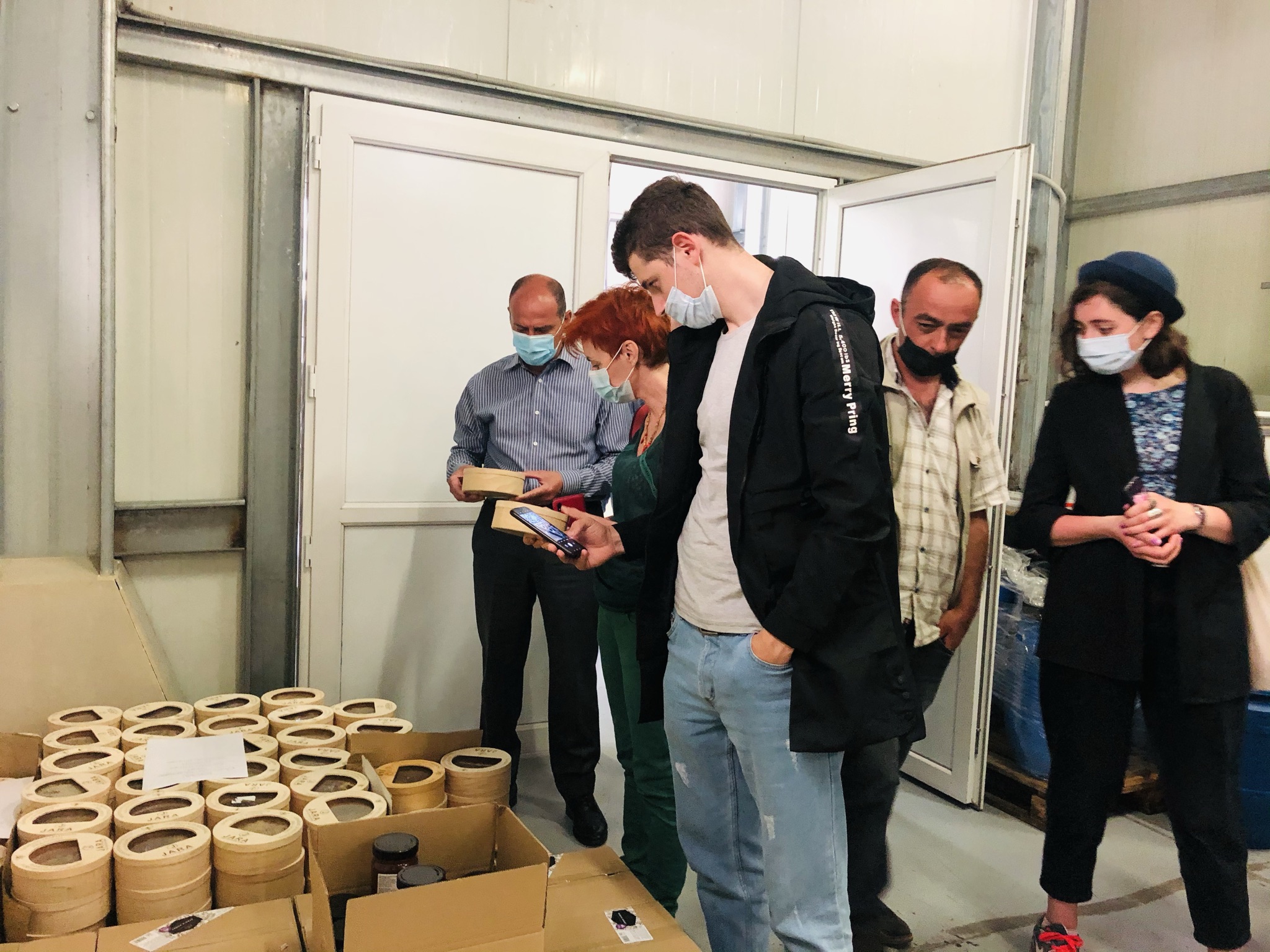
The trainees learnt how to teach beekeeping students Jara honey production and how to obtain Bio certification. They also visited a Bio certified Jara apiary and the Agro-Keda factory to see the process of Jara honey processing and packaging.
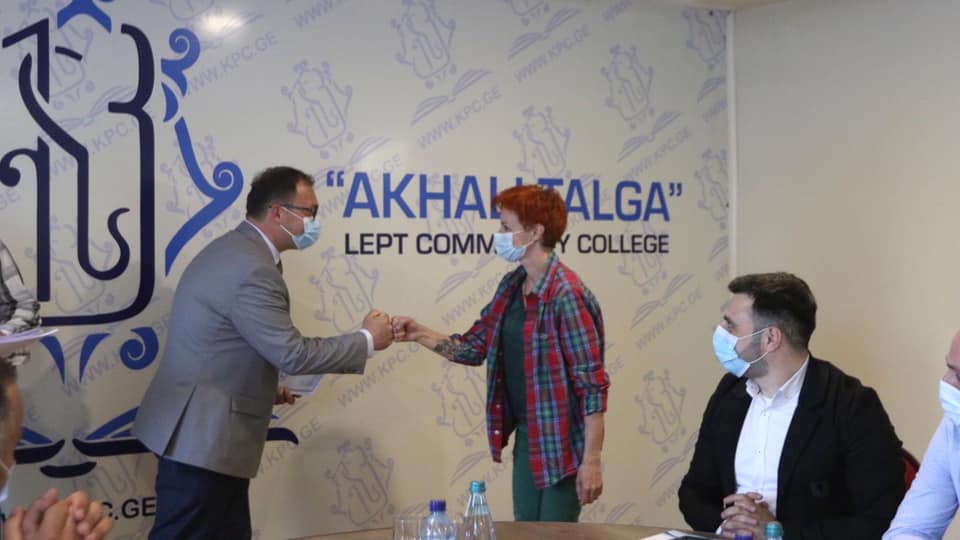
Akhali Talga VET College in Kobuleti and Khulo, who have already integrated the Jara teaching materials into their one-year beekeeping programme since October 2020, also shared their experience of including and teaching Jara production.
‘I am happy to attend this training, as I learned a lot. I am ready to teach Jara beekeeping to my students, because it will make our beekeeping programme even more interesting.’ – Ilia Khazarishvili, a lecturer at the Public College Aisi, Kakheti.
‘I am glad that all of the colleges now acknowledge that Jara teaching is an essential part of Georgian beekeeping programmes. During these two days they heard about a wide range of Jara topics, for example, Bio certification, which was impressive for them. Now they are convinced that Jara teaching has a future and this will help them to attract more students to beekeeping. They also saw the demand from businesses after visiting two Jara honey processing entities.’ - Aleko Papava, the Head of the GBU.
The National Center for Educational Quality Enhancement and sectoral skills organization Agro Duo are supporting Jara teaching integration in the VET colleges.
On June 1st, the GBU is organizing an online event Highlights So Far: Jara in VET, which is bringing together VET colleges, specialists, agro journalists, donors, and public officials to further promote Jara teaching in VET colleges and share reflections on the training.